

The case
The most useful witness in the Urschel case was the victim, and he spent most of it with his eyes taped shut. Held for more than a week on a farm somewhere in the dry country south of the Red River, Charles Urschel listened. He noticed that a plane passed over twice a day at about the same times, except one morning when it rained hard and no plane came. He noted the creak of a bucket being hauled up a well, the animals around the farm, and he left his fingerprints on every surface he could reach. When he came home, he could describe the place well enough for federal agents to find it.
Urschel was an Oklahoma City oilman who had married Berenice Slick, widow of the famous wildcatter Tom Slick, uniting two large fortunes. On the night of 22 July 1933 he and his wife were playing bridge on their porch with another oilman, Walter Jarrett, and his wife when two armed men came in. They were George Kelly, a former bootlegger the papers would soon call 'Machine Gun' Kelly, and Albert Bates, a veteran burglar and robber. Unsure which man was Urschel, they took both, checked wallets on the road out of town and let Jarrett go.
Urschel was driven to a farm near Paradise, in Wise County, Texas, owned by Robert 'Boss' Shannon, the stepfather of Kelly's wife Kathryn. The kidnappers demanded $200,000. The family's go-between, E. E. Kirkpatrick, handed it over on a Kansas City street on the evening of 30 July, in twenty-dollar bills whose serial numbers had been recorded, and Urschel was freed the next day near Norman, Oklahoma, with ten dollars for the journey home.
The case was among the first big tests of the federal kidnapping law passed after the Lindbergh case, and J. Edgar Hoover's Bureau of Investigation treated it as a chance to prove itself. Agents checked airline schedules against Urschel's memory of the planes and the missing flight on the rainy morning. The pattern pointed to the Shannon farm. On 12 August agents and local officers raided it with Urschel himself along, arresting members of the Shannon family and the bank robber Harvey Bailey, who had some of the ransom money on him. Bates was arrested in Denver the same day.
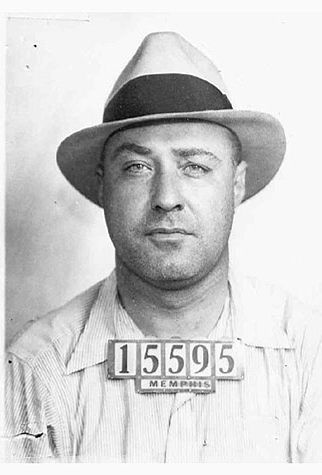
The Kellys stayed free for several more weeks, moving across the South and sending threatening letters to Urschel, the prosecutor and the judge. On the morning of 26 September 1933 agents and Memphis police arrested them in a house in Memphis, Tennessee. According to a story the Bureau later popularised, Kelly surrendered crying 'Don't shoot, G-men!' The earliest Bureau report has him standing silently with his hands up.
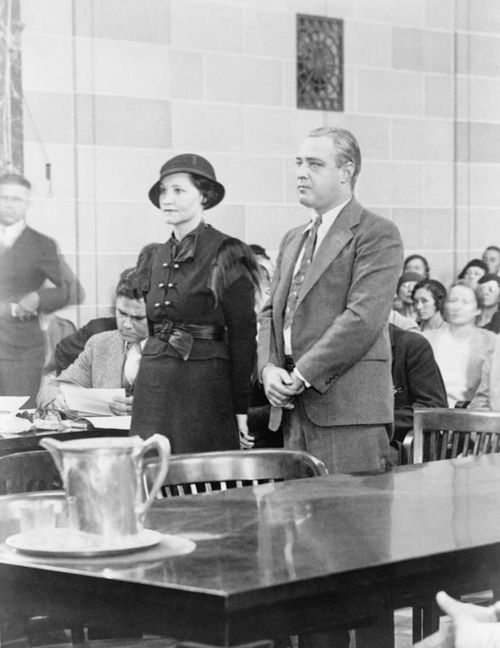
The trials in the federal courthouse in Oklahoma City were the first under the new law, and newsreel cameras were allowed in the courtroom. On 30 September a jury convicted Bates, Bailey and the Shannons, along with men who had laundered part of the ransom; Bates, Bailey and both Shannons were sentenced to life. The Kellys were flown to Oklahoma City for their own trial, and on 12 October 1933 both were convicted and sentenced by Judge Edgar Vaught to life imprisonment. In all, twenty-one people were eventually convicted in connection with the kidnapping.
The victims
Charles Frederick Urschel was born in Ohio in 1890 and made his fortune in the Oklahoma oil fields. His first wife was a sister of the oilman Tom Slick; after both she and Slick had died, he married Slick's widow, Berenice, and managed the Slick estate. He was by all accounts a calm, observant man, and the composure he kept through nine days in chains and blindfolds is the reason the case was solved. He was not physically harmed, but he lived afterwards under the shadow of threats from the convicted kidnappers.
The Urschels later moved to San Antonio, where he ran the Slick-Urschel Oil Company and was a founding trustee of the Southwest Research Institute. Berenice died in 1970, and Urschel died a few months later. Walter Jarrett, the friend taken with him and released on the road, was unharmed.
Timeline
George Kelly and Albert Bates abduct Charles Urschel and Walter Jarrett from the Urschel home in Oklahoma City; Jarrett is soon released.
E. E. Kirkpatrick hands over the $200,000 ransom on a street in Kansas City.
Urschel is released near Norman, Oklahoma, and reaches home that night.
Agents raid the Shannon farm at Paradise, Texas, arresting the Shannons and Harvey Bailey; Bates is arrested in Denver.
Bailey escapes from the Dallas County jail but is recaptured within hours.
George and Kathryn Kelly are arrested in Memphis, Tennessee.
A federal jury in Oklahoma City convicts Bates, Bailey, the Shannons and two money changers.
Bates, Bailey and Robert and Ora Shannon are sentenced to life imprisonment.
George and Kathryn Kelly are convicted and sentenced to life.
George Kelly is transferred from Leavenworth to Alcatraz.
Kelly dies of a heart attack at Leavenworth on his fifty-ninth birthday.
Kathryn Kelly and Ora Shannon are released on bond after a judge orders new trials; they are never retried.
People in the case
-
Charles F. Urschel Victim
7 March 1890 – 26 September 1970
Oklahoma City oilman; kidnapped for $200,000 and released after nine days. His recollections located the hideout.
-
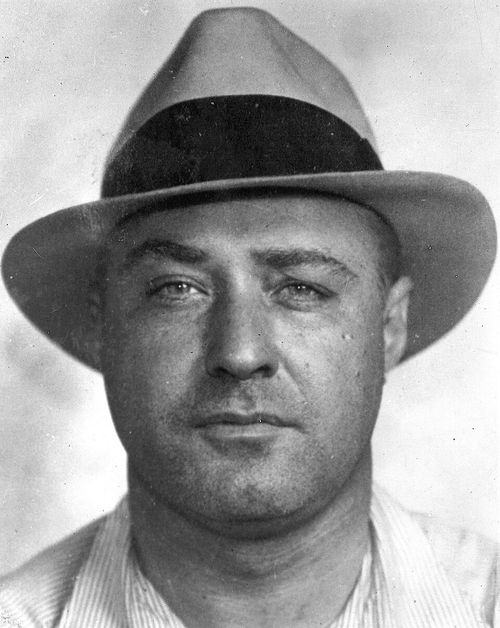
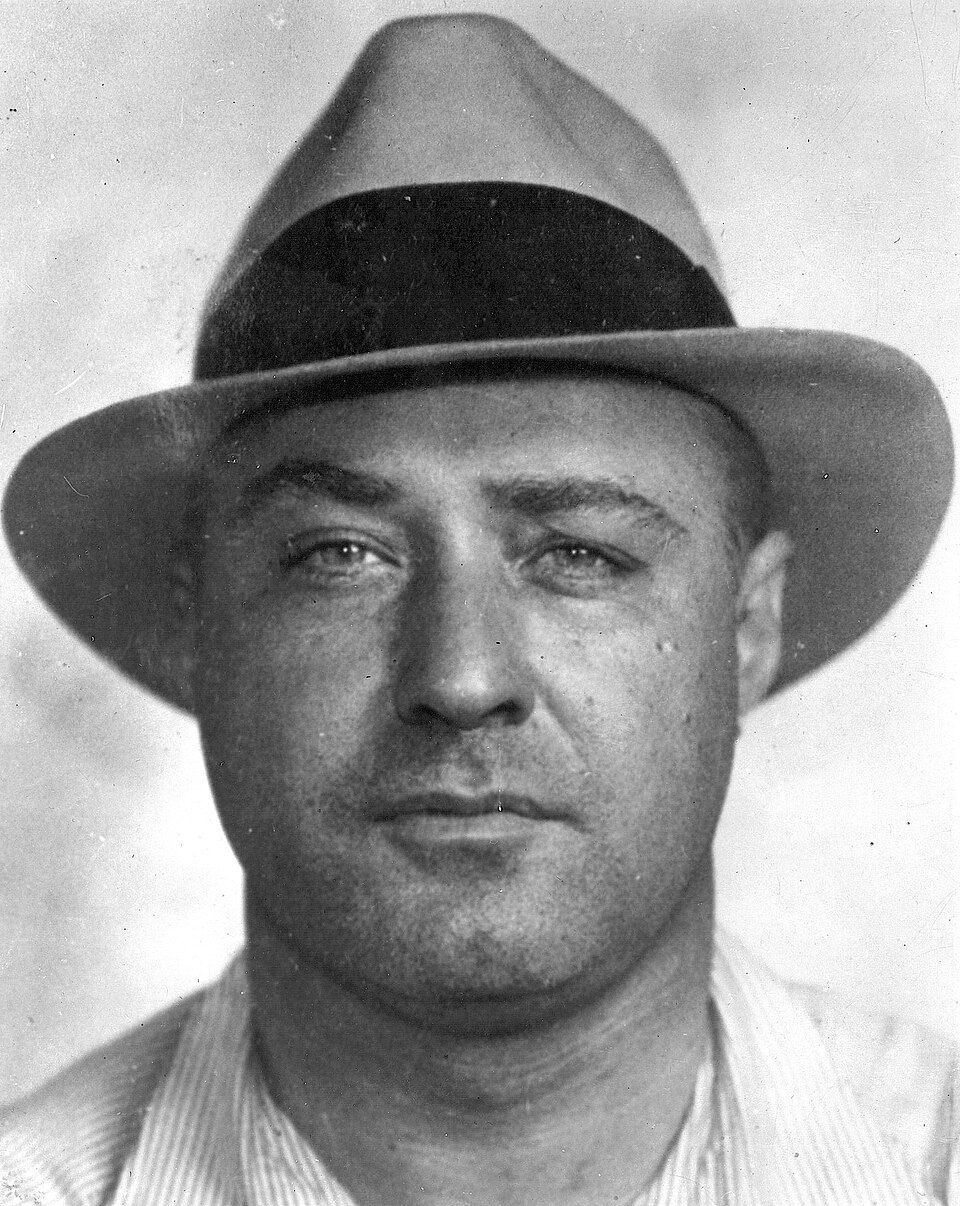
George "Machine Gun" Kelly Perpetrator
18 July 1895 – 18 July 1954
Born George Kelly Barnes in Memphis; convicted and sentenced to life. Served most of it on Alcatraz and died at Leavenworth.
-
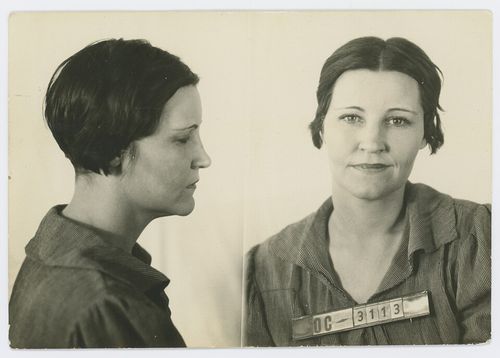
Kathryn Kelly Perpetrator
18 March 1904 – 1985
George's wife, widely seen as the planner; convicted and sentenced to life, released in 1958 when a judge ordered a new trial that never took place.
-
Albert Bates Accomplice
1891 – 4 July 1948
Kelly's partner in the abduction; arrested in Denver and sentenced to life. Died on Alcatraz.
-
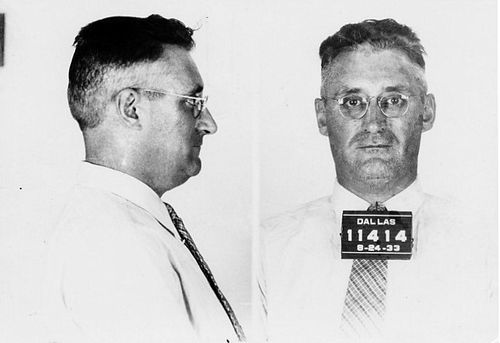
Harvey Bailey Accomplice
23 August 1887 – 1 March 1979
Bank robber found at the Shannon farm with ransom money; convicted and sentenced to life, though his actual part in the kidnapping is doubted.
-
Edgar Sullins Vaught Judge
7 January 1873 – 5 December 1959
Federal judge who presided over both trials and passed the life sentences.
-
Ora Shannon Accomplice
? – 1980
Kathryn's mother, born about 1888; the hostage was kept at her family's farm. Sentenced to life and released with her daughter in 1958.
Where it happened
- Paradise, Wise County, Texas. Urschel was held on the Shannon farm near this small town.
- Federal courthouse, Oklahoma City. The Post Office, Courthouse and Federal Office Building, where both trials were held under newsreel cameras.
- Memphis, Tennessee. Where the Kellys were arrested on 26 September 1933.
Outcome
Convicted Convicted
George and Kathryn Kelly were convicted under the Federal Kidnapping Act on 12 October 1933 and sentenced to life imprisonment; Bates, Bailey and Robert and Ora Shannon received life sentences on 7 October. Appeals failed. In 1958 a federal judge vacated Kathryn Kelly's and Ora Shannon's convictions and ordered new trials, and they were released on bond; although an appeals court reversed that order in 1959, neither woman returned to prison. Robert Shannon was freed in the 1940s after serving about eleven years.
What the record settles, and what it doesn't
Established
- Charles Urschel and Walter Jarrett were abducted at gunpoint from the Urschel home in Oklahoma City on 22 July 1933 by George Kelly and Albert Bates.
- Urschel was held at the Shannon farm near Paradise, Texas, and freed on 31 July after a $200,000 ransom was paid.
- Urschel's careful observations in captivity helped federal agents identify the farm.
- The Kellys were arrested in Memphis on 26 September 1933.
- George and Kathryn Kelly were convicted and sentenced to life on 12 October 1933, in one of the first prosecutions under the federal kidnapping law.
- Twenty-one people were eventually convicted in connection with the kidnapping and the handling of the ransom.
- Newsreel cameras filmed the proceedings, an early example of a filmed American trial.
Disputed
- Whether Kelly ever said 'Don't shoot, G-men': the phrase became FBI folklore, but the Bureau's earliest account of the arrest does not include it.
- Kathryn Kelly's role: the prosecution and Urschel himself saw her as the brains of the scheme, while she maintained that her husband acted alone and that her mother was innocent.
- Harvey Bailey's guilt: he was found with ransom money at the farm and convicted, but he always denied taking part, and many writers think he was only hiding there.
- Whether the 1933 trials were fair: in 1958 Kathryn Kelly and Ora Shannon argued that the FBI had withheld handwriting evidence about the threatening letters, and the government's refusal to release its files is why they were never retried.
- How dangerous Kelly really was: the FBI built him into a fearsome gangster, but fellow prisoners and some historians portray a mild bootlegger shaped by his wife's ambitions.
Pictures





Afterwards
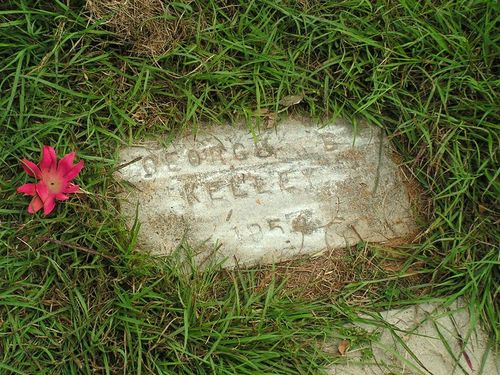
The case did as much for J. Edgar Hoover as for Urschel. It showed the new federal kidnapping law working quickly and visibly, it gave the Bureau a nickname, and it was the first time prisoners were moved by aeroplane. Kelly spent seventeen years on Alcatraz, where other inmates mocked his tall stories as 'Pop Gun Kelly', and died at Leavenworth in 1954; he is buried at Cottondale, Texas, under a small marker with his name misspelled. Bates died on Alcatraz in 1948.
Kathryn Kelly and her mother served about twenty-five years before a judge ordered new trials in 1958 because the government would not produce its files. They lived quietly afterwards in Oklahoma, where Kathryn worked as a bookkeeper at the county poor farm under the name Lera Kelly. Urschel moved to San Antonio in 1945 and became a philanthropist there; according to a later historian, he quietly paid for the education of Kathryn Kelly's daughter.
Questions readers ask
Who was Machine Gun Kelly?
George Kelly Barnes, a Memphis-born bootlegger who, with his wife Kathryn, kidnapped Oklahoma oilman Charles Urschel in 1933. The nickname came largely from Kathryn's promotion of him and from the FBI's publicity.
How did Charles Urschel help catch his kidnappers?
Although blindfolded, he memorised sounds, the taste of the water and especially the times of planes flying overhead, including one day when rain stopped the flight. Agents matched these details to airline schedules and weather and found the Texas farm.
What happened to Machine Gun Kelly?
He was sentenced to life imprisonment in October 1933, served seventeen years on Alcatraz, and died at Leavenworth on 18 July 1954, his fifty-ninth birthday.
Did Machine Gun Kelly say 'Don't shoot, G-men'?
Probably not. The line became famous through FBI publicity, but the Bureau's earliest report of the arrest says Kelly stood in a corner with his hands raised and does not record him saying anything.
Sources and further reading
- Charles F. Urschel (Wikipedia)
- Machine Gun Kelly (gangster) (Wikipedia)
- Urschel Kidnapping (Encyclopedia of Oklahoma History and Culture)
- United States v. Kelly and Shannon, 269 F.2d 448 (10th Cir. 1959)
- Wikidata Q2960357 (life dates checked here)
Written by Sinister Crimes from the sources above; see our editorial standards. Last checked 1 November 2026.