

The case
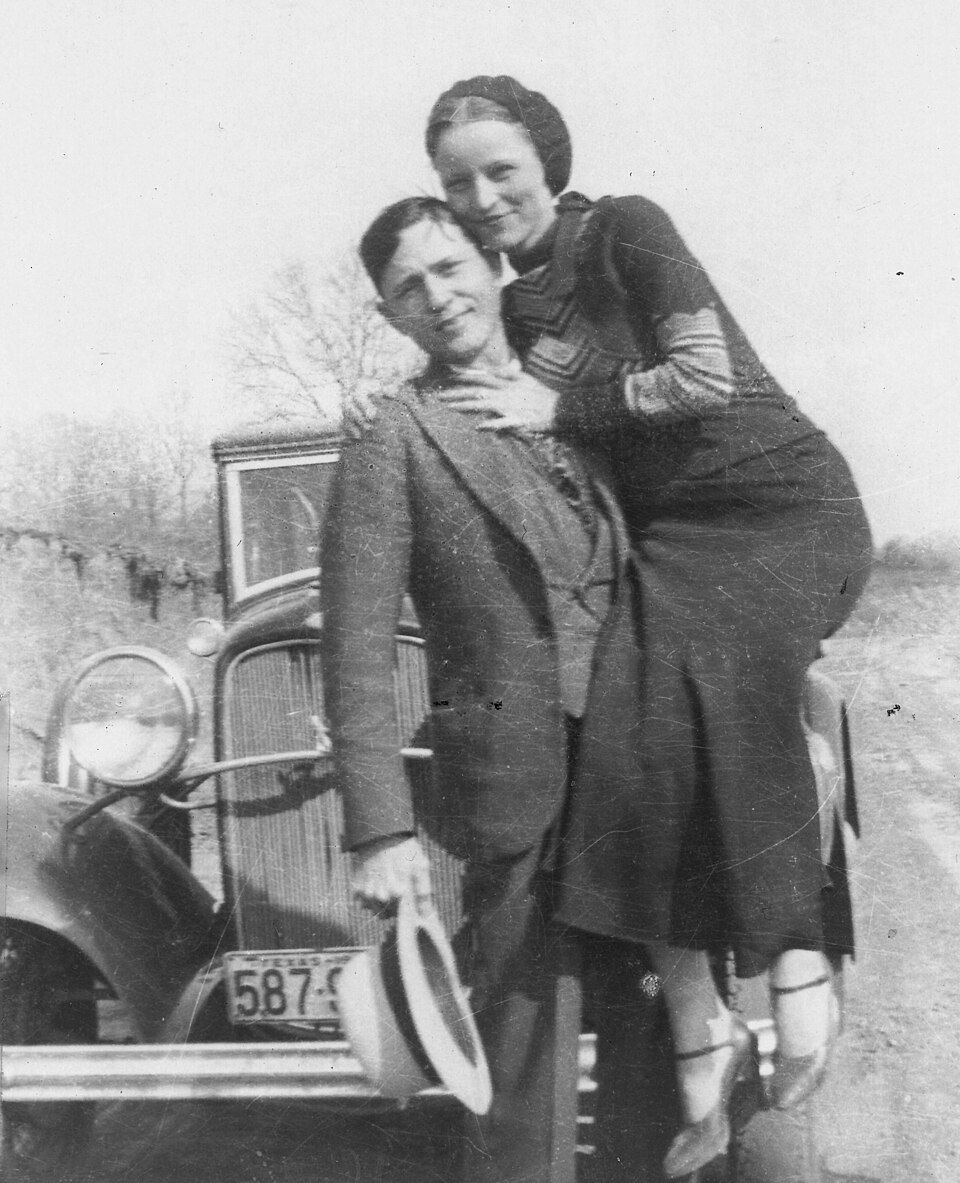
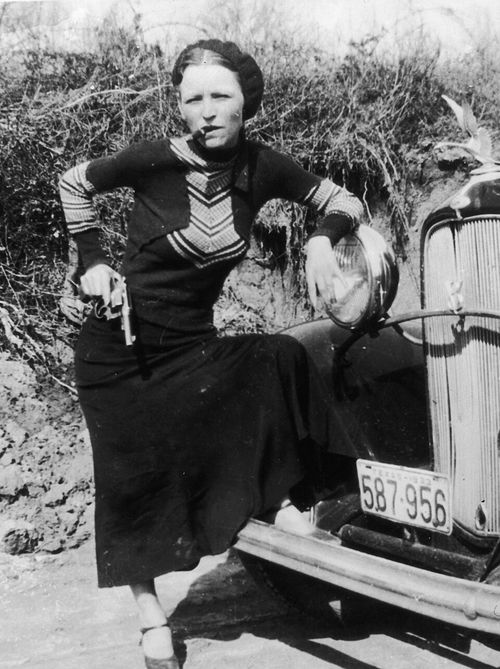
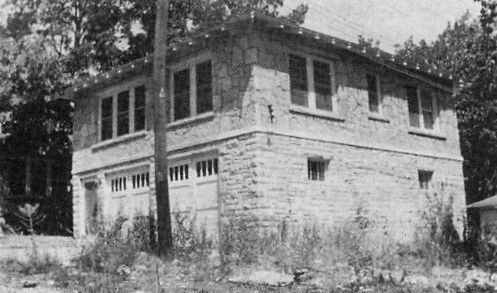
The picture that made them famous was never meant for the public. In April 1933 the Barrow gang fled a rented garage apartment in Joplin, Missouri, after a shootout that killed two lawmen, and left behind a camera full of film. The Joplin Globe developed it. Among the prints was one of a small young woman leaning on a Ford with a pistol in her hand and a cigar between her teeth. Within days Bonnie Parker and Clyde Barrow were on front pages across the country.
Both came out of West Dallas, a riverside slum where families like the Barrows had arrived from failing farms and lived for a while under their wagon. Clyde, born in 1909, was stealing cars and cracking safes in his teens. Bonnie, born in 1910, was bright, wrote poetry, wanted to be on the stage, and had married at fifteen a man who soon drifted into prison. They met in January 1930, weeks before Clyde was locked up. Two years at Eastham prison farm, where he was brutalised and where he killed an inmate who had abused him, left him bitter enough that he had two of his toes cut off to get out of field work. He was paroled in February 1932, a few days later.
What followed was less a career of bank robbery than a long, ragged run of small hold-ups at grocery stores and filling stations, car thefts and escapes. The gang changed shape constantly: Ralph Fults, Raymond Hamilton, the teenage W. D. Jones, Clyde's brother Buck and Buck's wife Blanche, later Henry Methvin. What made them notorious was how quickly they shot. A storekeeper died in Hillsboro, Texas, in April 1932. In August Clyde and Hamilton killed a deputy at a country dance in Stringtown, Oklahoma. On Christmas Day Clyde and Jones shot a young man who tried to stop them taking his car.
1933 was the year of the big gunfights. After Joplin came a car crash near Wellington, Texas, that left Bonnie with severe burns to her leg; she could barely walk for the rest of her life. In July the gang fought their way out of the Red Crown Tourist Court near Platte City, Missouri, where Buck was shot in the head. Five days later lawmen and a crowd of locals surrounded their camp at Dexfield Park in Iowa. Buck and Blanche were captured, and Buck died in hospital. Clyde, Bonnie and Jones escaped on foot.
In January 1934 Clyde raided Eastham itself, freeing Hamilton, Methvin and others. A guard was fatally wounded in the escape, and the head of the Texas prison system, Lee Simmons, hired the retired Ranger Frank Hamer to hunt the couple down. On Easter Sunday, 1 April, two young highway patrolmen were killed near Grapevine, Texas. Newspapers printed an eyewitness claim that Bonnie had fired the fatal shots and laughed; the witness later changed his story and Methvin said he had fired first, but the damage to her reputation was done. Five days later Clyde and Methvin killed a constable near Commerce, Oklahoma.
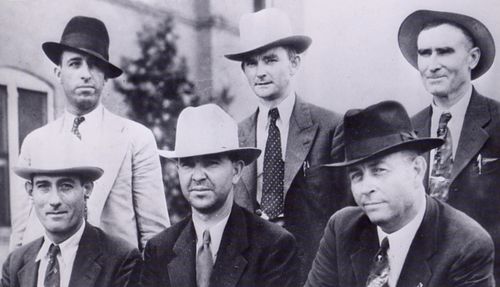
Hamer worked out that the gang moved in a loop around family homes, and that Methvin's father lived in Bienville Parish, Louisiana. With Methvin's family reportedly cooperating in return for leniency for Henry, a posse of four Texans and two Louisiana officers hid in the brush beside the road south of Gibsland. At about 9.15 on the morning of 23 May 1934 Clyde's Ford slowed beside a truck parked on the verge. The lawmen opened fire without warning that anyone could later agree on, and kept firing until their guns were empty. Bonnie was 23 and Clyde 25.
Neither was ever tried for murder. When Clyde's mother asked Hamer for the return of his guns, she reminded him that her son had never been convicted of killing anyone in any court. The posse's report and the coroner's findings became the last official word.
The victims
The gang is generally credited with at least nine law officers and several civilians killed between 1932 and 1934. Some were very young. Doyle Johnson, shot at Temple, Texas, on Christmas Day 1932, was a young family man defending his car. Highway patrolmen E. B. Wheeler and H. D. Murphy, killed near Grapevine on Easter Sunday 1934, had stopped because they thought a motorist needed help; Murphy's fiancée wore the dress she had bought for their wedding to his funeral. Eugene Moore, a deputy at Stringtown, Oklahoma, was the first lawman the gang killed. Cal Campbell, the constable shot near Commerce, Oklahoma, was a sixty-year-old widower with children.
Others on the list include the Hillsboro storekeeper J. N. Bucher, Deputy Malcolm Davis in Dallas County, Detective Harry McGinnis and Constable Wes Harryman at Joplin, Town Marshal Henry Humphrey at Alma, Arkansas, and Major Joe Crowson, the Eastham guard shot during the 1934 breakout. A few killings, such as that of the Sherman shopkeeper Howard Hall, are disputed by historians.
Timeline
Clyde Barrow and Bonnie Parker meet in West Dallas.
Clyde is paroled from Eastham prison farm.
Storekeeper J. N. Bucher is killed in a robbery at Hillsboro, Texas, in which Clyde took part.
Deputy Eugene Moore is killed at a dance in Stringtown, Oklahoma, the first lawman the gang kills.
Two officers are killed in a shootout at the gang's Joplin apartment; the abandoned photographs make the couple famous.
A car crash near Wellington, Texas, leaves Bonnie badly burned.
The gang shoots its way out of the Red Crown Tourist Court near Platte City, Missouri; Buck is gravely wounded.
The gang is surrounded at Dexfield Park, Iowa; Buck and Blanche are captured, and Buck dies on 29 July.
Clyde leads a raid that frees Raymond Hamilton, Henry Methvin and others from Eastham; guard Joe Crowson is mortally wounded.
Frank Hamer begins tracking the couple for the Texas prison system.
Highway patrolmen E. B. Wheeler and H. D. Murphy are killed near Grapevine, Texas.
Constable Cal Campbell is killed near Commerce, Oklahoma.
Bonnie and Clyde are killed by a six-man posse on the road south of Gibsland, Louisiana.
Twenty relatives and friends are tried in Dallas for harbouring the couple; all are convicted or plead guilty.
People in the case
-
Clyde Barrow Perpetrator
24 March 1909 – 23 May 1934
Leader of the gang; killed in the ambush near Gibsland.
-
Bonnie Parker Perpetrator
1 October 1910 – 23 May 1934
Clyde's partner throughout the run; how far she took part in the killings is debated. Killed with him.
-
Buck Barrow Accomplice
14 March 1903 – 29 July 1933
Clyde's older brother; shot at Platte City and captured at Dexfield Park, where he died days later.
-
Blanche Barrow Accomplice
1 January 1911 – 24 December 1988
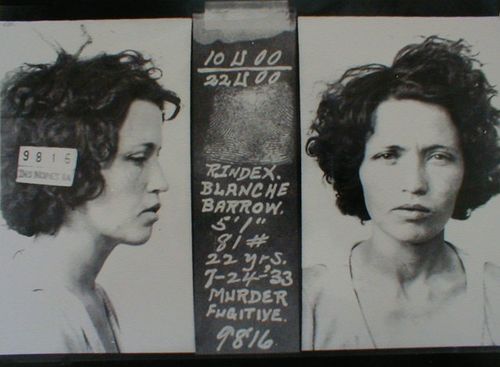
Buck's wife; captured at Dexfield Park, imprisoned and paroled in 1939.
-
W. D. Jones Accomplice
12 May 1916 – 20 August 1974
Joined at sixteen in December 1932; later convicted of the murder of Doyle Johnson.
-
Henry Methvin Accomplice
8 April 1912 – 19 April 1948
Freed in the Eastham raid; his family's cooperation helped set up the ambush. Convicted of the Commerce killing.
-
Raymond Hamilton Accomplice
21 May 1913 – 10 May 1935
Early gang member freed from Eastham in 1934; executed in Texas in 1935.
-
Frank Hamer Investigator
17 March 1884 – 10 July 1955
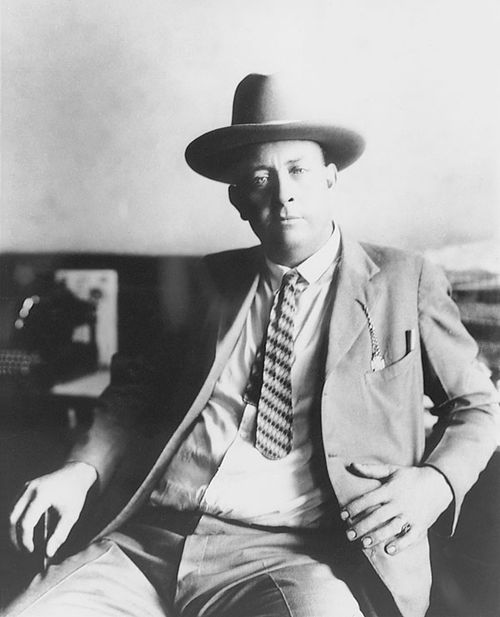
Retired Texas Ranger hired by the prison system in 1934 to hunt the gang; led the posse.
-
Ted Hinton Investigator
5 October 1904 – 27 October 1977
Dallas County deputy who had known Bonnie as a waitress; member of the posse and later author of a contested memoir.
Where it happened
- Ambush site, Louisiana Highway 154 south of Gibsland. Where the posse killed Bonnie and Clyde; marked by roadside monuments.
- Bonnie & Clyde Garage Apartment, Joplin. Scene of the April 1933 shootout; the film left here produced the famous photographs.
- Red Crown Tourist Court, Platte City. Site of the July 1933 gunfight in which Buck Barrow was wounded.
- Arcadia, Louisiana. Parish seat where the bodies were taken and crowds gathered.
- Primm, Nevada. The bullet-holed Ford is displayed at a casino here.
Outcome
Killed before trial Killed before trial
Clyde Barrow and Bonnie Parker were killed by a posse of Texas and Louisiana officers on 23 May 1934, with murder warrants outstanding against both. Neither was ever tried. In 1935 twenty family members and friends were convicted of harbouring them; Henry Methvin was convicted of murder in Oklahoma and paroled in 1942, and Raymond Hamilton was executed in Texas in May 1935.
What the record settles, and what it doesn't
Established
- Clyde Barrow was paroled from Eastham prison farm in February 1932, and the gang's crimes ran from then until May 1934.
- The gang killed at least nine law officers, along with several civilians, in Texas, Oklahoma, Missouri and Arkansas.
- Most of their robberies were of small businesses such as grocery stores and filling stations rather than banks.
- Photographs found at the Joplin apartment in April 1933 made the couple nationally famous.
- Buck Barrow died of wounds after the gang was surrounded at Dexfield Park, Iowa, in July 1933.
- Frank Hamer led a six-man posse that killed both outlaws on the road south of Gibsland, Louisiana, on 23 May 1934.
- Neither Bonnie nor Clyde was ever tried for any killing.
Disputed
- Whether Bonnie ever fired a fatal shot: newspapers blamed her for the Grapevine killings, but the eyewitness changed his account and Henry Methvin later said he and Clyde did the shooting; many historians think she never killed anyone.
- Whether the posse gave any warning: members later gave contradictory accounts of who, if anyone, called on the couple to halt, and Prentiss Oakley is said to have admitted firing first.
- The role of Methvin's father Ivy: the posse's report has him cooperating and parking his truck as bait, while Ted Hinton's late memoir says he was tied to a tree overnight to keep him quiet.
- Whether the cigar photograph was a joke or a retouched image: the cigar was almost certainly a prop, and Hinton claimed it had been touched up by the newspaper, a claim others doubt.
- Some killings attributed to the gang, including Howard Hall's at Sherman in 1932, are questioned by historians.
Pictures





Afterwards
Crowds stripped the death car of glass, bullet casings and scraps of clothing before the bodies reached Arcadia, and tens of thousands filed past the coffins in Dallas. Bonnie was buried apart from Clyde, as her family wished; she now lies in Crown Hill Cemetery and he in Western Heights Cemetery next to his brother Marvin. The posse got little of the advertised reward. The Ford was returned to its owner in Kansas and spent decades as a fairground attraction before ending up in a casino at Primm, Nevada.
The new federal laws of 1934 on bank robbery and kidnapping, better police radio and a more aggressive Bureau of Investigation ended the era of the roving Depression outlaw within months. Arthur Penn's 1967 film turned the couple into glamorous rebels, an image that people who had known the gang, W. D. Jones among them, publicly rejected. Gibsland has a museum devoted to the ambush, and the site itself is marked by monuments that vandals have repeatedly damaged.
Questions readers ask
How did Bonnie and Clyde die?
They were shot by a six-man posse of Texas and Louisiana lawmen led by Frank Hamer on 23 May 1934, on a rural road south of Gibsland, Louisiana. The officers fired without giving the couple a chance to surrender.
Did Bonnie Parker kill anyone?
It has never been proved. She was present at many shootings and was blamed for the Grapevine killings in 1934, but the key witness changed his story and Henry Methvin later said he and Clyde fired. Many historians doubt she killed anyone.
How many people did Bonnie and Clyde kill?
The gang is usually credited with at least nine police officers and several civilians, around twelve or thirteen people in all. Not every killing was done by Clyde, and a few attributions are disputed.
Where is Bonnie and Clyde's car now?
The bullet-riddled 1934 Ford is on display at a casino in Primm, Nevada, near the California state line.
Sources and further reading
- Bonnie and Clyde (Wikipedia)
- Barrow Gang (Wikipedia)
- Bonnie and Clyde ambush site marker (HMdb)
- Wikidata Q219937 (life dates checked here)
Written by Sinister Crimes from the sources above; see our editorial standards. Last checked 1 November 2026.