

The case
Bob Dalton's plan had a flaw that no amount of nerve could fix: he and his brothers had lived near Coffeyville, Kansas, and people there knew them. On the morning of 5 October 1892 five riders tied their horses in an alley off the town plaza and walked out in a line, carrying Winchesters. Two of them wore false whiskers. A shopkeeper on the square recognised a Dalton before they had reached the first bank door, and the shout went around the plaza that the Daltons were robbing the bank.
The Dalton brothers had begun on the side of the law. Their elder brother Frank, a deputy US marshal out of Fort Smith, was killed by whiskey runners in Indian Territory in 1887. Grat, Bob and Emmett all served as deputies or posse men afterward, but by 1890 they had crossed over, first to horse theft and then to robbing trains. Grat was convicted of a California train robbery he may not have committed and escaped on the way to prison. Between 1891 and the summer of 1892 the gang held up trains at Wharton, Lillietta, Red Rock and Adair in Indian Territory; a doctor was killed by a stray bullet in the Adair fight. Railroads posted large rewards and Deputy Marshal Heck Thomas stayed on their trail.
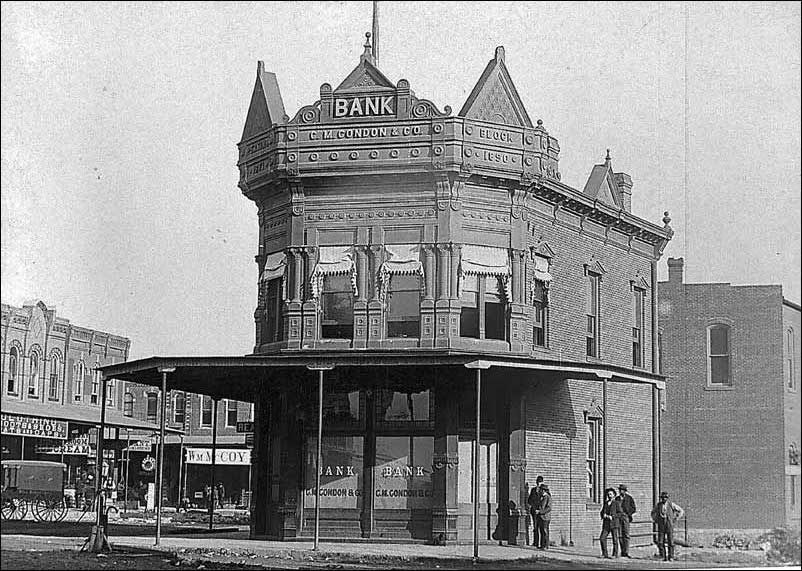
Bob wanted one large haul that would let them leave the territory, and he wanted, as he put it, to "beat anything Jesse James ever did". He would rob two banks at once in daylight, the C. M. Condon and Company bank and the First National, which faced each other across Union Street. Grat, Dick Broadwell and Bill Powers took the Condon; Bob and Emmett crossed to the First National. Street works had removed the hitching rail they had meant to use behind the Condon bank, so the horses stood in an alley across the plaza, a long run from either door.
In the Condon bank, cashier Charles Ball told Grat that the vault was on a time lock that would open in a few minutes. It was a lie; the lock had already opened. Grat chose to wait. By then men in Isham's hardware store and the store next door were handing out rifles and shotguns, and firing had started through the bank's plate-glass windows. In the First National, Bob and Emmett filled a grain sack with more than $20,000 and left by the back door, where Lucius Baldwin, a young clerk carrying a pistol, came toward them. Bob shot him. In the next few minutes Bob also killed George Cubine and Charles Brown, who had armed themselves near the bank, and seriously wounded cashier Thomas Ayres, who had taken up a rifle in the hardware store.
The robbers converged on the alley under fire from three sides. City Marshal Charles Connelly ran into it from a livery stable without seeing the gang behind him, and Grat shot him dead. John Kloehr, the liveryman following behind, shot Grat. Bob and Powers were killed near the horses. Emmett, who had reached his horse unhurt, turned back to help his dying brother and was cut down by a load of buckshot. Broadwell got onto a horse and out of town, and was found dead by the road about two miles away. By the Journal's reckoning the whole engagement lasted about ten minutes. Four citizens and four outlaws were dead, and Emmett was carried upstairs to a doctor's office with more than twenty wounds.
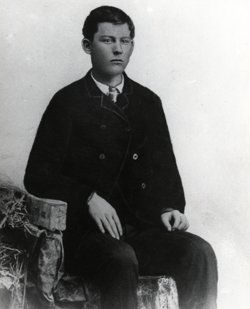
Photographs of the dead raiders were sold across the country. Emmett survived, in part by talking freely to the townsmen who were threatening to hang him. He pleaded guilty to second-degree murder and was sentenced to life in the Kansas penitentiary at Lansing, where he served fourteen years before Governor Edward Hoch released him in 1907. He spent the rest of his life telling the story, in a 1931 memoir and in films, insisting he had not fired a shot.
The victims
The four Coffeyville men who died were all, as the local Journal stressed, men who had taken up arms rather than bystanders. Charles T. Connelly was the city marshal and had left his pistol aside that morning; he was buried at Independence, Kansas. Lucius M. Baldwin was a young clerk who stepped out of Isham's hardware store with a revolver and walked into Bob Dalton's line of fire; he was buried at Burlington, Kansas. George B. Cubine had known Bob Dalton in earlier years and was the only defender who came with his own rifle rather than one from the hardware stores. Charles Brown, standing unarmed beside him, picked up Cubine's Winchester after he fell and was shot in turn. Cubine and Brown were buried in Elmwood Cemetery in Coffeyville. Cashier Thomas Ayres survived a head wound.
Timeline
Deputy US Marshal Frank Dalton is killed by whiskey runners in Indian Territory.
The Dalton gang robs a Santa Fe train at Wharton in Oklahoma Territory.
The gang robs a Santa Fe train at Red Rock.
The gang robs a train at Adair; a local doctor is killed by a stray bullet in the gunfight.
Five gang members enter Coffeyville and attempt to rob the Condon and First National banks at the same time.
Bob Dalton shoots Lucius Baldwin, George Cubine and Charles Brown and wounds cashier Thomas Ayres.
In the alley Grat Dalton kills Marshal Connelly; Bob and Grat Dalton, Powers and Broadwell are killed, and Emmett is captured.
The Coffeyville Journal publishes its account of the raid.
Bill Dalton, who had ridden with the Doolin gang after Coffeyville, is shot dead by lawmen in Indian Territory.
Emmett Dalton is released from the Kansas penitentiary at Lansing by Governor Edward Hoch.
Emmett Dalton dies in California.
People in the case
-
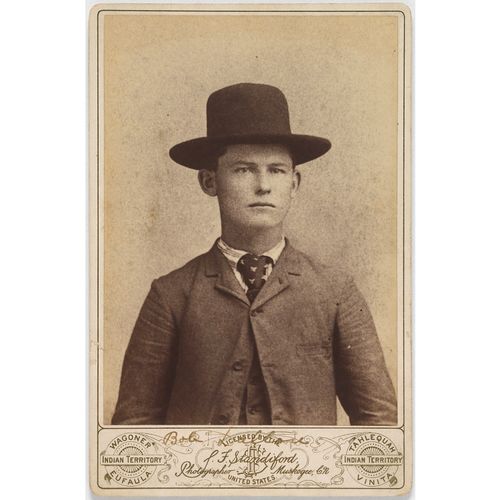
Bob Dalton Perpetrator
13 May 1869 – 5 October 1892
Leader and planner of the raid; killed in the alley.
-
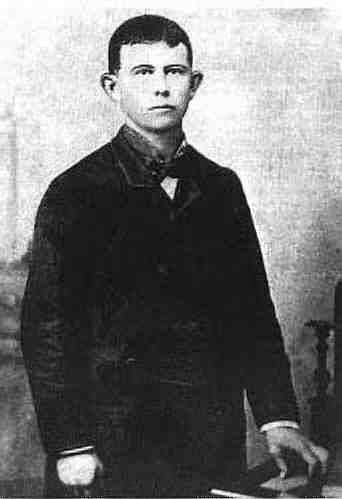
Grat Dalton Perpetrator
30 March 1861 – 5 October 1892
Led the robbery of the Condon bank; killed Marshal Connelly and was killed in the alley.
-
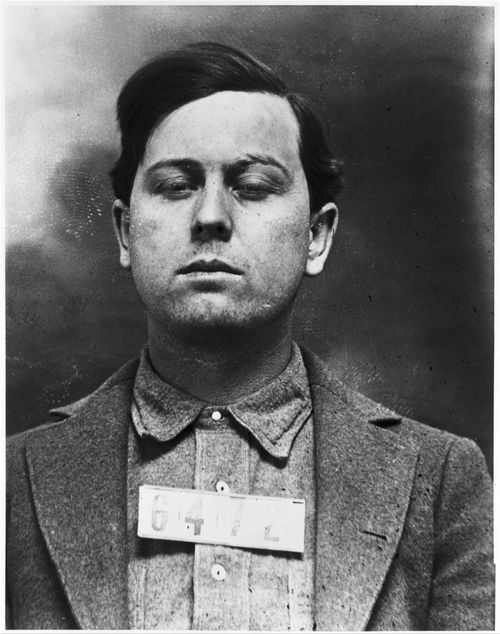
Emmett Dalton Perpetrator
3 May 1871 – 13 July 1937
Youngest brother and the only raider to survive; pleaded guilty to second-degree murder and served fourteen years.
-
Dick Broadwell Perpetrator
? – 5 October 1892
Also known as Texas Jack; escaped the town wounded and was found dead about two miles out.
-
Bill Powers Perpetrator
? – 5 October 1892
Killed at the horses. The local paper first identified this body as Tom Evans, and his identity is still argued over.
-
Charles T. Connelly Victim
? – 5 October 1892
Coffeyville city marshal, shot by Grat Dalton in the alley.
-
Lucius M. Baldwin Victim
? – 5 October 1892
Young store clerk shot by Bob Dalton behind the First National Bank.
-
George B. Cubine Victim
? – 5 October 1892
Townsman who covered the bank with his own rifle; shot by Bob Dalton.
-
Charles Brown Victim
? – 5 October 1892
Shot by Bob Dalton as he took up Cubine's rifle.
-
John J. Kloehr Also involved
Liveryman credited with shooting Grat Dalton.
Where it happened
- Coffeyville, Kansas. The Condon bank building on the plaza survives and the alley is marked as Death Alley; the Dalton Defenders Museum is nearby.
- Kansas State Penitentiary, Lansing. Where Emmett Dalton served fourteen years of his life sentence.
Outcome
Killed before trial Four raiders killed; one convicted
Bob and Grat Dalton, Dick Broadwell and Bill Powers were killed during the raid. Emmett Dalton pleaded guilty to second-degree murder and was sentenced to life imprisonment in the Kansas State Penitentiary. He was released in 1907 by Governor Edward Hoch after fourteen years; sources differ on whether this was a parole or a pardon.
What the record settles, and what it doesn't
Established
- On 5 October 1892 five members of the Dalton gang tried to rob the C. M. Condon and Company bank and the First National Bank in Coffeyville, Kansas, at the same time.
- The robbers were recognised on the plaza and townspeople armed themselves from the town's hardware stores.
- Four Coffeyville men were killed: Marshal Charles Connelly, Lucius Baldwin, George Cubine and Charles Brown.
- Bob and Grat Dalton, Dick Broadwell and Bill Powers were killed; Emmett Dalton survived severe wounds.
- The Condon bank's cashier delayed the robbers by falsely claiming the vault was on a time lock.
- Emmett Dalton pleaded guilty to second-degree murder, received a life sentence and was released in 1907 after fourteen years.
Disputed
- Whether a sixth man rode with the gang toward Coffeyville is unresolved; some witnesses saw six riders, and Bill Dalton, Bill Doolin and others have been suggested without proof.
- The dead man buried as Bill Powers was first identified by the local paper as Tom Evans, and whether they were the same person is debated.
- Emmett Dalton later claimed he never fired a shot during the raid; this cannot be confirmed or disproved.
- Which defenders fired the shots that killed each outlaw was contested among townsmen at the time, though John Kloehr is generally credited with killing Grat Dalton.
- Whether the Daltons committed the California train robbery for which Grat was convicted in 1891 remains doubtful.
Pictures





Afterwards
Bill Dalton, who had not been at Coffeyville, joined Bill Doolin's gang and was shot dead by a posse in June 1894. After his release Emmett Dalton moved to California and worked in real estate and in films; his book When the Daltons Rode appeared in 1931. His brother Littleton later dismissed much of it as invention.
Coffeyville kept the memory as a civic victory. The Condon bank building stands on the plaza, the alley is marked as Death Alley with plaques where the defenders fell, and the town has held an annual Dalton Defenders celebration each October. A museum in the town is devoted to the raid and its defenders.
Questions readers ask
What happened at Coffeyville in 1892?
On 5 October 1892 the Dalton gang tried to rob two banks at once in Coffeyville, Kansas. They were recognised, the townspeople armed themselves, and in the gunfight four citizens and four outlaws were killed. Emmett Dalton was the only raider to survive.
Who survived the Dalton raid?
Emmett Dalton, the youngest brother, survived more than twenty wounds. He pleaded guilty to second-degree murder, served fourteen years of a life sentence, and died in California in 1937.
Were the Daltons related to the James-Younger gang?
Yes, through their mother. Adeline Younger Dalton was an aunt of Cole and Jim Younger, who were in prison in Minnesota at the time of the Coffeyville raid.
Who were the Coffeyville citizens killed by the Daltons?
City Marshal Charles T. Connelly, Lucius M. Baldwin, George B. Cubine and Charles Brown. All four had armed themselves to stop the robbery.
Sources and further reading
- Dalton Gang (Wikipedia)
- Coffeyville, Kansas: The Town That Stopped the Dalton Gang (National Park Service, archived)
- Dalton Defenders Memorial (MaritimeQuest)
- Wikidata Q934918 (life dates checked here)
Written by Sinister Crimes from the sources above; see our editorial standards. Last checked 1 November 2026.