

The case
At about two in the afternoon on 7 September 1876, eight riders from Missouri came into Northfield, Minnesota, a small milling town on the Cannon River, to rob the First National Bank. Three went inside. Two waited at the door and three more held the bridge end of the square. They were Jesse and Frank James, the brothers Cole, Jim and Bob Younger, Clell Miller, Bill Chadwell and Charlie Pitts, most of them hardened by the guerrilla war in Missouri. Within a few minutes two of them were dead in the street and the gang that had robbed banks and trains across half a dozen states was finished.
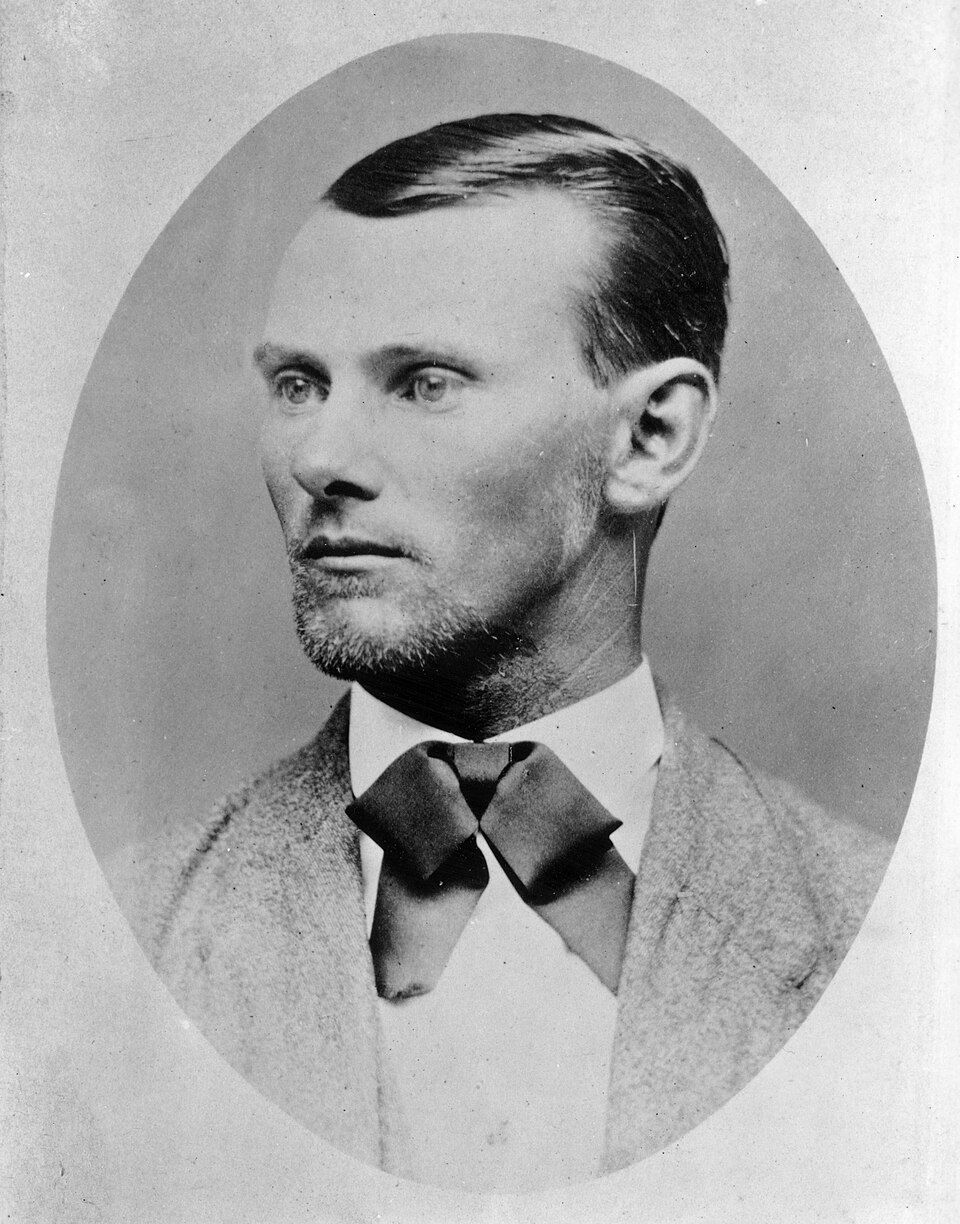
The James brothers came out of Clay County, Missouri, a slaveholding district where the Civil War was fought farm to farm. Both had ridden with pro-Confederate bushwhackers, Jesse from the age of sixteen, and served under William Quantrill and "Bloody Bill" Anderson. When the war ended the fighting did not. Former guerrillas turned to robbing banks, and from the Gallatin robbery of December 1869, when the cashier John Sheets was shot dead, Jesse's name was in the newspapers. The editor John Newman Edwards of the Kansas City Times printed his letters protesting innocence and cast him as a defiant son of the lost Confederacy. With the Youngers, the brothers robbed banks, stagecoaches and, from 1873, trains.
Their enemies made them more popular. In January 1875 Pinkerton agents raided the James-Samuel farm at night and threw an incendiary device into the house. It killed Jesse's young half-brother Archie Samuel and cost his mother Zerelda an arm. Missouri opinion swung toward the outlaws, and the legislature narrowly rejected a bill offering them amnesty.
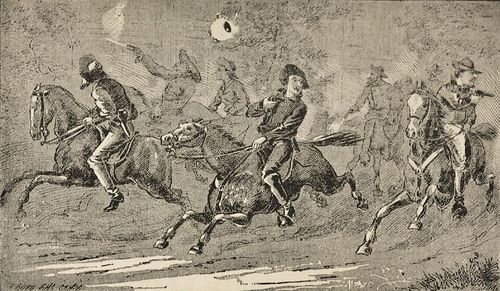
Northfield ended that. Townspeople noticed the strangers loitering outside the bank and raised the alarm, then took up guns from the hardware stores and fired from windows and doorways. Inside, the acting cashier Joseph Lee Heywood refused to open the safe, telling the robbers it was on a time lock, which was untrue. He was beaten and then shot dead as the robbers left. Assistant cashier Alonzo Bunker was wounded in the shoulder escaping through the back door. Out on the square, Miller and Chadwell were killed. Nicholas Gustafson, a Swedish immigrant who had been in Minnesota only three months and probably did not understand the shouted orders to clear the street, was mortally wounded.
The survivors escaped with almost nothing and were hunted across southern Minnesota for two weeks. The James brothers split off and got away to the south and west. On 21 September a posse cornered the others in thick brush along the Watonwan River near Madelia. Pitts was killed and the three Youngers, all wounded, surrendered. They pleaded guilty to avoid the death penalty that a murder conviction would have carried and were sentenced to life in the state prison at Stillwater.
Jesse and Frank resurfaced near Nashville under false names. Frank settled into farming, but Jesse put together a new and less reliable gang in 1879 and resumed train robbery. Several of its members were caught or turned informant. Late in 1881 he moved his wife and two children to a rented house in St. Joseph, Missouri, as "Thomas Howard".
Governor Thomas T. Crittenden had made the James brothers his priority, and with the law capping state rewards he arranged for the railroads and express companies to fund $5,000 for each. Robert Ford, twenty years old and a newcomer to the gang, and his brother Charley were living in the St. Joseph house as Jesse's trusted companions. Robert had already been in secret contact with the governor. On the morning of 3 April 1882 Jesse took off his gun belt, stood on a chair to straighten or dust a picture, and Robert Ford shot him in the back of the head.
The Fords gave themselves up at once. They were indicted for murder, pleaded guilty and were sentenced to hang, all on 17 April, and Crittenden pardoned them the same day. The speed of the pardon convinced many people that the governor had sanctioned a killing rather than an arrest, and it made the dead outlaw more sympathetic than he had been alive.
The victims
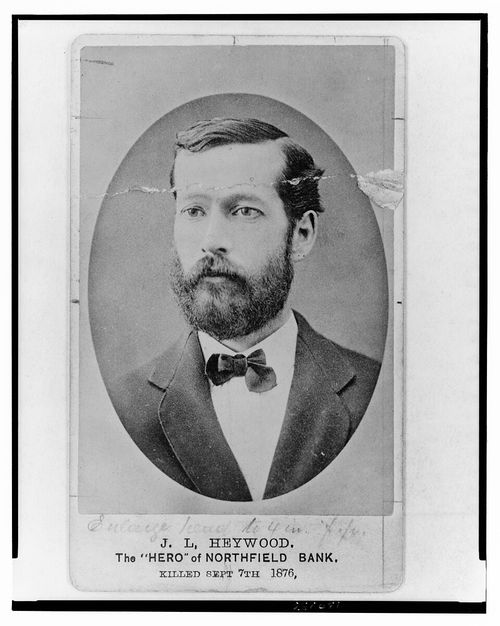
Joseph Lee Heywood was thirty-nine, a Union army veteran from New Hampshire who had settled in Northfield and served as acting cashier of the bank as well as treasurer of the town and of Carleton College. His refusal to open the safe, at the cost of his life, is the reason the robbery yielded almost nothing. Nicholas Gustafson, born in Kalmar County, Sweden, in 1846, had arrived in Minnesota in June 1876 and was living with his brother's family in the Swedish settlement at Millersburg. He died four days after the raid and was buried in Northfield Cemetery. The gang's earlier robberies also cost lives, among them the Gallatin cashier John Sheets in 1869, and the Pinkerton raid of 1875 killed Jesse's young half-brother Archie Samuel.
Timeline
Jesse Woodson James is born in Clay County, Missouri.
The robbery of the Daviess County Savings Association at Gallatin, in which cashier John Sheets is killed, first makes Jesse James a public figure.
The gang derails and robs a Rock Island train near Adair, Iowa, its first train robbery.
A Pinkerton night raid on the James-Samuel farm kills Jesse's half-brother Archie and maims his mother.
The raid on the First National Bank of Northfield fails; Heywood, Miller and Chadwell are killed and Gustafson is mortally wounded.
A posse traps the Youngers and Charlie Pitts near Madelia; Pitts is killed and the Youngers surrender.
The three Younger brothers, having pleaded guilty, are sentenced to life in the state prison at Stillwater.
Jesse James's new gang robs a train at Glendale, Missouri.
Jesse moves his family to St. Joseph, Missouri, living as Thomas Howard.
Robert Ford shoots Jesse James in the back of the head at the house in St. Joseph.
The Ford brothers plead guilty to murder, are sentenced to death and are pardoned by Governor Crittenden the same day.
Frank James surrenders to Governor Crittenden in Jefferson City.
Robert Ford is shot dead by Edward O'Kelley in his saloon at Creede, Colorado.
People in the case
-
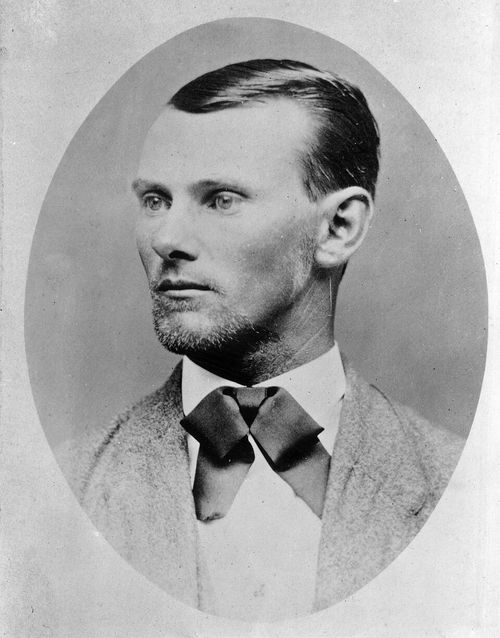
Jesse James Perpetrator
5 September 1847 – 3 April 1882
Former Confederate guerrilla and the best-known member of the James-Younger gang; shot dead in St. Joseph by Robert Ford.
-
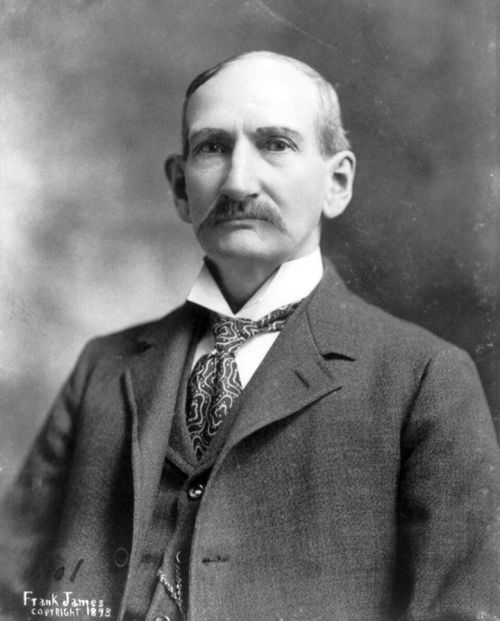
Frank James Perpetrator
10 January 1843 – 18 February 1915
Jesse's elder brother; escaped Northfield, surrendered to Governor Crittenden in October 1882 and was acquitted at trial in 1883.
-
Cole Younger Perpetrator
15 January 1844 – 21 March 1916
Captured near Madelia after Northfield; pleaded guilty and served twenty-five years before parole in 1901.
-
Joseph Lee Heywood Victim
12 August 1837 – 7 September 1876
Acting cashier of the First National Bank of Northfield; killed after refusing to open the safe.
-
Nicholas Gustafson Victim
20 August 1846 – 11 September 1876
Swedish immigrant mortally wounded in the street fighting at Northfield.
-
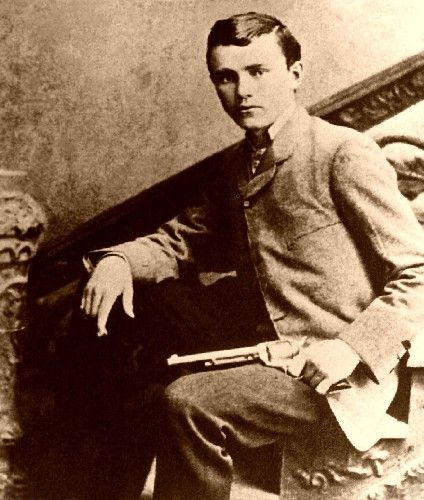
Robert Ford Perpetrator
31 January 1862 – 8 June 1892
Killed Jesse James; convicted of murder and pardoned the same day. Shot dead in Creede, Colorado, in 1892.
-
Charley Ford Accomplice
9 July 1857 – 6 May 1884
Robert's elder brother, present at the killing; pardoned with him. Died by suicide in 1884.
-
Thomas T. Crittenden Also involved
1 January 1832 – 29 May 1909
Governor of Missouri who arranged the reward and pardoned the Fords. Birth day uncertain; Wikidata gives only 1832 at day precision.
Where it happened
- Northfield, Minnesota. Town of the failed 1876 raid on the First National Bank; the bank building is now a museum of the Northfield Historical Society.
- Madelia, Minnesota. Near the river thickets where the Youngers were captured and Charlie Pitts was killed.
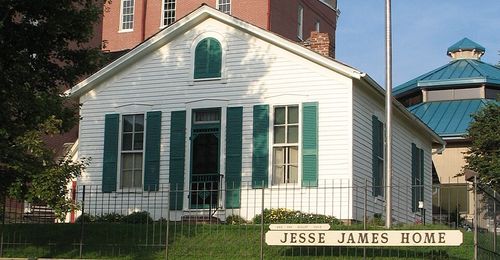
- Jesse James Home, St. Joseph. The house where Jesse James was shot, since moved and now a museum.
- Kearney, Missouri. James's birthplace district and burial place; the family farm is a historic site.
Outcome
Killed before trial Killed
Jesse James was never tried; he was killed by Robert Ford on 3 April 1882. The Ford brothers were indicted for first-degree murder, pleaded guilty and were sentenced to hang on 17 April 1882, then pardoned by Governor Crittenden the same day. After Northfield, Cole, Jim and Bob Younger pleaded guilty and received life sentences; Frank James surrendered in 1882 and was acquitted.
What the record settles, and what it doesn't
Established
- The James-Younger gang attempted to rob the First National Bank of Northfield on 7 September 1876 and was driven off by armed townspeople.
- Acting cashier Joseph Lee Heywood was shot dead inside the bank after refusing to open the safe.
- Clell Miller and Bill Chadwell were killed in Northfield, and Charlie Pitts was killed near Madelia on 21 September 1876.
- Cole, Jim and Bob Younger pleaded guilty and were sentenced to life imprisonment in Minnesota.
- Robert Ford shot Jesse James from behind in his rented house in St. Joseph on 3 April 1882, while James was unarmed.
- The Fords were sentenced to death for the killing and pardoned by Governor Crittenden on the same day.
- A 1995 exhumation and mitochondrial DNA test found the remains buried as Jesse James at Kearney consistent with his maternal line.
Disputed
- Who shot Heywood is not settled: various accounts have blamed Frank James, Jesse James or another robber, and historians have not reached agreement.
- Who was inside the bank at Northfield, and which brother led the gang, are argued over; many historians think leadership was shared and that Jesse's prominence owes much to the press.
- Whether Crittenden intended James to be killed rather than captured is debated; the same-day pardon is the main evidence for the view that he did.
- Whether the James brothers took part in early robberies such as the Liberty bank robbery of 1866 is unproven either way.
- Claims that James survived, notably by J. Frank Dalton in 1948, are rejected by biographers and contradicted by the 1995 DNA findings.
Pictures





Afterwards
Bob Younger died in prison in 1889. Jim and Cole Younger were paroled in 1901; Jim took his own life in 1902, and Cole toured with Frank James in a Wild West show before dying in Missouri in 1916. Frank James lived quietly in a series of ordinary jobs and died on the family farm in 1915. Robert Ford performed the killing on stage for a time and was shot dead in Colorado in 1892. Zerelda Samuel had her son's first grave on the family farm inscribed with the words that he had been murdered by a traitor and coward.
Northfield has marked the raid every September since 1948 with Defeat of Jesse James Days, and the graves of Heywood and Gustafson are honoured on the anniversary. The farm at Kearney and the house in St. Joseph are both museums. The Robin Hood story, which began in Edwards's editorials, has never quite let go, though there is no evidence the gang shared its takings with anyone outside its own circle.
Questions readers ask
Who killed Jesse James?
Robert Ford, a twenty-year-old member of his gang, shot him in the back of the head at his home in St. Joseph, Missouri, on 3 April 1882. Ford had been negotiating secretly with Governor Thomas Crittenden, and he and his brother Charley were pardoned within hours of being sentenced to death.
What happened at Northfield in 1876?
The James-Younger gang tried to rob the First National Bank of Northfield, Minnesota, on 7 September 1876. The cashier refused to open the safe and the townspeople opened fire, killing two robbers; the cashier and a Swedish immigrant were also killed. Within two weeks the Younger brothers had been captured.
Did Jesse James give money to the poor?
There is no evidence that he did. The Robin Hood image was largely built by the newspaper editor John Newman Edwards, and the gang's victims were often small local banks and ordinary passengers.
Was Frank James ever convicted?
No. Frank James surrendered to Governor Crittenden in October 1882 and was acquitted when tried in 1883. He lived until 1915.
Sources and further reading
- Jesse James (Wikipedia)
- Joseph Lee Heywood (Wikipedia)
- Nicholas Gustafson (Wikipedia)
- Robert Ford (Wikipedia)
- Wikidata Q213626 (life dates checked here)
Written by Sinister Crimes from the sources above; see our editorial standards. Last checked 1 November 2026.