

The case
Charles Guiteau chose an ivory-handled revolver over a cheaper wooden-gripped one because he thought it would look better in a museum. The store owner knocked a dollar off so he could afford it. That detail, which he cheerfully volunteered, tells you most of what the country later learned about the man who shot James Garfield: he was certain of his own historical importance, broke, and entirely untroubled by the gap between the two.
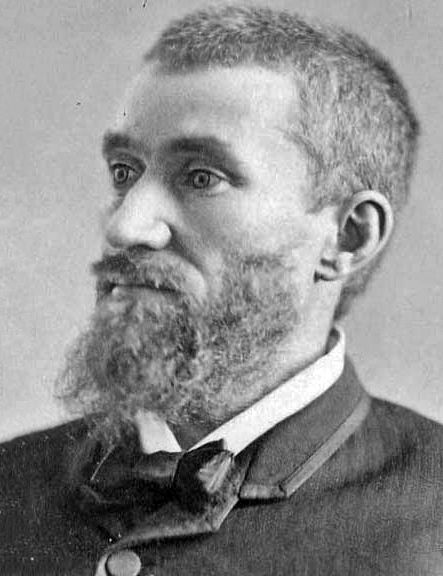
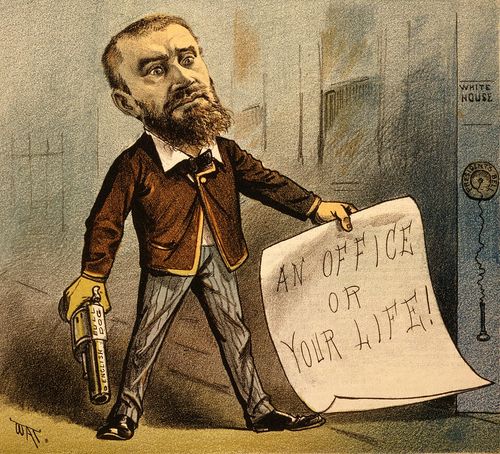
Guiteau, born in Freeport, Illinois, in 1841, had drifted through a utopian religious commune at Oneida, a short-lived newspaper, a thin law practice and a career as a lecturer and bill collector. His family had tried to have him committed in 1875. In the 1880 campaign he wrote a speech, first in praise of Ulysses Grant and then, when Garfield won the Republican nomination, hastily retitled for Garfield. He never delivered it in public, but he had copies printed and became convinced it had won the election. He came to Washington the day after the inauguration in March 1881 to collect his reward, a consulship in Vienna or, failing that, Paris.
For two months he haunted the White House waiting room and the State Department, until he was barred from the one and told by Secretary of State James Blaine never to raise the Paris consulship again. Guiteau then decided that God wanted the president removed, and that Vice President Chester Arthur, a member of the Stalwart faction Guiteau admired, would be grateful. He bought the revolver, practised with it, wrote to General Sherman requesting troops to protect him from the mob, and asked to tour the city jail in advance. In June he followed the president about the city and once let a chance pass because Lucretia Garfield, recovering from illness, was at his side.
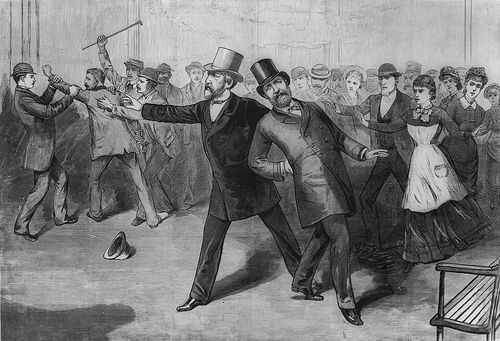
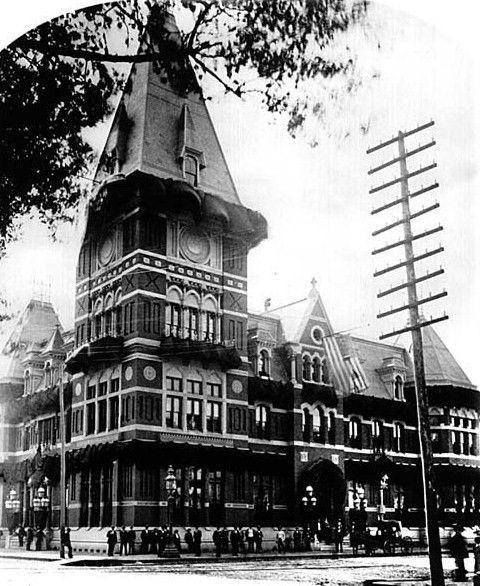
On the morning of July 2, 1881, Garfield arrived at the Baltimore and Potomac Railroad Station, at Sixth Street and the Mall, to begin a summer journey that was to include a visit to his old college, Williams. He had no bodyguard; presidents then rarely did. Guiteau stepped up behind him in the waiting room and fired twice. One bullet grazed Garfield's shoulder. The other entered his back beside the spine and lodged behind the pancreas. A policeman, Patrick Kearney, seized Guiteau at the door, where he announced that he was a Stalwart and that Arthur was now president.
The wound need not have been fatal. Over the next eleven weeks a succession of physicians, led by Dr. D. Willard Bliss, searched for the bullet with unwashed fingers and instruments, opening a false track that filled with infection. Alexander Graham Bell built an induction balance, an early metal detector, to locate it, but the president's metal bed spring confused the readings and Bliss allowed only the side where he believed the bullet lay to be tested. The country followed daily bulletins as Garfield wasted from about 210 pounds to 130. In early September he was moved by train to a seaside cottage at Elberon, New Jersey, in the hope that the air would help. He died there on the night of September 19, 1881, two months short of his fiftieth birthday.
Guiteau's trial opened in Washington in November before Judge Walter Cox. His brother-in-law, George Scoville, a lawyer whose practice lay in land titles, argued that he was insane. Guiteau himself interrupted constantly, abused his own counsel, recited verse and told the court that God and the doctors, not he, had killed the president. The jury convicted him on January 25, 1882. His appeal failed, and he was hanged at the District of Columbia jail on June 30, 1882, after reading on the scaffold a poem he had written that morning, "I am Going to the Lordy."
The victims
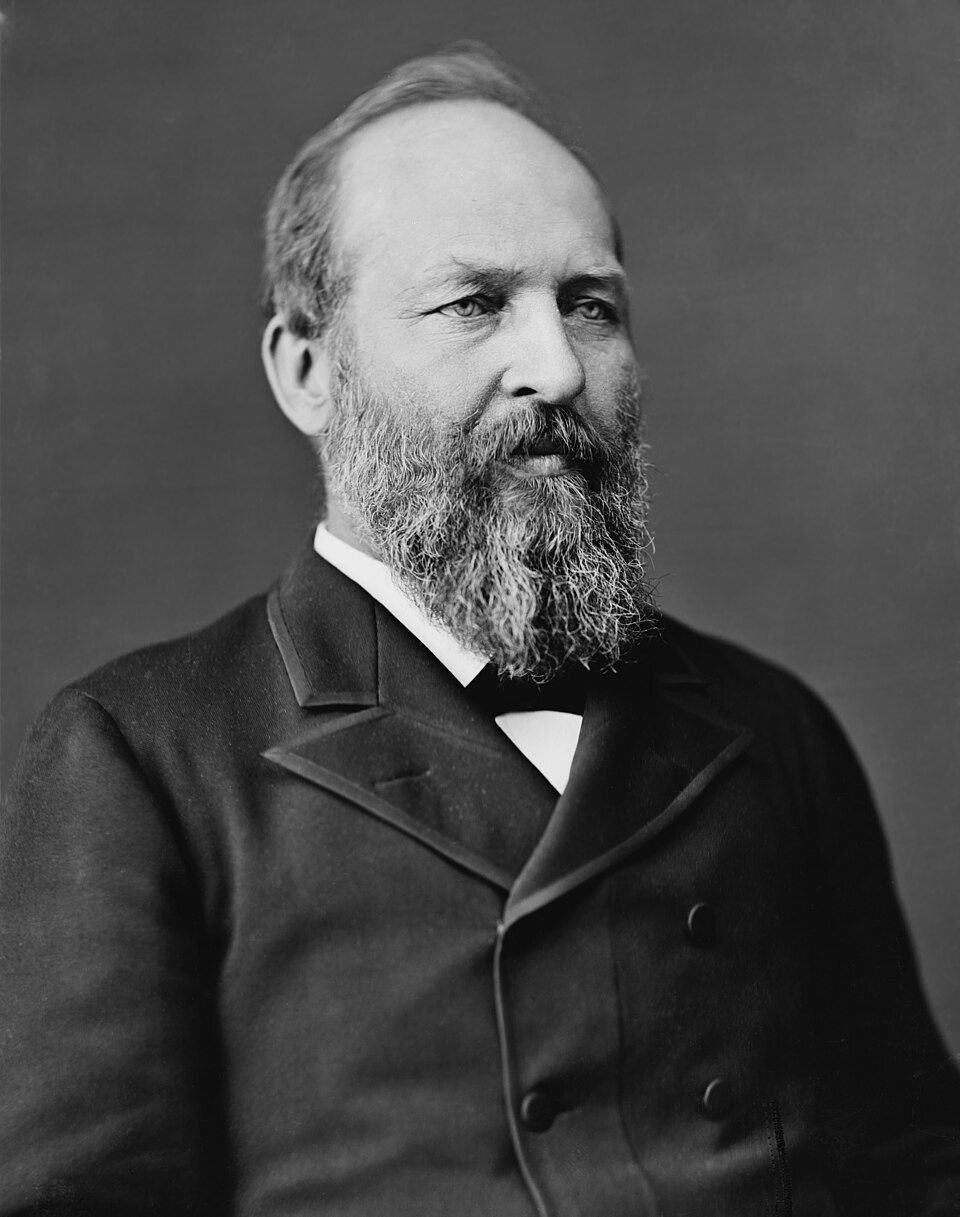
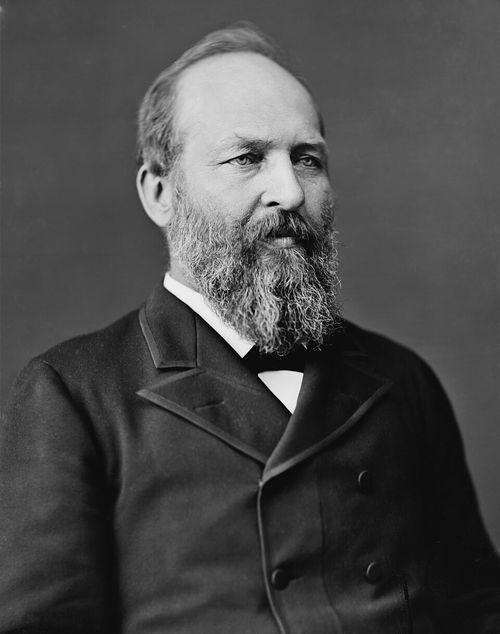
James Abram Garfield was born in a log cabin in Orange Township, Ohio, in 1831, the youngest of five children, and lost his father before he was two. He drove mules on a canal towpath as a teenager, worked his way through the Western Reserve Eclectic Institute (later Hiram College) and Williams College, and became a teacher, lay preacher, college principal and lawyer. He served as a Union general in the Civil War and sat in Congress for seventeen years before the 1880 convention chose him, on the 36th ballot, as a compromise candidate.
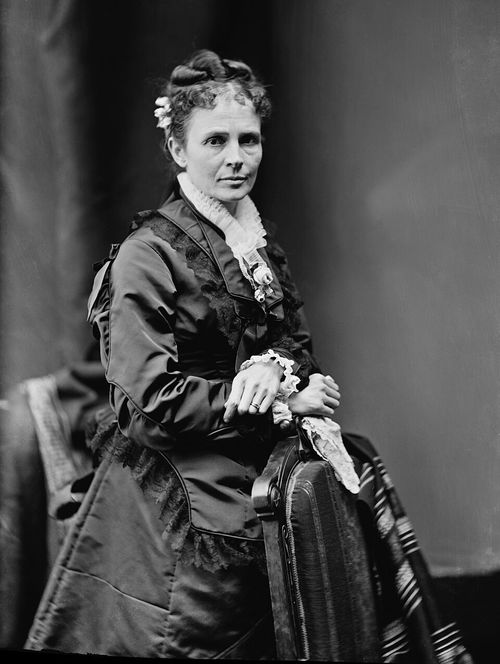
He married Lucretia Rudolph, whom he had met as a student and taught Greek, and they had seven children, five of whom survived infancy. He was an energetic reader and mathematician who published his own proof of the Pythagorean theorem, and as president he had begun a fight against the patronage system that had produced men like Guiteau. He held office for only six and a half months, nearly half of it on his sickbed.
Timeline
Garfield narrowly defeats Winfield Scott Hancock in the presidential election.
Guiteau arrives in Washington, the day after Garfield's inauguration, to seek a consulship.
Secretary of State Blaine tells Guiteau never to raise the Paris consulship with him again.
Guiteau shoots Garfield twice in the waiting room of the Baltimore and Potomac station and is arrested at once.
Alexander Graham Bell tries to locate the bullet with an improvised metal detector, without success.
The president is taken by train to a cottage at Elberon on the New Jersey shore.
Garfield dies at Elberon; Chester Arthur takes the oath in New York early the next morning.
Guiteau is indicted for murder.
The trial opens in Washington before Judge Walter Cox.
The jury finds Guiteau guilty of murder.
Guiteau is hanged at the District of Columbia jail.
The Pendleton Civil Service Reform Act, passed partly in Garfield's memory, becomes law.
People in the case
-
James A. Garfield Victim
19 November 1831 – 19 September 1881
Twentieth president of the United States; shot on July 2, 1881, and died at Elberon, New Jersey, eleven weeks later.
-
Charles J. Guiteau Perpetrator
8 September 1841 – 30 June 1882
Failed lawyer and preacher who believed Garfield owed him a consulship; convicted of murder and hanged.
-
Lucretia Garfield Also involved
19 April 1832 – 14 March 1918
The president's wife; returned from New Jersey to nurse him and lived another 37 years.
-
D. Willard Bliss Also involved
18 August 1825 – 21 February 1889
Physician who took charge of Garfield's care; his search for the bullet is widely blamed for the fatal infection.
-
Alexander Graham Bell Also involved
3 March 1847 – 2 August 1922
Inventor who built an induction-balance metal detector in an attempt to find the bullet.
-
Chester A. Arthur Also involved
5 October 1829 – 18 November 1886
Vice president, named by Guiteau as the reason for the shooting; there was no evidence he had any connection to it. Sworn in on September 20, 1881.
-
Walter Smith Cox Judge
25 October 1826 – 25 June 1902
Presided at Guiteau's trial in the Supreme Court of the District of Columbia.
-
James G. Blaine Witness
31 January 1830 – 27 January 1893
Secretary of state; walking beside Garfield when he was shot, and the man who had told Guiteau to stop asking for a post.
Where it happened
- Site of the Baltimore and Potomac Railroad Station. Where Garfield was shot; the station was demolished and the site is now under the National Gallery of Art's West Building. A wayside marker stands nearby.
- White House. Where Garfield lay for most of the summer of 1881.
- Elberon, New Jersey. Shore resort where Garfield was moved in September and where he died.
Outcome
Executed Convicted; hanged
Guiteau was indicted for murder once Garfield died and pleaded not guilty, his defence resting on insanity. A jury in the Supreme Court of the District of Columbia convicted him on January 25, 1882, and he was sentenced to death. His appeal was rejected and he was hanged at the District of Columbia jail on June 30, 1882.
What the record settles, and what it doesn't
Established
- Charles Guiteau shot President Garfield twice from behind at the Baltimore and Potomac Railroad Station in Washington on July 2, 1881.
- Guiteau acted alone; his motive grew out of his failure to obtain a diplomatic post he believed he had earned.
- Garfield survived for eleven weeks and died at Elberon, New Jersey, on September 19, 1881.
- His doctors repeatedly probed the wound without antiseptic precautions and never found the bullet.
- Guiteau's insanity defence failed, and he was convicted of murder on January 25, 1882.
- Guiteau was hanged in Washington on June 30, 1882.
- Public reaction to the assassination helped pass the Pendleton Civil Service Reform Act of 1883.
Disputed
- Whether Garfield would have lived with better care: most modern medical writers think he would probably have survived, while a minority note that the bullet passed close to major vessels and that some complications were not caused by the probing.
- The exact cause of death: the autopsy found widespread infection and a ruptured splenic artery, and some surgeons have argued that a pseudoaneurysm and gallbladder infection, not only the doctors' probing, drove his decline.
- Guiteau's sanity: the jury found him legally responsible, but several physicians at the time and many historians since have considered him seriously mentally ill, and the case is still cited in debates over the insanity defence.
- Guiteau's claims that Stalwart politicians, including Arthur, would welcome the killing briefly raised suspicion of a plot; no evidence of anyone else's involvement was found.
Pictures





Afterwards
Chester Arthur, long regarded as a creature of the patronage machine, surprised his critics by signing the Pendleton Act in January 1883, which began to replace political appointment with competitive examination in the federal service. The case also exposed a gap in the Constitution: for eleven weeks the president could barely act and no one knew who had the authority to declare him unable. The question was not settled until the Twenty-fifth Amendment in 1967.
The station where Garfield was shot was later demolished, and the National Gallery of Art now covers the site. Garfield was buried in Cleveland, where a large memorial was built at Lake View Cemetery. Parts of Guiteau's brain are preserved in medical collections in Philadelphia and Maryland, and the case remains a standard example in histories of antiseptic surgery, which American doctors were slow to adopt.
Questions readers ask
Who shot President Garfield?
Charles J. Guiteau, a failed lawyer and religious drifter who believed Garfield owed him a diplomatic appointment. He shot the president at a Washington railway station on July 2, 1881.
Did the doctors kill Garfield?
Garfield died of infection after his doctors probed the wound repeatedly with unsterilised fingers and instruments. Most historians think he would probably have survived with better care, though Guiteau remained legally responsible for his death.
What happened to Charles Guiteau?
He was tried in Washington, where his insanity defence failed, and was convicted of murder on January 25, 1882. He was hanged on June 30, 1882.
How long did Garfield live after being shot?
Seventy-nine days. He was shot on July 2 and died on September 19, 1881, at Elberon, New Jersey.
Sources and further reading
- Assassination of James A. Garfield (Wikipedia)
- Charles J. Guiteau (Wikipedia)
- James A. Garfield (Wikipedia)
- Wikidata Q2866972 (life dates checked here)
Written by Sinister Crimes from the sources above; see our editorial standards. Last checked 1 November 2026.