

The case
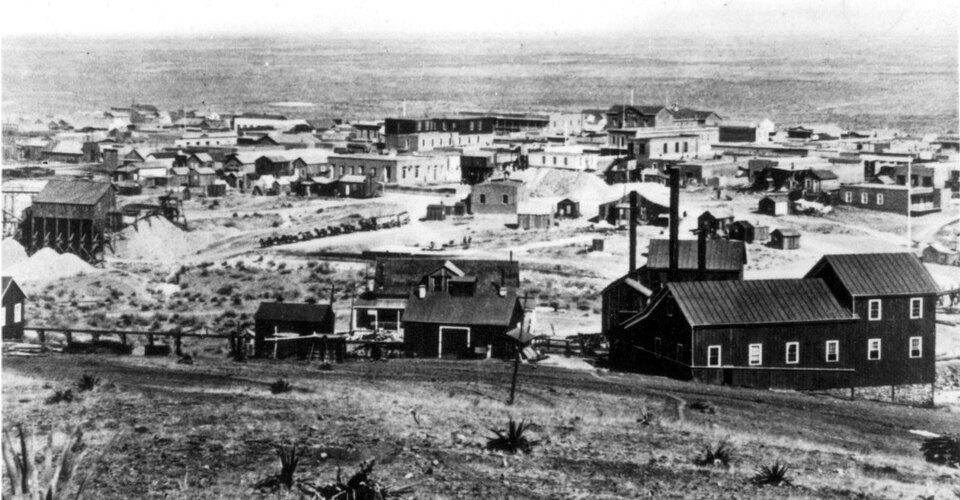
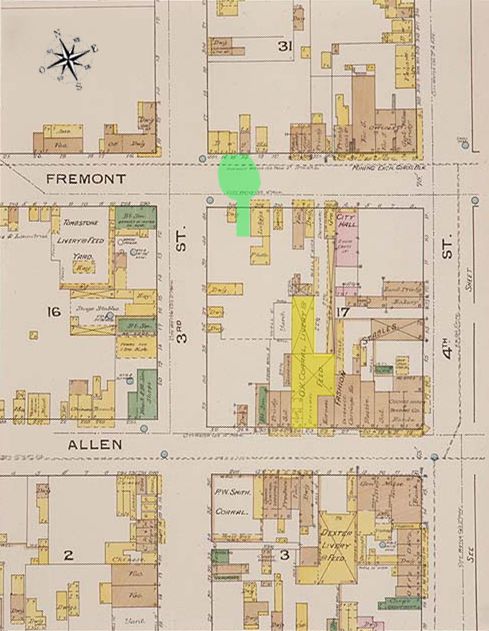
The most famous gunfight in the American West did not happen at the O.K. Corral. It took place on the afternoon of 26 October 1881 in a vacant lot about fifteen to twenty feet wide beside C. S. Fly's photography studio on Fremont Street in Tombstone, Arizona Territory, a few doors from the corral's back entrance. It lasted about thirty seconds. When the smoke cleared, Billy Clanton and the brothers Tom and Frank McLaury were dying, Virgil and Morgan Earp and Doc Holliday were wounded, and Ike Clanton, whose drunken threats had done most to bring it about, had run away unhurt.
Tombstone was barely two years old and growing fast on silver. Its townspeople, merchants and mine owners looked to the Earp brothers. Virgil was town marshal and a deputy US marshal, and Wyatt and Morgan served under him. Out in the county, a loose fraternity of rustlers and smugglers called the Cowboys had the sympathy of many ranchers and of Sheriff Johnny Behan, Wyatt's political rival and his rival for the actress Josephine Marcus. Through 1881 friction built over stagecoach robberies, arrests of Cowboy associates and stolen stock. Ike Clanton had a particular fear: he had secretly discussed giving Wyatt information about stage robbers in exchange for reward money, and the Cowboys must not find out.
On the night of 25 October Ike quarrelled with Holliday in a saloon, then spent the rest of the night playing poker with Virgil, Behan and Tom McLaury. In the morning, still drinking and now armed in breach of a town ordinance against carrying weapons, he went about saying he would kill an Earp or Holliday on sight. Around one o'clock Virgil came up behind him and struck him with a pistol, and he was hauled before a justice of the peace and fined. Outside the courtroom Wyatt ran into Tom McLaury, demanded to know if he was armed, and pistol-whipped him. By early afternoon Billy Clanton and Frank McLaury had ridden in from the country, armed as riders always were, and joined their brothers. Witnesses saw them buying cartridges and heard threats against the Earps.
Virgil decided to disarm them. Behan met the Earps and Holliday as they walked down Fremont Street and told them, by their account, that he had disarmed the Cowboys; Behan later said he had only meant he had tried to. The lawmen came up to the lot. Virgil, holding Holliday's walking stick, called on the Cowboys to throw up their hands. Within moments two shots went off almost together, and then everyone was firing. Most historians follow the Earps' version that Billy Clanton and Wyatt fired first, Wyatt hitting Frank McLaury in the stomach; Holliday killed Tom McLaury with a shotgun blast to the chest. Ike grabbed Wyatt, protested that he was unarmed, and was told to fight or get away. He fled through Fly's building. Frank McLaury and Billy Clanton fought on, wounded, until both fell.
The case turned on one question: were the Cowboys resisting arrest or surrendering? Ike Clanton filed murder charges against all four lawmen. Justice of the Peace Wells Spicer held a preliminary hearing that ran from 31 October to the end of November. Behan, Ike and Billy Claiborne testified that the Cowboys had raised their hands or held open their coats and were shot down. For a time the prosecution case looked strong, and Spicer revoked bail and jailed Wyatt and Holliday for sixteen days. Then came witnesses with no stake in the feud: a railroad engineer new to town who saw Billy Clanton and Wyatt draw and fire, a dressmaker across the street who saw no hands raised, and a probate judge whose office overlooked the scene. The examining doctor added that Billy Clanton's wrist wound could not have been made with his hands in the air.
On 30 November Spicer ruled that Virgil had acted within his duty as marshal, that Wyatt and Holliday had been properly deputized, and that the evidence did not justify sending the case to trial. A grand jury declined to indict the lawmen a few weeks later. It did not end the feud. Virgil was ambushed and crippled in December, Morgan was shot dead through a saloon window in March 1882, and Wyatt answered with a ride of revenge that put him outside the law he had worn a badge for.
The victims
Billy Clanton was nineteen, Ike's younger brother, and had ridden into town from the family's stock work that afternoon after hearing Ike was stirring up trouble. Tom McLaury was twenty-eight and Frank thirty-three; the brothers ranched outside Tombstone and came from a large family with roots in Iowa. A year earlier an army officer had publicly accused Frank of helping hide mules stolen from Camp Rucker, though no charge was ever proved against him. An older brother, Will McLaury, was a lawyer in Fort Worth who came to Tombstone and joined the prosecution. The town's undertaker displayed the three bodies under a sign reading "Murdered in the Streets of Tombstone", and some three hundred people walked in the funeral procession to the cemetery, with perhaps two thousand watching.
Timeline
James, Virgil and Wyatt Earp arrive in the new silver town of Tombstone.
Virgil Earp is appointed Tombstone's town marshal.
A Bisbee stage is held up, leading to the arrest of Cowboy associates Frank Stilwell and Pete Spence.
Virgil Earp pistol-whips and arrests an armed Ike Clanton; Wyatt Earp strikes Tom McLaury in the street.
In the afternoon gunfight beside Fly's studio, Billy Clanton and Tom and Frank McLaury are killed.
A coroner's jury finds the three died of wounds inflicted by the Earps and Holliday without ruling on blame.
Justice Wells Spicer opens the preliminary hearing on Ike Clanton's murder complaint.
Spicer revokes bail; Wyatt Earp and Holliday spend sixteen days in jail.
Spicer rules that the lawmen acted within the law and declines to send the case to trial.
A Cochise County grand jury refuses to indict the Earps and Holliday.
Virgil Earp is ambushed and badly wounded by unknown gunmen.
Morgan Earp is shot dead in a Tombstone billiard parlor, setting off Wyatt's vendetta ride.
People in the case
-
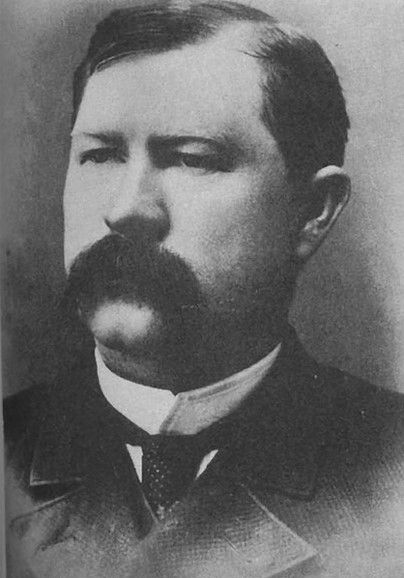
Virgil Earp Accused
18 July 1843 – 19 October 1905
Tombstone town marshal and deputy US marshal who led the attempt to disarm the Cowboys; wounded in the leg.
-
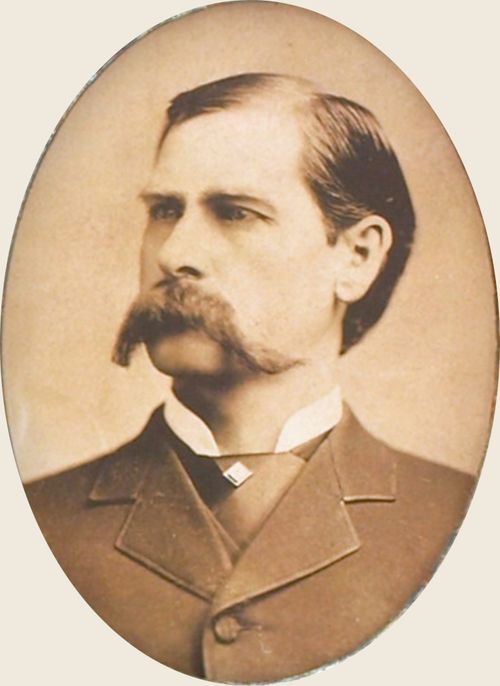
Wyatt Earp Accused
19 March 1848 – 13 January 1929
Acting as a deputy to Virgil; unhurt in the fight. Later led the vendetta ride after Morgan's murder.
-
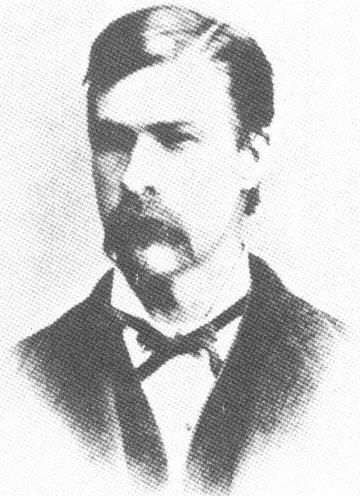
Morgan Earp Accused
24 April 1851 – 18 March 1882
Special policeman under Virgil; wounded across the shoulders. Murdered in a Tombstone billiard parlor in 1882.
-
Doc Holliday Accused
14 August 1851 – 8 November 1887
Dentist and gambler deputized by Virgil; carried the shotgun that killed Tom McLaury.
-
Ike Clanton Witness
1847 – 1 June 1887
Whose threats preceded the fight; ran unhurt and filed murder charges against the lawmen.
-
Tom McLaury Victim
30 June 1853 – 26 October 1881
Rancher, aged 28; killed by Holliday's shotgun. Whether he was armed was the central question of the hearing.
-
Frank McLaury Victim
3 March 1848 – 26 October 1881
Tom's elder brother; shot in the stomach and the head.
-
Johnny Behan Witness
24 October 1844 – 7 June 1912
Cochise County sheriff; chief prosecution witness at the Spicer hearing.
-
Wells Spicer Judge
1831 – 1887
Justice of the peace who presided over the preliminary hearing and declined to send the lawmen to trial.
Where it happened
- O.K. Corral, Tombstone. The corral whose name the gunfight took; the fight itself was in a lot on Fremont Street near its rear entrance.
- Tombstone, Arizona. Silver boomtown where the feud played out; much of it is now a National Historic Landmark district.
Outcome
Acquitted Not sent to trial
Ike Clanton charged Virgil, Wyatt and Morgan Earp and Doc Holliday with murder. After a preliminary hearing lasting a month, Justice of the Peace Wells Spicer ruled on 30 November 1881 that Virgil had acted lawfully as marshal and that there was insufficient evidence to send the case to trial. A grand jury then declined to indict. No one was ever convicted over the deaths.
What the record settles, and what it doesn't
Established
- The gunfight took place on 26 October 1881 in a narrow lot beside Fly's studio on Fremont Street, not inside the O.K. Corral.
- Billy Clanton and Tom and Frank McLaury were killed; Virgil Earp, Morgan Earp and Doc Holliday were wounded; Wyatt Earp was unhurt.
- Ike Clanton and Billy Claiborne were unarmed and fled once the shooting began.
- Virgil Earp was the town marshal and had gone to disarm the Cowboys under a city ordinance against carrying weapons.
- Holliday killed Tom McLaury with a shotgun, as the coroner's examination of the wound supported.
- Justice Spicer found the lawmen had acted within the law, and a grand jury declined to indict them.
Disputed
- Who fired first remains uncertain: the Earps said Billy Clanton and Wyatt fired almost together after the Cowboys drew, while Cowboy witnesses said the lawmen fired on men surrendering.
- Whether Tom McLaury was armed is unresolved; a saloon keeper testified he had left his revolver behind after being pistol-whipped, while the Earps believed he fired over his horse.
- Whether Virgil should have tried to disarm men who, by one reading of the ordinance, might still have been on their way to a stable, and whether bringing Holliday made a fight more likely, is argued by historians.
- Whether Sheriff Behan told the Earps he had disarmed the Cowboys or only that he had tried to is disputed; it was one of the hearing's sharpest conflicts of testimony.
- How far the Earps were impartial lawmen and how far partisans in a political and business feud divides writers today as it divided Tombstone's two newspapers.
Pictures





Afterwards
After Morgan's murder, Wyatt, now a deputy US marshal, killed Frank Stilwell at the Tucson railroad station and went on to kill several other Cowboys during a ride through southern Arizona in March and April 1882, pursued by Behan's posse. He then left the territory for good. Holliday died of tuberculosis in Colorado in 1887. Ike Clanton was shot dead in 1887 while trying to escape arrest. Virgil, his arm crippled, lived until 1905; Wyatt died in Los Angeles in January 1929.
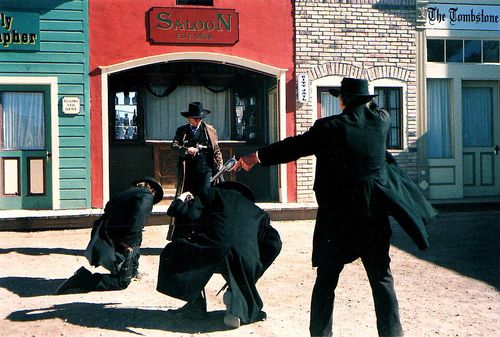
The fight was little known outside the Southwest until Stuart Lake's admiring 1931 biography of Wyatt, and the 1957 film Gunfight at the O.K. Corral fixed the name and the location in public memory. Tombstone now stages reenactments daily, and the three Cowboys lie side by side in its Boothill cemetery.
Questions readers ask
Who died at the O.K. Corral?
Billy Clanton, aged 19, and the brothers Tom McLaury, 28, and Frank McLaury, 33. Virgil Earp, Morgan Earp and Doc Holliday were wounded, and Wyatt Earp was unhurt.
Did the gunfight actually happen at the O.K. Corral?
No. It took place in a narrow lot beside C. S. Fly's photography studio on Fremont Street, several doors from the O.K. Corral's rear entrance. The name became fixed through later books and the 1957 film.
Were the Earps charged with murder?
Yes. Ike Clanton filed murder charges against the Earps and Holliday, and Justice Wells Spicer held a month-long preliminary hearing. On 30 November 1881 he ruled that they had acted within the law and declined to send the case to trial; a grand jury later refused to indict.
How long did the gunfight last?
About thirty seconds, in which roughly thirty shots were fired.
Sources and further reading
- Gunfight at the O.K. Corral (Wikipedia)
- O.K. Corral hearing and aftermath (Wikipedia)
- A Fierce Fight, Tombstone Epitaph, 27 October 1881 (Wikisource)
- Wikidata Q1347682 (life dates checked here)
Written by Sinister Crimes from the sources above; see our editorial standards. Last checked 1 November 2026.