

The case
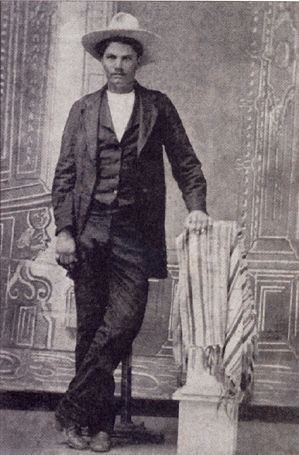
On 26 May 1874 John Wesley Hardin was celebrating his twenty-first birthday with friends in a saloon at Comanche, Texas, when Charles Webb, a deputy sheriff from neighbouring Brown County, walked in. Hardin asked him whether he had come to arrest him. Webb said no, and Hardin invited him in for a drink. Within moments Webb was dead on the floor. Hardin said Webb had drawn first; it was reported at the time that Webb was reaching for an arrest warrant. Either way, it was the killing that finally brought Texas down on him.
Hardin was born near Bonham, Texas, in 1853, the son of a Methodist preacher and schoolteacher who named him after the founder of his church. By his own account he killed for the first time at fifteen, in November 1868, shooting a former slave of his uncle's named Maje Holshousen after a quarrel that followed a wrestling match. He said he then ambushed and killed three soldiers sent to arrest him. Much of what is known of his early life comes from the autobiography he wrote in prison, which historians treat with caution: it exaggerates, omits and occasionally contradicts the record.
The record is grim enough. Hardin drifted through Reconstruction Texas as a gambler, cattle drover and fugitive, killing a Texas State Police officer named Smalley in January 1871 and, that October, killing one special policeman and wounding another in Gonzales. On a cattle drive to Abilene, Kansas, in August 1871 he fired through a hotel wall at a snoring man in the next room, killing him, and climbed out of a window to escape. Back in south Texas he married Jane Bowen and was drawn into the Sutton-Taylor feud on the Taylor side; in 1873 he killed a deputy, J. B. Morgan, and with Jim Taylor shot dead the former state police captain and DeWitt County sheriff Jack Helm, who had led the Sutton faction.
After Webb's death a mob in Comanche hanged Hardin's brother Joe and two cousins who had been arrested on other warrants. Hardin fled east with his wife and child and lived in Alabama and Florida under the name Swain. The Texas legislature authorised a $4,000 reward. An undercover Texas Ranger, Jack Duncan, intercepted a family letter that gave away the alias, and on 24 August 1877 Rangers and local officers boarded a train at Pensacola where Hardin was sitting. He tried to draw, but his pistol caught in his suspenders and he was knocked unconscious. Ranger John B. Armstrong shot dead one of his companions who had drawn a gun.
Hardin was tried at Comanche for Webb's murder, convicted of second-degree murder and sentenced to twenty-five years in the penitentiary at Huntsville. He tried repeatedly to escape, then settled. He read theology, ran the prison Sunday school and studied law. His wife Jane died in 1892 while he was still inside. In February 1894 he was released after serving about sixteen years, received a full pardon in March and passed the Texas bar examination that July.
Freedom did not suit him. A brief marriage to a fifteen-year-old girl in early 1895 collapsed almost at once, and he moved to El Paso, where he drank, gambled and quarrelled. He fell out with the policeman John Selman Jr. over the arrest of a woman he was involved with, and then with Selman's father, Constable John Selman, a former outlaw himself. On the night of 19 August 1895 Hardin was standing at the bar of the Acme Saloon shaking dice when the elder Selman came in and shot him in the back of the head, then fired again as he lay on the floor. Hardin was forty-two. He was buried the next day in Concordia Cemetery.
The victims
Charles Webb was a Brown County deputy sheriff, well liked in his community, whose killing at Comanche led to the lynching of Hardin's brother and cousins and to the reward that eventually caught him. Hardin's other confirmed victims included the state policemen Smalley and Green Paramore, killed in 1871 at a time when the force was widely hated by former Confederates, and the cattleman Charles Couger, killed in his bed at an Abilene hotel. Several of the men Hardin claimed to have killed in his first years, including freedmen and Union soldiers, are known only from his own boastful account, which makes their names and numbers impossible to confirm.
Timeline
John Wesley Hardin is born near Bonham, Texas.
By his own account, he shoots and kills Maje Holshousen near Moscow, Polk County.
Hardin kills Texas State Police officer Smalley and escapes custody.
In Abilene, Kansas, he fires through a hotel wall and kills Charles Couger.
In the Sutton-Taylor feud he kills deputy J. B. Morgan and, with Jim Taylor, Sheriff Jack Helm.
On his 21st birthday he kills Deputy Sheriff Charles Webb at Comanche, Texas.
A mob lynches his brother Joe and two cousins held in the Comanche jail.
Texas Rangers arrest Hardin on a train at Pensacola, Florida.
Hardin is sentenced to 25 years in the Huntsville penitentiary for Webb's murder.
His wife Jane dies while he is in prison.
Hardin is released after about sixteen years; he is pardoned on 16 March.
He passes the Texas bar examination.
Constable John Selman shoots Hardin dead in the Acme Saloon, El Paso.
Selman, awaiting retrial, is killed by Deputy US Marshal George Scarborough.
People in the case
-
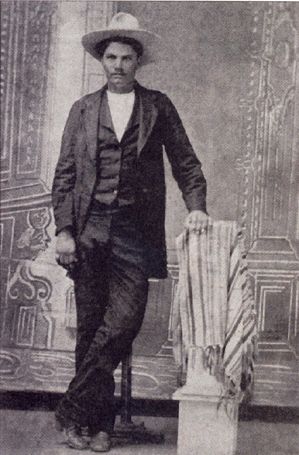
John Wesley Hardin Perpetrator
26 May 1853 – 19 August 1895
Gunman convicted of the second-degree murder of Charles Webb; killed in El Paso the year after his release.
-
Charles Webb Victim
? – 26 May 1874
Brown County deputy sheriff shot dead by Hardin in a saloon at Comanche, Texas.
-
Jack Helm Victim
1839 – 1873
Former Texas State Police captain and Sutton faction leader killed by Hardin and Jim Taylor.
-
Jane Bowen Hardin Also involved
? – 6 November 1892
Hardin's first wife, who followed him into hiding and died while he was in prison.
-
John B. Armstrong Investigator
1850 – 1 May 1913
Texas Ranger who led the arrest at Pensacola in 1877.
-
John Selman Perpetrator
16 November 1839 – 6 April 1896
El Paso constable who shot Hardin; his murder trial ended in a hung jury, and he was killed before a retrial.
Where it happened
- Comanche, Texas. Where Hardin killed Charles Webb in 1874 and was later tried.
- Pensacola, Florida. Where Rangers captured him on a train in August 1877.
- Huntsville Unit, Texas. The state penitentiary where he served sixteen years.
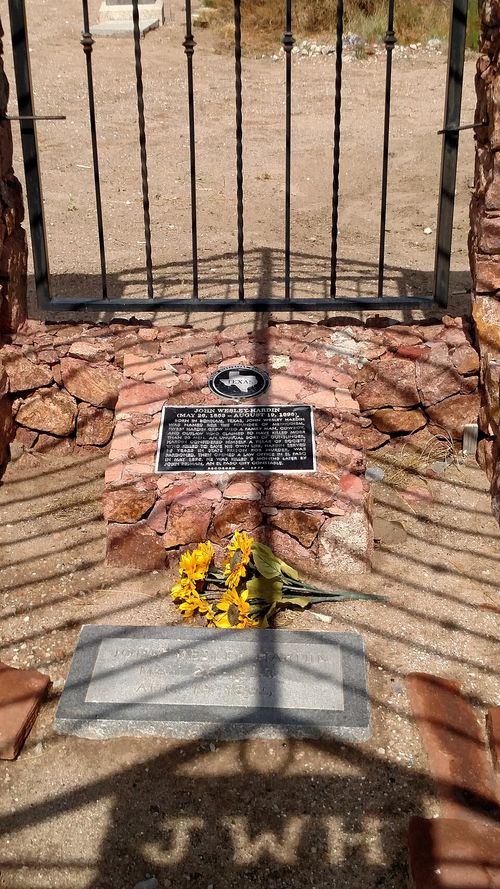
- Concordia Cemetery, El Paso. Hardin's grave; a 1995 attempt to move his remains was blocked.
Outcome
Convicted Convicted of second-degree murder
Tried at Comanche for the killing of Charles Webb, Hardin was convicted of second-degree murder and sentenced to twenty-five years in the Texas penitentiary; Wikipedia dates the sentence to 5 June 1878. In 1892 he was convicted on a further manslaughter charge over J. B. Morgan and received two years to run concurrently. He was released on 17 February 1894 and pardoned on 16 March 1894. John Selman, who killed him in 1895, was tried for murder; the jury could not agree, and Selman was shot dead before a retrial.
What the record settles, and what it doesn't
Established
- Hardin killed Deputy Sheriff Charles Webb at Comanche, Texas, on 26 May 1874.
- He was arrested by Texas Rangers at Pensacola, Florida, in August 1877 after years living under the alias Swain.
- He was convicted of second-degree murder for Webb's death and served about sixteen years of a twenty-five-year sentence.
- In prison he studied law, and after his release and pardon in 1894 he was admitted to the Texas bar.
- He killed Charles Couger by firing through a hotel wall in Abilene, Kansas, in August 1871.
- Constable John Selman shot him from behind in the Acme Saloon, El Paso, on 19 August 1895.
Disputed
- How many men Hardin killed is uncertain. He claimed many more than can be documented; the confirmed list is shorter, and some early killings rest only on his autobiography.
- Who fired first at Comanche: Hardin said Webb drew on him, while contemporary reports said Webb was reaching for a warrant.
- Whether Selman shot Hardin without warning or, as Selman claimed, because Hardin went for his pistol on seeing him enter was the issue at Selman's trial, which ended in a hung jury. Hardin's hand was found on the grip of his holstered gun.
- Dates for the 1873 killings of Morgan and Helm differ between sources, with May and July 1873 both given.
- Whether Hardin was capable of reform, as his prison years suggested, or never changed, as his last months in El Paso suggest, divides his biographers.
Pictures

Afterwards
John Selman was killed in a quarrel with Deputy US Marshal George Scarborough in April 1896 before he could be retried. Hardin's autobiography, The Life of John Wesley Hardin as Written by Himself, appeared in 1896 and has been reprinted many times; it remains both the main source for his life and the main reason it is hard to pin down.
A century after his death, in August 1995, a group acting for some of his descendants arrived at Concordia Cemetery with a permit to move his body to Nixon, Texas, beside his first wife, and met El Paso residents with a court order to stop them. The remains stayed in El Paso. His grave, enclosed in an iron cage, is now one of the cemetery's best-known sites.
Questions readers ask
How did John Wesley Hardin die?
Constable John Selman shot him in the back of the head as he stood at the bar of the Acme Saloon in El Paso on 19 August 1895, and fired again as he lay on the floor. Selman claimed self-defence; his trial ended in a hung jury.
How many people did John Wesley Hardin kill?
No one knows. He claimed a very large number, but only part of his account can be confirmed from other records, and historians regard his autobiography as unreliable.
Did John Wesley Hardin really kill a man for snoring?
He killed Charles Couger at the American House Hotel in Abilene, Kansas, on 6 August 1871 by firing through the wall of the next room, apparently to stop his snoring. In his autobiography he gave a different date and called it self-defence.
Was John Wesley Hardin a lawyer?
Yes. He studied law in the Huntsville penitentiary and passed the Texas bar examination in July 1894, a few months after his release. He then moved to El Paso, where he was killed the following year.
Sources and further reading
- John Wesley Hardin (Wikipedia)
- Sutton-Taylor feud (Wikipedia)
- John Selman (Wikipedia)
- Wikidata Q2460778 (life dates checked here)
Written by Sinister Crimes from the sources above; see our editorial standards. Last checked 1 November 2026.