

The case
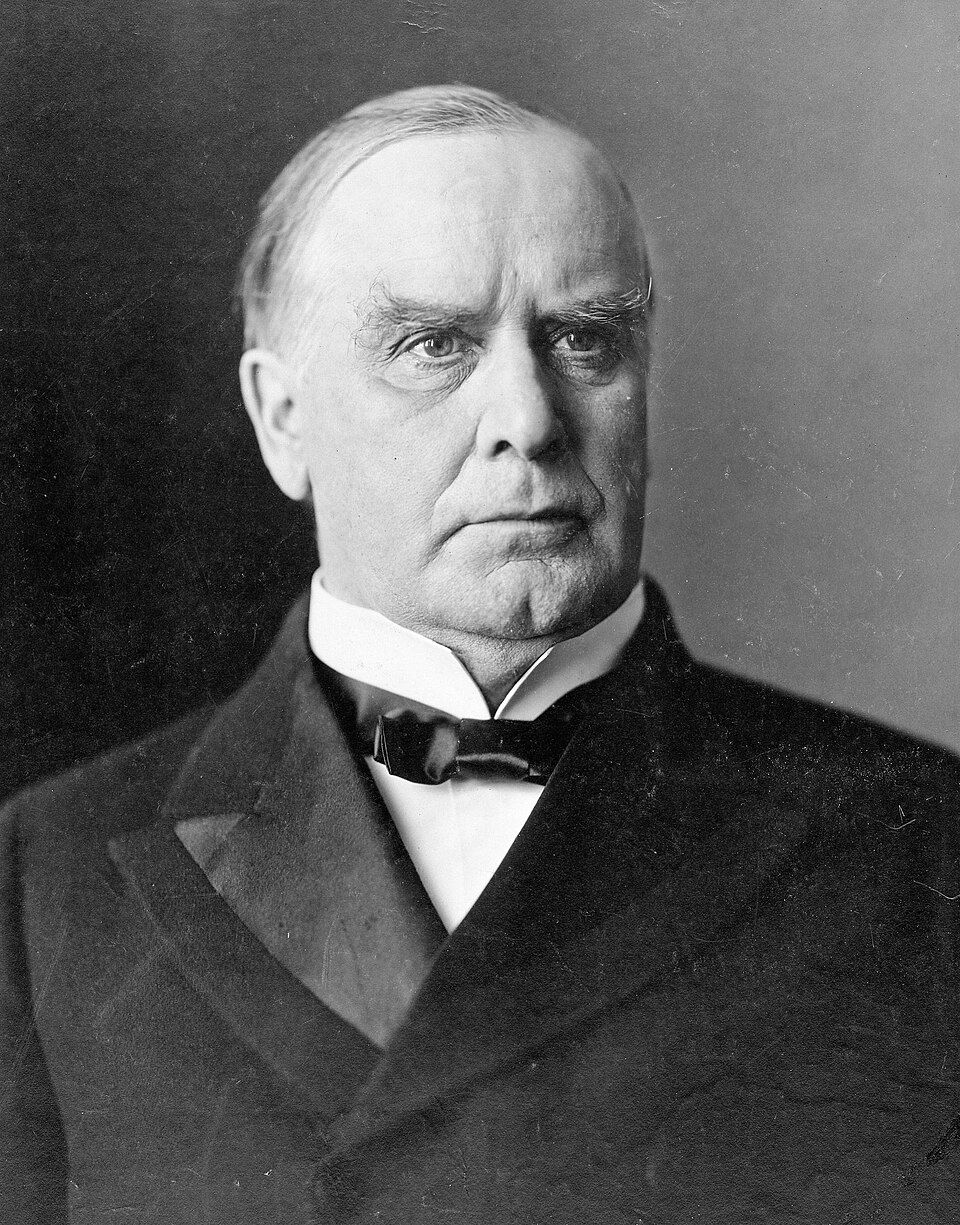
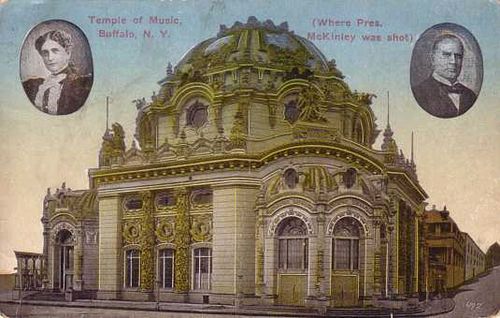
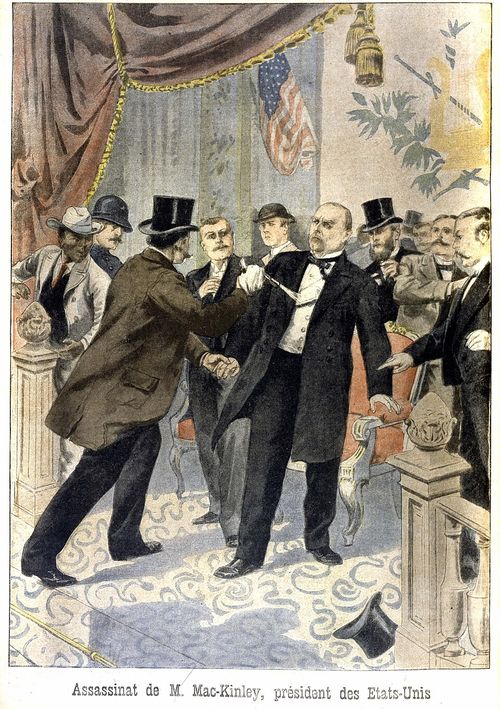
A few minutes into the public reception at the Temple of Music, a twelve-year-old girl asked William McKinley for the red carnation in his lapel, and he gave it to her. Not long after, a slight young man reached the head of the line with his right hand wrapped in a white handkerchief, as if bandaged. It was a hot afternoon and several people had handkerchiefs out, so nobody stopped him. McKinley reached for his left hand instead. At 4:07 p.m. on September 6, 1901, the man fired twice through the cloth into the president's abdomen.
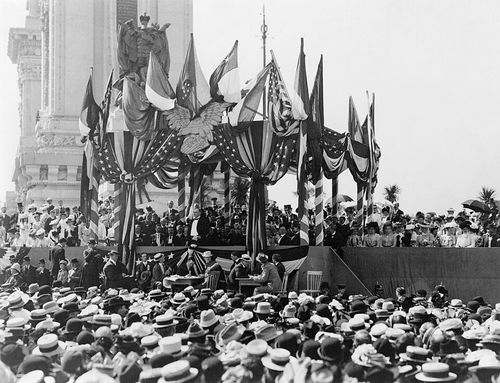
McKinley was fifty-eight, six months into a second term, and at the height of his popularity. He had come to the Pan-American Exposition in Buffalo to make the case for reciprocal trade treaties, and his speech the day before had drawn tens of thousands. His secretary, George Cortelyou, disliked the idea of a public handshaking session and twice struck it from the schedule; McKinley put it back both times, reportedly saying that no one would wish to hurt him. Extra guards were posted, but a row of soldiers in the aisle blocked the Secret Service agents' view.
The gunman was Leon Czolgosz, twenty-eight, the Detroit-born son of Polish immigrants. He had lost factory work in Cleveland during the depression that followed the Panic of 1893, drifted between jobs and his family's farm, and been drawn to anarchism. In May 1901 he heard Emma Goldman lecture in Cleveland and later sought her out in Chicago, though the anarchists he approached found him odd and some suspected him of being a police spy. He bought a .32 Iver Johnson revolver in Buffalo on September 3 and failed to get near the president on the two days before the shooting.
James Parker, a Black waiter employed at one of the fair's restaurants, who had been standing behind Czolgosz in the line, struck him before he could fire a third time, and guards and soldiers piled on. McKinley, still standing, asked them not to hurt him and told Cortelyou to be careful how he broke the news to Mrs. McKinley. One bullet had glanced off a button. The other went through his stomach.
The best surgeon in Buffalo was operating at Niagara Falls, so Dr. Matthew Mann, a gynaecologist, operated in the fair's small emergency hospital by fading daylight. He repaired the holes in the stomach but could not find the bullet, closed the wound without drainage and moved the president to the Milburn House, the home of the exposition's president, where he had been staying. For several days the bulletins were hopeful. Vice President Theodore Roosevelt left for the Adirondacks. Then infection set in along the bullet's track. McKinley collapsed on September 13 and died at 2:15 the next morning. Roosevelt, fetched out of the Adirondack wilderness by a park ranger, raced back by carriage and train and took the oath in Buffalo later that day.
Czolgosz made no secret of what he had done. "I done my duty," he said as he was pinned to the floor, and he insisted to the end that no one else had been involved. His trial in the Erie County court opened on September 23, nine days after McKinley died. He tried to plead guilty; the judge entered a plea of not guilty for him. His court-appointed lawyers called no witnesses, and the jury took well under an hour to convict him of first-degree murder. He was electrocuted at Auburn Prison on October 29, 1901. His last words were that he had killed the president because he was the enemy of the good working people, and that he was not sorry. Acid was poured into his coffin before burial in the prison cemetery.
The victims
William McKinley grew up in Ohio, enlisted as a private in the 23rd Ohio Infantry in 1861 and left the army a brevet major, the last Civil War veteran to become president. He practised law in Canton, sat in Congress for most of fourteen years, where his name became attached to a famous tariff, and served two terms as governor of Ohio before winning the presidency in 1896. His administration fought the Spanish-American War of 1898 and acquired Puerto Rico, Guam and the Philippines.
He married Ida Saxton, the daughter of a Canton banker, in 1871. Their two daughters died in early childhood, and Ida developed epilepsy and long periods of ill health; McKinley's attentiveness to her was well known in Washington; guests noticed that when she had a seizure at the table he would quietly lay a napkin over her face until it passed. His first concern after he was shot was how she would hear the news. She outlived him by less than six years.
Timeline
McKinley is inaugurated for his second term.
Czolgosz hears Emma Goldman lecture in Cleveland.
Czolgosz buys a .32 Iver Johnson revolver at a Buffalo hardware store.
McKinley speaks to a vast crowd at the Exposition on trade and the end of American isolation.
Czolgosz shoots McKinley twice in the receiving line at the Temple of Music; Dr. Matthew Mann operates that evening.
Emma Goldman is arrested in Chicago; she is later released without charge.
McKinley's condition collapses as infection spreads.
McKinley dies at the Milburn House at 2:15 a.m.; Theodore Roosevelt takes the oath in Buffalo later that day.
Czolgosz's trial opens in Buffalo.
The jury convicts Czolgosz of first-degree murder after a brief deliberation.
Czolgosz is sentenced to death.
Czolgosz is electrocuted at Auburn Prison.
Congress formally assigns the Secret Service to protect the president.
People in the case
-
William McKinley Victim
29 January 1843 – 14 September 1901
Twenty-fifth president of the United States; shot at the Pan-American Exposition and died eight days later.
-
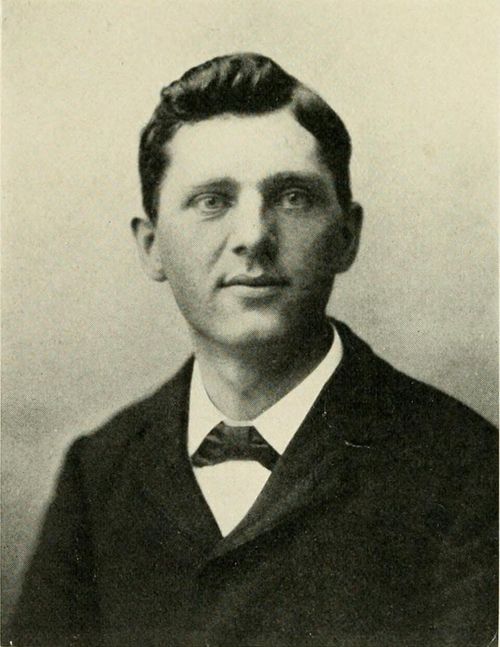
Leon Czolgosz Perpetrator
5 May 1873 – 29 October 1901
Unemployed wireworker and self-described anarchist; convicted of first-degree murder and electrocuted at Auburn Prison.
-
Ida Saxton McKinley Also involved
8 June 1847 – 26 May 1907
The president's wife; was resting at the Milburn House when he was shot.
-
James Benjamin Parker Witness
31 July 1857 – 13 April 1907
Waiter from Georgia, standing behind Czolgosz in line, who struck him before he could fire again.
-
Emma Goldman Also involved
27 June 1869 – 14 May 1940
Anarchist lecturer whose speech Czolgosz attended; arrested after the shooting and released without charge.
-
Theodore Roosevelt Also involved
27 October 1858 – 6 January 1919
Vice president; sworn in as president in Buffalo after McKinley's death.
-
Truman C. White Judge
New York Supreme Court justice who presided at Czolgosz's trial and refused his guilty plea.
Where it happened
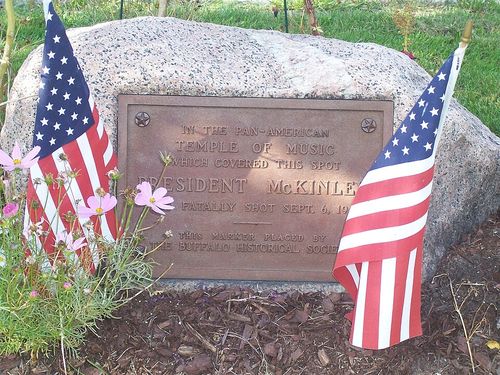
- Temple of Music site, Fordham Drive, Buffalo. The Exposition hall where McKinley was shot; demolished after the fair, its site marked by a stone in a residential street.
- Auburn Prison, Auburn, New York. Where Czolgosz was held and executed; still in use as the Auburn Correctional Facility.
Outcome
Executed Convicted; executed
Czolgosz was indicted for first-degree murder after McKinley's death. At trial in Buffalo the judge refused his attempt to plead guilty; his assigned lawyers called no witnesses and the jury convicted him after less than half an hour. He declined to appeal and was electrocuted at Auburn Prison on October 29, 1901.
What the record settles, and what it doesn't
Established
- Leon Czolgosz shot President McKinley twice at the Temple of Music in Buffalo on September 6, 1901, hiding the revolver under a handkerchief.
- McKinley died on September 14, 1901, after the wound became infected; the bullet was never found.
- Czolgosz acted alone and said so; anarchists arrested after the shooting, including Emma Goldman, were released without charge.
- Czolgosz was convicted of first-degree murder and electrocuted at Auburn Prison on October 29, 1901.
- Theodore Roosevelt became president on McKinley's death, at forty-two the youngest to hold the office.
- After the assassination the Secret Service began protecting the president full time, a duty Congress formalised in 1906.
Disputed
- Whether McKinley could have been saved: some argue that better lighting, an X-ray or drainage of the wound would have changed the outcome, while modern writers often conclude that damage to the pancreas made his death very hard to prevent with the medicine of 1901.
- Czolgosz's mental state: the trial rejected any insanity defence and the post-mortem found no brain abnormality, but some historians think he was mentally unwell and question how much he understood the anarchism he professed.
- Emma Goldman's influence: authorities treated her lecture as an incitement, while Goldman and her defenders said she had never advocated the act and barely knew him.
- The fairness of a trial completed within days, with defence counsel who called no witnesses, has been criticised, though contemporaries described it as orderly and lawful.
Pictures





Afterwards
McKinley's body was taken by train to Washington and then home to Canton, Ohio, where a large domed memorial was dedicated in 1907, months after Ida McKinley's death; both are buried there with their daughters. Roosevelt's presidency soon eclipsed the man whose death had produced it, and McKinley's reputation declined before recovering in later twentieth-century assessments.
The assassination brought a wave of anti-anarchist laws and immigration restrictions, including a 1903 ban on admitting anarchists to the United States, and Goldman herself was deported in 1919. It also ended the era of the unguarded president. The Temple of Music was demolished with the rest of the fair, and a stone marker in a quiet Buffalo street shows where McKinley stood.
Questions readers ask
Who killed President McKinley?
Leon Czolgosz, a twenty-eight-year-old unemployed wireworker who described himself as an anarchist. He shot McKinley at the Pan-American Exposition in Buffalo on September 6, 1901.
How did McKinley die?
One of the two bullets passed through his stomach and the wound became infected. He seemed to recover for several days, then collapsed and died on September 14, 1901.
What happened to Leon Czolgosz?
He was convicted of first-degree murder at a short trial in Buffalo and electrocuted at Auburn Prison on October 29, 1901.
Who stopped Czolgosz?
James Parker, a waiter standing behind him in the receiving line, struck him as he fired, and a detective and soldiers then pinned him down.
Sources and further reading
- Assassination of William McKinley (Wikipedia)
- Leon Czolgosz (Wikipedia)
- William McKinley (Wikipedia)
- Wikidata Q2866985 (life dates checked here)
Written by Sinister Crimes from the sources above; see our editorial standards. Last checked 1 November 2026.