

The case
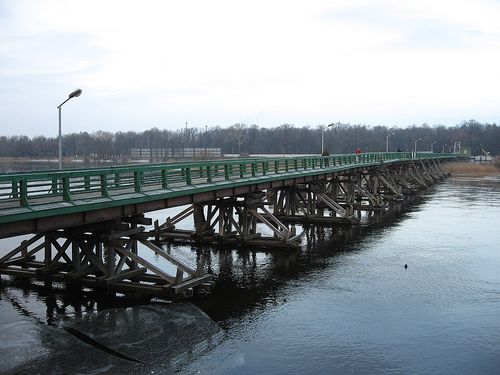
Two workmen crossing the Bolshoy Petrovsky Bridge in Petrograd noticed blood on the railing and a man's boot on the ice below. That was how the police, already looking for Grigori Rasputin, found where his killers had disposed of him. On 1 January 1917 (19 December in the Julian calendar Russia still used) police recovered his body from under the ice of the Little Nevka, some two hundred metres downstream. He had been missing since the small hours of 30 December.
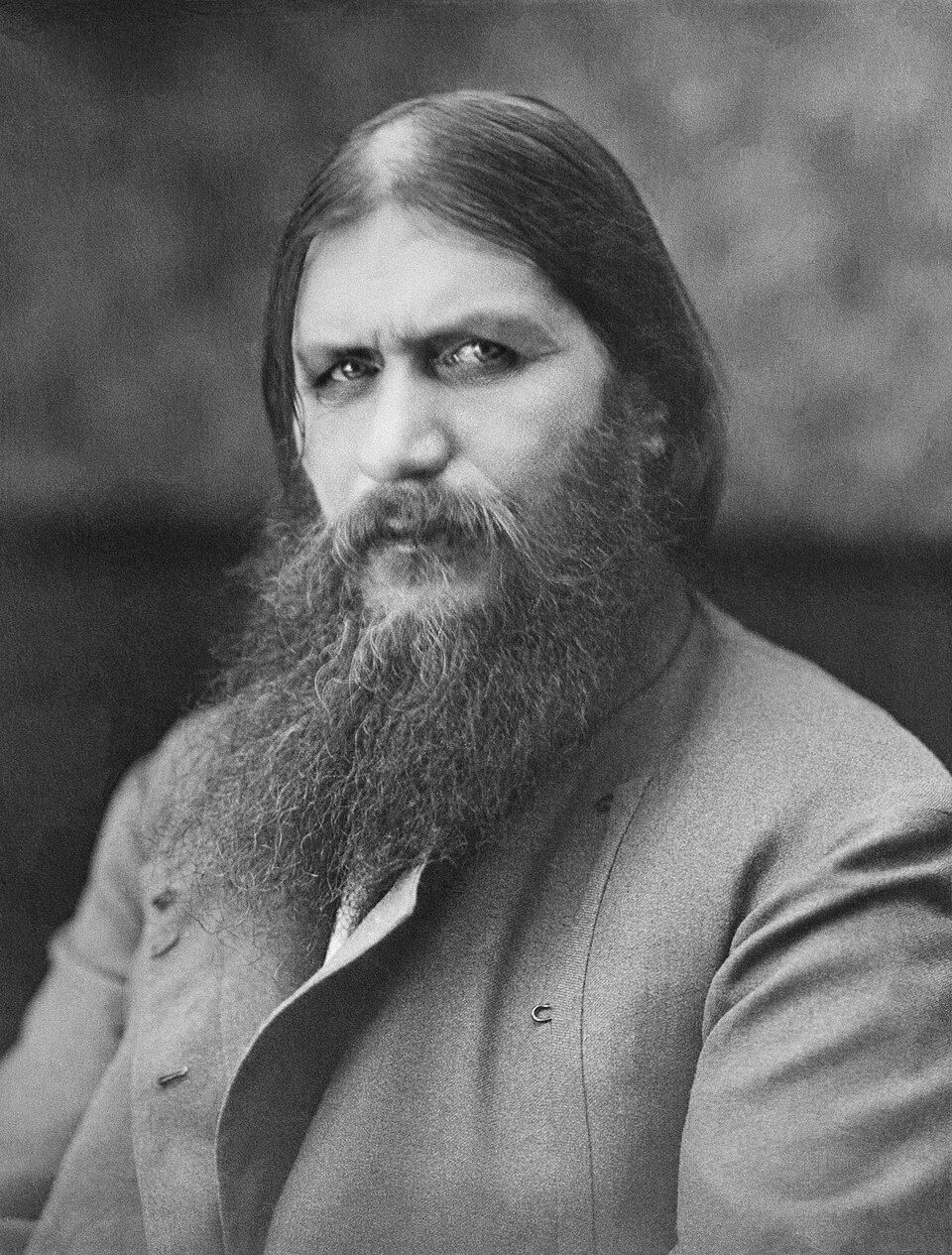
Rasputin was a Siberian peasant from the village of Pokrovskoye who had become a wandering holy man and then, from 1905, an intimate of Tsar Nicholas II and Empress Alexandra. They believed he could ease the bleeding attacks of their only son, Alexei, who had haemophilia, and they protected him against a growing chorus of accusations: of drunkenness, sexual misconduct, bribe-taking and, once Nicholas left for army headquarters in 1915, of steering the appointment of ministers through the empress. With the war going badly, rumour turned him into the symbol of everything rotten at court. In 1914 a woman had already stabbed him outside his house in Siberia; he survived.
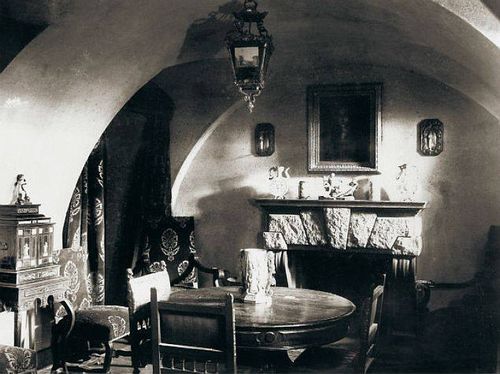
The men who finally killed him were not revolutionaries but monarchists who thought they were saving the dynasty. Prince Felix Yusupov, heir to one of Russia's largest fortunes and married to the tsar's niece, recruited the right-wing Duma deputy Vladimir Purishkevich and the tsar's cousin Grand Duke Dmitri Pavlovich, along with an army officer, Sergei Sukhotin, and a doctor, Stanislaus Lazovert. Yusupov invited Rasputin to the family's palace on the Moika canal late on the night of 29 December, where a basement room had been newly furnished for the purpose.
What happened in that room is known almost entirely from the killers. In Yusupov's version, published years later in exile and retold ever since, Rasputin ate cakes and drank Madeira laced with cyanide and showed no effect. Yusupov fetched a revolver and shot him in the chest. When he came back to check the body, Rasputin sprang up, seized him and staggered out into the courtyard, where Purishkevich fired several more shots and brought him down in the snow. The conspirators then drove the body to the bridge and pushed it through a hole in the ice. Purishkevich's own diary, published in emigration, tells a broadly similar story but differs in many details, and Yusupov changed his account more than once.
The physical evidence is less theatrical. The city's senior autopsy surgeon, Dmitry Kosorotov, found three gunshot wounds, including one fired at close range into the forehead that would have killed instantly, along with injuries he thought were inflicted after death. He found no trace of poison and no water in the lungs, which contradicts the familiar claim that Rasputin was still alive when he went into the river. Rasputin's daughter later said he avoided sweet things and would not have eaten cakes at all. Kosorotov's written report has been lost, so even his findings survive only as he later described them.
Nobody was ever tried. Purishkevich had boasted of the killing to a policeman that same night, and within hours much of the city knew who was responsible. But the suspects were a grand duke, a prince related to the imperial family and a prominent politician, and the public largely cheered them. Nicholas ordered Dmitri to the Persian front and confined Yusupov to his estate at Rakitnoye; Purishkevich left for the Romanian front. Rasputin was buried at Tsarskoye Selo on 2 January in the presence of the imperial family. Ten weeks later the monarchy fell, and in March 1917 soldiers dug up his body and burned it.
The victims
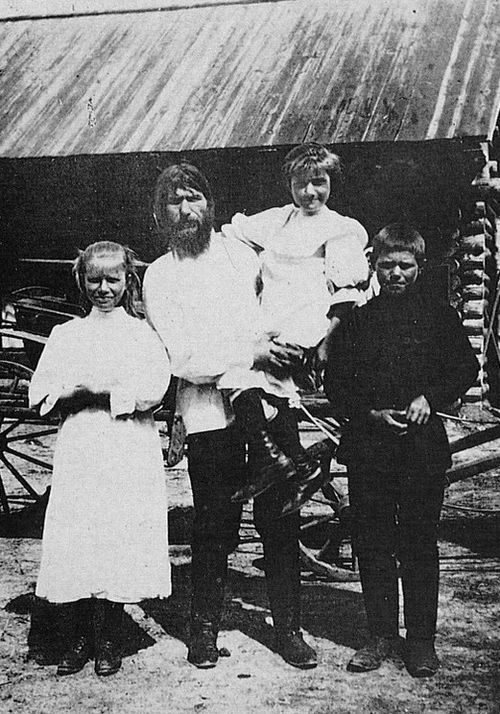
Grigori Yefimovich Rasputin was born in Pokrovskoye on the Tura river in western Siberia in January 1869, one of the few of his parents' children to survive infancy. He married a local woman, Praskovya Dubrovina, in 1887, and three of their children lived to adulthood: Dmitry, Maria and Varvara. A pilgrimage to the monastery at Verkhoturye in 1897 changed his life; he gave up drink and meat for a time, learned to read, and spent years walking between holy places before arriving in St Petersburg as a starets, a lay spiritual guide.
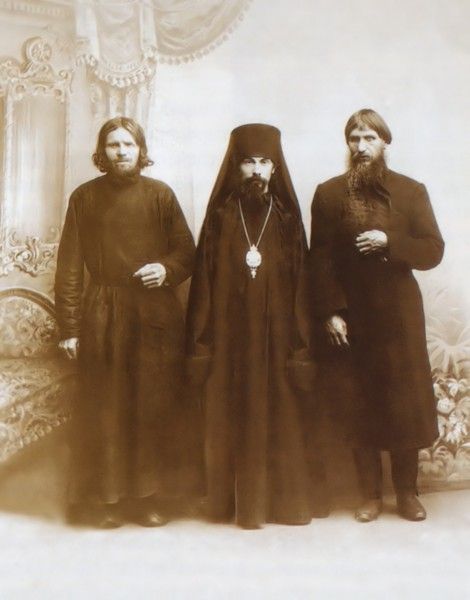
He was never ordained and held no church office. To the imperial couple he was "our friend", a plain-spoken man of faith who could calm a frightened child and his mother when doctors could not. To his enemies he was a drunk, a lecher and a charlatan who had captured the throne. Historians agree that much of what was said about him was rumour, but also that he took money and favours and that his influence did real damage to the government's standing. He was forty-seven when he was killed.
Timeline
Rasputin is born in Pokrovskoye, Tobolsk province (9 January Old Style).
Rasputin is first received by Nicholas II and Alexandra.
After Rasputin telegraphs a prayer during Alexei's near-fatal illness at Spała, the empress's faith in him becomes unshakeable.
Khioniya Guseva stabs Rasputin outside his house in Pokrovskoye; he recovers.
Nicholas takes personal command of the army, leaving Alexandra, and with her Rasputin, more influence in Petrograd.
Purishkevich attacks Rasputin's influence in a speech in the Duma.
Rasputin is killed at the Yusupov palace on the Moika in the early hours, and his body is pushed under the ice of the Little Nevka.
Police recover the body near the Bolshoy Petrovsky Bridge.
Rasputin is buried at Tsarskoye Selo; Dmitri Pavlovich is sent to the Persian front and Yusupov to his estate.
Nicholas II abdicates; soon afterwards soldiers exhume Rasputin's body and burn it.
People in the case
-
Grigori Rasputin Victim
21 January 1869 – 30 December 1916
Siberian peasant and faith healer close to the imperial family. Dates are Gregorian; in the Julian calendar then used in Russia, 9 January 1869 and 17 December 1916.
-
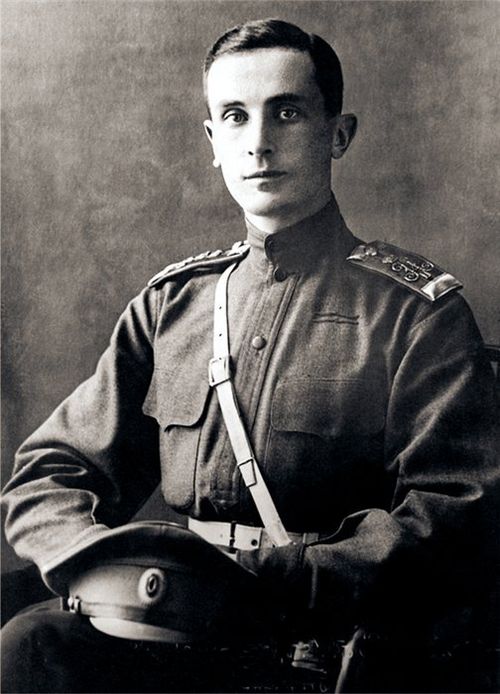
Felix Yusupov Perpetrator
23 March 1887 – 27 September 1967
Prince and organiser of the plot, in whose palace the killing took place; confined to his estate, then lived in exile and wrote the best-known account.
-
Vladimir Purishkevich Perpetrator
24 August 1870 – 1 February 1920
Far-right Duma deputy who had denounced Rasputin's influence in a November 1916 speech; said he fired the shots in the courtyard.
-
Grand Duke Dmitri Pavlovich Perpetrator
18 September 1891 – 5 March 1942
First cousin of Nicholas II; took part in the plot and was sent to the Persian front as punishment.
-
Oswald Rayner Suspect
29 November 1888 – 6 March 1961
British intelligence officer in Petrograd and an Oxford friend of Yusupov; some writers claim he fired the fatal shot, but no document links him to the killing.
-
Empress Alexandra Feodorovna Also involved
6 June 1872 – 17 July 1918
Wife of Nicholas II and Rasputin's most devoted protector.
-
Nicholas II Also involved
18 May 1868 – 17 July 1918
Last emperor of Russia; chose to punish the killers by banishment rather than trial.
Where it happened
- Moika Palace (Yusupov Palace), St Petersburg. Where Rasputin was killed; the basement rooms are shown to visitors with a waxwork reconstruction.
- Bolshoy Petrovsky Bridge, Little Nevka. Where the body was dropped through the ice; it was found downstream on 1 January 1917.
Outcome
Never caught Never tried
A police investigation identified the conspirators within days, but no charges were brought. Nicholas II dealt with them administratively: Grand Duke Dmitri was sent to serve on the Persian front and Felix Yusupov was placed under house arrest on his estate at Rakitnoye. Purishkevich was not punished. The February Revolution of 1917 ended any prospect of prosecution.
What the record settles, and what it doesn't
Established
- Rasputin was killed in the early hours of 30 December 1916 (17 December Old Style) at the Yusupov palace on the Moika in Petrograd.
- Felix Yusupov, Vladimir Purishkevich and Grand Duke Dmitri Pavlovich organised and took part in the killing, and Yusupov and Purishkevich both admitted it in print.
- Rasputin died of gunshot wounds; the autopsy surgeon described three, one fired into the forehead at close range.
- The surgeon reported no evidence of poisoning and no water in the lungs.
- His body was pushed through the ice of the Little Nevka from the Bolshoy Petrovsky Bridge and recovered on 1 January 1917.
- None of the killers was tried; the tsar punished two of them by banishment.
- Rasputin's body was exhumed and burned in March 1917, after the fall of the monarchy.
Disputed
- Yusupov's account of poisoned cakes and wine and of a victim who would not die is the best-known version, but it comes from an interested party who changed his story; the autopsy as later described found no poison, and many historians treat those parts as embellishment.
- Who fired the fatal shot to the forehead is unknown; Yusupov and Purishkevich do not describe it, and candidates include Purishkevich, Dmitri Pavlovich and others present.
- Some writers argue that British intelligence officers, especially Oswald Rayner, took part or fired the final shot because Britain feared Rasputin would push Russia toward a separate peace. Others reply that no British archive document links any agent to the killing and that the forensic evidence does not show a British-type bullet.
- Whether Rasputin was still alive when he went into the river: older accounts say he drowned, but the autopsy surgeon reported no water in the lungs.
- How much real political power Rasputin had: some historians see him as a decisive influence on appointments in 1915 and 1916, others as a convenient scapegoat for the failures of the tsar and empress.
Pictures





Afterwards
The killers expected to be national heroes, and for a few weeks many in Petrograd treated them that way, but Rasputin's death did nothing to save the monarchy. Nicholas abdicated in March 1917, and he, Alexandra and their five children were shot by the Bolsheviks at Yekaterinburg in July 1918. Dmitri Pavlovich's exile to Persia probably saved his life. Yusupov escaped Russia in 1919 with his wife and lived in Paris, where he published his account of the murder and won a famous libel action against MGM in 1934 over a film that suggested his wife had been seduced by Rasputin.
Rasputin's daughter Maria emigrated and eventually settled in the United States, working for a time as a circus performer, and wrote defences of her father. The basement at the Moika palace is now part of a museum, and the story of the poisoned cakes and the man who would not die has become the most retold scene in the whole history of the late Russian empire, in films, novels and a 1978 disco song.
Questions readers ask
Who killed Rasputin?
A group of aristocratic monarchists led by Prince Felix Yusupov, with the Duma deputy Vladimir Purishkevich and Grand Duke Dmitri Pavlovich, killed him at Yusupov's palace in Petrograd in December 1916. Which of them fired the fatal shot is not known.
Was Rasputin really poisoned, shot and drowned?
That story comes from Yusupov's memoirs. The autopsy surgeon reported three gunshot wounds, including a close-range shot to the forehead, but no poison and no water in the lungs, so most historians think he was dead before he reached the river.
Were the British involved in Rasputin's death?
Some authors claim a British intelligence officer, Oswald Rayner, was present and fired the final shot. The theory is disputed: no British archive document links any agent to the killing and the forensic evidence does not settle the question.
Were Rasputin's killers punished?
There was no trial. The tsar sent Grand Duke Dmitri to the Persian front and confined Yusupov to his country estate; the revolution a few weeks later ended the matter.
Sources and further reading
- Grigori Rasputin (Wikipedia)
- Felix Yusupov (Wikipedia)
- Oswald Rayner (Wikipedia)
- Wikidata Q43989 (life dates checked here)
Written by Sinister Crimes from the sources above; see our editorial standards. Last checked 1 November 2026.