

The case
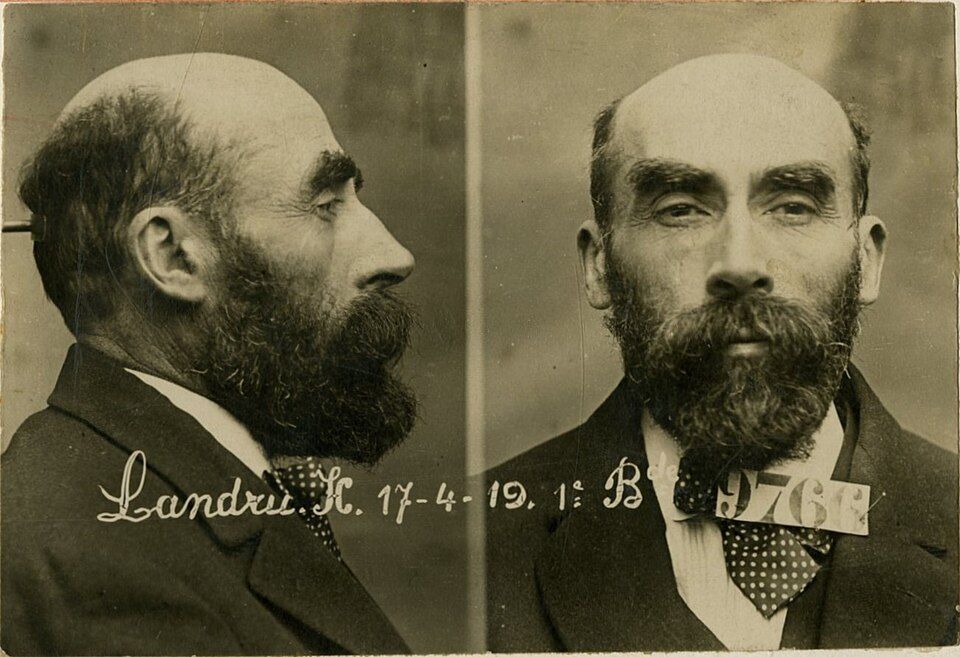
On 12 April 1919, his fiftieth birthday, police arrested a bald, bearded man in a flat on the rue de Rochechouart, near the Gare du Nord. He said his name was Lucien Guillet. In his pocket was a small notebook, kept with a bookkeeper's care: bus fares, train tickets, sacks of coal, and a list of eleven names. Ten were women. One was a teenage boy. Nobody had seen any of them for months, some for years.
The man was Henri Désiré Landru, born in Paris in 1869. He had been an altar boy, a soldier and a clerk, then a dealer in furniture and a promoter of inventions that never existed. From 1904 he was in and out of prison for fraud. In July 1914 a court convicted him in his absence and sentenced him to four years followed by transportation for life to a penal colony. He was a fugitive, and a husband and father of four, when the war began.
The war gave him his method. With men at the front or dead, Paris newspapers filled with matrimonial advertisements. Landru placed his own, presenting himself as a widower of comfortable means, and filed the replies in his notebooks according to what each writer appeared to own. He used dozens of false names and claimed to come from the occupied north, which made his papers impossible to check. Police later identified 283 women who had been in contact with him. Most were traced alive.
In December 1914 he rented a villa at Vernouillet, north-west of Paris. Jeanne Cuchet, a widowed seamstress, moved in with her son André; both were last seen around the start of February 1915. Thérèse Laborde-Line vanished from the same house in June, and Marie-Angélique Guillin in August. Each time, Landru afterwards sold the missing woman's securities and furniture.
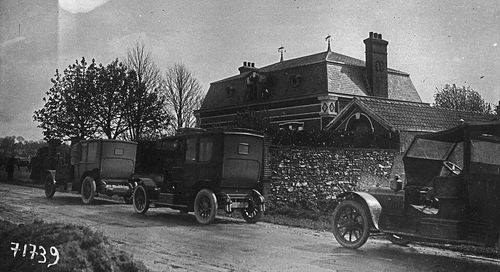
In December 1915 he took a more isolated house, the Villa Tric at Gambais, a village west of Paris, set some way from its nearest neighbours.Over the next three years Berthe Héon, Anna Collomb, Andrée Babelay, Célestine Buisson, Louise Jaume, Anne-Marie Pascal and Marie-Thérèse Marchadier travelled there with him. His accounts recorded the fares: a return ticket for himself, a single for his companion. Neighbours noticed thick, foul-smelling smoke from the chimney.
Two families brought him down. Victorine Pellat wrote to the mayor of Gambais asking after Anna Collomb, who had settled there with a 'Monsieur Dupont'. Marie Lacoste wrote asking after her sister Célestine Buisson and a 'Monsieur Frémyet'. The mayor put the two women in touch, and they realised they were describing the same man. Their complaint reached Inspector Jules Belin, but the trail went cold until April 1919, when an acquaintance of Lacoste recognised the suspect leaving a china shop on the rue de Rivoli with a young woman. The shop had taken his address for a delivery.
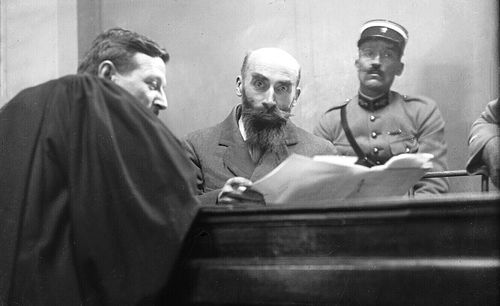
No body was ever found. Searches at Gambais turned up burnt bone fragments and teeth in ashes and in the kitchen range, too damaged to identify. Landru admitted the aliases and the frauds but would not say where the women had gone: that, he told investigators, was his own affair. His trial opened at the assize court in Versailles on 7 November 1921 and drew crowds from Paris, among them the writer Colette, then covering courts. Landru was polite and quick-witted from the dock. His counsel, Vincent de Moro-Giafferi, argued that without bodies there could be no proof of murder.
On 30 November 1921 the jury found him guilty of all eleven killings, and he was sentenced to death. President Alexandre Millerand refused clemency. Landru was guillotined at dawn on 25 February 1922 outside the prison in Versailles, still denying that he had killed anyone.
Who lost out
The people on Landru's list were mostly women in their thirties to fifties, widowed, separated or alone, who had answered advertisements hoping for a second marriage and some security in wartime. Jeanne Cuchet, 39, was a seamstress who worked in lingerie and was devoted to her son André, about 17, who was waiting to be called up; her family distrusted her suitor and she broke with them to go with him. Thérèse Laborde-Line, 46, had been born in Argentina and had run a hotel. Marie-Angélique Guillin, 51 or 52, a former housekeeper, had recently come into a small inheritance. Berthe Héon, 55, a cleaner from Le Havre, had lost her husband and her children. Anna Collomb, 44, was a typist for an insurance company.
Andrée Babelay, 19, worked as a domestic servant and had quarrelled with her mother; she had little money, and investigators never settled why she was taken. Célestine Buisson, 46, a widowed housekeeper from the Pyrenees, left her son in her sister Marie Lacoste's care, and it was Lacoste's persistence that ended the killings. Louise Jaume, 38, was a devout shop assistant whose marriage had broken down. Anne-Marie Pascal, 37, a dressmaker from Toulouse, wrote to a relative that she was afraid of the man she was seeing. Marie-Thérèse Marchadier, 37, from Bordeaux, kept a boarding house in the rue Saint-Jacques and was known in the street for her small dogs. She was the last to disappear, on 13 January 1919.
Timeline
Henri Désiré Landru is born in Paris.
Already a repeat offender, Landru is convicted of fraud in his absence and sentenced to prison and transportation for life.
Landru rents a villa at Vernouillet, where Jeanne Cuchet and her son André move in with him.
Jeanne and André Cuchet are last seen around the turn of January and February.
Thérèse Laborde-Line disappears at Vernouillet.
Landru takes the Villa Tric at Gambais; Berthe Héon, the first woman to go there, disappears soon after.
Célestine Buisson is last seen, the date and hour later found noted in Landru's book.
Marie-Thérèse Marchadier, the last name on the list, disappears at Gambais.
Police arrest Landru, living as 'Lucien Guillet', at 76 rue de Rochechouart in Paris.
Searches at Gambais recover burnt bone fragments and teeth from ashes and the kitchen range.
The trial opens before the assize court in Versailles.
The jury convicts Landru of eleven murders and he is sentenced to death.
Landru is guillotined at dawn outside the prison in Versailles.
People in the case
-
Henri Désiré Landru Perpetrator
12 April 1869 – 25 February 1922
Fraudster and fugitive who used dozens of aliases; convicted of eleven murders and guillotined at Versailles.
-
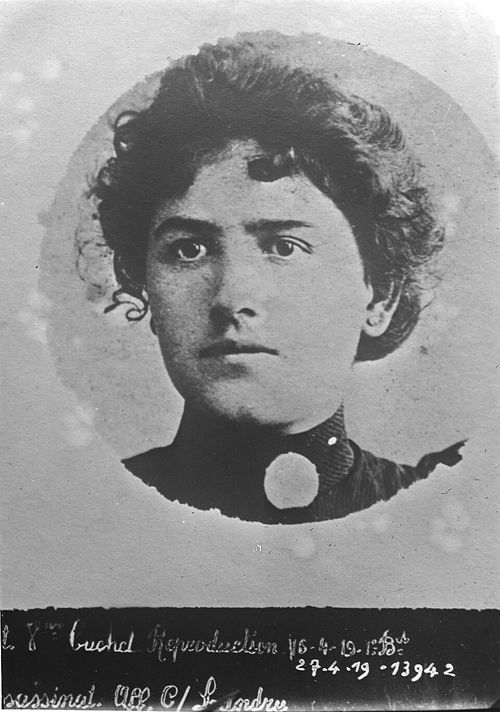
Jeanne Cuchet Victim
? – 1915
Widowed Paris seamstress, about 39; last seen with her son André at Vernouillet in early 1915.
-
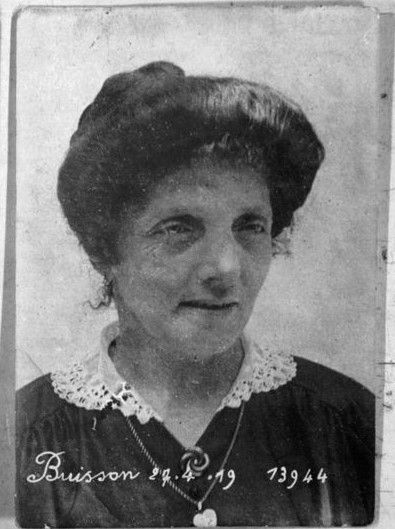
Célestine Buisson Victim
6 April 1871 – ?
Widowed housekeeper courted by Landru as 'Georges Frémyet'; last seen at Gambais on 1 September 1917.
-
Marie Lacoste Witness
Sister of Célestine Buisson; her inquiries with Victorine Pellat, sister of Anna Collomb, set off the police investigation.
-
Jules Belin Investigator
Inspector of the Paris mobile brigade who arrested Landru in April 1919; born about 1884.
-
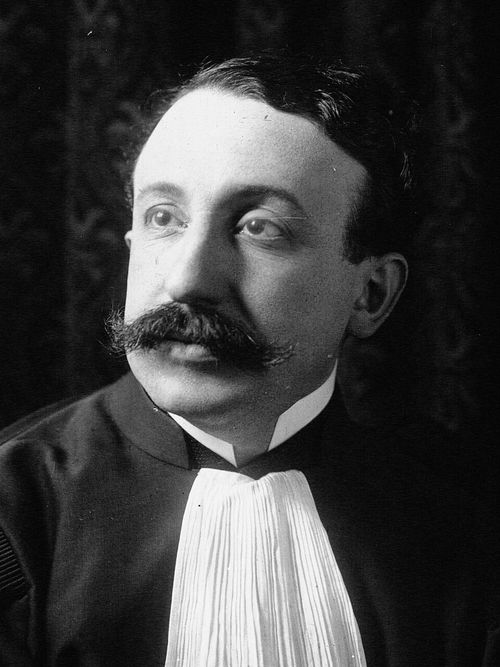
Vincent de Moro-Giafferi Defence
6 June 1878 – 22 November 1956
Leading Paris advocate who built Landru's defence on the absence of bodies.
-
Fernande Segret Witness
? – 21 January 1968
Young singer living with Landru when he was arrested; testified at the trial. Born about 1893.
-
Anatole Deibler Also involved
29 November 1863 – 2 February 1939
France's chief executioner, who carried out the sentence at Versailles.
Where it happened
- Gambais. Village where Landru rented the isolated Villa Tric ('L'Ermitage') from December 1915; seven women disappeared there. Coordinates are for the village.
- Vernouillet. Town north-west of Paris where Landru rented his first villa; four people disappeared there in 1915. Coordinates are for the town.
- Versailles. Seat of the Seine-et-Oise assize court that tried Landru in 1921, and the place of his execution. Coordinates are for the town.
Outcome
Executed Convicted and executed
Landru was charged with eleven murders and with theft from his victims. The jury at the Seine-et-Oise assize court in Versailles found him guilty of all eleven murders on 30 November 1921, and he was sentenced to death. His appeal for clemency was rejected by President Millerand, and he was guillotined at Versailles on 25 February 1922.
What the record settles, and what it doesn't
Established
- Landru was a career fraudster with several convictions before 1914 and was living as a fugitive under false names throughout the war.
- He advertised for marriage partners in Paris newspapers and kept detailed notebooks of the women who replied and what they owned.
- Ten women and one teenage boy who had gone with him to his rented villas at Vernouillet and Gambais were never seen again.
- After each disappearance Landru took control of the missing person's money, securities and furniture.
- Two victims' relatives, Marie Lacoste and Victorine Pellat, compared notes and prompted the police inquiry that led to his arrest on 12 April 1919.
- No body was recovered; the physical evidence consisted of burnt bone fragments and teeth found at Gambais.
- He was convicted of eleven murders on 30 November 1921 and executed on 25 February 1922, without ever confessing in court.
Disputed
- How many people Landru killed: the court convicted him of eleven, police searched for others among the 283 women in his records, and some writers suspect further victims, including a possible twelfth in 1916.
- How the bodies were disposed of: the prosecution and most later writers believe they were burned in the kitchen range at Gambais, while the defence argued the bone fragments proved nothing and could not be identified.
- Whether Landru ever confessed: a drawing of his stove that he gave to a member of his defence team is said to carry a cryptic admission on the back, but the wording reported in different accounts varies.
- Exact dates of several disappearances, such as the Cuchets' (late January or early February 1915) and Berthe Héon's (December 1915 or January 1916), differ between accounts.
- How long the jury deliberated and how its verdict split: some accounts give about three hours and a majority verdict, others a much longer sitting.
Pictures



Afterwards
Landru's wife and eldest son were held for a time on suspicion of handling stolen property but were released without trial. Fernande Segret, who had been living with him at the time of his arrest, later successfully sued over her portrayal in Claude Chabrol's 1963 film Landru; she died in 1968. The villa at Gambais was briefly turned into a restaurant, and the stove from its kitchen became a collectors' item.
The case became a byword in France for the predatory suitor, and the press revived the old folk-tale name Bluebeard for him. It inspired Charlie Chaplin's 1947 film Monsieur Verdoux and is still cited as a leading example of a murder conviction secured without a body.
Questions readers ask
How many people did Landru kill?
He was convicted of eleven murders: ten women and the teenage son of the first, Jeanne Cuchet. Police investigated hundreds of women in his records and found most of them alive, but some historians think there may have been further victims.
Were any bodies ever found?
No identifiable remains were recovered. Investigators found fragments of burnt bone and teeth in ashes at the Gambais villa, and the prosecution argued the victims had been burned in the kitchen range.
How was Landru caught?
Relatives of two missing women wrote to the mayor of Gambais, discovered they were describing the same man under different names, and went to the police. In April 1919 an acquaintance spotted him in a Paris shop, which had his address.
Did Landru ever confess?
Not in court. He denied murder to the end, though a drawing he gave to his defence team is said to bear a cryptic admission on the back.
Sources and further reading
- Henri Désiré Landru (Wikipedia)
- Henri Désiré Landru (French Wikipedia)
- Henri Désiré Landru (Wikidata)
- Wikidata Q534708 (life dates checked here)
Written by Sinister Crimes from the sources above; see our editorial standards. Last checked 1 November 2026.