

The case
On 9 May 1902, under a court order and before a crowd of reporters, officials forced open a strongbox in a mansion at 65 avenue de la Grande-Armée in Paris. For two decades its owner, Thérèse Humbert, had told bankers, lawyers and judges that it held the bonds and papers of a vast American inheritance, and on the strength of that box she had borrowed tens of millions of francs. Inside they found almost nothing. Accounts of the contents vary, from an old newspaper, a trouser button and a coin to a brick and a penny, but all agree on what was missing. The family who owned the safe had already left town.
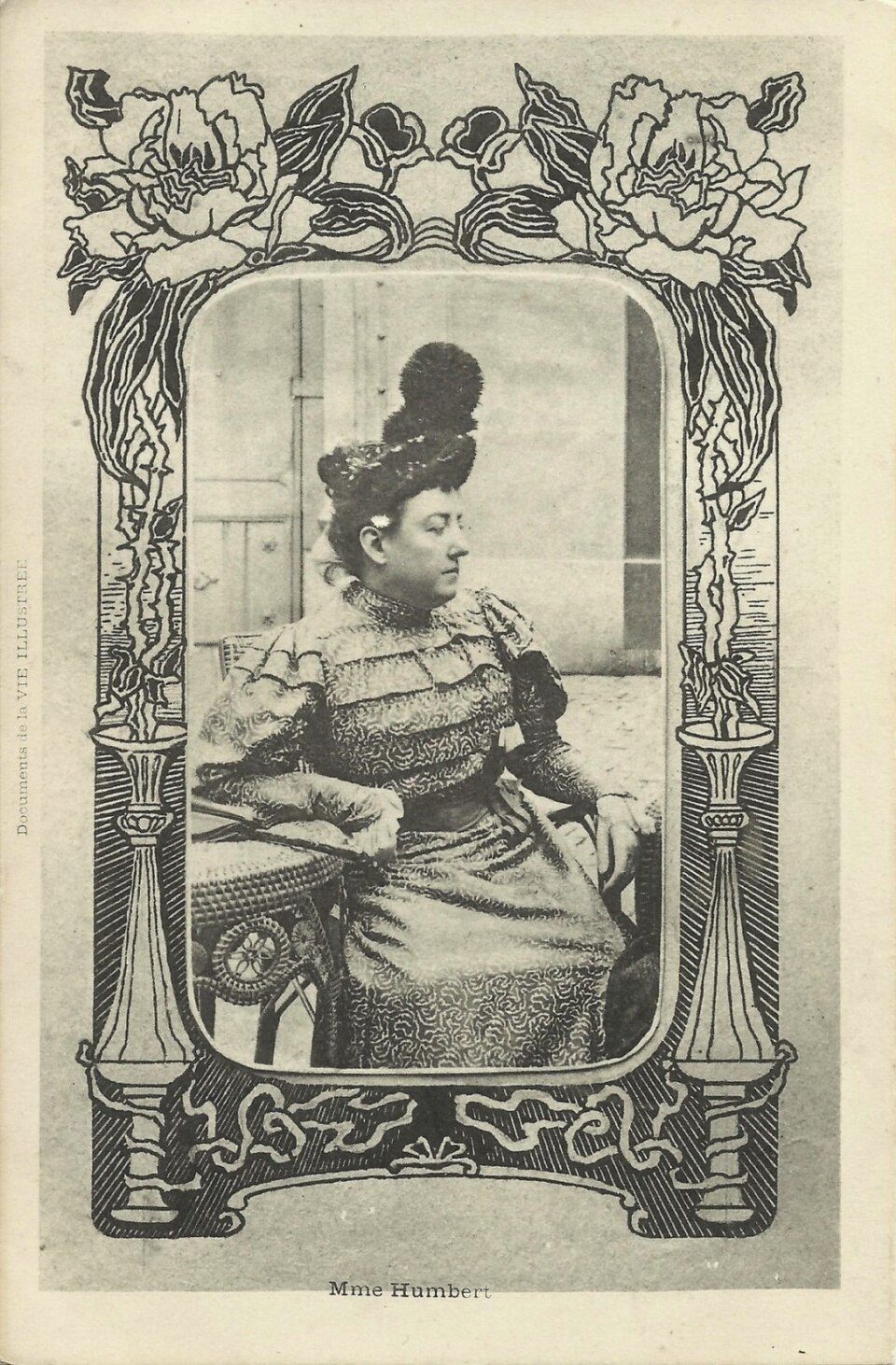
Thérèse Daurignac was born in the mid-1850s into a peasant family at Aussonne, near Toulouse. Her father, a foundling who practised as a healer, liked to hint at a noble inheritance to come, and his daughter learned early how far a promise could be stretched. In 1878 she married Frédéric Humbert, son of Gustave Humbert, a distinguished jurist who became Minister of Justice in 1882. She is said to have won over her in-laws by claiming to be heir to a château in the Gers. That story fell apart; the marriage survived it.
The tale that made her fortune came next. Thérèse said that in 1879 she had helped an American millionaire, Robert Henry Crawford, through a heart attack on a train, and that on his death he had left her a large part of his estate. Two nephews, Henry and Robert Crawford, were said to dispute the will, and until the quarrel was settled the securities had to remain sealed in her safe. The genius of the scheme lay in the lawsuits. Thérèse hired eminent lawyers to fight the nephews through the courts, and each judgment, up to the Court of Cassation, became fresh proof that the Crawford millions existed. When the nephews had to appear in person, two of her brothers obliged.
Against this phantom collateral the Humberts borrowed heavily and lived grandly. They moved to Paris, bought the Château des Vives-Eaux near Melun, and kept a salon that drew politicians, magistrates and men of letters. Frédéric sat in the Chamber of Deputies from 1885 to 1889. When creditors pressed, new loans paid off old ones. A life-annuity business the family set up, the Rente Viagère, brought in further deposits from small savers.
Doubts surfaced repeatedly. The newspaper Le Matin questioned the story as early as 1883 and returned to it later, and some lenders grew suspicious when they compared the size of the supposed inheritance with the sums already borrowed against it. Eventually a creditor obtained an order for the safe to be placed under seal and opened. Shortly before the appointed day, Thérèse, Frédéric and her brothers slipped away.
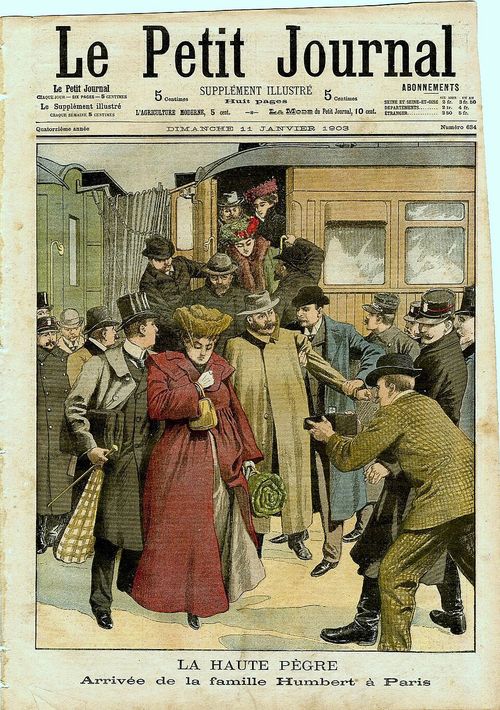
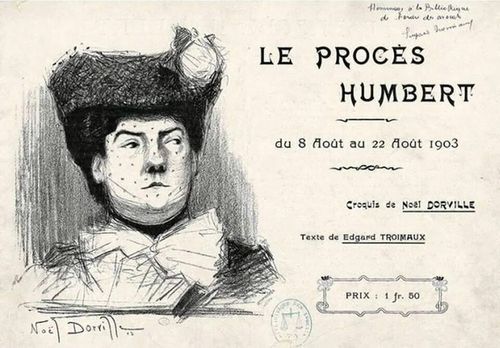
They were found in Madrid on 20 December 1902 and returned to Paris, where the crowds turned out to see them. The trial before the Seine Court of Assizes began on 8 August 1903, with Fernand Labori, who had defended Dreyfus, among Thérèse's counsel. She stayed defiant, and near the end told the jury that Crawford had really been a man named Regnier, a go-between in the 1870 war, a claim no one could test. On 22 August the jury convicted all four defendants. Thérèse and Frédéric received five years each; her brothers Romain and Émile Daurignac received three and two years. Many thought the sentences light for what Prime Minister Pierre Waldeck-Rousseau had called the greatest swindle of the century.
Who lost out
The Humberts' lenders ranged from bankers and businessmen who had advanced large sums at high interest to small investors and annuitants who put their savings into the family's Rente Viagère. Many of the larger lenders preferred not to say how much they had lost. The collapse also caught people close to the family: the parents-in-law of the young painter Henri Matisse, who had worked in the Humbert household, came under suspicion, Matisse's father-in-law was arrested and went on hunger strike to protest his innocence, and the family faced angry crowds of ruined creditors.
Timeline
Thérèse Daurignac marries Frédéric Humbert at Beauzelle, near Toulouse.
The year in which Thérèse later claimed she met the dying millionaire Robert Henry Crawford on a train.
Gustave Humbert, her father-in-law, serves as Minister of Justice.
Le Matin publishes an early sceptical article about the Crawford inheritance.
The Humbert safe is opened by court order and found to be nearly empty; the family has fled.
Thérèse, Frédéric and her brothers are arrested in Madrid.
The trial opens before the Seine Court of Assizes in Paris.
All four defendants are convicted; Thérèse and Frédéric are sentenced to five years.
Thérèse and Frédéric are released on parole.
Frédéric Humbert dies in Paris, still married to Thérèse.
People in the case
-
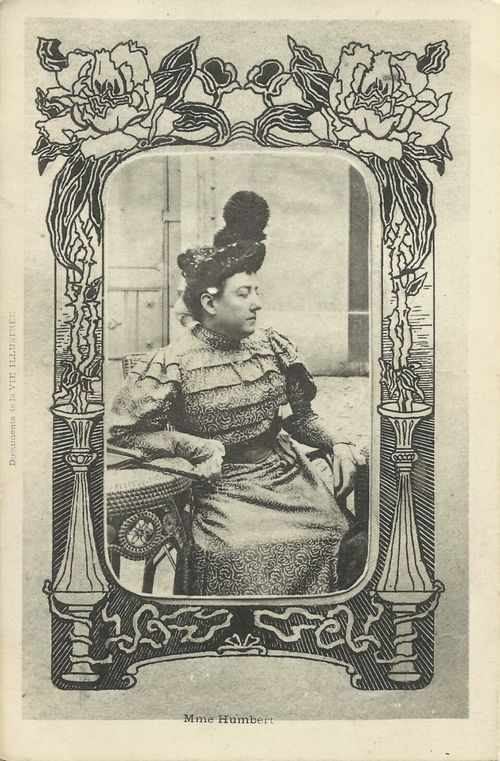
Thérèse Humbert Perpetrator
Born Thérèse Daurignac at Aussonne; birth given as 10 September 1855 or 1856. Convicted in 1903; she was still alive in Paris in the late 1930s and her death date is not established.
-
Frédéric Humbert Accomplice
19 July 1857 – 14 December 1937
Her husband, a lawyer and deputy for Seine-et-Marne in 1885-1889; convicted with her and sentenced to five years.
-
Romain Daurignac Accomplice
Thérèse's brother; posed as a Crawford nephew and was convicted in 1903. He died around 1930.
-
Émile Daurignac Accomplice
Thérèse's brother; convicted in 1903 for his part in the fictitious Crawford litigation.
-
Gustave Humbert Also involved
28 June 1822 – 24 September 1894
Jurist and Minister of Justice in 1882, Thérèse's father-in-law; his standing lent the family credibility. He died before the fraud was exposed and was never accused.
-
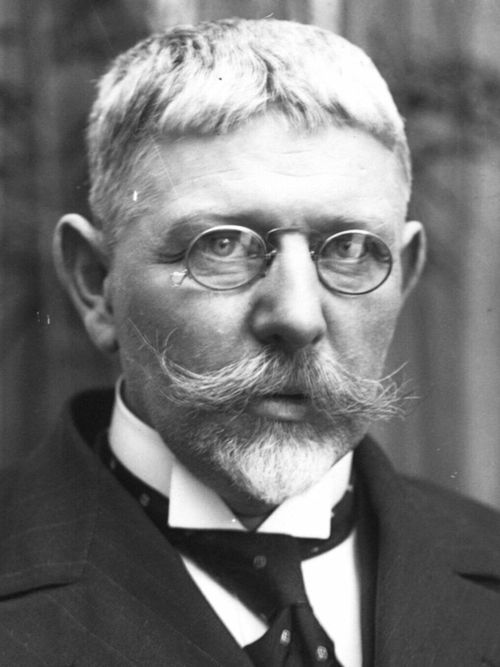
Fernand Labori Defence
18 April 1860 – 14 March 1917
Celebrated advocate who defended Thérèse at the 1903 trial.
-
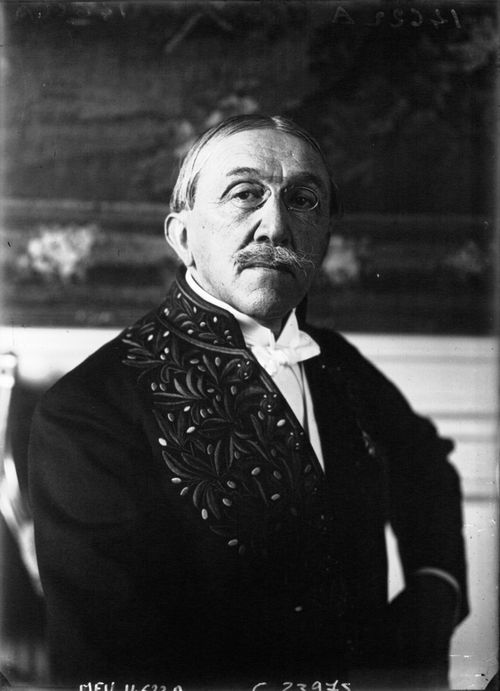
Henri-Robert Defence
4 September 1863 – 12 May 1936
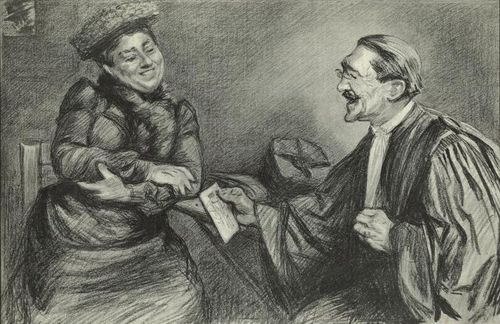
Lawyer who acted for Thérèse; sketched beside her in court by Paul Renouard.
Where it happened
- Avenue de la Grande-Armée, Paris. The Humberts' mansion at No. 65, where the safe was opened in May 1902.
- Palais de Justice, Paris. Seat of the Seine Court of Assizes, where the 1903 trial was held.
- Château des Vives-Eaux. Country house near Melun bought by the Humberts.
- Aussonne. Thérèse's birthplace near Toulouse.
Outcome
Convicted Convicted
Thérèse and Frédéric Humbert and her brothers Romain and Émile Daurignac were tried before the Seine Court of Assizes from 8 August 1903 on charges of forgery, use of forged documents and fraud. On 22 August all four were convicted. Thérèse and Frédéric were each sentenced to five years, the brothers to three and two years. Thérèse and Frédéric were paroled in September 1906.
What the record settles, and what it doesn't
Established
- Thérèse Humbert borrowed large sums for about twenty years against a supposed inheritance from an American named Robert Henry Crawford.
- No such Crawford existed, and the 'nephews' who contested the will in court were impersonated by her own brothers.
- The family used genuine court judgments in the fictitious litigation as evidence that the inheritance was real.
- The safe was opened by court order on 9 May 1902 and contained nothing of value.
- The Humberts fled and were arrested in Madrid on 20 December 1902.
- On 22 August 1903 a Paris jury convicted Thérèse, Frédéric and two of her brothers.
Disputed
- What was in the safe: English sources list an old newspaper, a trouser button and an Italian coin, while French sources speak of a brick and a penny.
- Thérèse's year of birth, given as 1855 in French sources and 1856 in others.
- Her fate: a long-repeated story says she emigrated and died in Chicago in 1918, but French records show her living in Paris in 1930 and 1936 and inheriting from a brother in 1939.
- The form of the sentence: some accounts describe five years' hard labour, others solitary confinement or simple imprisonment.
- How much Frédéric and others in the family knew from the start, as opposed to being drawn in by Thérèse.
Pictures




Afterwards
The affair became a byword in France, and Thérèse was remembered as "la Grande Thérèse". The satirical weekly L'Assiette au beurre devoted a whole issue to the trial, and Maurice Leblanc made her the model for a swindler who outwits Arsène Lupin in a 1906 story. After their release the Humberts sank into obscurity. For decades it was said that Thérèse had emigrated to the United States and died in Chicago, but a 1930 magazine article found her living quietly on the boulevard des Batignolles, the 1936 census recorded her there with Frédéric, and in 1939 newspapers reported that she had, at last, received a real inheritance from a brother. When and where she died is not known. Simone Signoret played her in a French television series in 1983.
Questions readers ask
What was in Thérèse Humbert's safe?
Almost nothing of value. Accounts differ on the details, with English sources mentioning an old newspaper, a trouser button and a coin and French ones a brick and a penny.
Was Robert Henry Crawford a real person?
No. The American millionaire and his two litigious nephews were inventions; her brothers played the nephews when appearances were needed.
What sentence did Thérèse Humbert receive?
Five years, as did her husband Frédéric. Her brothers received three and two years. She was released on parole in 1906.
When did Thérèse Humbert die?
Her death date is unknown. The story that she died in Chicago in 1918 is contradicted by French records showing her alive in Paris into the late 1930s.
Sources and further reading
- Thérèse Humbert (Wikipedia)
- Thérèse Humbert (Wikipédia, French)
- L'affaire Thérèse Humbert (Musée du Barreau de Paris)
- Humberts declared guilty of fraud (New York Times, 23 August 1903)
- Wikidata Q2346348 (life dates checked here)
Written by Sinister Crimes from the sources above; see our editorial standards. Last checked 1 November 2026.