

The case
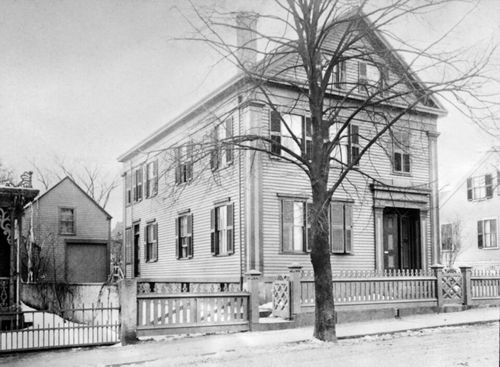
The house at 92 Second Street lacked the plumbing that wealthy families in Fall River took for granted, although its owner was one of the richest men in Fall River. Andrew Jackson Borden had made his money in furniture, undertaking and property, sat on the boards of textile mills and a bank, and left an estate valued at around $300,000. He was also famously careful with it. Living under his roof in the summer of 1892 were his second wife Abby, his two unmarried daughters from his first marriage, Emma and Lizzie, and an Irish maid, Bridget Sullivan.
The household was not a happy one. The daughters resented their stepmother and suspected her of marrying for money; Lizzie called her "Mrs. Borden." Andrew's gifts of property to Abby's relatives caused open quarrels that summer, and the sisters spent part of July away in New Bedford. In the days before the killings the whole house fell ill with vomiting, which Abby privately feared was poison. On August 3, Emma was visiting friends in Fairhaven and John Vinnicum Morse, the girls' maternal uncle, arrived to stay the night.
On the morning of Thursday, August 4, after breakfast and a long talk with Morse, Andrew went out on his usual morning round of business in town. Abby went upstairs to tidy the guest room, sometime between nine and half past ten. There she was struck repeatedly with a hatchet-like blade and killed. Andrew came home at about 10:30, found that his key would not open the front door and was let in by Bridget. He lay down on the sitting-room sofa. Shortly after eleven, Lizzie called up to Bridget, resting in her attic room, that her father was dead and somebody had come in and killed him. Abby was found a little later by Bridget and a neighbor, Adelaide Churchill, lying on the guest-room floor.
Lizzie's statements to police shifted. She said she had been in the barn loft looking for fishing sinkers, then gave differing accounts of where she had been when her father came in. She told officers that Abby had received a note asking her to visit a sick friend; no note and no friend were ever found. In the cellar, police found a hatchet head with a freshly broken handle, which the prosecution later argued was the weapon. A few days after the murders, Lizzie's friend Alice Russell saw her burn a dress in the kitchen stove, saying it was stained with paint.
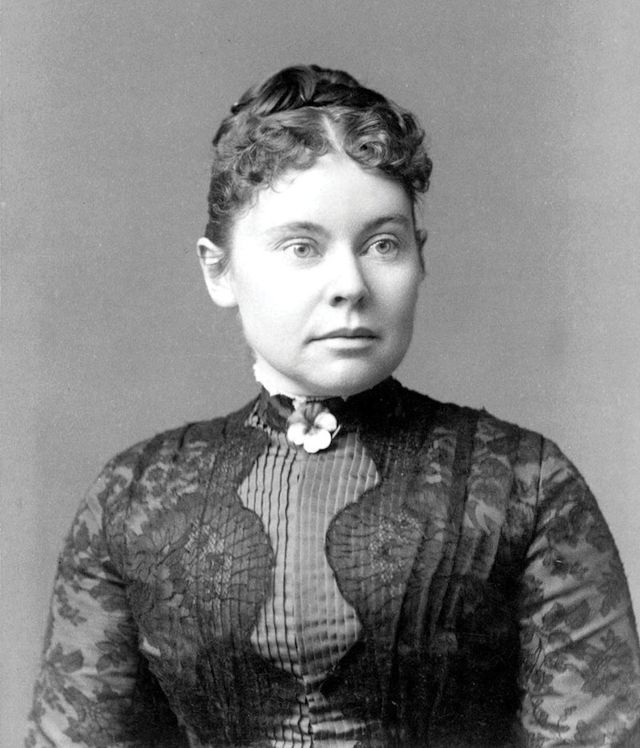
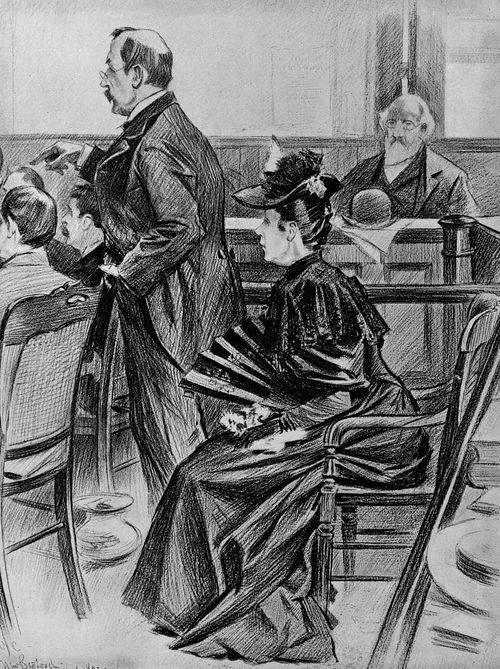
Lizzie testified at a closed inquest in August and was arrested on August 11, 1892. A grand jury indicted her on December 2. Her trial opened at New Bedford on June 5, 1893, before three judges, with Hosea Knowlton and William Henry Moody prosecuting and a defense led by George D. Robinson, a former governor of Massachusetts. The case for the Commonwealth was entirely circumstantial. There were no bloodstained clothes, no proven weapon and no witness to either killing.
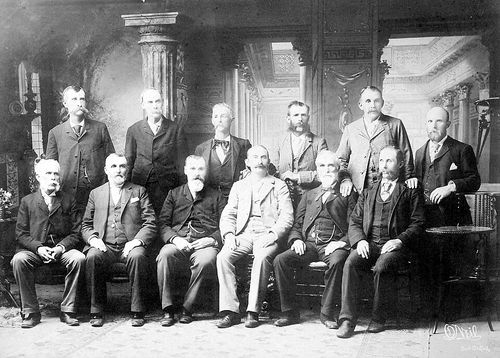
Key rulings went the defense's way. Lizzie's contradictory inquest testimony was excluded because she had given it without counsel while effectively already a suspect. So was evidence that she had tried to buy prussic acid from a local druggist the day before the murders. Justice Justin Dewey's charge to the jury was widely read as favorable to her. On June 20, 1893, the jury returned not-guilty verdicts after deliberating for barely an hour.
No one else was ever tried, and the case has never been officially solved. Lizzie remained in Fall River for the rest of her life, inheriting a share of her father's fortune and an equally durable share of local suspicion.
The victims
Andrew Jackson Borden was 69, a self-made man who had grown up in modest circumstances despite belonging to an old Fall River family. He built a fortune from a furniture and undertaking business, then from commercial property, and became president of the Union Savings Bank. He was known as a hard landlord and a frugal householder, which made him respected rather than loved.
Abby Durfee Borden, born Abby Gray, was 64. She married the widowed Andrew in 1865, when Lizzie was a small child, and kept his house for 27 years. She remained close to her own half-sister, and Andrew's generosity toward that side of the family became one of the household's sharpest grievances. Her stepdaughters, by their own account, kept her at a cold distance.
Timeline
The widowed Andrew Borden marries Abby Durfee Gray.
After quarrels over property gifts to Abby's family, Lizzie and Emma leave for a stay in New Bedford.
John Morse, the sisters' uncle, arrives to stay at the house; the household has been ill for days.
Abby Borden is killed in the guest room in mid-morning and Andrew Borden in the sitting room shortly before 11:10.
A few days after the murders, Alice Russell sees Lizzie burn a dress in the kitchen stove, which Lizzie says was stained with paint.
After testifying at a closed inquest, Lizzie is arrested and charged.
A grand jury indicts Lizzie Borden for the murders.
The trial opens at the courthouse in New Bedford.
The jury acquits Lizzie Borden on all counts.
Lizzie is accused of shoplifting in Providence, Rhode Island, putting her name back in the papers.
Emma moves out of Maplecroft, the house the sisters bought after the trial, and does not see Lizzie again.
Lizzie Borden dies of pneumonia in Fall River; Emma dies nine days later in New Hampshire.
People in the case
-
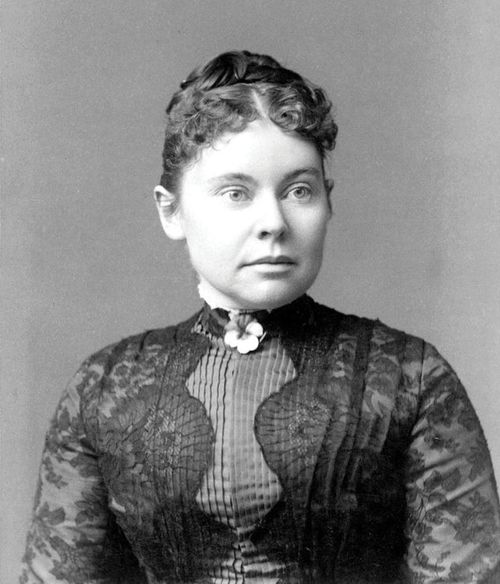
Lizzie Borden Accused
19 July 1860 – 1 June 1927
Younger surviving daughter of Andrew Borden; tried for both murders and acquitted in June 1893. Later called herself Lizbeth.
-
Andrew Jackson Borden Victim
1822 – 4 August 1892
Fall River businessman, property owner and bank president; killed on the sitting-room sofa.
-
Abby Durfee Borden Victim
1828 – 4 August 1892
Andrew's second wife and Lizzie's stepmother; killed in the upstairs guest room, about an hour or more before her husband.
-
Emma Borden Also involved
? – 10 June 1927
Lizzie's elder sister, born c. 1851; away in Fairhaven on the day of the murders. Lived with Lizzie until 1905 and died nine days after her.
-
Bridget Sullivan Witness
? – 1948
Irish-born maid, about 26 in 1892; the only other person known to be in the house that morning. Later married and lived in Butte, Montana.
-
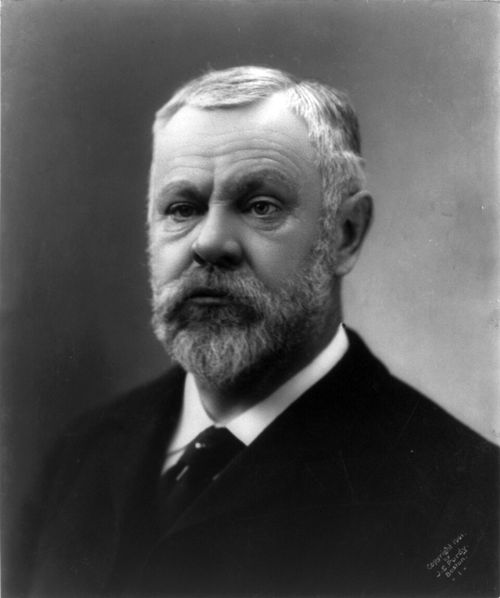
Hosea M. Knowlton Prosecutor
20 May 1847 – 19 December 1902
District attorney who led the prosecution; later Attorney General of Massachusetts.
-
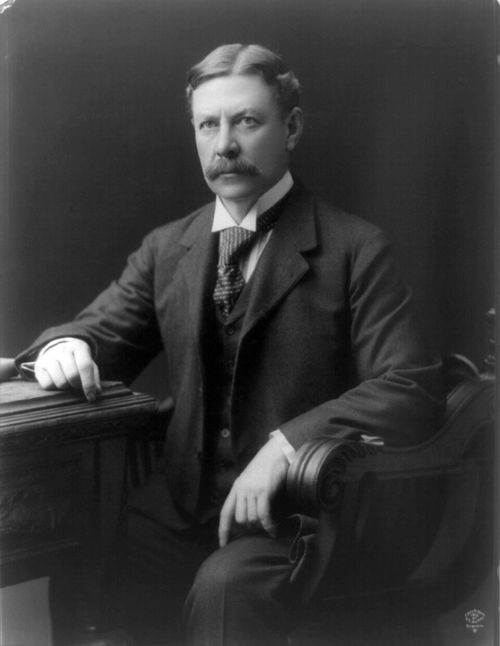
William Henry Moody Prosecutor
23 December 1853 – 2 July 1917
Junior prosecutor at the trial; later US Attorney General and a Supreme Court justice.
-
George D. Robinson Defence
20 January 1834 – 22 February 1896
Former Governor of Massachusetts who led Lizzie's defense.
Where it happened
- Borden house, 92 Second Street. Where both murders took place; now a museum and bed and breakfast.
- New Bedford, Massachusetts. County seat where the trial was held in June 1893.
- Oak Grove Cemetery, Fall River. Burial place of Andrew, Abby, Lizzie and Emma Borden.
Outcome
Acquitted Acquitted
Lizzie Borden was indicted for the murders of her father and stepmother and tried at New Bedford in June 1893. Her inquest testimony and the prussic-acid evidence were excluded, and the prosecution's case rested on opportunity, motive and conduct. The jury acquitted her on June 20, 1893, after about an hour, and no one else was ever charged.
What the record settles, and what it doesn't
Established
- Abby Borden was killed in the upstairs guest room on the morning of August 4, 1892, at least an hour before Andrew Borden was killed downstairs.
- Both victims were struck repeatedly with a hatchet or similar bladed tool.
- Lizzie Borden and Bridget Sullivan were the only people known to be in or around the house during the interval between the two killings.
- Lizzie gave police and the inquest inconsistent accounts of where she was when her father returned home.
- Lizzie burned a dress in the kitchen stove within days of the murders, telling Alice Russell it was spoiled with paint.
- A jury acquitted Lizzie Borden on June 20, 1893, and nobody else has ever been charged with the murders.
Disputed
- Whether Lizzie committed the murders: most writers since have believed she did, while others argue the police fixed on her early and that the evidence never excluded an outsider.
- Whether the handleless hatchet head from the cellar was the weapon; police witnesses contradicted each other about a handle, and the prosecution never proved it.
- Whether the burned dress was the one Lizzie wore that morning, or, as she said, an old dress stained with paint.
- Whether Bridget Sullivan knew more than she told; a story that she made a deathbed statement protecting Lizzie has never been substantiated.
- Alternative suspects proposed by later authors, including John Morse, Emma Borden and an unknown intruder, none of whom has been placed at the scene by evidence.
- How long the jury deliberated: contemporary reports give about an hour or less, some later accounts longer.
Pictures




Afterwards
The sisters used their inheritance to buy a large house on French Street in the fashionable Hill district, which Lizzie named Maplecroft. She styled herself Lizbeth, kept horses and a coachman, and was largely shunned by Fall River society. In 1905, after a quarrel apparently connected with her friendship with the actress Nance O'Neil, Emma left and never returned. Lizzie died in 1927 and left a large bequest to the Fall River Animal Rescue League; the sisters are buried in the family plot at Oak Grove Cemetery.
The case escaped into folklore almost at once. The skipping rhyme about forty whacks and forty-one, inaccurate in every count, has outlived nearly every other memory of 1890s Massachusetts. The trial became a reference point for later "trials of the century", and the case has been retold in ballet, opera, plays, novels and films. The Second Street house is now a museum, and the Fall River Historical Society holds the trial exhibits, including the hatchet head.
Questions readers ask
Was Lizzie Borden found guilty?
No. A jury at New Bedford acquitted her of both murders on June 20, 1893. No one else was ever charged, so legally the murders remain unsolved.
Did Lizzie Borden really give her mother forty whacks?
The rhyme is wrong on almost every point. Abby Borden was her stepmother, not her mother, and was struck about 18 or 19 times; Andrew was struck about 10 or 11 times. And Lizzie was acquitted.
What happened to Lizzie Borden after the trial?
She stayed in Fall River, moved with her sister Emma to a large house she called Maplecroft and lived on her inheritance. Emma left in 1905. Lizzie died of pneumonia on June 1, 1927, aged 66.
Can you visit the Lizzie Borden house?
Yes. The house at 92 Second Street in Fall River operates as a museum and bed and breakfast, furnished in the style of the 1890s.
Sources and further reading
- Lizzie Borden (Wikipedia)
- Trial of Lizzie Borden, edited with a history of the case by Edmund Pearson (1937), Internet Archive
- Lizzie Borden House (Wikipedia)
- Wikidata Q240496 (life dates checked here)
Written by Sinister Crimes from the sources above; see our editorial standards. Last checked 1 November 2026.