

The case
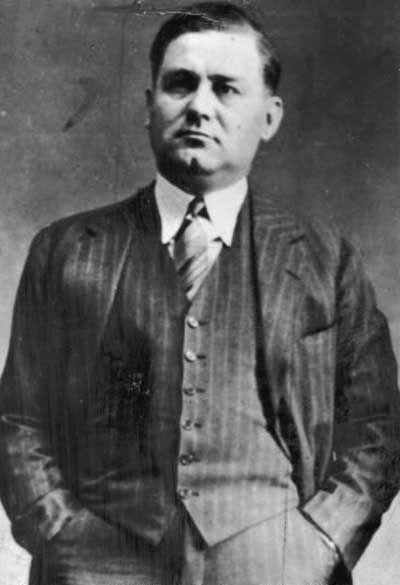
A little after half past ten on the morning of 14 February 1929, a black Cadillac touring car that looked exactly like a police detective's car stopped outside the S.M.C. Cartage Company on North Clark Street, in Chicago's Lincoln Park neighbourhood. Two of the men who got out wore police uniforms. Inside the brick garage behind the office, seven men were waiting. Five belonged to the North Side Gang of George "Bugs" Moran, the last serious rival to Al Capone's organisation. The other two had simply chosen a bad place to spend the morning.
The visitors behaved like a raiding party. They ordered the seven to face the north wall, and the men complied, apparently expecting nothing worse than an arrest and a fine. Then two Thompson submachine guns and a shotgun were fired along the line. About seventy rounds came from the Thompsons. The gunmen left by the front door in a little piece of theatre: the two in plain clothes walked out with their hands raised, marched along by the two in uniform, so that anyone watching from the street saw what looked like a routine arrest.
What the neighbours actually noticed was a dog. Highball, the dog belonging to the mechanic John May, would not stop howling, and people went to look. Six men were dead. Frank Gusenberg, one of Moran's enforcers, had crawled some distance across the floor and was still alive. At the hospital a police sergeant asked him who had shot him. Gusenberg, keeping the underworld's rule to the end, insisted that nobody had, and died within hours.
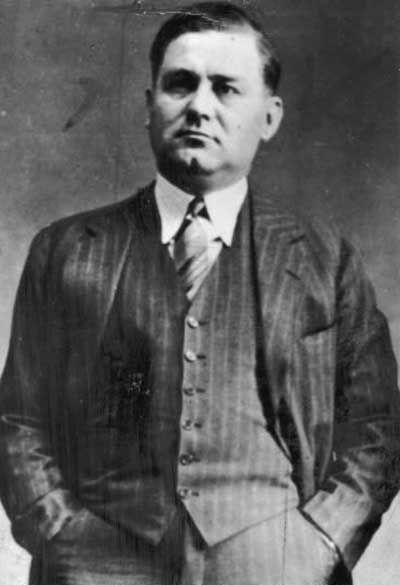
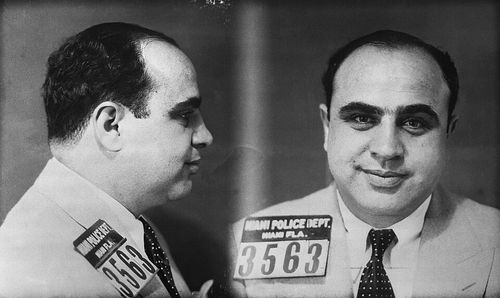
Moran himself was the obvious intended target, and he was late. Arriving with two associates, he saw what he took for a police car outside, assumed a raid was under way and went for coffee instead. He was soon telling a reporter that only Capone killed like that. Capone was at his house in Miami Beach that morning, which settled nothing: nobody imagined he had pulled a trigger himself.
Several investigations started at once, run by the police, the state's attorney and the Cook County coroner, Herman Bundesen. A deputy Prohibition administrator muddied things early by suggesting real policemen had done it. Bundesen's citizens' panel brought in Calvin Goddard, then building the new science of firearms identification, and paid for him to set up a laboratory in Chicago. Goddard test-fired the Thompsons held by the city police and showed none of them had been used. On 22 February the Cadillac turned up, partly cut apart and burned, in a garage on Wood Street. A second car, a Peerless, was blown up in suburban Maywood five days later, with what looked like planted evidence inside.
Capone gunmen were arrested, Jack McGurn among them. He had an alibi from his girlfriend, who said they had spent the day together in a hotel room, and the charges against him and others were dropped. The best physical evidence arrived by accident in December 1929, when Fred Burke, a former St. Louis gangster known for posing as a policeman, shot a patrolman after a car crash in St. Joseph, Michigan. Police searching his bungalow found two Thompsons. Goddard matched both to the bullets from the garage. Burke was eventually caught in 1931, tried in Michigan for the patrolman's murder, and sentenced to life. He was never tried for the massacre.
Bundesen closed his inquest in November 1931 with the finding that the seven had been killed by persons unknown. In 1935 a minor gangster, Byron Bolton, told the FBI he had been a lookout across the street and named the gunmen as Burke, Fred Goetz, Gus Winkler, Ray Nugent and Bob Carey, acting for Capone. By then most of those men were dead or missing, and nobody was prosecuted. Historians still disagree about who was in the garage, and some doubt that Capone gave the order at all.
The victims
Peter and Frank Gusenberg were brothers in their thirties and long-time North Side enforcers. Albert Kachellek, who went by James Clark, was Moran's brother-in-law and his second in command. Adam Heyer kept the gang's books and ran its business affairs, and Albert Weinshank managed a string of cleaning and dyeing businesses through which Moran's people squeezed that trade; it was often said afterwards that he looked enough like Moran to have fooled the lookouts, though that rests on later tradition rather than evidence.
Two of the dead were not gangsters at all. John May was a mechanic who did occasional work at the garage and had brought his dog Highball with him that morning; he was fixing a truck wheel when the gunmen came in. Reinhardt Schwimmer had trained as an optician and drifted into gambling, and he liked to spend time around Moran's men. Neither had any part in the feud that killed them.
Timeline
Seven men are shot in the S.M.C. Cartage Company garage at 2122 North Clark Street by men posing as police; Frank Gusenberg dies in hospital that day.
Coroner Herman Bundesen holds a re-enactment at the garage and opens his inquest.
A partly dismantled and burned Cadillac is found in a garage on Wood Street.
A Peerless touring car is blown up in Maywood, and Jack McGurn is arrested at the Stevens Hotel.
The bodies of Capone gunmen John Scalise and Albert Anselmi, both arrested after the massacre, are found with that of Joseph Giunta.
Fred Burke kills patrolman Charles Skelly in St. Joseph, Michigan; Thompsons later found at his home are matched to the massacre.
Burke is captured near Green City, Missouri, and returned to Michigan, where he is sentenced to life for Skelly's murder.
Bundesen closes the inquest, finding that the seven were killed by persons unknown.
Byron Bolton, under FBI questioning, names Burke, Goetz, Winkler, Nugent and Carey as the killers; no one is charged.
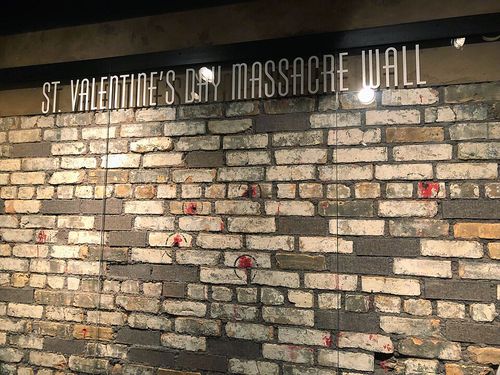
The garage is demolished; its bullet-marked wall is later sold and now belongs to the Mob Museum in Las Vegas.
People in the case
-
Bugs Moran Also involved
21 August 1893 – 25 February 1957
Leader of the North Side Gang and the presumed target; he arrived late and stayed away. Died in federal prison in 1957 after a later robbery conviction.
-
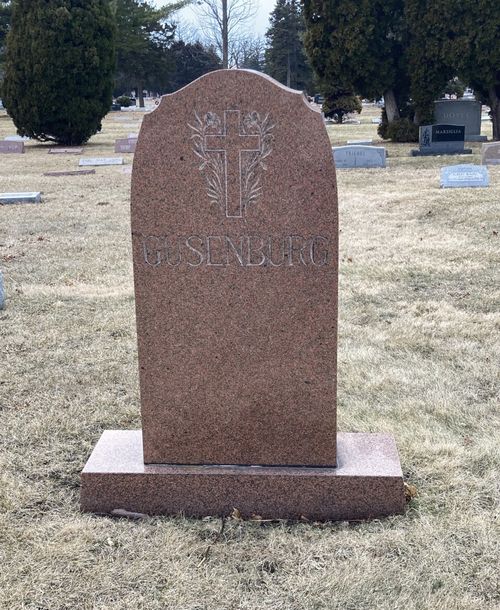
Frank Gusenberg Victim
11 October 1892 – 14 February 1929
North Side enforcer; the only man still alive when police arrived, he refused to say who had shot him.
-
Peter Gusenberg Victim
22 September 1889 – 14 February 1929
Frank's older brother and fellow North Side gunman. Sources give his birth year as 1888 or 1889.
-
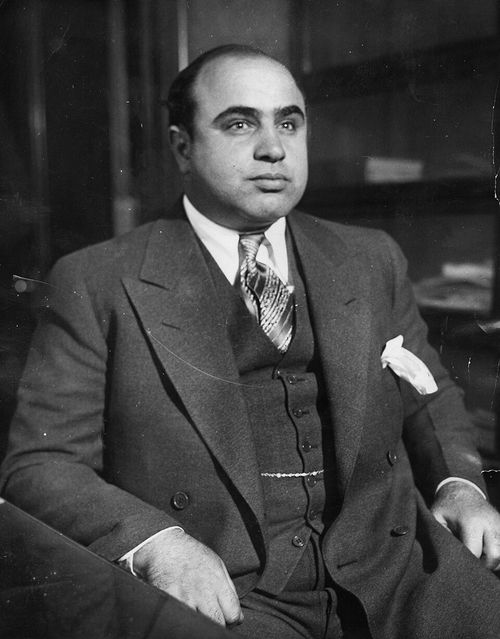
Al Capone Suspect
17 January 1899 – 25 January 1947
Head of the rival Chicago Outfit; widely believed to have ordered the killings but never charged. He was in Florida that day.
-
Fred Burke Suspect
29 May 1893 – 10 July 1940
Former Egan's Rats gunman; two Thompsons found at his Michigan home in 1929 were matched to the massacre. Imprisoned for life for killing a Michigan policeman.
-
Jack McGurn Suspect
2 July 1902 – 15 February 1936
Capone gunman charged after the killings; the case was dropped for lack of evidence. Some historians think he organised the hit team.
-
Herman Bundesen Investigator
27 April 1882 – 25 August 1960
Cook County coroner who ran the inquest and closed it in 1931 with a finding of persons unknown.
-
Calvin Goddard Investigator
30 October 1891 – 22 February 1955
Firearms examiner whose Chicago laboratory cleared the city police's guns and matched Burke's Thompsons to the scene.
Where it happened
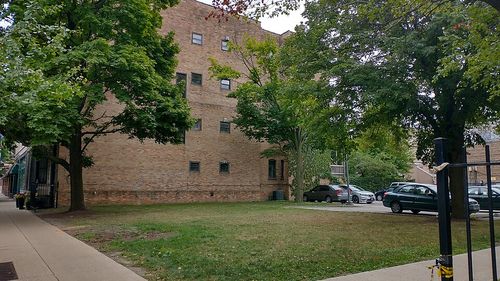
- Site of the S.M.C. Cartage Company garage, 2122 North Clark Street. Where the seven men were killed; the building was demolished in 1967 and the site is now a lawn.
- Wood Street garage. Where the burned Cadillac used by the gunmen was found on 22 February 1929.
- 1st Street and Harvard Avenue, Maywood. Where a second car was blown up on 27 February 1929.
- Mob Museum, Las Vegas. Displays the reassembled bricks of the wall against which the men were shot.
Outcome
Unsolved Unsolved
Jack McGurn, John Scalise and Albert Anselmi were charged with the murders, but the charges were dropped for lack of evidence. The Cook County coroner's inquest ended in November 1931 with a finding of murder by persons unknown. Fred Burke, whose guns matched the scene, was sentenced to life imprisonment in Michigan for a different murder and was never tried for the massacre. No one was ever convicted.
What the record settles, and what it doesn't
Established
- Seven men were shot dead in the S.M.C. Cartage Company garage at 2122 North Clark Street on the morning of 14 February 1929.
- At least two of the attackers wore police uniforms, and the killers arrived in a car made to look like a police detective's car.
- Five of the dead were members of Bugs Moran's North Side Gang; John May and Reinhardt Schwimmer were not gang members.
- Calvin Goddard's ballistics work showed that the Chicago police's own Thompson guns had not been used.
- Two Thompson submachine guns recovered from Fred Burke's home in Michigan in late 1929 were matched to bullets from the scene.
- The coroner's inquest closed in 1931 with a verdict of murder by persons unknown, and no one was ever convicted.
- Al Capone was in Florida on the day of the killings.
Disputed
- Whether Capone ordered the killings: most historians accept he did, but some argue a plot this elaborate does not fit how he usually dealt with rivals.
- Who the gunmen were: Byron Bolton's 1935 account named Burke, Goetz, Winkler, Nugent and Carey; other researchers add Tony Accardo or credit Jack McGurn with assembling the team.
- The 'Three Fingered Jack' White theory, put forward in a letter to J. Edgar Hoover and favoured by one Capone biographer, is rejected by others because White appears to have been in jail at the time.
- Why the men were at the garage: the traditional story is that they were waiting for a load of hijacked whiskey, but some historians point out that they were dressed for a meeting, not for unloading a truck.
- How many attackers there were: estimates run from four to six, and witnesses described the car and men differently.
- Whether Albert Weinshank was mistaken for Moran by the lookouts is a long-repeated story with little documentary support.
Pictures





Afterwards
The killings did more damage to Capone than to Moran's gang in the long run. Public patience with Chicago's beer wars ran out, newspapers across the country gave the case enormous space, and the federal government's interest in Capone hardened into the tax prosecution that sent him to prison in 1931. The North Side Gang survived for a time but was finished as a serious rival by the early 1930s. Moran drifted into smaller crimes and died in federal custody in 1957.
The massacre also helped make the Thompson submachine gun a political issue, and it fed into the debate that produced the National Firearms Act of 1934. The garage was torn down in 1967. Its north wall was bought brick by brick, exhibited for years as a curiosity, and is now displayed at the Mob Museum in Las Vegas. Calvin Goddard's work on the case led to what is usually described as the first independent crime laboratory in the United States, set up in Chicago with the backing of the same citizens who had paid for his investigation.
Questions readers ask
Did Al Capone order the St. Valentine's Day Massacre?
Most historians think so, and it was widely assumed at the time, but Capone was never charged and no court ever ruled on it. He was at his home in Florida on the day, and some writers argue the killings were the work of others.
Was anyone convicted for the St. Valentine's Day Massacre?
No. A few Capone men were charged and released, and the coroner's inquest found the men had been killed by persons unknown. Fred Burke, whose guns matched the scene, went to prison for a different murder.
Why was Bugs Moran not killed?
Moran was running late that morning. When he saw what looked like a police car outside the garage he assumed it was a raid and stayed away.
Where are the bricks from the St. Valentine's Day Massacre wall?
The garage was demolished in 1967 and the wall's bricks were sold. After years on display as a curiosity, the reassembled wall is now at the Mob Museum in Las Vegas.
Sources and further reading
- Saint Valentine's Day Massacre (Wikipedia)
- Fred Burke (Wikipedia)
- Frank Gusenberg (Wikipedia)
- Wikidata Q1164263 (life dates checked here)
Written by Sinister Crimes from the sources above; see our editorial standards. Last checked 1 November 2026.