

The case
The prisoner was handcuffed in the front seat, and the man meant to guard him from behind had a shotgun he did not know how to use. A little after seven on the morning of 17 June 1933, seven lawmen walked Frank Nash out of Union Station in Kansas City to a waiting Chevrolet. Nash was a veteran train and bank robber who had walked away from Leavenworth penitentiary three years earlier. Two federal agents and Otto Reed, police chief of McAlester, Oklahoma, had arrested him the previous day in Hot Springs, Arkansas, and brought him north by overnight train. In Kansas City they were met by the head of the Bureau of Investigation's local office, Reed Vetterli, agent Raymond Caffrey, and two city detectives, Frank Hermanson and William Grooms.
Nash's friends had learned of his arrest and of the train. As the officers settled into the car, with Nash in front and agents Joe Lackey and Frank Smith and Chief Reed in the back, armed men came from between the parked cars. Someone shouted 'Up, up!' and someone else 'Let 'em have it!' Machine-gun fire swept the car. In about half a minute Hermanson and Grooms were dead on the pavement, Caffrey was dying of a head wound, and Reed and Nash were dead inside. Lackey was badly wounded and Vetterli hit in the arm. Smith, crouched in the middle of the back seat, was untouched. The attackers ran to another car and were gone.
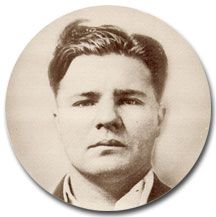
The Bureau's investigation, driven hard by J. Edgar Hoover, concluded that the plan had been organised by Nash's associates in Kansas City and carried out by Vernon Miller, a former South Dakota sheriff turned gunman, with the help of Charles Arthur 'Pretty Boy' Floyd and his partner Adam Richetti. Floyd and Richetti, the Bureau said, had arrived in the city the night before after kidnapping a Missouri sheriff on the way. Fingerprints identified as Richetti's were found on beer bottles at Miller's house.
Miller never stood trial. In November 1933 his body was found in a ditch outside Detroit, apparently the victim of other criminals. Floyd and Richetti stayed at large until October 1934, when a car crash near Wellsville, Ohio, led to a gunfight with local police. Richetti was captured. Floyd escaped, and two days later, on 22 October 1934, federal agents and local officers shot him dead on a farm near East Liverpool. According to those present, he denied to the end that he had been at Union Station.
Richetti was tried in Kansas City in June 1935 for the murder of Detective Hermanson, about two years after the shooting. Witnesses who had earlier named other men or no one now identified him, and he was convicted and sentenced to death. After appeals he was executed in the gas chamber of the Missouri State Penitentiary on 7 October 1938. He too insisted he had not been there. Four men who had helped plan the escape, Richard Galatas, Herbert Farmer, Louis Stacci and Frank Mulloy, were convicted of conspiracy in January 1935 and given the maximum two years.
The case is still argued over, and for more than one reason. Floyd's biographers and several other writers say the massacre was unlike anything else in his career, and that the Bureau needed a famous name. Some researchers have gone further and argued, from the wounds and the weapons, that some of the lawmen and Nash himself were hit by Lackey's shotgun as he fumbled with it in the back seat, a possibility the Bureau never acknowledged. The Bureau's own files, and a number of underworld informants, continued to name Floyd. What is not disputed is the result: within a year Congress had given federal agents the power to carry guns and make arrests.
The victims
Raymond J. Caffrey was thirty-one, a Nebraska lawyer who had joined the Bureau of Investigation in 1927 and served in Boston and Charlotte before Kansas City; he left a wife and a young son. Otto Reed, born Orin Henry Reed in 1884, was the police chief of McAlester, Oklahoma, the town whose state prison Nash knew well; he had helped track Nash down and lent the shotgun that Lackey carried. He was survived by his wife, Phoebe.
The two Kansas City detectives had come only to provide an escort. Frank Hermanson, forty-two, was a long-serving officer survived by his wife, Montie. William 'Red' Grooms was twenty-nine and also married. Frank Nash, the prisoner the gunmen had supposedly come to free, died in the front seat. Agent Joe Lackey survived serious wounds to the back, and Reed Vetterli was wounded in the arm.
Timeline
Frank Nash escapes from the federal penitentiary at Leavenworth, Kansas.
Two federal agents and Chief Otto Reed arrest Nash in Hot Springs, Arkansas, and take the overnight train north from Fort Smith.
Gunmen open fire outside Union Station, killing four lawmen and Nash.
Vernon Miller's body is found near Detroit.
Congress gives federal agents general authority to carry firearms and make arrests.
Richetti is captured after a shootout with police near Wellsville, Ohio; Floyd escapes.
Floyd is shot dead by federal agents and local officers on a farm near East Liverpool, Ohio.
Galatas, Farmer, Stacci and Mulloy are convicted of conspiring to free a federal prisoner.
Adam Richetti is convicted of murdering Detective Frank Hermanson and sentenced to death.
Richetti is executed in the gas chamber of the Missouri State Penitentiary.
People in the case
-
Frank Nash Victim
6 February 1887 – 17 June 1933
Escaped federal prisoner being returned to Leavenworth; killed in the car he was supposed to be rescued from.
-
Raymond J. Caffrey Victim
15 May 1902 – 17 June 1933
Bureau of Investigation special agent; fatally wounded in the head beside his car.
-
Otto Reed Victim
13 March 1884 – 17 June 1933
Police chief of McAlester, Oklahoma, who had helped capture Nash; killed in the back seat.
-
Frank Hermanson Victim
8 November 1890 – 17 June 1933
Kansas City police detective; Richetti was convicted of his murder.
-
William J. Grooms Victim
19 January 1904 – 17 June 1933
Kansas City police detective killed at the start of the shooting.
-
Vernon C. Miller Suspect
25 August 1896 – 29 November 1933
Former sheriff and gunman named as the organiser of the attack; found murdered near Detroit before he could be caught.
-
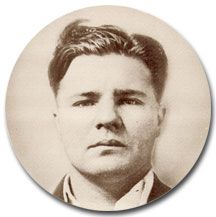
Pretty Boy Floyd Suspect
3 February 1904 – 22 October 1934
Oklahoma bank robber named by the FBI as a gunman; killed by agents and police in Ohio, denying involvement.
-
Adam Richetti Accused
5 August 1909 – 7 October 1938
Floyd's partner; convicted of murder in 1935 and executed in Missouri, maintaining his innocence.
Where it happened
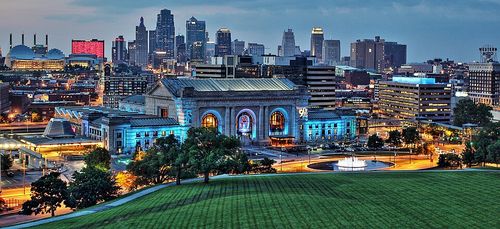
- Union Station, Kansas City. The shooting took place in the parking area outside the east entrance.
- Clarkson, Ohio. Pretty Boy Floyd was killed on a farm in this area, near East Liverpool, in October 1934.
- Missouri State Penitentiary, Jefferson City. Where Adam Richetti was executed in 1938.
Outcome
Disputed verdict Conviction disputed
Adam Richetti was convicted in Jackson County, Missouri, of the murder of Detective Frank Hermanson in June 1935, sentenced to death, and executed on 7 October 1938. Vernon Miller was murdered and Pretty Boy Floyd killed by lawmen before either could be tried. Four men who planned the escape attempt were convicted of federal conspiracy on 4 January 1935 and each sentenced to two years and a $10,000 fine. Whether Floyd and Richetti took part in the shooting remains contested.
What the record settles, and what it doesn't
Established
- On the morning of 17 June 1933, gunmen attacked lawmen escorting Frank Nash outside Union Station in Kansas City.
- Four officers, Raymond Caffrey, Otto Reed, Frank Hermanson and William Grooms, were killed, and Nash was killed too.
- Agents Joe Lackey and Reed Vetterli were wounded and agent Frank Smith was unhurt.
- The attack was an attempt, organised by Nash's associates, to free him from custody, and Vernon Miller played a central part.
- Adam Richetti was convicted of Hermanson's murder and executed in 1938.
- Four men were convicted in January 1935 of conspiring to free Nash.
- The killings helped persuade Congress in 1934 to give federal agents authority to carry firearms and make arrests.
Disputed
- Whether Pretty Boy Floyd was there: the FBI and some historians say the evidence, including informant testimony, shows he was; Floyd's biographers and others argue it was out of character and that he was blamed for publicity.
- Whether Richetti was there: he was convicted largely on identification and fingerprints at Miller's house, and some writers argue he was framed.
- Who killed whom: researchers have argued from the wounds that Agent Lackey's shotgun, fired from the back seat, killed Nash and possibly Caffrey or Hermanson; the FBI has always attributed all the deaths to the gunmen.
- Whether it was a rescue at all: some writers suggest the real aim was to silence Nash, pointing to Miller's later murder and Nash's underworld connections.
- The identity of any other gunmen: one underworld memoir named different men entirely, and the survivors themselves were unsure whether three or four attackers were involved.
Pictures

Afterwards
The Union Station shooting is usually counted as the event that turned the Bureau of Investigation into the armed FBI. Hoover used it to press for new federal crime laws, and in May and June 1934 Congress gave agents general power to carry weapons and make arrests and made killing a federal officer a federal crime. The Bureau bought its first Thompson guns. The agents who died that morning are commemorated on the FBI's Wall of Honor and in Missouri's law enforcement memorial.
Floyd's death in an Ohio field turned him into a folk figure, the 'Robin Hood of the Cookson Hills' of Woody Guthrie's song, and his defenders have kept the Union Station question open. Union Station itself was restored and reopened as a museum and science centre, and bullet marks long said to date from the shooting are still pointed out on its facade.
Questions readers ask
Who was killed in the Kansas City Massacre?
FBI agent Raymond Caffrey, McAlester police chief Otto Reed, Kansas City detectives Frank Hermanson and William Grooms, and the prisoner Frank Nash. Two other officers were wounded.
Was Pretty Boy Floyd involved in the Kansas City Massacre?
The FBI said so and still does, and some historians agree. Floyd denied it as he was dying, and several biographers and researchers argue that he and Adam Richetti were wrongly blamed.
Was anyone executed for the Kansas City Massacre?
Yes. Adam Richetti was convicted of murdering Detective Frank Hermanson and executed in the Missouri gas chamber on 7 October 1938.
How did the Kansas City Massacre change the FBI?
Before 1934 federal agents had no general authority to carry guns or make arrests. The massacre helped persuade Congress to grant both in 1934, alongside other new federal crime laws.
Sources and further reading
- Kansas City massacre (Wikipedia)
- Kansas City Massacre and Pretty Boy Floyd (FBI history)
- Union Station Massacre (Missouri Law Enforcement Memorial)
- Raymond J. Caffrey (FBI Wall of Honor)
- Wikidata Q6364933 (life dates checked here)
Written by Sinister Crimes from the sources above; see our editorial standards. Last checked 1 November 2026.