

The case
In early 1679 a lawyer at a Paris dinner heard a fortune teller named Marie Bosse, well into her wine, boast that one more round of poisonings would let her retire. He passed the remark to the police. A police officer's wife was sent to consult her, posing as a woman desperate to be rid of her husband, and came away with a vial. Within weeks Bosse had been arrested, and she named a rival: Catherine Monvoisin, known as La Voisin.
Paris was already uneasy about poison. In 1676 the Marquise de Brinvilliers had been executed for poisoning her father and two brothers to secure the family fortune, with the help of her lover, and rumours spread that she was one of many. In 1677 another suspect arrested for forgery and murder, Magdelaine de La Grange, hinted to the war minister Louvois that she knew of greater crimes. Louis XIV ordered Gabriel Nicolas de La Reynie, lieutenant general of the Paris police, to find the poisoners.
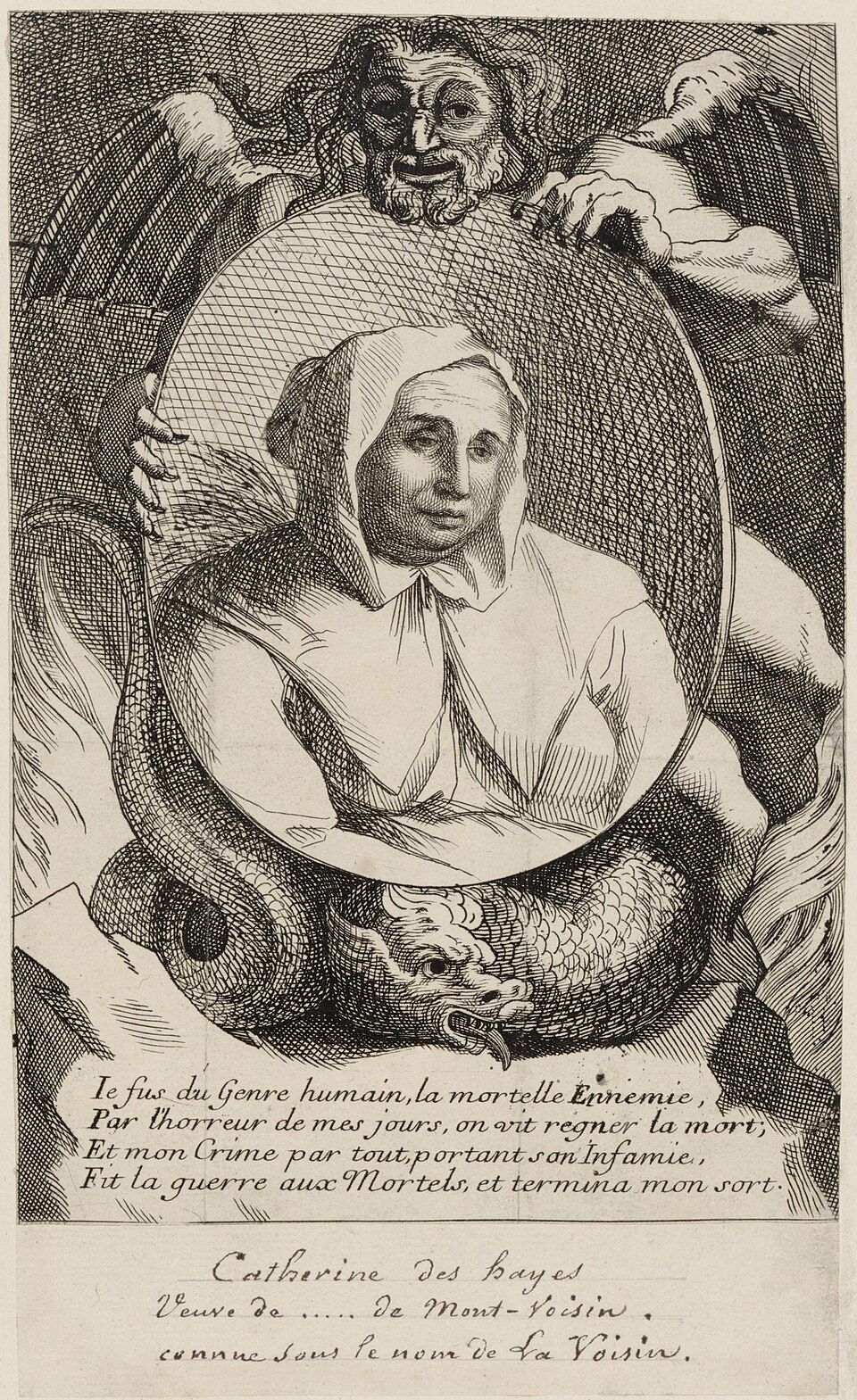
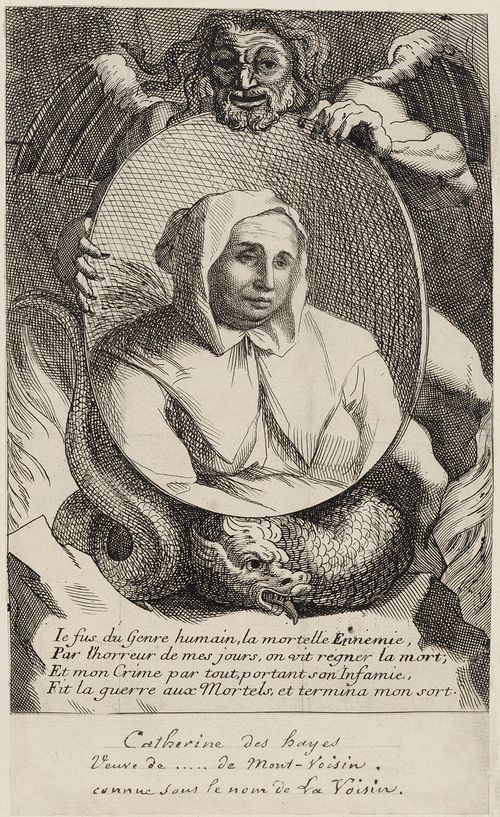
La Voisin, arrested on 12 March 1679, was a jeweller's wife from the outskirts of Paris who had built a lucrative trade in palm reading and prophecy. Her clients came from every rank up to the highest nobility. Investigators came to believe that she and a loose network of fortune tellers, midwives, alchemists and renegade priests sold more than predictions: love charms and aphrodisiacs, illegal abortions, sacrilegious masses, and powders that would speed an inheritance or remove an unwanted husband.
To try these cases the king set up a special commission of judges in April 1679, sitting at the Arsenal near the Bastille. It became known as the chambre ardente, the burning chamber, after its dark, torchlit hearing room. Its prisoners were questioned under torture, and their confessions named clients among the court: the Countess of Soissons, her sister the Duchess of Bouillon, the Marshal of Luxembourg and others. Some fled abroad, some were briefly imprisoned and released, and most were never tried. Marie Bosse was burned on 8 May 1679. La Voisin was tried in February 1680 and burned in the Place de Grève on 22 February.
After her death the investigation took its most dangerous turn. In the summer of 1680 her daughter, Marguerite Monvoisin, and several of the imprisoned priests and magicians described dealings with Madame de Montespan, the king's long-standing mistress and mother of several of his children. They alleged that she had bought love powders to keep the king's affections and attended black masses, and some claimed there had been plans to poison a rival and even the king. La Reynie recorded these statements but doubted much of them. The king suspended the commission at the end of September 1680.
It sat again from May 1681 but kept away from the Montespan allegations. Louis XIV dissolved it on 21 July 1682. The most compromising witnesses were never brought to trial; instead they were sent under royal orders to remote fortresses, with instructions that anyone who talked of the case was to be silenced. By then the court had heard several hundred accused and pronounced dozens of death sentences.
The victims
The poisonings at the heart of the affair are mostly impossible to count. The commission was told of husbands, fathers and rivals who had died after being given 'inheritance powders', and of attempts that failed, but few of these deaths were investigated as individual murders, and the names of most of those alleged to have been poisoned were never established in court. The family of the Marquise de Brinvilliers, her father Antoine Dreux d'Aubray and her brothers, are the best documented victims of the poison panic that preceded the affair.
The records also speak, through confessions extracted under torture, of infants said to have been sacrificed at black masses and of women who died after abortions. These claims were never tested at trial, and historians disagree about how much of them to believe. The accused themselves, many of them poor women working as midwives and fortune tellers, also paid a heavy price: several died under torture, and others spent the rest of their lives chained in remote prisons without trial.
Timeline
The Marquise de Brinvilliers is executed in Paris for poisoning members of her family.
Magdelaine de La Grange, arrested for forgery and murder, hints at wider crimes, and the king orders La Reynie to investigate.
Marie Bosse is arrested after selling poison to a police officer's wife posing as a client.
La Voisin is arrested in Paris.
Louis XIV creates a special commission, the chambre ardente, to try the poison cases.
Marie Bosse is burned at the stake.
Arrest warrants are issued for prominent courtiers, and the Countess of Soissons flees France.
La Voisin is burned in the Place de Grève after her trial before the commission.
Marguerite Monvoisin's statements begin to implicate Madame de Montespan.
The king suspends the commission's sittings.
The commission resumes, but avoids the cases touching Madame de Montespan.
Louis XIV dissolves the commission; remaining witnesses are imprisoned for life by lettre de cachet.
Louis XIV is reported to have burned the dossier of evidence concerning Madame de Montespan.
People in the case
-
Catherine Monvoisin (La Voisin) Perpetrator
1640 – 22 February 1680
Born Catherine Deshayes, c. 1640. Fortune teller and midwife at the centre of the network; burned for witchcraft and poisoning.
-
Marie Bosse Perpetrator
? – 8 May 1679
Fortune teller and poisoner whose arrest exposed La Voisin; burned in May 1679.
-
Gabriel Nicolas de La Reynie Investigator
25 May 1625 – 14 June 1709
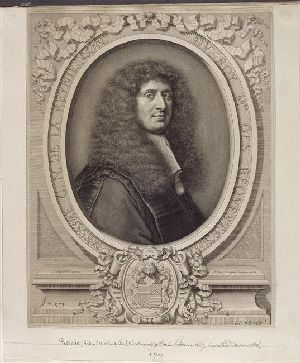
Lieutenant general of the Paris police, who led the investigation and served as a rapporteur to the commission.
-
Louis XIV Also involved
5 September 1638 – 1 September 1715
King of France, who set up the commission and later suspended and dissolved it.
-
Madame de Montespan Suspect
5 October 1640 – 27 May 1707
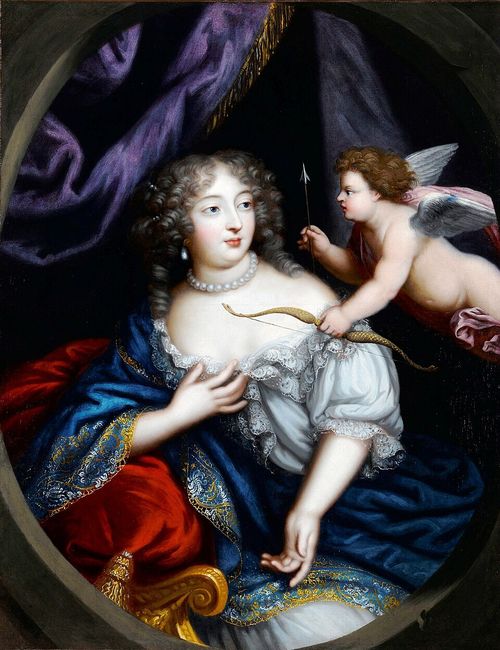
The king's mistress, named by witnesses after La Voisin's execution; never charged or tried.
-
Marquise de Brinvilliers Also involved
22 July 1630 – 17 July 1676
Aristocrat executed in 1676 for poisoning her father and brothers; her case set off the poison panic.
-
Étienne Guibourg Accomplice
1610 – 1686
Priest who confessed to saying black masses for La Voisin's clients; imprisoned for life without trial.
-
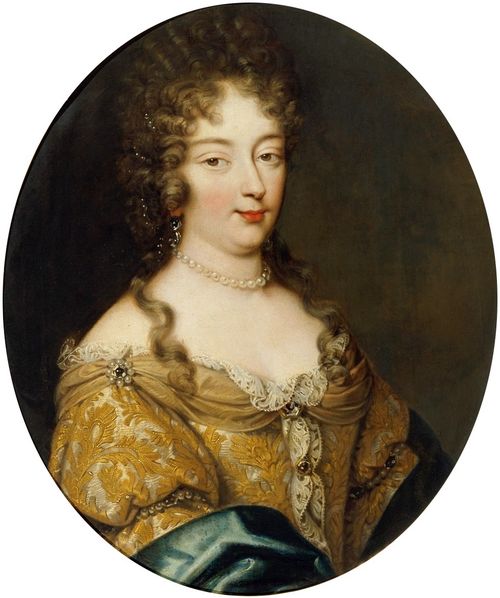
Olympia Mancini, Countess of Soissons Suspect
11 July 1638 – 9 October 1708
Courtier named as a client of La Voisin; fled France in 1680 rather than face the commission.
Where it happened
- The Arsenal, Paris. Where the chambre ardente sat from 1679 to 1682; the building now houses the Bibliothèque de l'Arsenal.
- Place de Grève (Place de l'Hôtel-de-Ville), Paris. Execution ground where La Voisin was burned on 22 February 1680.
- Château de Vincennes. Fortress prison where La Voisin and many of the accused were held and questioned.
Outcome
Executed Executed
The chambre ardente heard several hundred accused between 1679 and 1682. French sources give 36 death sentences and around 34 executions, with others sent to the galleys, banished or fined; several prisoners died under torture or took their own lives. Dozens more, including the witnesses against Madame de Montespan, were imprisoned for life by royal order without trial. La Voisin was burned on 22 February 1680.
What the record settles, and what it doesn't
Established
- The Marquise de Brinvilliers was executed in 1676 for poisoning her father and two brothers.
- La Voisin was arrested on 12 March 1679 and burned in Paris on 22 February 1680.
- Louis XIV created a special commission in April 1679 to try poisoning and sorcery cases; it sat at the Arsenal.
- Members of the high nobility, including the Countess of Soissons and the Marshal of Luxembourg, were named as clients and investigated.
- Madame de Montespan was named by several witnesses in 1680 but was never charged.
- The king suspended the commission in 1680 and dissolved it on 21 July 1682, and key witnesses were imprisoned for life without trial.
Disputed
- Whether Madame de Montespan took part in black masses or plotted poisonings: the witnesses who named her were prisoners hoping to save themselves, and many historians think the most extreme claims false, while others believe she at least bought love powders.
- How many murders the network actually committed; contemporary estimates were wild, and modern historians note that poisoning was hard to prove and that many 'powders' were probably harmless.
- The scale of the alleged child sacrifices and of claims that remains were found at La Voisin's house, which one modern historian has said are not supported by the records of any search.
- Whether the confessions, extracted under torture or the threat of it, can be trusted at all.
- How many were executed: sources give 34 or 36 death sentences or executions.
Pictures





Afterwards
The affair hastened the end of Madame de Montespan's reign as royal favourite, though she stayed at court for years and was never accused publicly. The Countess of Soissons lived in exile, and her son, Prince Eugene of Savoy, left France to serve the Habsburgs and became one of Louis XIV's most formidable enemies. In 1682 the king issued an edict restricting the sale of poisons and treating fortune telling and sorcery as fraud and sacrilege, a step often seen as one of the first moves away from treating witchcraft as a real crime in France.
La Reynie's notes survived the king's attempt to destroy the dossier, and the archives of the Bastille later allowed historians to reconstruct the case. It has inspired plays, novels and television drama, often far more lurid than the documents.
Questions readers ask
What was the Affair of the Poisons?
A scandal in Paris between 1677 and 1682 in which fortune tellers and alchemists were accused of selling poisons, charms and black masses to clients that included members of Louis XIV's court. A special commission tried the cases and passed dozens of death sentences.
Who was La Voisin?
Catherine Monvoisin, born Deshayes, a Paris fortune teller and midwife who became the central figure of the affair. She was arrested in March 1679 and burned at the stake on 22 February 1680.
Was Madame de Montespan involved in the Affair of the Poisons?
Witnesses accused her in 1680 of buying love powders and attending black masses, and some claimed worse. She was never charged, and historians remain divided about how much of the testimony to believe.
What was the chambre ardente?
A special court set up by Louis XIV in April 1679 to try the poison cases. It met at the Arsenal in Paris, took its name from its torchlit, black-draped hearing room, and was dissolved in July 1682.
Sources and further reading
- Affair of the Poisons (Wikipedia)
- L'affaire des poisons (Ministère de la Justice)
- Affaire des poisons (Wikipédia, French)
- La Voisin (Wikipedia)
- Wikidata Q1248576 (life dates checked here)
Written by Sinister Crimes from the sources above; see our editorial standards. Last checked 1 November 2026.