

The case
Late one night in September 1840, in a locked room of the courthouse at Tulle, the most famous chemist in France worked over flasks of zinc and sulphuric acid while the town slept. Mathieu Orfila, dean of the Paris faculty of medicine, had been summoned to settle a question that had already defeated three local experts: was there arsenic in the body of Charles Lafarge? The next afternoon he told the court that there was. With that statement, Marie Lafarge's long and theatrical trial was effectively over.
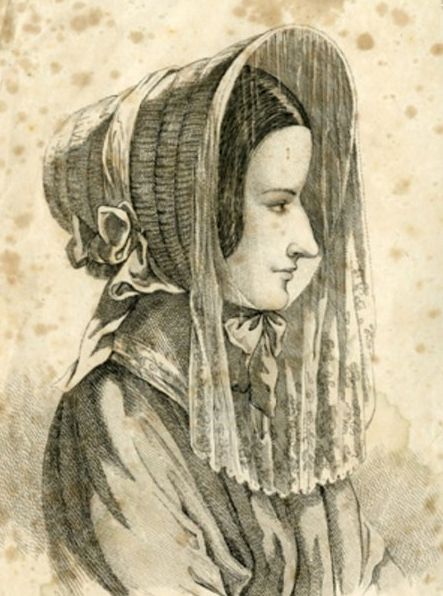
Marie Capelle was born in Paris in 1816, the daughter of an artillery officer, and was orphaned young. Brought up by well-connected relatives, educated alongside the daughters of the rich but with a modest dowry of her own, she reached her twenties unmarried. Her family found a husband through a marriage broker: Charles Pouch-Lafarge, a 28-year-old ironmaster from Corrèze who presented himself as the owner of a prosperous estate. They met, became engaged within days, and married in August 1839.
The estate was Le Glandier, a former Carthusian monastery in the hills near Brive that his father had bought after the Revolution. Charles had put a forge on it and run up debts. Marie found a damp, half-ruined house, in-laws she despised and a husband she did not love. On her first night she wrote him a letter begging to be released from the marriage and threatening to take arsenic. They came to an arrangement, and outwardly the household settled down.
In November Charles went to Paris to raise money and patent a process he had devised for cutting fuel costs in iron-making. Marie sent him affectionate letters and, in December, a cake. He fell sick after eating it, but thought it had spoiled in the post. He returned home on 3 January 1840, still unwell, and grew rapidly worse, with vomiting, cramps and thirst. The doctors diagnosed something like cholera. Marie had bought arsenic, she said for the rats, and she nursed him herself. Anna Brun, a young woman staying in the house, believed she saw Marie stir a white powder into her husband's drinks and set some of them aside. Charles Lafarge died early on the morning of 14 January 1840.
His family went to the authorities. The rat paste Marie had made turned out to contain no arsenic at all, while a small malachite box she kept with her did. She was arrested on 23 January. Before the murder trial, she was also convicted of stealing a school friend's diamonds, a scandal that had been hushed up before her marriage.
The murder trial opened at the Tulle assize court on 3 September 1840 and drew spectators and journalists from across France. The local doctors said they had found arsenic in the stomach, but their methods were old and crude. Her counsel had a letter from Orfila himself dismissing those tests. The court ordered new analyses with the Marsh test, a recently invented method for detecting very small amounts of arsenic. Local chemists found none in the body, even after exhumation, though they did find large amounts in food and drink kept from the sickroom. Then Orfila was called. Working with the local chemists' own materials, he found arsenic in the remains, and showed that it did not come from the reagents or the soil of the grave. On 19 September the jury convicted Marie Lafarge, and she was sentenced to hard labour for life.
The victims
Charles Pouch-Lafarge was about 28 when he married, the son of a local justice of the peace at Vigeois, and the master of a struggling iron forge on the family's estate at Le Glandier. Accounts written by Marie's supporters describe him as coarse and unpolished, and he had misrepresented his wealth to secure a wife with a dowry. He also seems to have hoped, genuinely, to make the marriage and the forge work, travelling to Paris to patent a process for making iron more cheaply.
He died at home at the age of about 29, after eleven days of illness, surrounded by his mother, his sister and the household, several of whom came to suspect his wife before he died.
Timeline
Marie-Fortunée Capelle is born in Paris.
She marries Charles Pouch-Lafarge in Paris after an engagement arranged through a marriage broker.
The couple arrive at Le Glandier, where Marie writes asking to be released from the marriage.
In Paris, Charles falls sick after eating a cake sent by Marie.
Charles returns to Le Glandier, still ill.
Charles Lafarge dies early in the morning.
Marie Lafarge is arrested and taken to prison at Brive.
In a separate trial she is convicted of stealing a friend's diamonds and sentenced to two years.
Her murder trial opens before the assize court at Tulle.
Orfila performs the Marsh test at Tulle and reports arsenic in the remains.
She is convicted and sentenced to hard labour for life.
Her memoirs, written in prison, are published.
Ill with tuberculosis, she is pardoned by Louis-Napoléon Bonaparte and released.
She dies at Ussat-les-Bains in the Ariège.
People in the case
-
Marie Lafarge Perpetrator
15 January 1816 – 1852
Born Marie-Fortunée Capelle in Paris. Convicted of poisoning her husband; pardoned in 1852 and died months later. Death date given as 7 November or 7 September 1852.
-
Charles Pouch-Lafarge Victim
? – 14 January 1840
Ironmaster of Le Glandier, born c. 1811; died eleven days after returning from Paris.
-
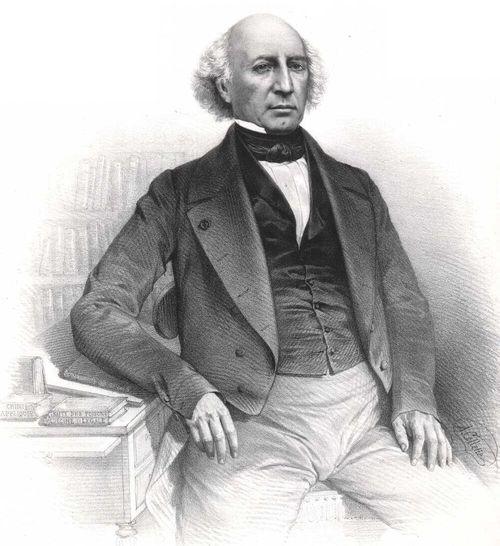
Mathieu Orfila Investigator
24 April 1787 – 12 March 1853
Spanish-born toxicologist and dean of the Paris medical faculty, whose Marsh-test analysis decided the case.
-
Charles Lachaud Defence
25 February 1817 – 9 December 1882
Young advocate in her defence team, later one of the leading criminal lawyers of France.
-
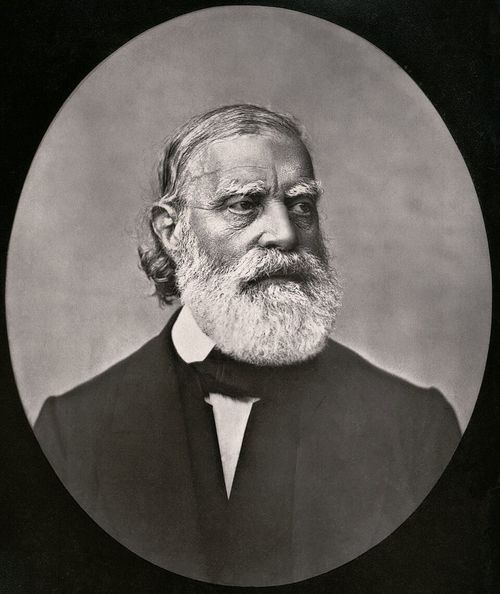
François-Vincent Raspail Witness
25 January 1794 – 7 January 1878
Chemist and Orfila's rival, called by the defence to challenge his findings; he arrived after the verdict.
-
Anna Brun Witness
Young woman living at Le Glandier who suspected Marie and preserved food and drink from the sickroom.
-
Emma Pontier Witness
Charles's young cousin, devoted to Marie, who handed over the malachite box.
Where it happened
- Le Glandier, Beyssac (Corrèze). The former Carthusian monastery where the Lafarges lived and Charles died; position is the commune of Beyssac.
- Tulle. Prefecture of Corrèze, where the murder trial was held in September 1840.
- Ornolac-Ussat-les-Bains. Spa village in the Ariège where she spent her last months and is buried.
Outcome
Convicted Convicted
The assize court at Tulle convicted Marie Lafarge of poisoning her husband on 19 September 1840, and she was sentenced to hard labour for life and an hour's public exposure in the square at Tulle. King Louis-Philippe commuted the hard labour to simple imprisonment for life. She was released by pardon in June 1852, already gravely ill.
What the record settles, and what it doesn't
Established
- Charles Lafarge died at Le Glandier on 14 January 1840 after an illness that began in Paris and worsened at home.
- Marie Lafarge had obtained arsenic during her husband's illness, saying it was for rats.
- The rat paste she had made contained no arsenic, while her malachite box did.
- Food and drink kept from the sickroom were found to contain large amounts of arsenic.
- Local chemists' Marsh tests on the body were negative; Orfila's tests on the same remains found arsenic.
- She was convicted on 19 September 1840 and sentenced to hard labour for life.
- She protested her innocence in memoirs published in 1841 and to the end of her life.
Disputed
- Whether Marie Lafarge was guilty: many contemporaries, including George Sand and Raspail, thought her a victim of prejudice and doubtful science, while Orfila and the court were convinced.
- Whether Orfila's analysis was reliable, given that the quantity of arsenic he found was small and the local tests were negative; Raspail argued it could have come from contamination.
- Whether someone else in the household, including a servant Charles had brought back from Paris, could have added the poison.
- The date of her death: English sources and Wikidata give 7 November 1852, while French sources citing the Ussat civil register give 7 September 1852.
Pictures


Afterwards
The trial divided France as few criminal cases had before, with newspapers taking sides and crowds of visitors seeking out Le Glandier. Orfila followed it with public lectures and demonstrations of the Marsh test, and the case is now remembered chiefly as a milestone in forensic science: one of the first in which a verdict turned on a chemist's detection of tiny quantities of poison in a body. Marie wrote her memoirs in prison and kept up a large correspondence.
She was moved from Montpellier to a nursing institution at Saint-Rémy before her release. She died in the Ariège months after leaving prison and was buried at Ornolac. Le Glandier was later sold back to the Carthusians and has since served as a children's home and a sanatorium. The story has been retold in novels and in a 1938 French film, L'Affaire Lafarge.
Questions readers ask
What was the Marsh test in the Lafarge case?
The Marsh test, devised by the British chemist James Marsh in 1836, detects arsenic by turning it into a gas that leaves a metallic deposit on cold glass. In the Lafarge trial, local chemists using it found nothing in the body, but Mathieu Orfila repeated the tests and found arsenic, which swung the verdict.
Was Marie Lafarge guilty?
A French jury convicted her in 1840, and most modern accounts accept the verdict. She always maintained her innocence, and in her own time many people believed she had been condemned on unreliable science.
What happened to Marie Lafarge?
She was sentenced to hard labour for life, reduced to life imprisonment. She developed tuberculosis, was pardoned in June 1852 and died later that year in the Ariège.
Who was Mathieu Orfila?
A Spanish-born chemist who became dean of the Paris faculty of medicine and is often called the founder of modern toxicology. His testimony at Tulle was decisive in the Lafarge case.
Sources and further reading
- Marie Lafarge (Wikipedia)
- Marie Lafarge (Wikipédia, French)
- Marsh test (Wikipedia)
- Wikidata Q274927 (life dates checked here)
Written by Sinister Crimes from the sources above; see our editorial standards. Last checked 1 November 2026.