
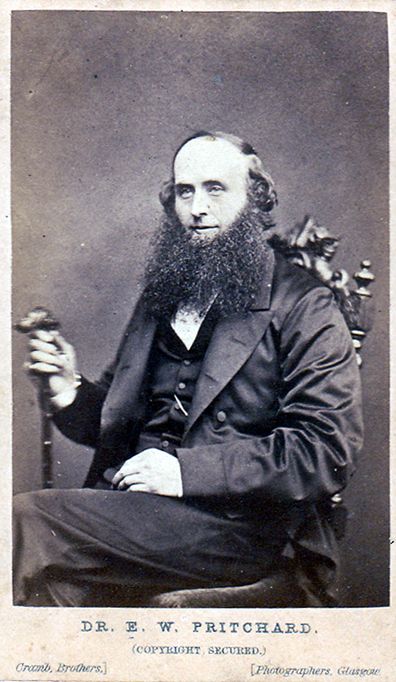

The case
In March 1865 Dr Edward Pritchard travelled from Glasgow to Edinburgh with his wife's coffin, had the lid opened so he could kiss her one last time, and saw her buried in her family's plot at the Grange Cemetery. When he stepped off the train in Glasgow afterwards, the police were waiting for him. An anonymous letter had reached the procurator fiscal suggesting that the deaths of Mary Jane Pritchard and her mother, within a month of each other in the same house, were not natural.
Pritchard was born in Southsea in 1825 into a naval family and served as an assistant surgeon in the Royal Navy before settling as a country doctor in Yorkshire. In 1851 he married Mary Jane Taylor, daughter of a prosperous Edinburgh silk merchant, and they had five children. Debts and gossip followed him from Yorkshire, and in 1859 the family moved to Glasgow. There he cultivated an image as a lecturer, traveller and man of science, much given to handing out signed photographs of himself. His Glasgow colleagues thought him a quack. In 1863 a servant, Elizabeth McGrain, died in a fire in the Pritchards' house in Berkeley Terrace; she had made no attempt to escape, and no charges were brought.
By 1864 the family was living in a house in Clarence Place, Sauchiehall Street, bought with help from Mrs Pritchard's parents. A young servant, Mary McLeod, had joined the household, and Pritchard began a sexual relationship with her. Late that year his wife fell ill with sickness and cramps that came and went. She improved during a visit to her family in Edinburgh and grew worse again on her return to Glasgow, where her husband treated her.
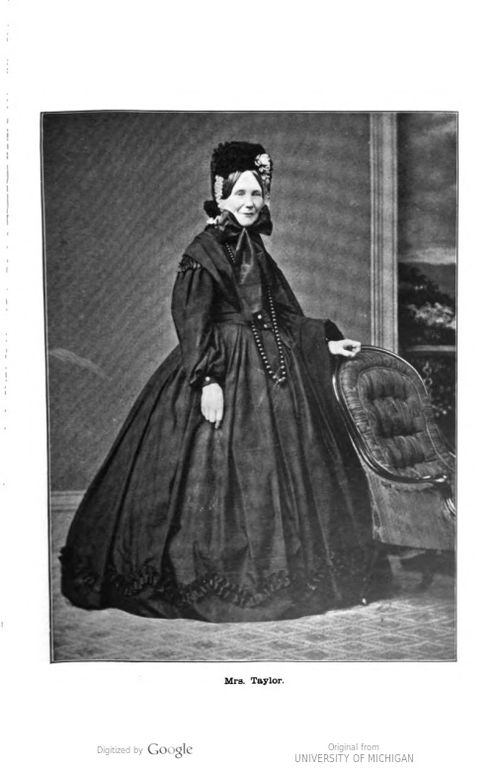
In February 1865 her mother, Jane Taylor, came to nurse her. Within about two weeks Mrs Taylor was taken ill late one evening and died. Pritchard certified her death himself as paralysis and apoplexy. Another doctor, James Paterson, who had seen her that night, believed she had been under the influence of a narcotic and that her daughter was being poisoned, but he did not go to the authorities. When the registrar asked him to certify the death, he declined. Mary Jane Pritchard died in March, aged 38, after a final collapse. Pritchard again signed the certificate himself, giving gastric fever as the cause.
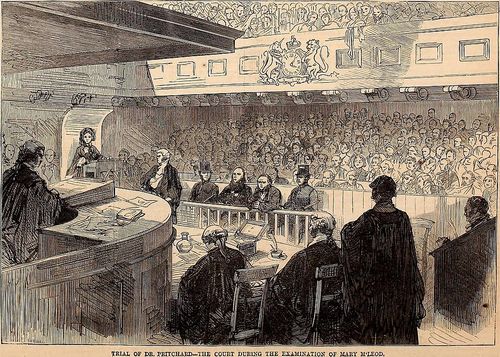
After his arrest, Professor Douglas Maclagan and Dr Henry Littlejohn examined the bodies, and the chemists found antimony in both women and evidence of aconite. Pritchard had been buying antimony, aconite and opium in large quantities from Glasgow chemists, much more than any practice needed. He was tried before the High Court of Justiciary in Edinburgh from 3 to 7 July 1865, with the Lord Justice-Clerk presiding. His counsel, Andrew Rutherfurd Clark, tried to suggest that Mary McLeod, who admitted the affair in the witness box, could have been the poisoner. The jury convicted him unanimously of both murders.
Before he died, Pritchard made more than one confession, contradicting himself as to whether he killed his mother-in-law and what part, if any, Mary McLeod had played. He was hanged at the Saltmarket end of Glasgow Green on the morning of 28 July 1865 before a crowd usually estimated at many tens of thousands. No one was hanged in public in Glasgow again.
The victims
Mary Jane Pritchard, born Mary Jane Taylor, was 38 when she died. She was the daughter of Michael Taylor, a retired silk and lace merchant of Lauder Road in the Grange district of Edinburgh, and had married Pritchard in 1851 when he was a naval surgeon at Portsmouth. She bore five children and stood by him through his debts and his move to Glasgow. Her family's money helped the couple buy their Sauchiehall Street house.
Jane Taylor, her mother, was about seventy and still active, a capable woman who came through from Edinburgh in February 1865 to look after her sick daughter and the household. Both women were buried together in the Taylor family lair at the Grange Cemetery in Edinburgh. Elizabeth McGrain, the 25-year-old servant who died in the 1863 fire, is sometimes counted as a third victim, though no inquiry established how she died.
Timeline
Edward William Pritchard is born in Southsea, Hampshire.
He marries Mary Jane Taylor, daughter of an Edinburgh silk merchant.
The Pritchards move to Glasgow after he leaves Yorkshire in debt.
The servant Elizabeth McGrain dies in a fire at the Pritchards' house in Berkeley Terrace.
Mary Jane Pritchard begins to suffer repeated attacks of sickness.
Her mother, Jane Taylor, arrives to nurse her.
Jane Taylor dies suddenly at the Sauchiehall Street house.
Mary Jane Pritchard dies at home, aged 38.
Pritchard is arrested in Glasgow on his return from his wife's funeral in Edinburgh.
His trial opens before the High Court of Justiciary in Edinburgh.
The jury unanimously finds him guilty of both murders.
Pritchard is hanged in public at Glasgow Green, the last public execution in the city.
People in the case
-
Edward William Pritchard Perpetrator
6 December 1825 – 28 July 1865
Former naval surgeon and Glasgow general practitioner, convicted of poisoning his wife and mother-in-law.
-
Mary Jane Pritchard Victim
? – March 1865
His wife, aged 38; died at their home in Sauchiehall Street after months of illness. Sources give 17 or 18 March.
-
Jane Taylor Victim
? – February 1865
His mother-in-law, about 70, of Lauder Road, Edinburgh. Sources give 25 or 28 February.
-
Mary McLeod Witness
Teenage servant with whom Pritchard had a sexual relationship; gave evidence at the trial and was named by the defence as a possible poisoner.
-
James Paterson Witness
Glasgow doctor who suspected poisoning but did not report it, and was strongly criticised afterwards.
-
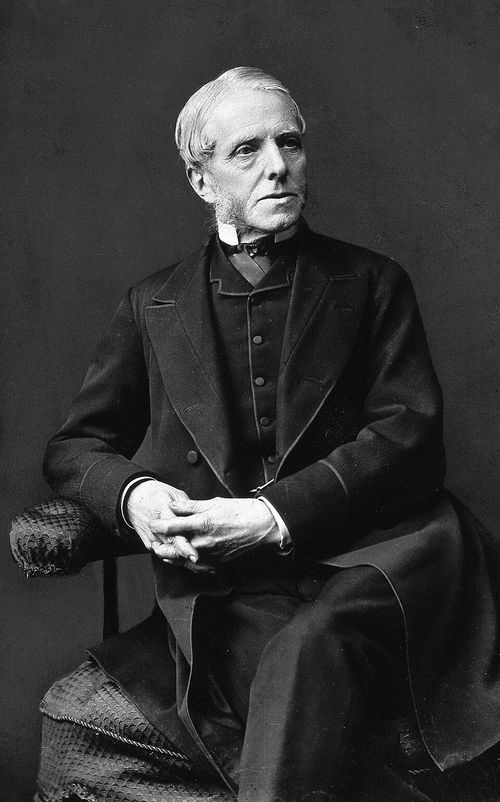
Henry Littlejohn Investigator
8 May 1826 – 30 September 1914
Edinburgh police surgeon who examined the bodies with Douglas Maclagan.
-
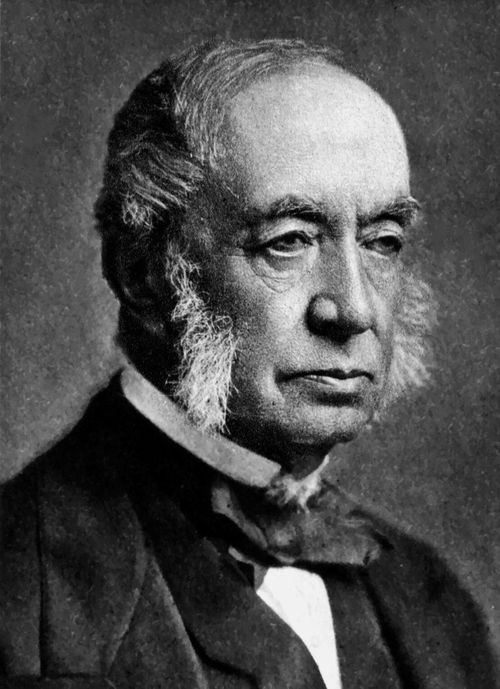
John Inglis, Lord Glencorse Judge
21 August 1810 – 20 August 1891
Lord Justice-Clerk, who presided at the trial.
-
Andrew Rutherfurd Clark Defence
1828 – 26 July 1899
Defence counsel; later a judge of the Court of Session.
-
Norman Macleod Also involved
3 June 1812 – 16 June 1872
Minister of the Barony Church, who attended Pritchard before his execution and left an account of it.
Where it happened
- Clarence Place, 131 Sauchiehall Street, Glasgow. The Pritchards' home, where both women died. Approximate position.
- Glasgow Green, Saltmarket end. Scene of the public execution outside the South Prison on 28 July 1865. Approximate position.
- Parliament House, Edinburgh. Seat of the High Court of Justiciary, where he was tried in July 1865.
Outcome
Executed Executed
Pritchard was tried before the High Court of Justiciary in Edinburgh from 3 to 7 July 1865 for the murders of his mother-in-law and his wife by administering antimony, aconite and opium. The jury returned a unanimous verdict of guilty on both charges, and he was sentenced to death. He was hanged in public at Glasgow on 28 July 1865.
What the record settles, and what it doesn't
Established
- Jane Taylor and Mary Jane Pritchard died within a month of each other in early 1865 at Pritchard's house in Sauchiehall Street.
- Pritchard treated both women and signed both death certificates himself, giving natural causes.
- Antimony was found in both bodies after his arrest, along with evidence of aconite.
- He had bought large quantities of antimony, aconite and opium from Glasgow chemists.
- He was having a sexual relationship with the teenage servant Mary McLeod.
- A unanimous jury convicted him of both murders on 7 July 1865, and he was hanged on 28 July 1865.
Disputed
- His motive: the prosecution pointed to his affair with Mary McLeod and to money from his wife's family, but no single motive was proved.
- Whether Mary McLeod had any part in the poisonings, as Pritchard claimed in one confession; the court did not accept it, and most writers regard her as a victim of his exploitation.
- Whether Dr James Paterson should have reported his suspicions after Mrs Taylor's death, which might have saved Mrs Pritchard; he defended his conduct at the time.
- Whether Pritchard caused the 1863 fire that killed Elizabeth McGrain; there was an inquiry but no charge.
- The exact death dates of both women, which differ by a day or more between sources.
Pictures
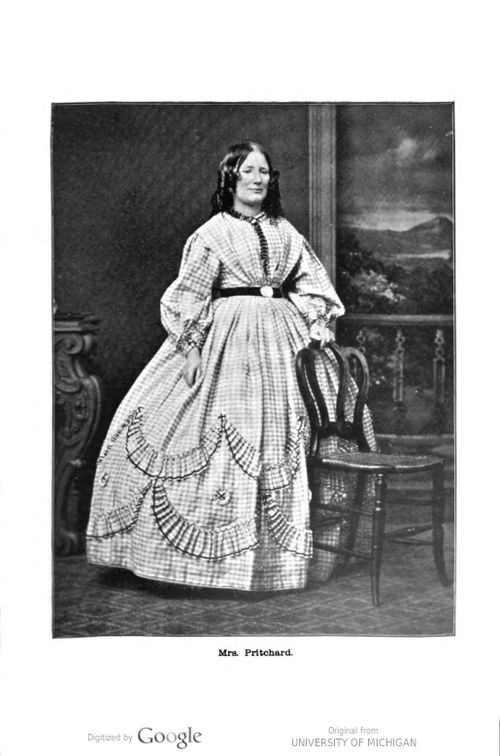




Afterwards
The scale of the crowd at his hanging, and the sense of a public spectacle made of a respectable doctor's death, fed the argument against public executions; Parliament ended them across Britain in 1868. Dr Paterson's silence prompted a pamphlet war in Glasgow over a doctor's duty when he suspects a colleague. The legal firm that defended Pritchard is said to have taken his consulting chair in lieu of fees, and kept it for well over a century.
The case became one of the classic Victorian medical murders. Conan Doyle named Pritchard alongside William Palmer in The Adventure of the Speckled Band as examples of doctors who turned their skill to crime, and James Bridie's play Dr Angelus (1947) is based on him.
Questions readers ask
Who did Dr Pritchard poison?
He was convicted of poisoning his wife, Mary Jane Pritchard, and her mother, Jane Taylor, at their Glasgow home in 1865. He is also suspected over the death of a servant in a house fire in 1863, but was never charged with it.
What poison did Edward Pritchard use?
Mainly tartarised antimony, with aconite and possibly opium. Antimony was found in both women's bodies, and he had been buying it in large quantities.
Was Dr Pritchard the last man publicly hanged in Glasgow?
Yes. He was hanged at the Saltmarket end of Glasgow Green on 28 July 1865, and public executions in Britain ended three years later.
How was Dr Pritchard caught?
An anonymous letter to the procurator fiscal raised suspicion after his wife's death. He was arrested on his return from her funeral, and post-mortem examinations found antimony in both women.
Sources and further reading
- Edward William Pritchard (Wikipedia)
- Our Records: The Glasgow Poisoner (ScotlandsPeople)
- Trial papers of Edward William Pritchard, JC26/1865/294 (National Records of Scotland)
- Trial that led to Glasgow's last public execution (history.scot)
- Wikidata Q5345907 (life dates checked here)
Written by Sinister Crimes from the sources above; see our editorial standards. Last checked 1 November 2026.