
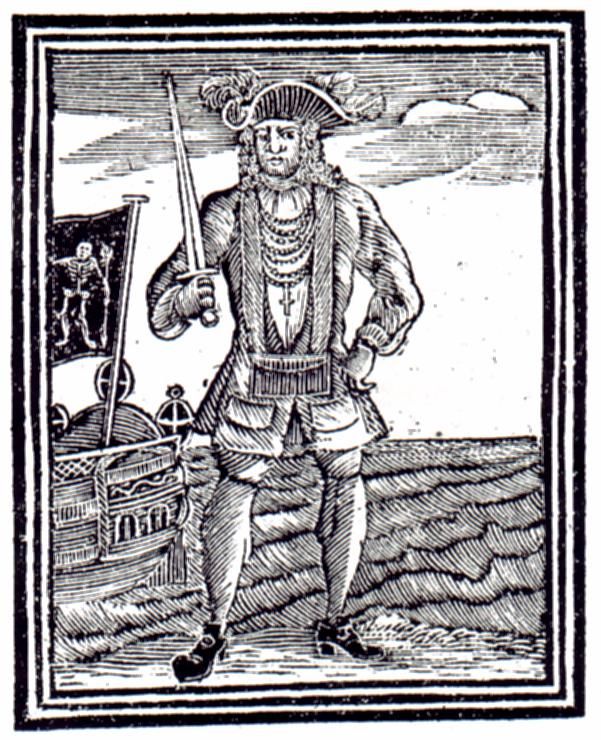

The case
Bartholomew Roberts did not volunteer. In June 1719 he was second mate of the slave ship Princess, lying at Anomabu on the Gold Coast, when the Welsh pirate Howell Davis captured her and took Roberts and several others along by force. Within about six weeks Davis was dead, shot in an ambush on the Portuguese island of Príncipe, and the crew elected the newcomer, a skilled navigator, as their captain.
He had been born John Roberts in 1682 at Casnewydd Bach in Pembrokeshire and had spent his working life at sea without much prospect of a command. Over the next two and a half years he became, by number of vessels taken, the most successful pirate of his age. Contemporary counts run to around four hundred prizes, though many were small fishing craft. The nickname Black Bart was attached to him only after his death.
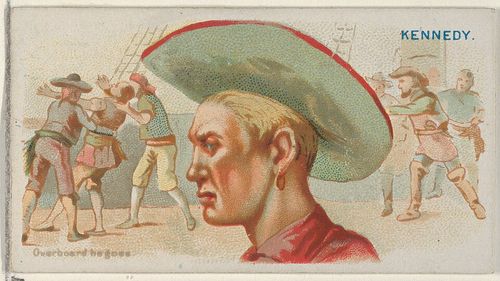
His first act as captain was a night raid on Príncipe to avenge Davis, in which many islanders were killed. He then crossed to Brazil, where in late 1719 his men slipped into a Portuguese convoy in the Bay of All Saints and carried off the Sagrada Familia with a large cargo of gold coin. A lieutenant, Walter Kennedy, later sailed off with the ship and most of the loot while Roberts was away chasing another prize; afterwards Roberts drew up written articles for his company, an early pirate code that survives in Charles Johnson's 1724 history.
From 1720 into early 1721 he worked north and south through the Atlantic. In June 1720 he sailed into Trepassey harbour in Newfoundland and took or destroyed the shipping there, its crews having fled without a fight. He swept the Leeward Islands, so disrupting trade that ships stayed in port. By the spring of 1721 the Caribbean had become too dangerous and too poor for him, and he crossed back to West Africa, where the slave trade offered rich, slow-moving targets.
In January 1722 he arrived at Ouidah, a major slaving port, and held the ships in its roads to ransom for gold dust. When one master refused to pay, Roberts's men set his ship on fire with the enslaved Africans still chained aboard; around eighty people died in the flames or in the water. It is the worst single act recorded against him.
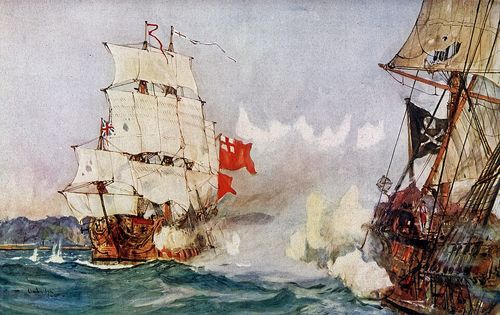
The Royal Navy had sent HMS Swallow and HMS Weymouth to the coast after him. Captain Chaloner Ogle of the Swallow found the pirates careened at Cape Lopez, in what is now Gabon. On 5 February 1722 the consort Ranger chased the Swallow, mistaking her for a merchantman, and was taken after a fight in which her captain, James Skyrme, lost a leg. Five days later Ogle came back for the flagship Royal Fortune, whose crew were still sluggish from drinking the night before.
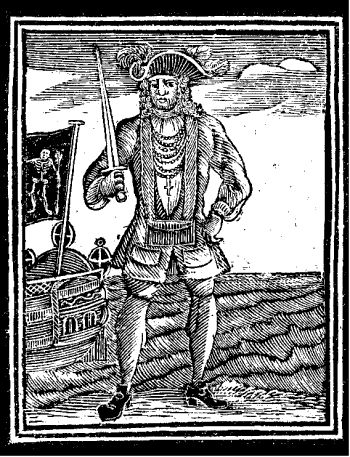
Roberts tried to run past the warship and take one broadside. A helmsman's error let the Swallow fire a second. Roberts, dressed for action in crimson damask with a jewelled cross at his throat, was hit in the throat by shot and killed where he stood on deck. His men, as he had asked, weighted his body and put it over the side before the navy could take it. The fight went on for about two hours more before the Royal Fortune struck.
Ogle had taken 272 men across the three ships. The survivors were carried to Cape Coast Castle, the Royal African Company's fort on the Gold Coast, for one of the largest piracy trials of the century.
The victims
Roberts's victims ranged from fishermen on the Newfoundland banks to slave-ship crews off Africa, most of whom lost cargo, vessels and sometimes their freedom when they were forced into his company, as he himself had been. The inhabitants of Príncipe paid heavily for Davis's death in the 1719 reprisal raid. The people who suffered most were Africans held aboard the slave ships he preyed on: at Ouidah in January 1722 about eighty enslaved men and women died when his crew burned a ship whose master would not pay ransom, and after his defeat the Black members of his crew, many of them formerly enslaved men who had joined him, were sold back into slavery rather than tried.
Timeline
John Roberts is born at Casnewydd Bach, Pembrokeshire.
Howell Davis captures the slave ship Princess at Anomabu and forces Roberts to join him.
Davis is killed on Príncipe and Roberts is elected captain soon afterwards.
Roberts takes the Portuguese ship Sagrada Familia from a convoy off Bahia, Brazil.
Roberts raids Trepassey harbour, Newfoundland.
Thomas Anstis leaves with the Good Fortune as Roberts heads for West Africa.
Roberts ransoms the ships at Ouidah and burns one with enslaved people aboard.
HMS Swallow captures the Ranger off Cape Lopez.
Roberts is killed by the Swallow's fire and the Royal Fortune surrenders.
The vice-admiralty court opens at Cape Coast Castle to try his crew.
Fifty-two condemned men are hanged at Cape Coast.
People in the case
-
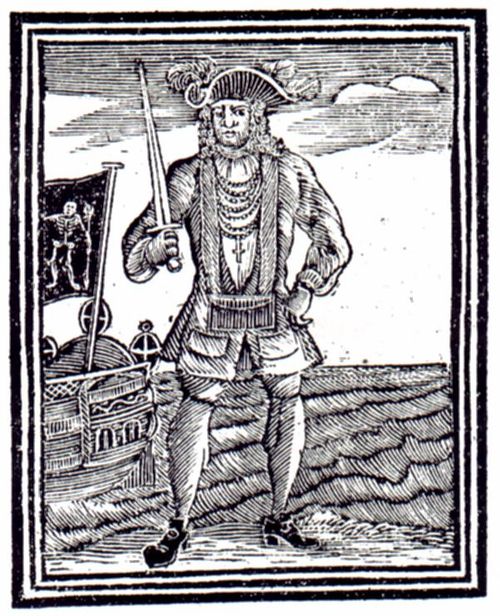
Bartholomew Roberts Perpetrator
17 May 1682 – 10 February 1722
Born John Roberts in Pembrokeshire; pirate captain from 1719, killed in action off Cape Lopez.
-
Howell Davis Also involved
1690 – 19 June 1719
Welsh pirate who captured the Princess and forced Roberts into his crew; killed on Príncipe weeks later. Born c. 1690.
-
Walter Kennedy Accomplice
1695 – 21 July 1721
Roberts's lieutenant who deserted with the Brazilian plunder; later hanged at Execution Dock.
-
James Skyrme Accomplice
Captain of the consort Ranger, taken by HMS Swallow on 5 February 1722; condemned at Cape Coast. Dates unknown.
-
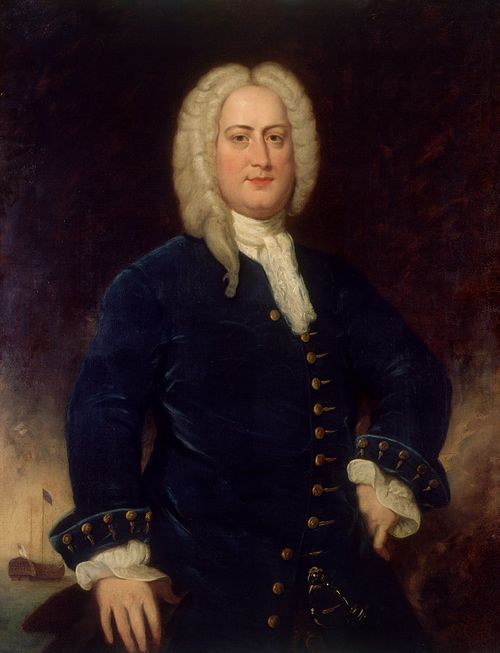
Chaloner Ogle Investigator
1681 – 11 April 1750
Captain of HMS Swallow; destroyed Roberts's squadron and was knighted for it.
-
Thomas Anstis Accomplice
? – 1723
Commanded the Good Fortune under Roberts until he slipped away in April 1721.
Where it happened
- Cape Lopez, Gabon. Where the Swallow caught Roberts's ships; he was killed off this cape.
- Cape Coast Castle, Ghana. Royal African Company fort where his crew were tried and hanged.
- Ouidah, Benin. Slaving port where Roberts ransomed shipping and burned a slave ship in January 1722.
- Casnewydd Bach (Little Newcastle), Pembrokeshire. Roberts's birthplace, now marked by a memorial stone.
- Príncipe. Island where Howell Davis was killed and Roberts led his first raid.
Outcome
Killed before trial Killed in action
Roberts was killed on 10 February 1722 and never tried. His surviving men were tried by a vice-admiralty court at Cape Coast Castle from 28 March 1722: 74 were acquitted, 54 condemned of whom 52 were hanged, 20 sentenced to servitude with the Royal African Company, and 17 sent to the Marshalsea in London. Black crew members were not tried but sold into slavery.
What the record settles, and what it doesn't
Established
- Roberts was forced into piracy when Howell Davis captured the Princess at Anomabu in 1719, and was elected captain after Davis's death.
- Between 1719 and 1722 he captured a very large number of vessels, often put at around four hundred, across Brazil, the Caribbean, Newfoundland and West Africa.
- At Ouidah in January 1722 his crew burned a slave ship with the enslaved people still on board.
- HMS Swallow under Chaloner Ogle took the Ranger on 5 February and the Royal Fortune on 10 February 1722 off Cape Lopez.
- Roberts was killed by shot in the throat during the 10 February action and his body was put overboard by his crew.
- At the Cape Coast Castle trial, 52 of his men were hanged.
Disputed
- What killed him: Johnson says grapeshot, other accounts a swivel-gun or musket ball; all agree on a wound to the throat.
- The size of his haul: the figure of about four hundred prizes includes many small boats, and estimates of the value taken vary widely.
- Stories of his character, such as preferring tea to rum or keeping the Sabbath, rest on readings of Johnson and his ship's articles rather than on independent evidence.
- Whether he hanged the governor of Martinique from a yardarm, as Johnson claims; French sources indicate officials were mock-hanged and released.
- How many of the men tried at Cape Coast had joined willingly; the court accepted that many had been forced, and historians still argue over how fair the sorting was.
Pictures
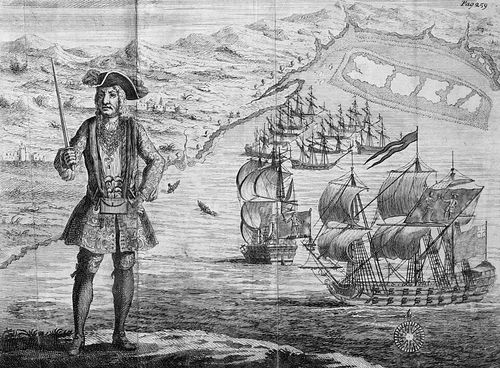





Afterwards
Ogle was knighted, the only naval officer honoured specifically for action against pirates, and also helped himself to gold dust found aboard the pirate ships; he later became an admiral. Many historians mark Roberts's death and the Cape Coast hangings as the effective end of the so-called golden age of Atlantic piracy, with consequences for the slave trade that his raids had disrupted. Johnson gave Roberts more pages than any other pirate, and later writers borrowed from him freely: Robert Louis Stevenson's Long John Silver claims to have sailed with Roberts's men, and the Dread Pirate Roberts of The Princess Bride takes his name. A memorial stone stands in his home village in Pembrokeshire.
Questions readers ask
How did Black Bart die?
He was hit in the throat by shot from HMS Swallow during the fight off Cape Lopez, Gabon, on 10 February 1722, and died on deck. His crew threw his body overboard, as he had wished, before it could be taken.
Why is Bartholomew Roberts called Black Bart?
The nickname, Barti Ddu in Welsh, was given to him after his death and was not used in his lifetime. His contemporaries called him Roberts or 'the great pirate'.
How many ships did Bartholomew Roberts capture?
Around four hundred by common estimate, the most of any pirate of his era, though many were small fishing and trading craft.
What happened to Bartholomew Roberts's crew?
They were tried at Cape Coast Castle in spring 1722. Fifty-two were hanged, 74 acquitted, 20 sent into servitude and 17 sent to London; Black crew members were sold into slavery.
Sources and further reading
- Bartholomew Roberts (Wikipedia)
- Battle of Cape Lopez (Wikipedia)
- The Cape Coast Trial and Executions, 1722 (Sailing the Black Flag)
- Wikidata Q313430 (life dates checked here)
Written by Sinister Crimes from the sources above; see our editorial standards. Last checked 1 November 2026.