

The case
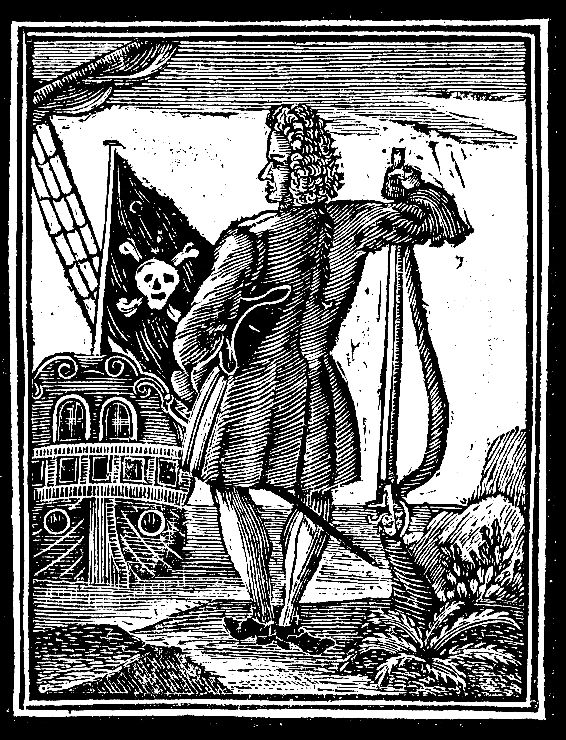
Most pirates stole their first ship. Stede Bonnet paid for his. In the spring of 1717 this Barbados landowner, a major in the island militia with a wife, three young children and an estate of several hundred acres, had a ten-gun sloop built, named her Revenge, recruited around seventy men and, unusually, paid them wages. Then he slipped out of Carlisle Bay at night and turned pirate.
Why he did it is not known. He was about twenty-nine, christened in July 1688 and orphaned young, and had inherited one of the more comfortable fortunes on the island. Johnson's 1724 history blamed an unhappy marriage; others have suggested a breakdown of some kind. He knew nothing of the sea and relied on his officers to sail the ship, which did little for his authority.
His first cruise went well enough. Off Virginia and the Carolinas, and as far north as New York, he took a string of merchant vessels, burning a Barbadian ship so that news would not reach home. Then a fight with a Spanish warship left the Revenge badly damaged, Bonnet seriously wounded and many of his crew dead or hurt. He limped into Nassau, the pirate haven on New Providence, and there met Edward Teach, soon to be known as Blackbeard.
Teach took command of the Revenge while Bonnet recovered in his cabin; a captured merchant master later described him pacing the deck in his nightgown. The partnership ran on and off through the winter of 1717 to 1718. When Bonnet's crew deserted him for Teach in the spring, he became in effect a guest aboard Queen Anne's Revenge, and he was with Teach for the blockade of Charles Town in May 1718.
After the flagship ran aground in North Carolina that June, Bonnet went to Bath and took the king's pardon from Governor Charles Eden, with permission to seek a privateering commission against Spain. He came back to find that Teach had stripped the Revenge and left with the plunder. Bonnet rescued a group of men Teach had marooned, chased him without success and then, short of supplies, went back to piracy under the name Captain Thomas, renaming his sloop the Royal James. Through July he took a run of vessels off Delaware Bay.
He put into the Cape Fear River to repair his leaking ship. South Carolina's governor, Robert Johnson, sent Colonel William Rhett with two armed sloops and about 130 men. On 27 September 1718 all three vessels ran aground in the river and exchanged fire for hours, tilted on the mud. When the tide freed Rhett's sloops first, Bonnet's crew forced him to surrender.
Taken to Charles Town, Bonnet was held apart from his men. On 24 October he escaped with his sailing master David Herriot; a posse found them on Sullivan's Island, killed Herriot and brought Bonnet back. His crew had already been tried before the vice-admiralty judge Nicholas Trott, and most of them were hanged on 8 November. Bonnet's own trial opened two days later on two counts of piracy. He pleaded not guilty, claimed the crew had acted against his will, and was sentenced to death on 12 November.
He wrote to Governor Johnson begging for his life, offering to serve him as a menial servant. Rhett offered to escort him to England for a fresh hearing. Johnson refused to intervene, and Bonnet was hanged at White Point on 10 December 1718.
The victims
Bonnet's victims were the masters, crews and owners of the merchant vessels he stopped along the American coast in 1717 and 1718, from the Barbadian ship Turbes, burned off Virginia, to the sloops Francis and Fortune whose commanders testified against him at his trial. Several captured seamen were forced to work on his ship, and enslaved men were made to careen it in the Cape Fear River. About ten of Rhett's militiamen were killed and more wounded in the battle that ended his career. His family also paid: he left behind a wife and young children in Barbados.
Timeline
Stede Bonnet is christened in Christ Church parish, Barbados.
Bonnet fits out the sloop Revenge and sails from Barbados as a pirate.
Wounded after a fight with a Spanish warship, Bonnet reaches Nassau and joins Teach.
Bonnet is aboard Queen Anne's Revenge during the blockade of Charles Town.
Bonnet takes the king's pardon from Governor Eden at Bath, North Carolina.
As Captain Thomas in the Royal James, Bonnet raids shipping off Delaware Bay.
Bonnet surrenders to William Rhett after the battle in the Cape Fear River.
Bonnet escapes custody in Charles Town; he is recaptured on Sullivan's Island.
Most of Bonnet's crew are hanged at Charles Town.
Judge Nicholas Trott sentences Bonnet to death.
Bonnet is hanged at White Point, Charles Town.
People in the case
-
Stede Bonnet Perpetrator
29 July 1688 – 10 December 1718
Barbados planter turned pirate; convicted at Charles Town and hanged. The birth date is his christening.
-
Edward Teach (Blackbeard) Accomplice
1680 – 22 November 1718
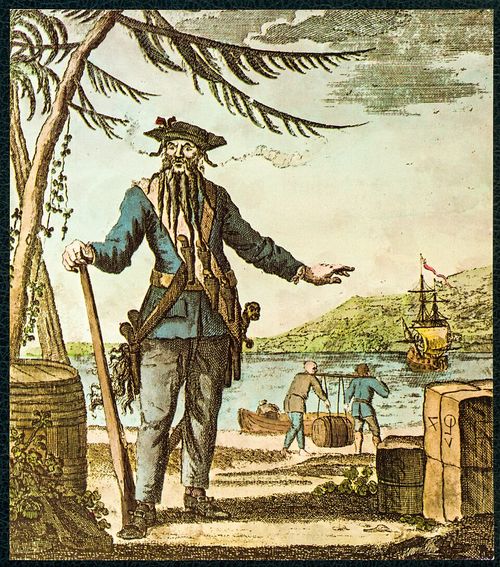
Took over Bonnet's sloop and later stripped it; killed at Ocracoke weeks before Bonnet's hanging.
-
William Rhett Investigator
4 September 1666 – 12 January 1722
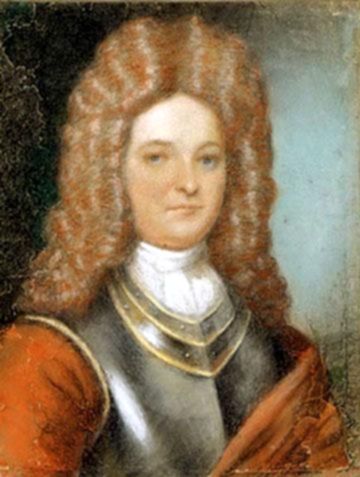
Militia colonel who captured Bonnet in the Cape Fear River and recaptured him after his escape.
-
Robert Johnson Also involved
? – 3 May 1735
Governor of South Carolina; refused Bonnet's pleas for clemency.
-
Nicholas Trott Judge
19 January 1663 – 21 January 1740
Vice-admiralty judge who tried and sentenced Bonnet and his crew.
-
David Herriot Accomplice
? – 1718
Former master of the sloop Adventure and Bonnet's sailing master; shot dead on Sullivan's Island after their escape.
-
Ignatius Pell Witness
Boatswain of the Revenge; turned king's evidence against his shipmates. Dates unknown.
Where it happened
- White Point, Charleston. Waterfront where Bonnet and his crew were hanged; now White Point Garden, with a plaque.
- Cape Fear River mouth. Estuary where Rhett trapped and captured Bonnet in September 1718.
- Sullivan's Island. Where Bonnet was recaptured after his escape and Herriot was killed.
- Bridgetown, Barbados. Bonnet's home island; his estate lay south-east of the town.
Outcome
Executed Convicted and hanged
Bonnet was tried before vice-admiralty judge Nicholas Trott at Charles Town from 10 November 1718 on two counts of piracy, against the sloops Francis and Fortune. He was convicted and sentenced to death on 12 November. Governor Robert Johnson rejected his appeals for clemency, and he was hanged at White Point on 10 December 1718.
What the record settles, and what it doesn't
Established
- Bonnet was a landowner and militia major in Barbados who fitted out his own sloop, the Revenge, and turned to piracy in 1717.
- He sailed in company with Blackbeard in 1717 and 1718 and was with him at the blockade of Charles Town.
- He accepted a royal pardon from Governor Charles Eden in 1718 and then resumed piracy under the alias Captain Thomas.
- Colonel William Rhett captured him in the Cape Fear River on 27 September 1718.
- He escaped custody on 24 October 1718 and was recaptured on Sullivan's Island.
- He was convicted by Judge Nicholas Trott and hanged at Charles Town on 10 December 1718.
Disputed
- Why a wealthy planter became a pirate: Johnson blamed domestic unhappiness, while modern writers suggest a personal crisis or a taste for adventure; no document gives his reasons.
- How much authority Bonnet really had: at trial he said the crew acted against his will, and his boatswain testified that the quartermaster held more power, but he did order floggings.
- Whether the Charles Town authorities acted justly in refusing clemency; contemporaries reported that many townspeople, and Rhett himself, wanted his case reconsidered.
- How he escaped in October 1718; a local merchant, Richard Tookerman, is suspected of helping, but the details are unclear.
Pictures


Afterwards
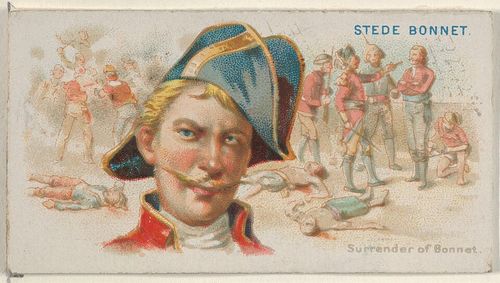
Bonnet's body was buried with his crew in the marsh below the low-water mark at White Point, without any marker. His sloop Royal James was taken into South Carolina's service. The hangings at Charles Town that autumn, together with Blackbeard's death at Ocracoke weeks earlier, were part of the rapid collapse of piracy along the North American coast. The man himself survived as a curiosity: the gentleman pirate who had to be taught to sail. He reappeared in pirate histories, in local legends around Wilmington, North Carolina, and much later as a comic, sympathetic figure on television. A plaque at White Point Garden in Charleston marks the place of execution.
Questions readers ask
Why was Stede Bonnet called the Gentleman Pirate?
He was a wealthy, educated Barbados landowner who bought his own ship and paid his crew wages, unlike most pirates. He had no sailing experience when he started.
How did Stede Bonnet die?
He was hanged at White Point, Charles Town (Charleston), South Carolina, on 10 December 1718 after being convicted of piracy.
Was Stede Bonnet friends with Blackbeard?
They sailed together for much of 1717 and 1718, but Blackbeard took over Bonnet's ship and crew, and in June 1718 stripped his sloop and left him behind. Bonnet then tried to hunt him down.
Did Stede Bonnet have a family?
Yes. He married Mary Allamby in 1709 and had children who were still very young when he left Barbados for piracy.
Sources and further reading
- Stede Bonnet (Wikipedia)
- Battle of Cape Fear River (Wikipedia)
- A General History of the Pyrates, Charles Johnson (Project Gutenberg)
- Wikidata Q444908 (life dates checked here)
Written by Sinister Crimes from the sources above; see our editorial standards. Last checked 1 November 2026.