

The case
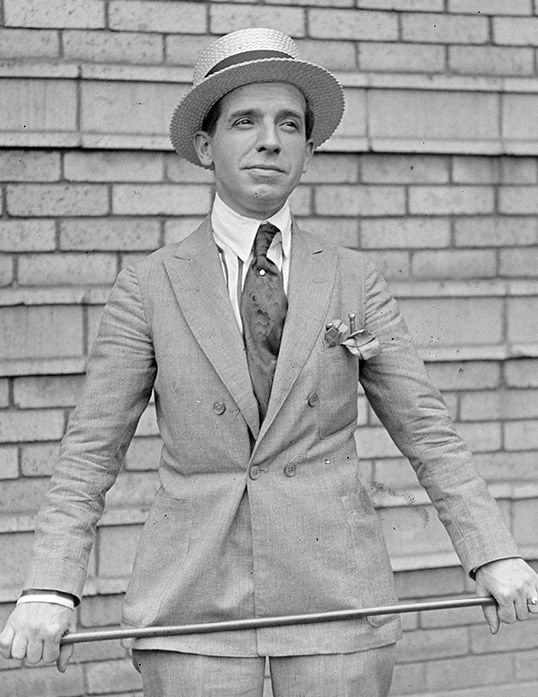
The idea began with a single slip of paper. In the summer of 1919 a letter from Spain reached a small Boston office at 27 School Street with an international reply coupon tucked inside, a voucher that could be exchanged abroad for return postage. Its tenant, Charles Ponzi, noticed that post-war inflation had made the coupons far cheaper in Italy than the American stamps they could be swapped for. On paper, the gap looked like free money.
Ponzi was then 37, a former dishwasher and waiter who had landed in Boston in 1903 with, by his own telling, $2.50 in his pocket. He had served a prison term in Canada for forging a cheque and another in Atlanta for smuggling Italian immigrants across the border. In Montreal he had worked at a bank that paid depositors' interest out of newer deposits until it collapsed. He had seen exactly how such a thing worked, and how it ended.
In January 1920 he founded the Securities Exchange Company and offered investors 50 per cent profit in 45 days, at a time when savings banks paid about 5 per cent a year. He claimed the returns came from buying reply coupons in Europe and redeeming them in the United States. The early investors were paid on time, using money from those who came after them, and they told their friends. By the summer agents were collecting deposits across New England and New Jersey, and the line outside his office stretched down the street. Millions of dollars came in. Ponzi bought a mansion in Lexington and a controlling stake in the Hanover Trust Company, and brought his mother over from Italy in first class.
The coupons could never have carried the weight. Covering what he owed would have required around 160 million of them; the financial journalist Clarence Barron, asked by the Boston Post to look at the scheme, found that only about 27,000 were in circulation, and that Ponzi was not putting his own money into his company. The Post, under its acting publisher Richard Grozier, began publishing hard questions on 26 July 1920. Ponzi met the run that followed with cheerful confidence, handing out coffee and doughnuts to the crowd and paying out about $2 million in three days. Many depositors, reassured, went home and left their money with him.
The ground gave way in August. On 2 August his former publicist, William McMasters, told Post readers that Ponzi was hopelessly insolvent. On 9 August the state bank commissioner stopped Hanover Trust from honouring Ponzi's cheques. On 11 August the Post reported his forgery conviction in Montreal, and the same afternoon the commissioner seized Hanover Trust. A federal audit showed Ponzi was at least $7 million in debt, and on 12 August he surrendered to federal authorities.
He pleaded guilty to a single count of mail fraud on 30 November 1920 and was sentenced to five years. Massachusetts then pursued him for larceny; Ponzi argued that his federal plea should protect him, but the Supreme Court ruled against him in Ponzi v. Fessenden in 1922. After two state trials ended in an acquittal and a hung jury, a third in 1925 convicted him, adding seven to nine years. While out on bail he went to Florida and sold lots in a land syndicate, much of it worthless swamp, was convicted again, and was caught trying to leave the country disguised as a ship's crewman.
Investors lost about $20 million, and at least five banks besides Hanover Trust failed in the aftermath. The method was not new; a Brooklyn bookkeeper known as "520% Miller" had run a similar fraud in 1899. But Ponzi ran it in the open, with newspaper coverage, a smile and a crowd, and it is his name the world kept.
Who lost out
Ponzi's earliest investors were working people from Boston's Italian and immigrant neighbourhoods, many of them people who had never owned a share in anything. Word spread upward to clerks, shopkeepers and wealthier Bostonians, and contemporary accounts say a large share of the city's police force put money in. Some mortgaged their homes; most reinvested their paper profits instead of withdrawing them. When the scheme failed, noteholders recovered less than 30 cents on the dollar, and depositors of the banks dragged down with Hanover Trust lost too.
Timeline
Carlo Ponzi is born in Lugo, Emilia-Romagna.
Ponzi arrives in Boston aboard the SS Vancouver.
In a School Street office, Ponzi notices the price gap in international reply coupons.
He founds the Securities Exchange Company, promising 50 per cent in 45 days.
A favourable Boston Post article brings a new rush of investors.
The Post begins its critical series, and a run on the company starts.
Former publicist William McMasters declares Ponzi insolvent in the Post.
The Post exposes Ponzi's Montreal forgery conviction, and the state seizes Hanover Trust.
Ponzi surrenders to federal authorities and is charged with mail fraud.
Ponzi pleads guilty to one count of mail fraud and is sentenced to five years.
The Supreme Court rules in Ponzi v. Fessenden that Massachusetts may try him on state charges.
A third state trial convicts him of larceny; he is sentenced to seven to nine years.
Ponzi is deported to Italy after his release.
He dies in a charity hospital in Rio de Janeiro.
People in the case
-
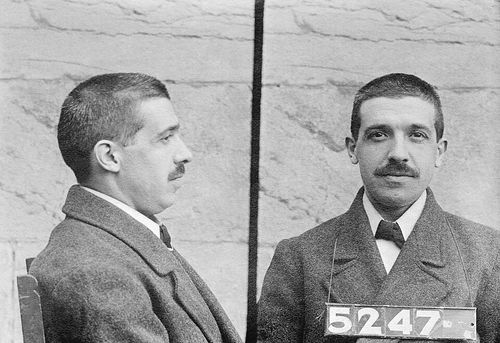
Charles Ponzi Perpetrator
3 March 1882 – 18 January 1949
Born Carlo Ponzi in Lugo, Italy; founder of the Securities Exchange Company; convicted of federal mail fraud and Massachusetts larceny, deported to Italy in 1934.
-
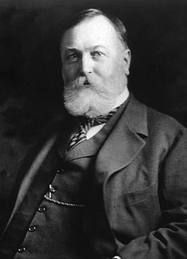
Clarence W. Barron Investigator
2 July 1855 – 2 October 1928
Financial journalist who showed that far too few reply coupons existed to support Ponzi's claims.
-
Richard Grozier Investigator
1887 – 1946
Acting publisher of the Boston Post, whose investigation won a Pulitzer Prize.
-
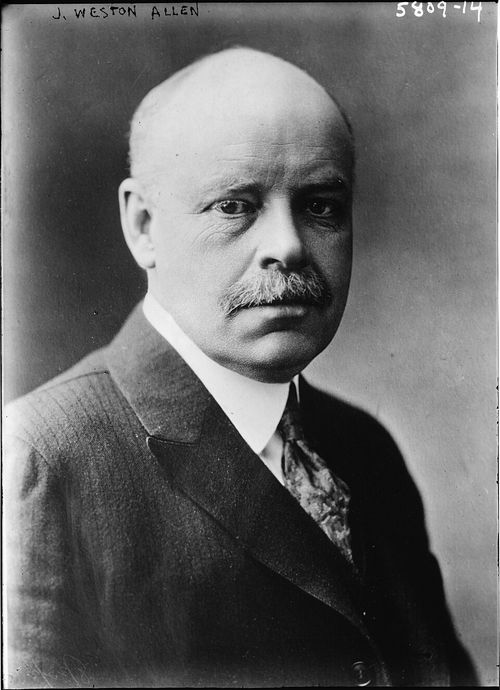
J. Weston Allen Prosecutor
19 April 1872 – 1 January 1942
Massachusetts Attorney General during the collapse.
-
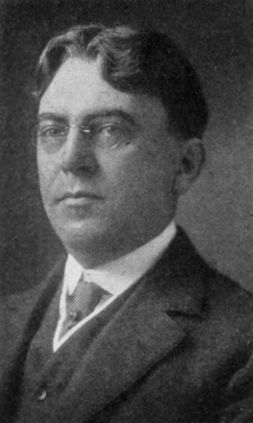
Daniel J. Gallagher Prosecutor
31 August 1873 – 24 March 1953
United States Attorney for Massachusetts, who commissioned the audit of Ponzi's books.
-
Clarence Hale Judge
15 April 1848 – 9 April 1934
Federal judge who accepted Ponzi's guilty plea and sentenced him to five years.
-
Rose Gnecco Ponzi Also involved
Boston stenographer who married Ponzi in 1918 and urged him to plead guilty; she divorced him in 1937 after his deportation.
Where it happened
- School Street, Boston. Ponzi's offices at No. 27 and later the Niles Building stood on this street; coordinates approximate.
- Massachusetts State House. Noteholders were invited here in August 1920 to register their claims.
- Lexington, Massachusetts. Where Ponzi bought a mansion at the height of the scheme.
- Lugo, Emilia-Romagna. Ponzi's birthplace.
- Rio de Janeiro. Where Ponzi died in poverty in 1949.
Outcome
Convicted Pleaded guilty
Ponzi pleaded guilty to one count of federal mail fraud on 30 November 1920 and was sentenced to five years. Massachusetts then tried him three times for larceny: the first jury acquitted, the second deadlocked, and the third, in 1925, convicted him, for a further seven to nine years. He was released in 1934 and deported to Italy.
What the record settles, and what it doesn't
Established
- Ponzi's Securities Exchange Company promised 50 per cent returns in 45 days and paid early investors with later investors' money.
- Far too few international reply coupons existed for his stated business to be possible, as Clarence Barron showed in 1920.
- The Boston Post's reporting in July and August 1920 triggered the runs that broke the scheme, and the paper won a Pulitzer Prize for it.
- Ponzi had earlier served prison time in Canada for forgery and in the United States for smuggling immigrants.
- He pleaded guilty to federal mail fraud in November 1920 and was later convicted of larceny by Massachusetts.
- Investors lost roughly $20 million, recovering under 30 cents on the dollar.
Disputed
- Whether Ponzi ever intended a legitimate coupon business: he insisted the arbitrage was real at the start, while auditors found no significant coupon dealings at all.
- How much money passed through his hands: investigators never fully untangled his accounts, and figures vary between sources.
- Accounts of his earlier life, including the skin graft he is said to have donated to a burned nurse, rest largely on his own later telling.
Pictures



Afterwards
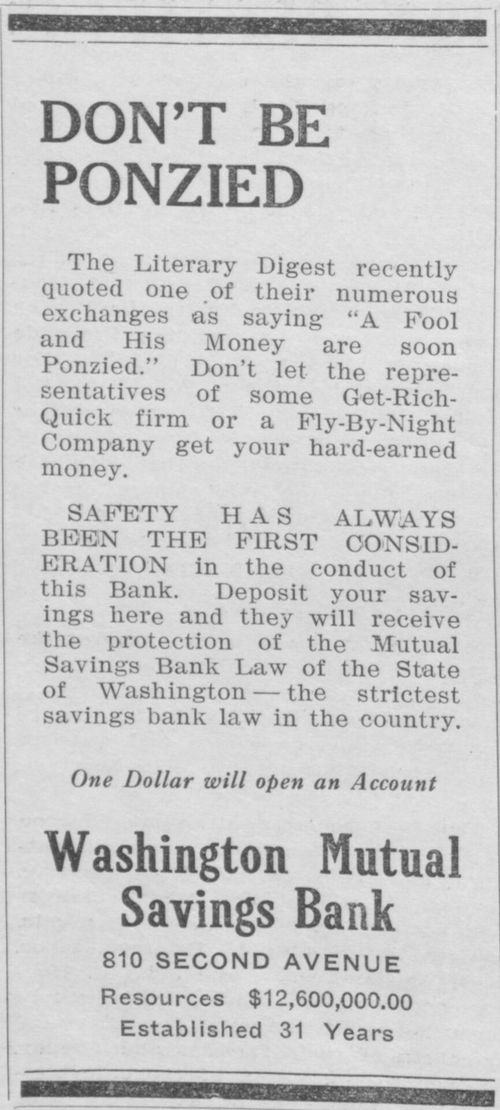
Within weeks of the collapse a Seattle bank was advertising with the slogan "Don't Be Ponzied", and the name never left the language. Ponzi himself spent most of the next fourteen years in prison. After deportation he drifted through schemes in Italy, then worked in Brazil for the Italian state airline until wartime closed it down. He died in the charity ward of a Rio de Janeiro hospital in January 1949, nearly blind and partly paralysed, leaving $75. Rose, who had urged him to plead guilty in 1920, stayed in Boston and divorced him in 1937. The Ponzi v. Fessenden decision remains a cited case on the right of states to prosecute federal prisoners.
Questions readers ask
What did Charles Ponzi actually promise investors?
A 50 per cent return in 45 days, or doubling their money in 90, supposedly by buying international postal reply coupons cheaply abroad and redeeming them at higher value in the United States.
How much money did Ponzi take?
Investors lost about $20 million in 1920 dollars. His total takings were never fully established because his records were little more than index cards.
Did Ponzi invent the Ponzi scheme?
No. Paying old investors with new money was an established fraud, and Ponzi had watched it at a Montreal bank. His scale and publicity simply attached his name to it.
What happened to Charles Ponzi?
He served federal and state sentences, was deported to Italy in 1934, and died poor in Rio de Janeiro in 1949.
Sources and further reading
- Charles Ponzi (Wikipedia)
- Ponzi v. Fessenden, 258 U.S. 254 (1922)
- The Ponzi Scheme (Smithsonian National Postal Museum)
- Nov. 30, 1920: Charlie Ponzi pleads guilty (ABA Journal)
- Wikidata Q360145 (life dates checked here)
Written by Sinister Crimes from the sources above; see our editorial standards. Last checked 1 November 2026.