

The case
When three iron-bound boxes of gold reached Paris from London in May 1855, two of them were heavier than they should have been and one was lighter. Inside, under intact-looking seals, the bankers found lead shot. Somewhere between London Bridge and the Bank of France, about 224 pounds of bullion and coin, worth some £12,000, had been turned into birdshot, and every company along the route insisted it could not have happened on their stretch.
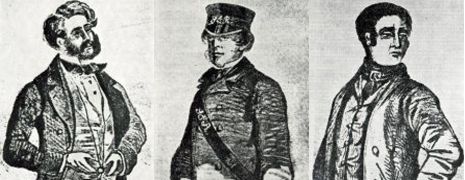
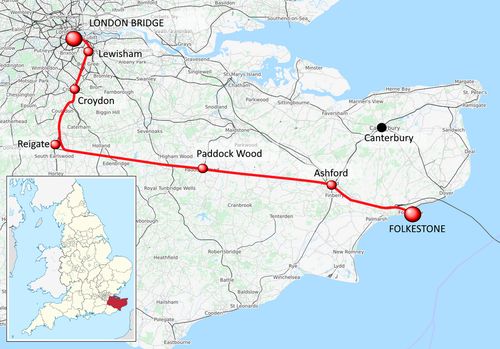
It had happened on the South Eastern Railway's 8.30 pm mail train to Folkestone, where gold for the Continent travelled in the guard's van inside Chubb safes. Each safe needed two keys, and the company kept them apart, one set at London Bridge and another at Folkestone, so that no single employee could open a safe. The scheme to defeat that rule came from William Pierce, a former railway clerk dismissed for gambling, who had spent his idle months drinking where railwaymen drank. He brought in Edward Agar, a professional thief of long experience and unusual patience, and two insiders: James Burgess, a guard who regularly worked the bullion trains, and William Tester, a clerk in the traffic superintendent's office who could see the guards' rota.
Getting the keys took most of a year. When one Folkestone key was lost in 1854 and the locks were sent back to Chubb, Tester briefly smuggled the new keys out of the office for Agar to press into wax, but in his nerves he brought two copies of the same key. The second impression was taken at Folkestone, where Pierce slipped into the harbour office while the staff went to meet the Boulogne steamer and Agar copied the key from its cupboard. Over the following months Agar rode the line on Burgess's shifts, filing his rough copies until they turned smoothly.
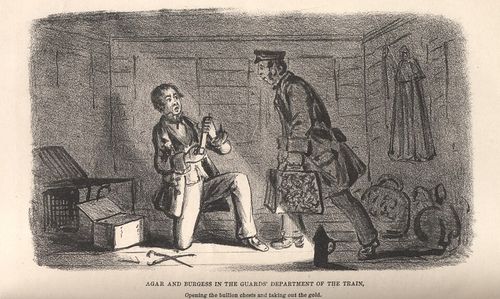
On 15 May 1855 Burgess stepped out of London Bridge station and wiped his face with a handkerchief, the signal that gold was aboard. Pierce and Agar bought first-class tickets and handed their heavy bags of lead shot to Burgess for the van, and Agar hid there as the train pulled out. He opened the safe, prised the bands off the first box, swapped gold bars for an equal weight of shot, and resealed it with a homemade die. At Redhill, Tester collected a bag of gold and went back to London to be seen at his desk. Pierce joined Agar in the van and they treated the other two boxes the same way. At Folkestone the safes were unloaded without question. The two men rode on to Dover, ate supper in a hotel, threw the tools in the sea and took the early train back to London.
The gold was melted down in Agar's house in Shepherd's Bush, with a cracked crucible scorching the floorboards, and part of it was sold through a fence. The four split the money. Burgess bought bonds; Pierce opened a betting office; Tester left for a post managing a Swedish railway. For more than a year no one was arrested.
What undid them was a separate offence and a broken promise. In 1855 Agar was arrested over a cheque fraud he said he knew nothing about, convicted at the Old Bailey, and sentenced to transportation for life. Before leaving he arranged for Pierce to receive £3,000 of his money to support Fanny Kay, the mother of his child. Pierce kept the money. Penniless, Kay went to the governor of Newgate in 1856 and told him what she knew. When the South Eastern Railway's solicitor visited Agar in Pentonville and Agar learned of the betrayal, he gave a full confession and agreed to testify.
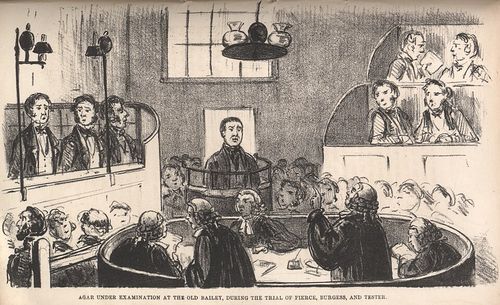
Pierce and Burgess were arrested in November 1856, and Tester came back from Sweden to surrender. At the Old Bailey in January 1857 Agar was the Crown's chief witness, and his calm account, corroborated by railway staff, innkeepers and the locksmith John Chubb, sank the defence. The jury took about ten minutes. Burgess and Tester, as railway servants, were sentenced to fourteen years' transportation. Pierce, convicted only of simple larceny because he was no longer an employee, got two years' hard labour.
Who lost out
No one was hurt. The losers were the three London bullion dealers whose gold was taken, Abell & Co, Adam Spielmann & Co and Bult & Co, and, through a long argument over liability, the railway and shipping companies on both sides of the Channel. Agar's partner Fanny Kay, once an attendant at Tunbridge station left without support after Pierce kept the money meant for her and her child, was the person whose desperation finally exposed the crime.
Timeline
Pierce and Agar watch the bullion handling at Folkestone and draw the attention of railway police.
Tester briefly takes the newly reconditioned safe keys out of the office so that Agar can take wax impressions.
Agar begins riding the line on Burgess's shifts to test and refine the copied keys.
Gold is taken from the safes in the guard's van of the 8.30 pm train between London Bridge and Folkestone and replaced with lead shot.
The boxes are weighed at Boulogne and opened in Paris, and the theft is discovered.
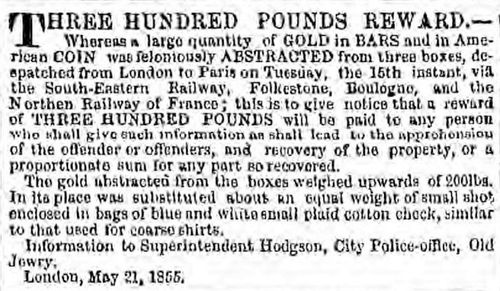
A £300 reward for information is advertised in the London papers.
Agar is convicted at the Old Bailey of an unrelated cheque fraud and sentenced to transportation for life.
After Pierce keeps money meant for her support, Fanny Kay tells the governor of Newgate who carried out the robbery.
Pierce and Burgess are arrested.
Tester returns from Sweden and surrenders to the Lord Mayor of London.
The trial of Pierce, Burgess and Tester opens at the Old Bailey, with Agar as the chief witness.
All three are convicted; Burgess and Tester receive fourteen years' transportation and Pierce two years' hard labour.
Burgess and Tester sail for Western Australia on the convict ship Edwin Fox.
People in the case
-
William Pierce Perpetrator
Former South Eastern Railway employee dismissed for gambling, aged about 37 in 1855; planned the robbery and was sentenced to two years' hard labour.
-
Edward Agar Perpetrator
Career thief and safe-breaker, just under 40 in 1855; carried out the substitution on the train and later turned Queen's evidence.
-
James Burgess Perpetrator
Railway guard with long service on the Folkestone line; sentenced to fourteen years' transportation to Western Australia.
-
William Tester Perpetrator
Clerk in the traffic department at London Bridge who obtained the keys and the rota; sentenced to fourteen years' transportation.
-
Fanny Kay Witness
Agar's partner, aged about 23 in 1855, and the mother of his child; her statement to the governor of Newgate in 1856 started the case.
-
John Chubb Witness
10 December 1816 – 30 October 1872
Head of the locksmiths Chubb & Son, whose firm made the railway safes; gave evidence at the trial.
-
Sir Samuel Martin Judge
3 September 1801 – 9 January 1883
Baron of the Exchequer who presided at the Old Bailey trial and remarked on Agar's ability in his summing-up.
Where it happened
- London Bridge station. Starting point of the South Eastern Railway mail train that carried the gold.
- Redhill station. First stop, where Tester collected a bag of gold and returned to London.
- Folkestone Harbour. Where the safes were unloaded for the Boulogne steamer, and where one key impression was taken.
- Dover. Where Pierce and Agar left the train with the gold before returning to London.
- Old Bailey. Central Criminal Court, scene of the January 1857 trial.
Outcome
Convicted Convicted
Tried at the Old Bailey from 13 to 15 January 1857, Pierce was convicted of larceny and Burgess and Tester of larceny as servants of the railway. Burgess and Tester were sentenced to fourteen years' penal transportation; Pierce, no longer an employee, received two years' hard labour, part of it in solitary confinement. Agar, already under a life sentence for fraud, gave evidence for the Crown and was not tried for the robbery.
What the record settles, and what it doesn't
Established
- On the night of 15 May 1855 gold being shipped from London to Paris was removed from Chubb safes in the guard's van of the South Eastern Railway's Folkestone train.
- The thieves replaced the gold with lead shot so that the boxes would pass the weighings at Folkestone and Boulogne without obvious alarm.
- The stolen bullion and coin weighed about 224 pounds and was valued at around £12,000.
- The four men were William Pierce and Edward Agar, who planned and carried out the substitution, and the railway employees James Burgess and William Tester.
- The case broke only after Fanny Kay, Agar's partner, went to the governor of Newgate in 1856, and Agar then confessed.
- Pierce, Burgess and Tester were convicted at the Old Bailey in January 1857, and Burgess and Tester were transported to Western Australia.
Disputed
- How much gold was taken from the first box: Agar's own testimony mentions four bars, while a modern history of the case gives six.
- Agar's guilt in the cheque fraud that sent him to prison: he insisted he had only gone to collect money he had lent and knew nothing of the forgery; the jury convicted him, and his version was never tested further.
- How much of the gold was ever recovered or traced is unclear; only part of it can be followed through the sale to the forger James Townshend Saward.
Pictures




Afterwards
Burgess and Tester reached the Swan River Colony in 1858. Both received tickets of leave and then conditional pardons; Tester left Australia in 1863. Agar was transported in 1857, pardoned conditionally ten years later, and is last recorded leaving Australia for Ceylon in 1869. Pierce served his sentence in England; little is recorded of him afterwards.
Victorian readers relished the story for its ingenuity, and the trial judge's grudging praise of Agar's talent was widely quoted. A full illustrated report of the trial was published in the 1850s. A century later the case was reborn as fiction: Michael Crichton's 1975 novel The Great Train Robbery and his 1978 film The First Great Train Robbery, starring Sean Connery as a gentleman-thief Pierce who bears little resemblance to the real one.
Questions readers ask
What was the Great Gold Robbery?
The theft of about £12,000 in gold from the guard's van of a South Eastern Railway train between London Bridge and Folkestone on 15 May 1855. The thieves opened the safes with copied keys and replaced the gold with lead shot.
Who carried out the 1855 gold robbery?
William Pierce and Edward Agar, with two railway employees, the guard James Burgess and the clerk William Tester. Agar later testified against the other three.
Is The First Great Train Robbery a true story?
It is loosely based on this case. Michael Crichton's novel and film keep the outline of the copied keys and the train, but invent much of the plot, and the real Pierce did not escape; he served two years' hard labour.
How were the gold robbers caught?
Agar was jailed for an unrelated fraud and left money with Pierce for his partner, Fanny Kay, and their child. Pierce kept it, Kay went to the governor of Newgate, and Agar, learning of the betrayal, confessed.
Sources and further reading
- Great Gold Robbery (Wikipedia)
- D. Morier Evans, Facts, Failures and Frauds (1859), Internet Archive
- Arthur Griffiths, Mysteries of Police and Crime, vol. I (1899), Internet Archive
- Wikidata Q5599260 (life dates checked here)
Written by Sinister Crimes from the sources above; see our editorial standards. Last checked 1 November 2026.