

The case
Two police constables stood in the empty back kitchen of 3 Minver Place, a new terrace off Weston Street in Bermondsey, on Friday 17 August 1849. They had been sent to look for a missing customs officer, Patrick O'Connor, who had last been seen heading to dinner there. One of them noticed that the mortar between two flagstones was soft and smelt fresh. They borrowed a shovel and a crowbar, lifted the stones and dug. Beneath them, packed in quicklime, was O'Connor.
The house had been rented by Frederick George Manning and his wife Maria. She had been born Marie de Roux in Switzerland and had worked as a lady's maid in great houses, latterly for Lady Blantyre at Stafford House in London. On her travels she had met both Manning, then a guard on the Great Western Railway, and O'Connor, an Irishman who worked as a gauger on the London Docks and had grown rich lending money at high interest. She married Manning in May 1847 at St James's, Piccadilly, but kept up her friendship, and by most accounts an affair, with O'Connor.
The Mannings' fortunes were poor. Manning had been dismissed from the railway under suspicion over thefts from trains, and a public house he took in Taunton failed amid rumours about a mail robbery. O'Connor, by contrast, kept railway shares and cash at his lodgings in Greenwood Street, Mile End. On 9 August he came to Minver Place for dinner. According to the case the prosecution put to the jury, Maria shot him in the head and her husband, finding him still alive, finished him with a crowbar. The grave had been dug in advance; a shovel and quicklime had been bought days earlier.
Within hours Maria was at O'Connor's lodgings letting herself into his rooms, and she went back the next day. She took his foreign railway shares, gold and banknotes. Then each partner moved to cheat the other. While Manning was out selling the furniture, Maria left with most of the loot, labelled her boxes with the name "Mrs Smith" and took the train north. Manning, finding himself abandoned with a smaller share, fled by steamer to Jersey.
Neither got far. Maria reached Edinburgh and tried to sell some of the shares to a stockbroker, who had read the published list of O'Connor's missing property and alerted the police. She was arrested on 21 August. Manning was traced to a lodging in Jersey and arrested on 27 August, protesting that his wife was the guilty one and he was "as innocent as a lamb".
They were tried together at the Old Bailey on 25 and 26 October 1849 before Lord Chief Baron Pollock, with Mr Justice Cresswell and Mr Justice Maule. Maria's counsel asked for a jury half made up of foreigners, an old right for aliens, but the court ruled that by marrying an Englishman she had become a British subject. Each defence tried to put the blame on the other partner. The jury convicted both. Maria, when sentenced, denounced the court and the country in a burst of fury that newspapers reported at length.
The victims
Patrick O'Connor was about fifty, an Irishman from County Tipperary who had come to London in 1832 with a letter of introduction from his brother, a priest. He found work in the excise and became a gauger at the London Docks, measuring casks for duty, and he added steadily to his income by moneylending and dealing in shares. Contemporary accounts describe a careful, acquisitive man who had courted Marie de Roux before her marriage and remained devoted to her after it. On 26 August an inquest jury found that he had been wilfully murdered by Frederick and Maria Manning.
Timeline
Marie de Roux marries Frederick Manning at St James's Church, Piccadilly.
Patrick O'Connor is killed at the Mannings' house, 3 Minver Place, Bermondsey.
Maria returns to O'Connor's lodgings at Mile End and removes more of his property.
Police constables find O'Connor's body under the back-kitchen floor.
Maria Manning is arrested in Edinburgh after offering O'Connor's shares to a stockbroker.
Frederick Manning is arrested in Jersey.
The couple go on trial together at the Old Bailey.
Both are convicted of murder and sentenced to death.
The Mannings are hanged together on the roof of Horsemonger Lane Gaol before a vast crowd.
Charles Dickens's letter attacking the conduct of the execution crowd is written to The Times.
People in the case
-
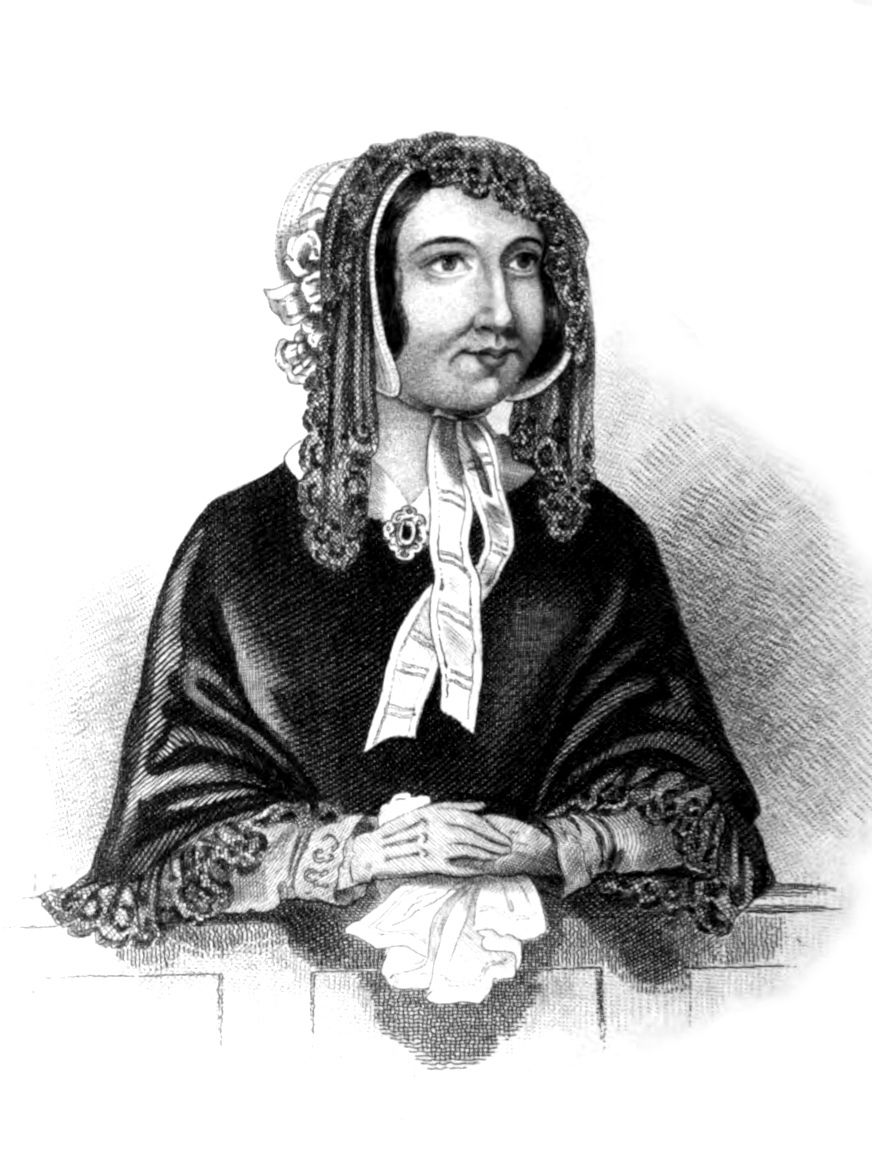
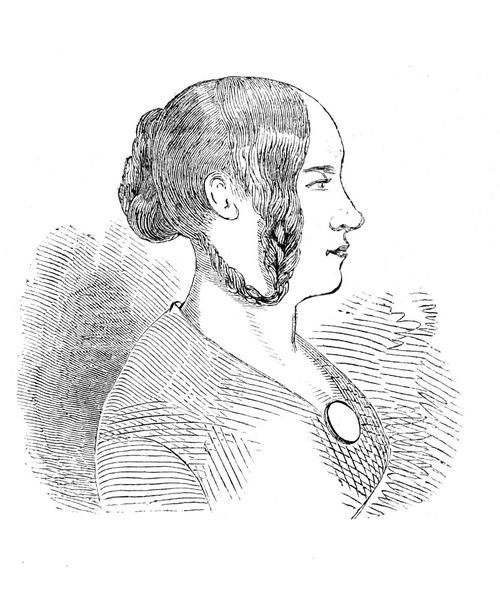
Maria Manning Perpetrator
1821 – 13 November 1849
Born Marie de Roux in Switzerland c. 1821; lady's maid. Convicted with her husband and hanged at Horsemonger Lane Gaol.
-
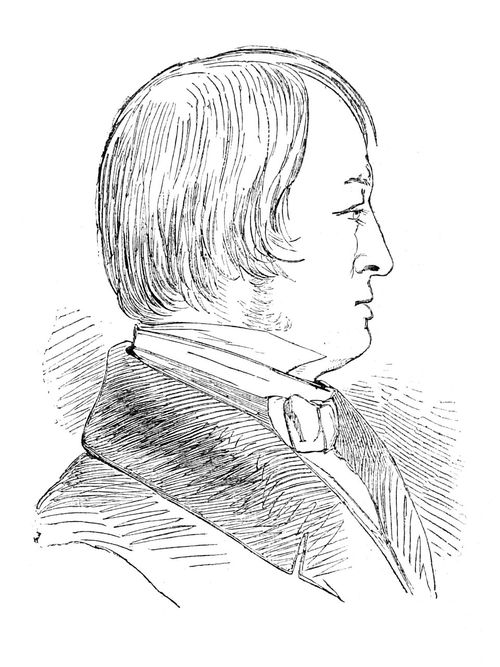
Frederick George Manning Perpetrator
1820 – 13 November 1849
Born c. 1820 in Somerset; former railway guard and publican. Convicted and hanged beside his wife.
-
Patrick O'Connor Victim
? – 9 August 1849
Born c. 1799 in County Tipperary; customs gauger and moneylender.
-
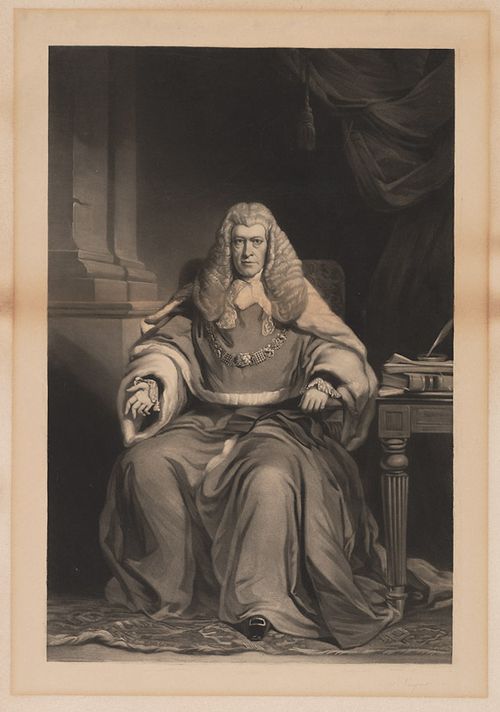
Sir Frederick Pollock Judge
23 September 1783 – 22 August 1870
Lord Chief Baron of the Exchequer; presided at the trial.
-
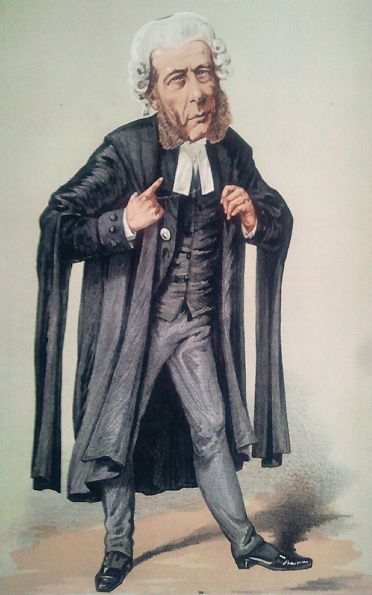
William Ballantine Defence
3 January 1812 – 9 January 1887
Counsel for Maria Manning; applied unsuccessfully for a half-foreign jury.
-
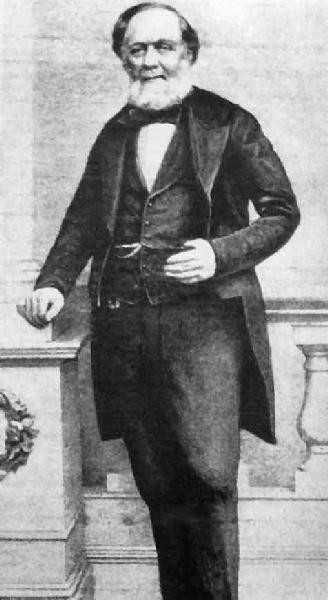
William Calcraft Also involved
10 October 1800 – 13 December 1879
Executioner who hanged the couple.
-
Charles Dickens Witness
7 February 1812 – 9 June 1870
Attended the execution and wrote to The Times against public hangings.
Where it happened
- Minver Place, off Weston Street, Bermondsey. The Mannings' house at No. 3, where O'Connor was killed and buried; coordinate is for Weston Street.
- Horsemonger Lane Gaol. Surrey county gaol where the Mannings were hanged; demolished in 1881, now a park.
- Old Bailey (Central Criminal Court). Where the couple were tried in October 1849.
Outcome
Executed Both convicted and executed
Frederick and Maria Manning were tried jointly at the Old Bailey on 25 and 26 October 1849 and both found guilty of murdering Patrick O'Connor. Maria's application for a jury de medietate linguae was refused on the ground that marriage to a British subject had naturalised her. They were hanged together by William Calcraft at Horsemonger Lane Gaol on 13 November 1849, the first husband and wife executed together in England since 1700.
What the record settles, and what it doesn't
Established
- Patrick O'Connor was killed at 3 Minver Place, Bermondsey, on 9 August 1849, and his body was buried under the kitchen floor.
- Police found the body on 17 August 1849 after noticing freshly laid mortar between the flagstones.
- Maria Manning took shares and money from O'Connor's lodgings after his death and fled to Edinburgh, where she was arrested on 21 August.
- Frederick Manning fled to Jersey and was arrested there on 27 August.
- Both were convicted of murder at the Old Bailey in October 1849 and hanged together on 13 November 1849.
- Charles Dickens attended the execution and wrote to The Times condemning the behaviour of the crowd.
Disputed
- Who fired the shot and who planned the murder: each spouse blamed the other at trial, and Frederick later gave statements naming Maria as the one who shot O'Connor; the court held them jointly responsible.
- The nature of Maria's relationship with O'Connor: contemporary accounts call him her lover, while some descriptions present it as a friendship he hoped would become more.
- Maria's birthplace: Wikipedia and a contemporary memoir give Lausanne, but her counsel described her in court as a native of Geneva.
- Whether the couple were reconciled before they died: some accounts say they made peace in their last hours, while Herman Melville, who watched the execution, wrote that they were hanged still unreconciled.
In the newspapers of the day
Clippings from American newspapers digitised by the Library of Congress. The excerpt under each is the library's machine-read text, uncorrected; read the original page for the full report.
Daily national intelligencer (Washington City [D.C.])
, page 2 · News of the arrests reaches America
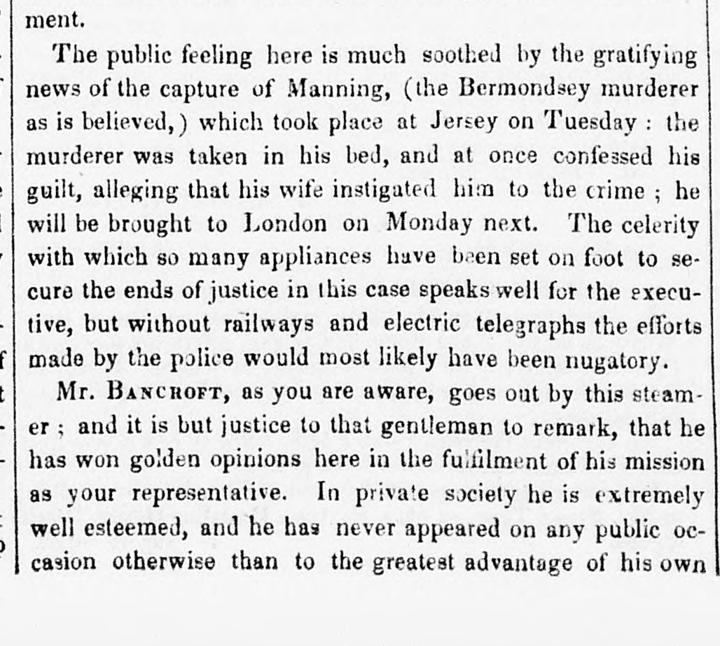
news of the capture of Manning, (the Bermondsey murderer as is believed,) which took place at Jersey on Tuesday : the murderer was taken in his bed, and at once confessed his guilt, alleging that his wife instigated him to the crime ; he will be brought to London on Monday next. The celerity with which so many appliances have been set on foot to se- cure the ends of justice in this case speakswell for the execu- …
New-york daily tribune (New-York [N.Y.])
, page 4 · News of the arrests reaches America
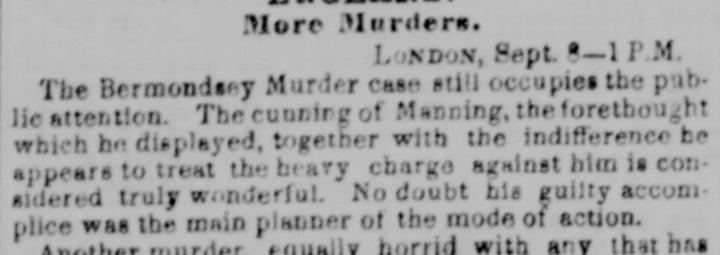
The Bermondsey Murder case still occupies the pab- lie attention. The cunning of Manning, the forethouzht which he displayed, together with the indifference be appears to treat the beary charge ngninst bim is con: sidered truly wonderful. No doubt Lie guilty accom plice was the main planner ot the moda of action.
The north star (Rochester, N.Y.)
, page 3 · News of the arrests reaches America
The recent brutal murder in Bermondsey by the woman Manning and her husband, is exciting much interest. Jhe coroner s Jury have biought in a verdict against them. Man- ning is said to be delighted with the notice taken of him. In his examination he denied having any share in the murder. An influential Committee lias been organ- ised in London, for the purpose of collecting a fund for the relief, of the Italian …
Source: Chronicling America: Historic American Newspapers, Library of Congress. Public domain.
Pictures


Afterwards
The double hanging drew an enormous crowd, and its noise and drunkenness prompted Dickens to write to The Times the same day calling for executions to be carried out in private. It took until 1868 for public hangings to end in England. Herman Melville, visiting London, paid for a place on a nearby roof to watch and recorded the scene in his journal.
The case was a sensation in the cheap press, with broadsides about the Mannings said to have sold in their millions. Maria went to the scaffold in black satin, and a popular story holds that the fabric went out of fashion for years afterwards. Dickens is often said to have drawn on her for the fiery French maid Hortense in Bleak House. The grave markers of the couple, buried inside the prison walls, were saved when Horsemonger Lane Gaol was demolished in 1881.
Questions readers ask
What was the Bermondsey Horror?
The name the press gave to the 1849 murder of Patrick O'Connor by Frederick and Maria Manning, who killed him at their house in Bermondsey, buried him under the kitchen floor and stole his shares and money.
How were the Mannings caught?
Police found the body under the kitchen flagstones on 17 August 1849. Maria was arrested in Edinburgh after trying to sell O'Connor's shares to a stockbroker who recognised them from a published list, and Frederick was arrested in Jersey.
Did Charles Dickens see the Mannings hanged?
Yes. He watched the execution at Horsemonger Lane on 13 November 1849 and wrote to The Times that day condemning the conduct of the crowd and urging an end to public executions.
Sources and further reading
- Marie Manning (Wikipedia)
- The Bermondsey murder: a full report of the trial (1849, Internet Archive)
- The 1849 Bermondsey Horror (Southwark News)
- Wikidata Q16203487 (life dates checked here)
Written by Sinister Crimes from the sources above; see our editorial standards. Last checked 1 November 2026.