
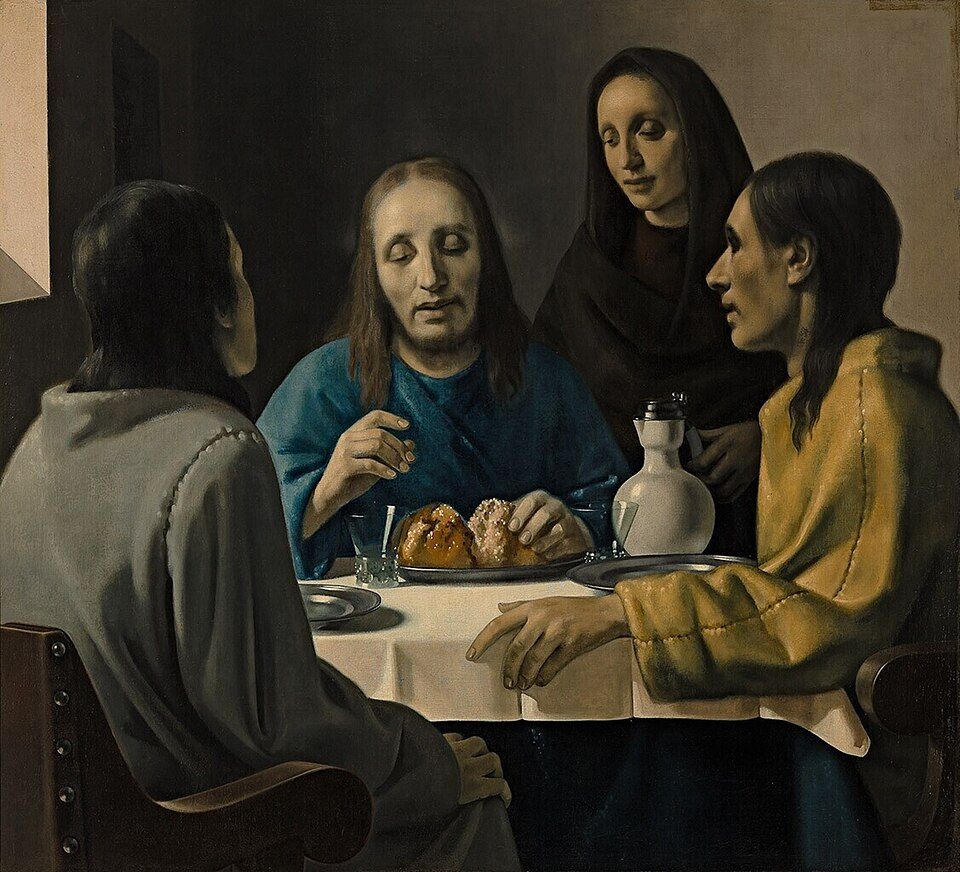

The case
In May 1945 Allied officers emptying a salt mine in Austria found, among thousands of looted works, a painting of Christ and the woman taken in adultery attributed to Johannes Vermeer. It had belonged to Hermann Göring, who had given 137 paintings in exchange for it. The trail led back through a German banker and art dealer in Amsterdam to a Dutch painter named Han van Meegeren, and on 29 May 1945 he was arrested. Selling a national treasure to the enemy was a charge that could, in the mood of liberated Holland, cost him his life.
In custody, Van Meegeren eventually gave an answer no one expected. The picture Göring had treasured was not a Vermeer at all. He had painted it himself, and he had painted several other 'Vermeers' now hanging in Dutch museums and private collections, including the most celebrated of them, The Supper at Emmaus in Rotterdam.
Van Meegeren, born in Deventer in 1889, had trained as an architect before turning to painting. In the 1920s he did well as a portraitist and illustrator, but critics dismissed his work as old-fashioned and derivative, and he answered them with bitter attacks in a magazine he co-published. In 1932 he moved to the Riviera village of Roquebrune-Cap-Martin and spent years solving a technical problem: how to make new oil paint pass the tests experts used to judge its age. His solution was to bind his pigments with a phenol-formaldehyde resin, a form of Bakelite, and bake the finished canvas so that the paint set hard like centuries-old work. He reused genuine seventeenth-century canvases, rolled them to raise a network of cracks, and filled the cracks with ink to imitate grime.
The first great result was The Supper at Emmaus, painted after a trip to Berlin for the 1936 Olympic Games. In 1937 Abraham Bredius, the grand old man of Dutch art history, examined it and declared it Vermeer's masterpiece. The Rembrandt Society, with help from a wealthy shipowner, bought it for the Boijmans museum for about 520,000 guilders. Over the next six years more 'Vermeers' and two fake Pieter de Hoochs followed, increasingly crude but sold in wartime, when genuine works were locked away and could not be compared. Collectors and the Dutch state paid millions of guilders, and Van Meegeren, by his own later account, bought more than fifty houses and a string of country properties.
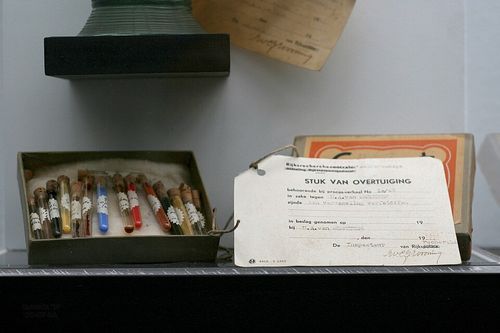
His confession was at first disbelieved. To prove his skill he painted a new picture in Vermeer's manner, Jesus among the Doctors, between July and December 1945 under the eyes of court-appointed witnesses. An international commission led by the Belgian chemist Paul Coremans then examined the disputed paintings and found the modern resin in the paint, along with cracks and dirt that could not have formed naturally. The collaboration charges were dropped, since a fake was not cultural property.
He was tried instead for forgery and fraud before the Amsterdam regional court, beginning on 29 October 1947. On 12 November he was found guilty and sentenced to one year in prison; the prosecutor had asked for two. By then Van Meegeren had become something of a folk hero, the man who had swindled Göring, and in an opinion poll he ranked among the most popular people in the country. He never served the sentence. He suffered a heart attack on 26 November, the last day for an appeal, and died in an Amsterdam clinic on 30 December 1947.
Who lost out
No one was physically harmed. The financial losers were the buyers of his forgeries: the Boijmans museum and the Rembrandt Society, the shipowner Willem van der Vorm, the collector Daniël George van Beuningen, the Dutch state, which bought The Washing of the Feet, and, by a roundabout route, Hermann Göring, who paid in looted pictures. Van Meegeren's estate was later auctioned to repay buyers and settle taxes.
Timeline
Han van Meegeren is born in Deventer.
He moves to Roquebrune-Cap-Martin in the south of France and begins developing his forging technique.
Abraham Bredius examines The Supper at Emmaus and declares it a Vermeer; it is bought for the Boijmans museum in Rotterdam.
Christ with the Adulteress is sold through Alois Miedl and acquired by Hermann Göring in exchange for 137 paintings.
Allied forces enter the Altaussee salt mine, where the painting is found among Göring's hoard.
Van Meegeren is arrested on suspicion of collaboration and selling Dutch cultural property to the enemy.
Having confessed to forgery, he begins Jesus among the Doctors under the eyes of witnesses, finishing it by December.
His trial for forgery and fraud opens before the Amsterdam regional court.
He is found guilty and sentenced to one year in prison.
On the last day for an appeal, he suffers a heart attack.
Van Meegeren dies in an Amsterdam clinic, aged 58.
People in the case
-
Han van Meegeren Perpetrator
10 October 1889 – 30 December 1947
Dutch painter who forged works attributed to Vermeer and Pieter de Hooch; convicted of forgery and fraud in 1947 and died before serving his sentence.
-

Hermann Göring Also involved
12 January 1893 – 15 October 1946
Nazi Reichsmarschall who acquired Christ with the Adulteress in exchange for 137 paintings.
-
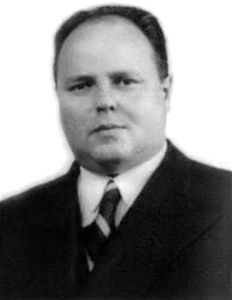
Alois Miedl Also involved
3 March 1903 – 11 June 1970
German banker and art dealer in Amsterdam through whom the forgery reached Göring; his questioning led investigators to Van Meegeren.
-
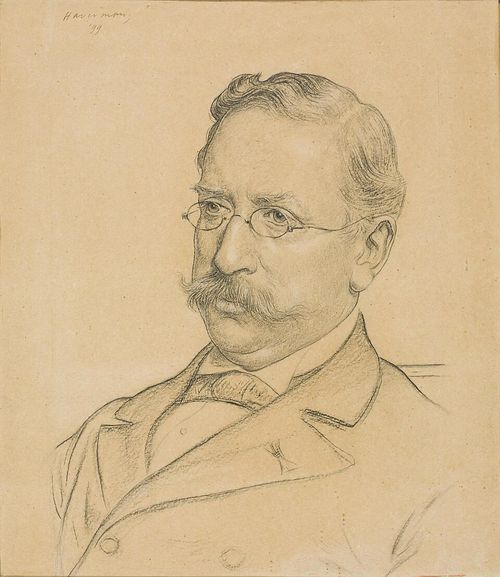
Abraham Bredius Also involved
18 April 1855 – 1946
Leading Dutch art historian who publicly authenticated The Supper at Emmaus as a Vermeer in 1937.
-
Paul Coremans Investigator
29 April 1908 – 11 June 1965
Belgian scientist who led the international commission that proved the paintings were modern forgeries.
Where it happened
- Roquebrune-Cap-Martin. Riviera village where Van Meegeren developed his method and painted The Supper at Emmaus.
- Museum Boijmans Van Beuningen, Rotterdam. Museum that bought The Supper at Emmaus as a Vermeer in 1937.
- Altaussee. Austrian salt-mining village where Allied forces found Göring's 'Vermeer' in 1945.
- Amsterdam. Where Van Meegeren lived from 1943, was arrested, tried and died.
Outcome
Convicted Convicted
Charges of collaboration were dropped once experts confirmed the 'Vermeer' sold to Göring was a forgery. On 12 November 1947 the Amsterdam regional court convicted Van Meegeren of forgery and fraud and sentenced him to one year in prison. He suffered a heart attack before the sentence began and died on 30 December 1947 without serving it.
What the record settles, and what it doesn't
Established
- Han van Meegeren painted forgeries attributed to Johannes Vermeer and Pieter de Hooch and sold them as genuine between 1937 and the mid-1940s.
- The Supper at Emmaus was authenticated as a Vermeer by Abraham Bredius in 1937 and bought for the Boijmans museum in Rotterdam.
- Hermann Göring acquired one of the forgeries, Christ with the Adulteress, in exchange for 137 paintings.
- Van Meegeren was arrested on 29 May 1945 and confessed to the forgeries while facing collaboration charges.
- A commission led by Paul Coremans found modern synthetic resin in the paint of the disputed works.
- On 12 November 1947 he was convicted of forgery and fraud and sentenced to one year; he died on 30 December 1947 before serving it.
Disputed
- His motive: Van Meegeren presented himself as an artist avenging his critics and fooling the Nazis; later research argues he forged mainly for money, and that his wartime conduct, including a book of his drawings inscribed to Hitler, was far from patriotic.
- Whether Göring ever learned the painting was fake: a contemporary story says he was told while in custody and was dismayed; some historians doubt he ever knew.
- How many forgeries he made: the known list is short, but other paintings once attributed to Vermeer or Frans Hals have been suggested as his work, and some may still hang as genuine.
- Whether his wife knew: Van Meegeren insisted his second wife, Jo, had no part in the forgeries; some biographers think she must have known, but nothing was proved.
- Authenticity of two works: after his death a Belgian expert argued The Supper at Emmaus and one Last Supper were real Vermeers; courts in the 1950s and laboratory tests in 1967 and 1977 confirmed they were forgeries.
Pictures


Afterwards
Van Meegeren's estate was auctioned in 1950 to repay buyers and settle his tax debts; Jesus among the Doctors, the picture he painted to prove his guilt, sold for 3,000 guilders. The collector D. G. van Beuningen sued Coremans for damaging the value of his 'Last Supper', and lost. Laboratory work in the 1960s and 1970s, including lead-isotope dating of the white paint, closed the question for good.
The case changed how museums examine paintings, making scientific analysis a routine partner to the connoisseur's eye. It also produced a durable myth of the forger as trickster hero. Biographers since have been less admiring, pointing to his antisemitic journalism, his wartime dealings and the very real money he took. His forgeries now hang as forgeries, studied for what they reveal about the people they fooled.
Questions readers ask
How did Han van Meegeren get caught?
Allied officers found his fake Vermeer, Christ with the Adulteress, in Göring's collection in 1945 and traced the sale back to him. Facing collaboration charges, he confessed that he had painted it.
Did Göring buy a fake Vermeer?
Yes. Göring acquired Christ with the Adulteress, painted by Van Meegeren, in exchange for 137 paintings. It was found in the Altaussee salt mine in 1945.
What sentence did Van Meegeren get?
One year in prison, for forgery and fraud, handed down on 12 November 1947. He died of heart failure on 30 December 1947 without serving it.
How were the Van Meegeren forgeries detected?
A commission led by Paul Coremans found a modern phenol-formaldehyde resin, similar to Bakelite, in the paint, and showed the cracks and dirt were artificial. Later lead-isotope tests confirmed the white paint was modern.
Sources and further reading
- Han van Meegeren (Wikipedia)
- Paul B. Coremans (Wikipedia)
- Alois Miedl (Wikipedia)
- Wikidata Q436161 (life dates checked here)
Written by Sinister Crimes from the sources above; see our editorial standards. Last checked 1 November 2026.