
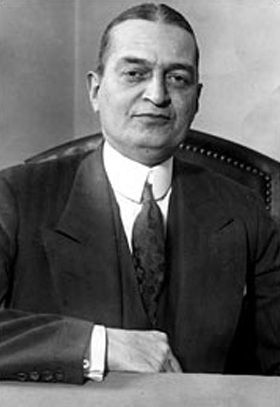

The case
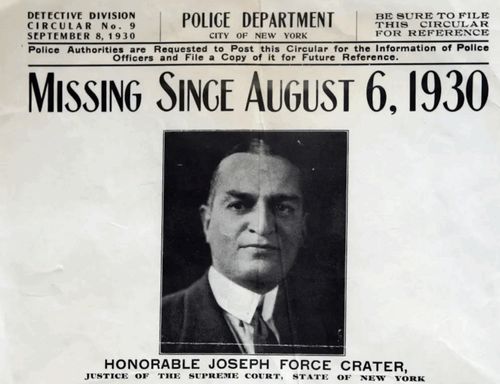
On the evening of Wednesday 6 August 1930, Joseph Force Crater, a justice of the New York Supreme Court, finished dinner at Billy Haas's chophouse on West 45th Street with a lawyer friend and a showgirl, stepped out onto the pavement, and vanished. He had a ticket waiting for him at the box office of the Belasco Theatre, a few blocks away, for a comedy he had already seen. No one has been able to show that he used it.
Crater was forty-one, a lawyer from Easton, Pennsylvania, who had made his career in Manhattan through Tammany Hall, the Democratic machine that ran New York City. He belonged to a Tammany district leader's club, organised its election workers and argued its election cases, and in April 1930 Governor Franklin D. Roosevelt appointed him to the state Supreme Court. That spring he sold about $16,000 in securities and drew $7,000 from his bank, a sum that later invited the suspicion that he had paid for the seat. He was also known about town as 'Good Time Joe', a regular in the speakeasies and showrooms of the theatre district.
That summer the state had begun to look into corruption in the city's courts, the inquiry that became the Seabury investigation. Crater was on holiday with his wife Stella at their cabin in Belgrade, Maine, when he took a telephone call he would not explain, other than to say he had to go to New York to straighten some people out. He made two trips back to the city. On the morning of 6 August, according to his clerk, he spent hours going through papers in his court chambers, then had the clerk cash two cheques for him totalling $5,150 and helped carry two locked briefcases to his apartment at 40 Fifth Avenue.
That night's dinner companions, the lawyer William Klein and the showgirl Sally Lou Ritz, first said Crater got into a taxi outside the restaurant and was driven off west along 45th Street. Later they said they were the ones who had taken the taxi, and that Crater had walked away. Nobody else claimed to have seen him leave.
Strangely, nobody raised the alarm for weeks. His wife waited in Maine and made discreet calls; his fellow judges noticed when he missed the opening of the courts on 25 August and searched quietly; the police were not told until 3 September. By then the briefcases were gone and his safe deposit box had been emptied. A grand jury heard ninety-five witnesses that autumn and concluded that it could not say whether he was alive or dead, a runaway, a victim of amnesia or the victim of a crime. In January 1931 Stella Crater found envelopes of cash, cheques, securities and a note listing debts owed to him in a dresser drawer that police said had been empty when they searched it.
The case became a national joke and an enduring puzzle. Sightings poured in from all over the world. Theories ran from a quiet flight abroad to a killing by gangsters or by people afraid of what he might tell the Seabury inquiry, to blackmail by a showgirl's associates. Crater was declared legally dead in 1939, and the police finally closed the file in 1979. In 2005, after the death of a Queens woman, police received her handwritten claim that her late husband had learned Crater was killed by a police officer and his brother and buried at Coney Island, under what is now the New York Aquarium. Nothing was found to support it.
The victims
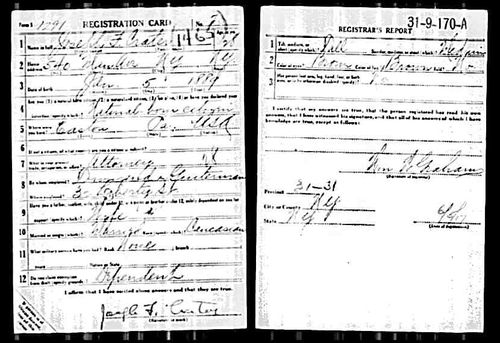
Joseph Force Crater was born in Easton, Pennsylvania, on 5 January 1889, the eldest of four children of a produce merchant. He studied at Lafayette College and Columbia, practised law in Manhattan, and married Stella Wheeler, whom he had helped through her divorce, in 1917. Ambitious and sociable, he worked his way through Tammany politics to the bench, and he was by most accounts a capable lawyer whose private life was a good deal livelier than his public one.
Stella Crater was left in a strange limbo. Evicted from the Fifth Avenue apartment for unpaid rent, she lived in Maine and worked for a time as a telephone operator, had her husband declared dead in 1939 to collect his life insurance, and remarried. In her 1961 memoir The Empty Robe she said she believed he had been murdered. She died in 1969.
Timeline
Governor Roosevelt appoints Crater to the New York Supreme Court.
On holiday in Belgrade, Maine, Crater receives a telephone call and returns to New York.
Crater leaves Maine for New York for the last time, promising to be back for his wife's birthday.
Crater clears papers from his chambers, has two cheques cashed, buys a theatre ticket and dines on West 45th Street, then disappears.
Crater fails to appear for the opening of the court term.
The police are notified, and the disappearance becomes front-page news.
A grand jury begins hearing evidence; it eventually reports that it cannot determine what happened.
Stella Crater finds envelopes of money, securities and a note from her husband in a dresser drawer.
Crater is declared legally dead.
Stella Crater publishes The Empty Robe, saying she believes he was murdered.
The New York police formally close the case.
Police disclose a posthumous claim that Crater was killed and buried at Coney Island; no evidence is found.
People in the case
-
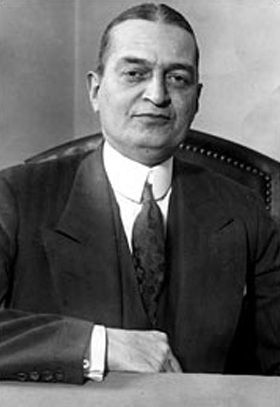
Joseph Force Crater Victim
5 January 1889 – ?
New York Supreme Court justice who disappeared on 6 August 1930; declared legally dead on 6 June 1939.
-
Stella Crater Also involved
? – 1969
Crater's wife; found hidden money and papers in their apartment in January 1931 and later wrote The Empty Robe.
-
Sally Lou Ritz Witness
? – 2000
Showgirl who dined with Crater on the night he vanished and later changed her account of how he left; born Sarah Ritzi about 1907.
-
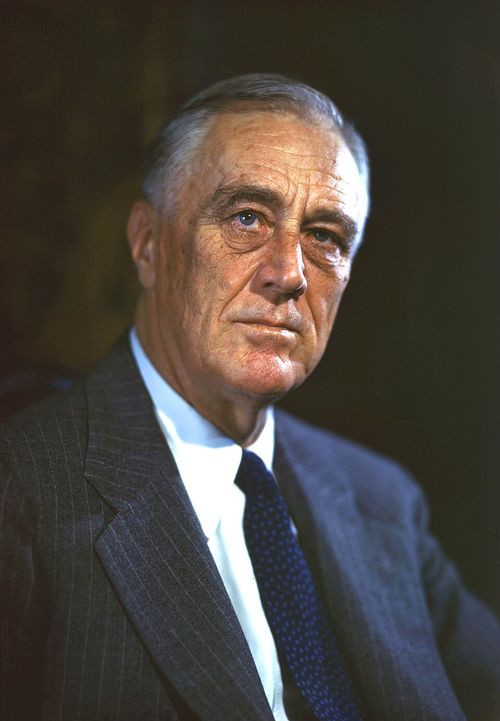
Franklin D. Roosevelt Also involved
30 January 1882 – 12 April 1945
As governor of New York, appointed Crater to the Supreme Court in April 1930.
-
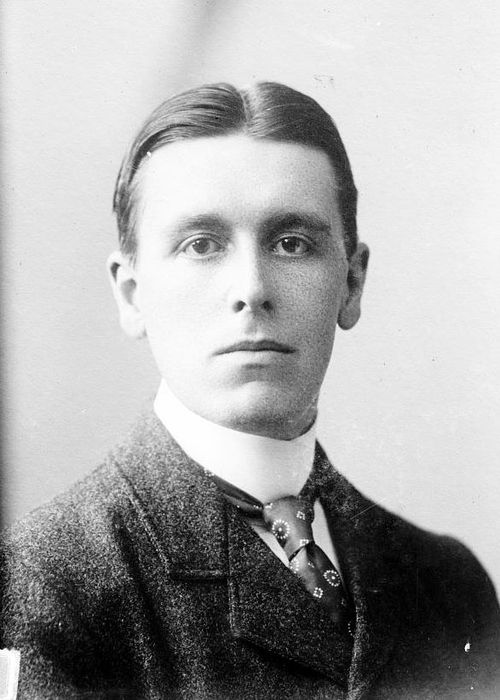
Samuel Seabury Investigator
22 February 1873 – 7 May 1958
Former judge who led the 1930-32 investigations into corruption in New York City's courts and government.
-
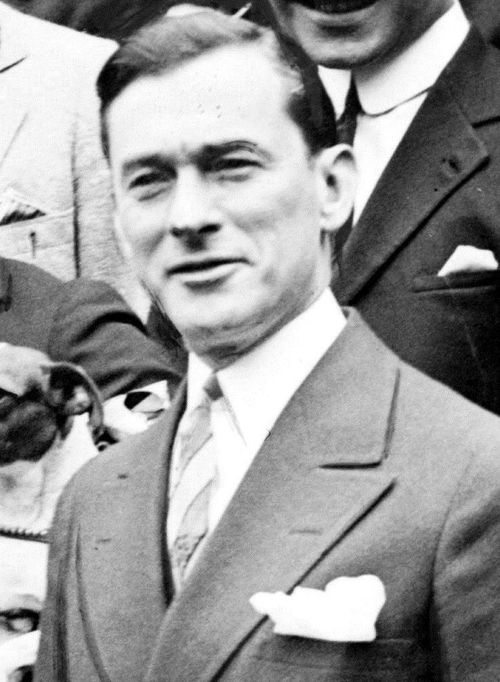
Jimmy Walker Also involved
19 June 1881 – 18 November 1946
Tammany mayor of New York, forced to resign in 1932 as the Seabury investigation widened.
Where it happened
- Belasco Theatre, West 44th Street. Crater reserved a seat here for the evening of 6 August 1930; the chophouse where he dined was nearby at 332 West 45th Street.
- Belgrade, Maine. Where the Craters had their summer cabin and where Stella waited for him.
Outcome
Unsolved Unsolved
No one was ever charged in connection with Crater's disappearance. A New York County grand jury that heard 95 witnesses in 1930 found the evidence insufficient to say whether he was alive or dead or what had happened to him. He was declared legally dead in 1939, and the police closed the case in 1979.
What the record settles, and what it doesn't
Established
- Joseph Force Crater, a New York Supreme Court justice appointed in April 1930, disappeared on the evening of 6 August 1930.
- That day he had papers removed from his chambers, had $5,150 in cheques cashed, and took two locked briefcases to his apartment.
- He dined that evening on West 45th Street with William Klein and Sally Lou Ritz, and had reserved a seat at the Belasco Theatre.
- The police were not notified until 3 September 1930, almost four weeks later.
- A grand jury in late 1930 could reach no conclusion about his fate.
- His wife found hidden money and papers in their apartment in January 1931.
- He was declared legally dead in 1939, and no trace of him has ever been confirmed.
Disputed
- Whether he was murdered or left of his own accord: his wife and many writers believed he was killed, while others noted the cash withdrawals and destroyed papers as signs of a planned flight.
- Whether the disappearance was linked to the Seabury corruption inquiry: some suspect he feared being questioned about buying his judgeship, or was silenced by people who did.
- The blackmail theory: a lawyer for Stella Crater argued that a showgirl and a gangster boyfriend were blackmailing him and killed him, but nothing was proved.
- How he left the restaurant: his dinner companions first said he took a taxi, then that they took the taxi and he walked away.
- The 2005 Coney Island claim: a posthumous note said a police officer and his brother killed Crater and buried him where the New York Aquarium now stands; police found no record of remains there, and the leading historian of the case doubted it.
Pictures



Afterwards
The disappearance arrived in the middle of a political storm and fed it. The Seabury investigations into the magistrates' courts, the police and finally the city government ran on into 1932, uncovering widespread bribery and forcing Mayor Jimmy Walker from office. They badly weakened Tammany Hall. Whatever Crater knew went with him.
In popular culture he became a byword. 'To pull a Crater' meant to vanish, and nightclub comedians for decades got a laugh with 'Judge Crater, call your office.' A Hollywood studio offered him $10,000 if he turned up in person at the box office of its 1933 film Bureau of Missing Persons. The newspapers dubbed him 'the missingest man in America'.
Questions readers ask
What happened to Judge Crater?
Nobody knows. Joseph Force Crater was last seen after dinner on West 45th Street in Manhattan on 6 August 1930. He was declared legally dead in 1939, and the case was closed unsolved in 1979.
Was Judge Crater ever found?
No. Thousands of sightings were reported and several theories put forward, including a 2005 claim that he was buried at Coney Island, but no body or confirmed trace has ever been found.
Why did Judge Crater disappear?
Theories include flight to avoid the Seabury corruption inquiry, murder by people who feared what he might reveal, and blackmail connected to his private life. None has been proved.
What does 'pull a Crater' mean?
It was slang for disappearing without trace, coined after the judge's case. Comedians long used the line 'Judge Crater, call your office.'
Sources and further reading
- Joseph Force Crater (Wikipedia)
- Hofstadter Committee (Seabury investigation) (Wikipedia)
- Wikidata Q4263399 (life dates checked here)
Written by Sinister Crimes from the sources above; see our editorial standards. Last checked 1 November 2026.