

The case
On the evening of Monday 19 January 1931 someone rang the café in Liverpool where the Central Chess Club met and asked for William Herbert Wallace. He had not yet arrived, so the caller left a message with the club captain. A man named R. M. Qualtrough wanted to see Wallace about insurance at 7.30 the next evening, at 25 Menlove Gardens East, Mossley Hill. When Wallace came in about twenty-five minutes later and was handed the note, he said he did not know the name or the street.
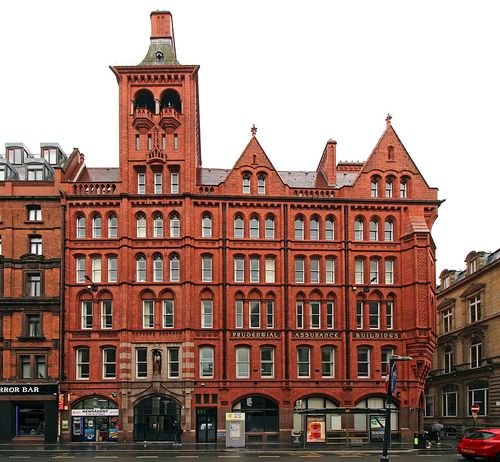
Wallace was 52, a collector for the Prudential Assurance Company who went door to door in the Clubmoor district gathering weekly premiums. He was a reserved man with a bad kidney and serious hobbies: chess, chemistry, botany, and the violin, which he had taken up to play with his wife Julia, a capable pianist. They had lived at 29 Wolverton Street, a terraced house in Anfield, since 1915 and had no children.
The next evening Wallace set off across the city by tram. He found Menlove Gardens North, South and West, but there was no East. For the best part of an hour he asked passers-by, a policeman on his beat and a newsagent, and called at 25 Menlove Gardens West, without result. He went home. At about 8.45 pm his neighbours, John and Florence Johnston, met him in the back entry, where he said he could not get into his house. When he tried the back door again it opened. Julia was lying in the front parlour, killed by heavy blows to the head. There were signs of a clumsy robbery, though the cash box where he kept his collections held very little that week.
The Liverpool police soon came to believe that Wallace had made the Qualtrough call himself to build an alibi. The call had been made from a telephone box about 400 yards from his house, and he had boarded his tram near enough for the timing to be argued. The theory that followed was that he had killed Julia on the Tuesday evening, perhaps naked under a mackintosh that was found beneath her body, then cleaned himself and left. About two weeks later he was arrested and charged with murder.
The evidence against him was thin. No blood was found on his clothes, and the bath and drains showed no sign of recent use. No weapon was found. The club captain, who knew Wallace's voice, was sure the caller was not him. A milk boy said he had spoken to Julia at her door after 6.30, which left Wallace only minutes in which to kill her, wash and leave for a tram he was seen to catch. Nor could anyone show a motive; the marriage appeared settled and affectionate.
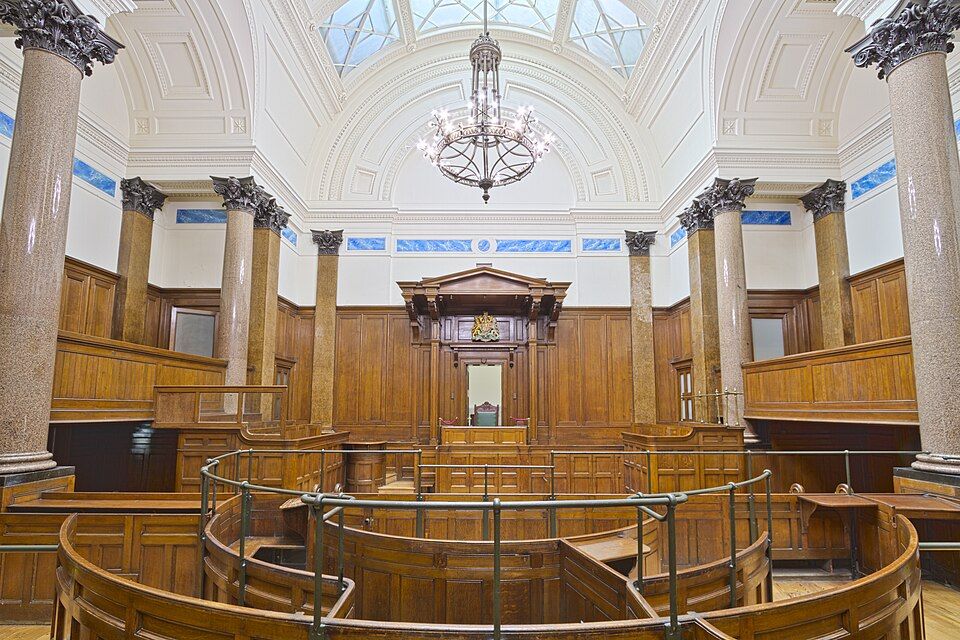
Even so, at the Liverpool Assizes in St George's Hall in April 1931 the jury took about an hour to convict. The judge, Mr Justice Wright, had summed up in Wallace's favour, telling the jury that the evidence did not exclude someone else. Wallace was sentenced to death. On 19 May the Court of Criminal Appeal, under the Lord Chief Justice, Lord Hewart, quashed the conviction on the ground that the verdict could not be supported by the evidence. It was the first time the court had overturned a murder conviction on that ground, and Wallace walked free.
The victims
Julia Wallace was born Julia Dennis near Northallerton in Yorkshire and was orphaned at thirteen when her father, a struggling farmer, died. She later gave herself a more polished background, telling people her father had been a vet and her mother French, and she let her age be understood as close to her husband's; records show she was about seventeen years older. She married William Wallace in Harrogate in 1914. She was an accomplished pianist, and the couple's musical evenings at home were a fixture of their quiet life. She was about 69 when she died.
Timeline
William Wallace marries Julia Dennis in Harrogate.
The couple move to 29 Wolverton Street, Anfield, Liverpool.
A caller calling himself R. M. Qualtrough leaves a message for Wallace at the Liverpool Central Chess Club.
Wallace searches in vain for Menlove Gardens East; returning home at about 8.45 pm, he finds Julia dead.
About two weeks after the murder, Wallace is arrested and charged.
His trial opens at the Liverpool Assizes in St George's Hall.
The jury convicts him after about an hour and he is sentenced to death.
The Court of Criminal Appeal quashes the conviction and Wallace is released.
Wallace dies of kidney disease at Clatterbridge Hospital, aged 54.
People in the case
-
Julia Wallace Victim
1861 – 20 January 1931
Born Julia Dennis in Yorkshire; birth year 1861 per her birth certificate, though her gravestone gives 1879.
-
William Herbert Wallace Accused
29 August 1878 – 26 February 1933
Prudential insurance agent; convicted of his wife's murder, then freed when the Court of Criminal Appeal quashed the verdict.
-
Richard Gordon Parry Suspect
? – 1980
Former Prudential colleague of Wallace, aged 22 in 1931, questioned by police at the time and later named by writers as the likely killer; he gave an alibi and was never charged. Born c. 1909.
-
Sir Robert Wright Judge
15 October 1869 – 27 June 1964
Trial judge, later Lord Wright; summed up in the defendant's favour.
-
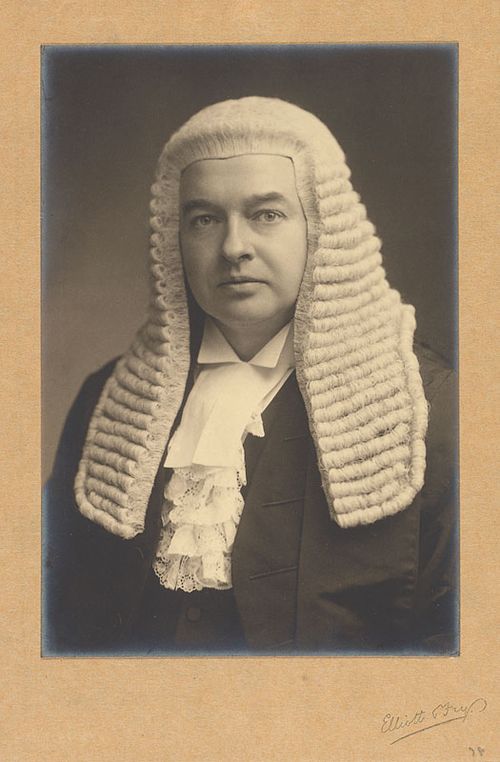
Lord Hewart Judge
7 January 1870 – 5 May 1943
Lord Chief Justice who delivered the appeal judgment freeing Wallace.
Where it happened
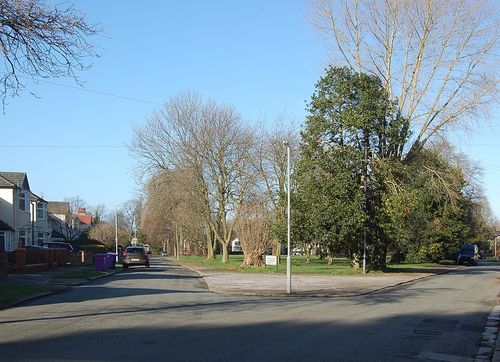
- Wolverton Street, Anfield. The Wallaces lived at number 29, where Julia was killed.
- Menlove Gardens West, Allerton. Wallace called at number 25 while searching for the non-existent Menlove Gardens East.
- St George's Hall, Liverpool. Seat of the Liverpool Assizes, where Wallace was tried.
- Anfield Cemetery. Where William and Julia Wallace are buried together.
Outcome
Disputed verdict Convicted, then quashed on appeal
Wallace was convicted of murder at the Liverpool Assizes in April 1931 and sentenced to death. On 19 May 1931 the Court of Criminal Appeal quashed the conviction because the verdict could not be supported having regard to the evidence, the first time it had done so in a murder case. No one else was ever charged, and the murder is officially unsolved.
What the record settles, and what it doesn't
Established
- On 19 January 1931 a caller giving the name R. M. Qualtrough left a message at the Liverpool Central Chess Club asking Wallace to visit 25 Menlove Gardens East the next evening.
- The call was made from a public telephone box about 400 yards from the Wallaces' house.
- Menlove Gardens East did not exist, and several witnesses saw Wallace searching for it on the evening of 20 January.
- Julia Wallace was killed by blows to the head in her front parlour on the evening of 20 January 1931.
- Wallace was convicted of her murder in April 1931 and the Court of Criminal Appeal quashed the conviction on 19 May 1931.
- No other person was ever charged.
Disputed
- Who made the Qualtrough call: the police believed Wallace made it to create an alibi, while the man who took it was sure it was not his voice, and later writers have attributed it to Richard Gordon Parry, as a plan or as a prank.
- Whether Wallace had time to kill his wife: the milk boy's sighting of Julia after 6.30 pm left only minutes, which the defence said was impossible and the prosecution said was enough.
- Whether Richard Gordon Parry was involved: a garage worker's later account of Parry washing his car that night and a bloodied glove has been cited against him, but a sworn alibi placed him elsewhere and he was never charged.
- Whether Wallace was in fact guilty: some writers, including some who were not convinced by the trial, still argue that he planned the whole thing; others regard him as plainly innocent.
- Julia's age: she was long believed to be about Wallace's age and her gravestone says 1879, but her birth certificate shows 1861.
Pictures



Afterwards
Wallace went back to work for the Prudential, though many in Liverpool still treated him as guilty, and later moved across the Mersey to the Wirral. His health, poor for years, declined, and he died in February 1933, less than two years after his release. He was buried with Julia in Anfield Cemetery.
The case set a legal precedent: R v Wallace is still cited for the principle that a conviction based on mere suspicion will be quashed. It also became a favourite of crime writers, from Dorothy L. Sayers to Raymond Chandler, who called it the impossible murder because Wallace could not have done it and nor could anyone else. Its combination of a chess player, a phantom address and evidence that points both ways has kept it among the most argued-over cases in British criminal history.
Questions readers ask
Was William Herbert Wallace guilty?
A jury found him guilty, but the Court of Criminal Appeal quashed the verdict as unsupported by the evidence, so in law he was innocent. Writers have argued both ways ever since, and no one else was convicted.
Who was R. M. Qualtrough?
No one of that name was ever found. The caller who used it in January 1931 has never been identified; suspicion has fallen on Wallace himself and on his former colleague Richard Gordon Parry.
Why is the Wallace case important in law?
R v Wallace (1931) was the first time the Court of Criminal Appeal quashed a murder conviction because the verdict could not be supported by the evidence. It established that a conviction founded on mere suspicion cannot stand.
Sources and further reading
- William Herbert Wallace (Wikipedia)
- R v Wallace (Wikipedia)
- The Trial of William Herbert Wallace (1933), Internet Archive
- Wikidata Q8012257 (life dates checked here)
Written by Sinister Crimes from the sources above; see our editorial standards. Last checked 1 November 2026.