

The case
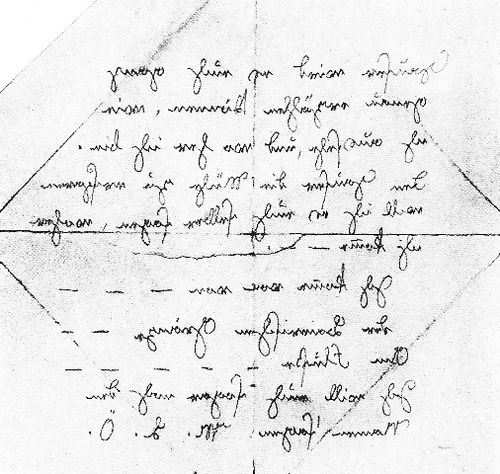
The note in the purse was written backwards. When a policeman searched Ansbach's Court Garden on 14 December 1833, where Kaspar Hauser said a stranger had stabbed him, he found a small violet purse holding a pencilled message in mirror writing. Its author offered to say where he came from: from the Bavarian border, on a river whose name was left blank, with the initials M. L. Ö. The note was meant to look like a taunt from an assassin. It also contained a spelling mistake and a grammatical slip that Hauser habitually made, and it was folded into the particular triangle in which he folded his own letters.
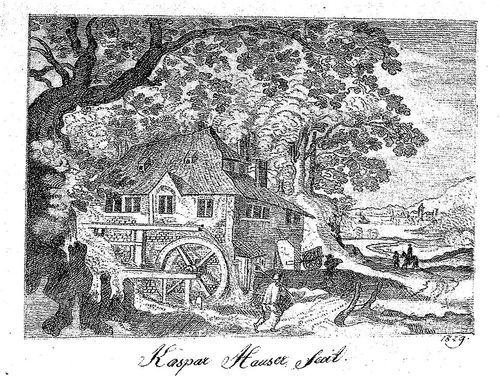
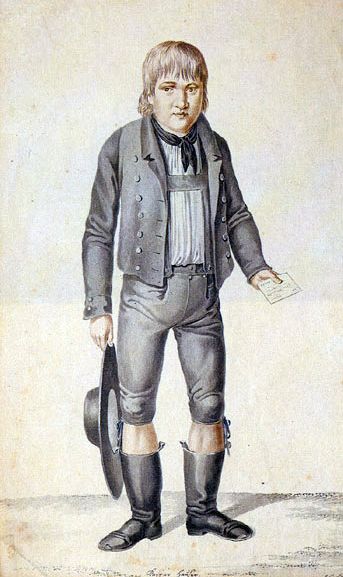
Hauser had been a public mystery for five years. On 26 May 1828 a teenage boy was found in the streets of Nuremberg carrying two letters, one addressed to a cavalry captain. He could say little beyond that he wanted to be a cavalryman like his father, and could write his name. Later he described a childhood spent alone in a small dark cell, fed on bread and water by a man he never saw, until he was taught to stand, walk and repeat a sentence and was led to the city. Nuremberg adopted him, and he was taken in by a schoolmaster, Friedrich Daumer, who found he had a gift for drawing.
The story drew crowds and theories. The most persistent held that Hauser was the infant hereditary prince of Baden, born in 1812, supposedly spirited away and replaced by a dying baby so that another line could inherit. Others thought him a fraud. Some of his own episodes fed the doubt. In October 1829 he was found bleeding from a cut on the forehead in Daumer's cellar and said a hooded man had attacked him; sceptics noted he had recently quarrelled with Daumer, who had accused him of lying. In 1830 a pistol went off in his room and grazed his head, which he explained as an accident while reaching for books.
In 1831 an English nobleman, Lord Stanhope, took custody of him, paid for two journeys to Hungary in search of his origins, and promised to take him to England. When those trips came to nothing, Stanhope placed him in Ansbach with a strict schoolteacher, Johann Georg Meyer, and kept paying his expenses from a distance. Hauser worked as a copyist in a law office and longed for England. His protector, the jurist Anselm von Feuerbach, died in May 1833. On 9 December Hauser and Meyer argued badly, with Stanhope due to visit at Christmas.
Five days later Hauser came back to the Meyers' house with a deep wound in his chest. He said a stranger had invited him, in the court gardener's name, to see a newly bored well in the Court Garden; finding no one there, he walked on toward a monument, where a bearded man handed him a purse and stabbed him as he reached for it. He was anxious that the purse be found but showed no interest in its contents. Hauser's condition worsened and he died on the evening of 17 December 1833. He was about twenty-one.
The Ansbach court of inquiry found too many inconsistencies to accept his story and leaned toward a self-inflicted wound, perhaps meant to revive interest in him, that went deeper than he intended. The examining doctors agreed the wound could have been self-inflicted, but no attacker was ever found and the question was never formally closed. Stanhope later published the evidence against Hauser and confessed that he had been deceived.
The victims
Kaspar Hauser's true name, birthplace and parents are unknown. The letter he carried gave his birthday as 30 April 1812, and that is the date on most records. When he arrived in Nuremberg he was judged to be about sixteen, in reasonable health, able to walk and climb stairs, but with very limited speech; within a few years he could read, write and draw well, and he earned a modest living as a copyist. People who knew him described him as gentle and eager to please, and also as vain and given to lying when cornered, and both pictures may be true.
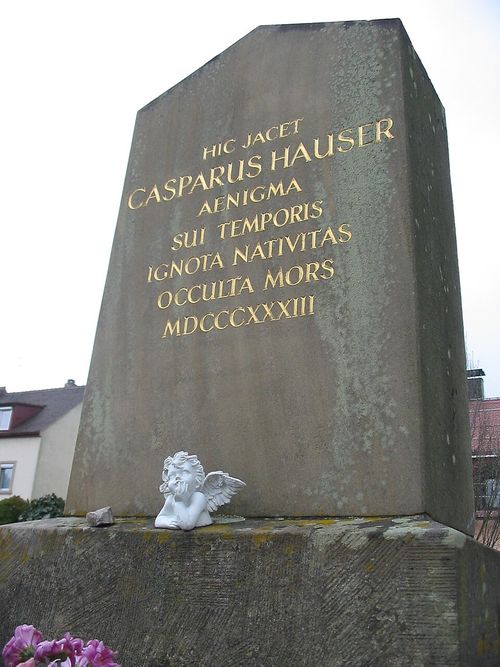
Whatever the truth of his childhood, he spent his last five years as an exhibit: examined by doctors, tested with magnets, paraded before visitors, passed from household to household and promised a future in England that never came. His gravestone in Ansbach calls him the riddle of his time, whose birth was unknown and whose death was mysterious.
Timeline
Hauser's birth date as given in the letter he carried; nothing confirms it.
The infant hereditary prince of Baden dies a few weeks after birth, the event behind the later 'stolen prince' rumour.
A teenage boy carrying two letters is found in the streets of Nuremberg.
Hauser is found with a cut to the forehead in Daumer's cellar and says a hooded man attacked him.
A pistol goes off in Hauser's room, slightly wounding his head.
Lord Stanhope moves Hauser to the house of the schoolteacher Johann Georg Meyer in Ansbach.
Anselm von Feuerbach dies.
Hauser and Meyer have a serious quarrel.
Hauser returns from the Court Garden with a deep chest wound, saying a stranger stabbed him.
Hauser dies of the wound in Ansbach.
A DNA test on a blood sample attributed to Hauser finds no match with the House of Baden.
A further DNA study of several samples attributed to Hauser again rules out descent from the House of Baden.
People in the case
-
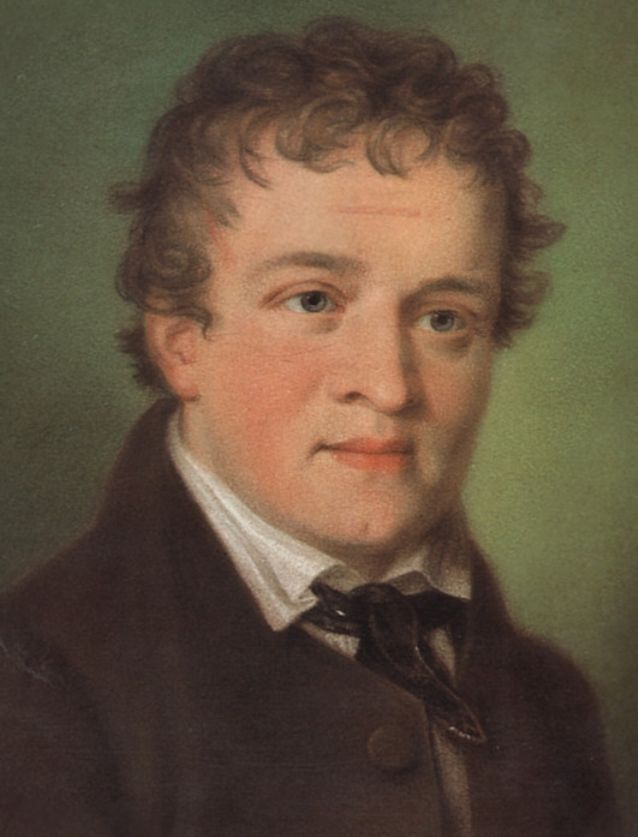
Kaspar Hauser Victim
30 April 1812 – 17 December 1833
Foundling who appeared in Nuremberg in 1828; died of a stab wound in Ansbach. The birth date comes only from the letter he carried.
-
Philip Stanhope, 4th Earl Stanhope Also involved
7 December 1781 – 2 March 1855
English peer who became Hauser's guardian in 1831 and later published the case against him; some of Hauser's supporters suspected his motives.
-
Anselm von Feuerbach Investigator
14 November 1775 – 29 May 1833
Eminent Bavarian jurist who investigated the case and wrote the first book on Hauser in 1832.
-
Georg Friedrich Daumer Also involved
5 March 1800 – 13 December 1875
Nuremberg schoolmaster and philosopher who first looked after and taught Hauser.
-
Johann Georg Meyer Witness
Ansbach schoolteacher in whose house Hauser lived from late 1831 until his death.
-
Stéphanie de Beauharnais Also involved
28 August 1789 – 29 January 1860
Grand Duchess of Baden, mother of the infant prince who died in October 1812 and whom rumour identified with Hauser.
Where it happened
- Hofgarten (Court Garden), Ansbach. Where Hauser said he was attacked; a memorial stone stands there.
- Nuremberg Castle. Hauser was held for two months in the castle's Luginsland tower after he was found in 1828.
Outcome
Unsolved Unsolved
No suspect was ever identified or charged. The Ansbach court of inquiry doubted Hauser's account and considered it likely that he had wounded himself, and the medical examiners agreed the wound could have been self-inflicted, but the case was never formally resolved.
What the record settles, and what it doesn't
Established
- Kaspar Hauser appeared in Nuremberg on 26 May 1828 carrying two letters about his origins, which later analysis attributed to a single writer.
- He suffered a cut to the forehead in October 1829 and a minor head wound from a pistol in April 1830, both in disputed circumstances.
- On 14 December 1833 he returned from Ansbach's Court Garden with a deep chest wound and died of it on 17 December.
- A purse containing a mirror-written note was found in the garden; the note had spelling and folding habits characteristic of Hauser himself.
- The Ansbach inquiry and the medical examiners considered a self-inflicted wound possible, and no attacker was ever identified.
- DNA tests in 1996 and 2024 on samples attributed to Hauser did not match the House of Baden.
Disputed
- Whether Hauser stabbed himself or was murdered: many historians think he inflicted the wound to regain attention and misjudged its depth, while his supporters held that he was silenced by people who feared his origins; a 2005 forensic review concluded that neither suicide-by-accident nor homicide can be ruled out.
- His origins: the 'prince of Baden' theory was widely believed in the nineteenth century, but birth and burial records for the infant prince and DNA testing weigh heavily against it.
- Whether his story of growing up in a dark cell was true: critics point to his physical health on arrival and a 2023 finding that he bore a smallpox vaccination scar, which implies contact with adults; defenders see him as a damaged, neglected child whose account was confused rather than invented.
- The value of the DNA tests: supporters of the princely theory have questioned whether the samples really came from Hauser, though the 2024 study found several independent samples consistent with one another.
Pictures





Afterwards
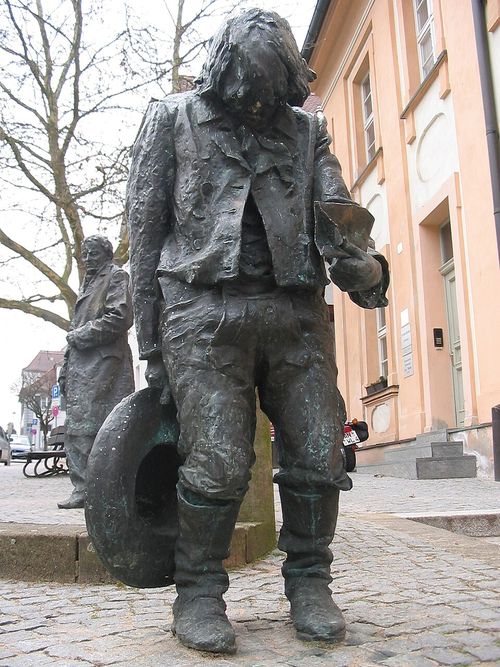
Hauser was buried in Ansbach's town cemetery under an inscription calling him the riddle of his time, and a monument in the Court Garden marks where he said he was attacked, with a Latin line saying that a mysterious man was killed there in a mysterious way. The 'prince of Baden' story grew into a long-running controversy that drew in the Baden court itself and outlived everyone involved.
His name passed into the language of science and art. Psychologists and biologists speak of 'Kaspar Hauser experiments' when animals are raised in isolation to test which behaviours are innate. Poets from Verlaine to Trakl wrote about him as an innocent lost in a hostile world, and Werner Herzog's 1974 film The Enigma of Kaspar Hauser made the story known to a new audience. Since 1998 Ansbach has held a Kaspar Hauser festival every two years.
Questions readers ask
Who was Kaspar Hauser?
A young man who appeared in Nuremberg in 1828, claiming to have grown up alone in a dark cell. He became a celebrity, rumoured to be a lost prince of Baden, and died of a stab wound in Ansbach in December 1833.
Was Kaspar Hauser murdered?
Nobody knows. He said a stranger stabbed him in the Ansbach Court Garden, but the investigators found his account inconsistent and thought he may have stabbed himself and gone too deep. No attacker was ever identified.
Was Kaspar Hauser really a prince?
Almost certainly not. Records of the Baden prince's death in 1812 and DNA studies in 1996 and 2024 all count against the theory.
What was written on the note found in Kaspar Hauser's purse?
A short message in mirror writing claiming to come from someone near the Bavarian border, with the initials M. L. Ö. Its spelling and folding matched Hauser's own habits.
Sources and further reading
- Kaspar Hauser (Wikipedia)
- Kaspar Hauser: Beispiel eines Verbrechens am Seelenleben des Menschen, by Anselm von Feuerbach, 1832 (Project Gutenberg, German)
- Wikidata Q44600 (life dates checked here)
Written by Sinister Crimes from the sources above; see our editorial standards. Last checked 1 November 2026.