

The case
Before she was a murder victim, Mary Rogers was a minor New York celebrity. In the late 1830s she worked behind the counter of John Anderson's tobacco shop, and her looks drew a steady crowd of young clerks, journalists and writers who came to buy cigars and linger. Newspapers called her the beautiful cigar girl. In October 1838 the Sun reported that she had vanished and left a note hinting at suicide; she reappeared within days, and some suspected the whole episode had been a publicity stunt for the shop.
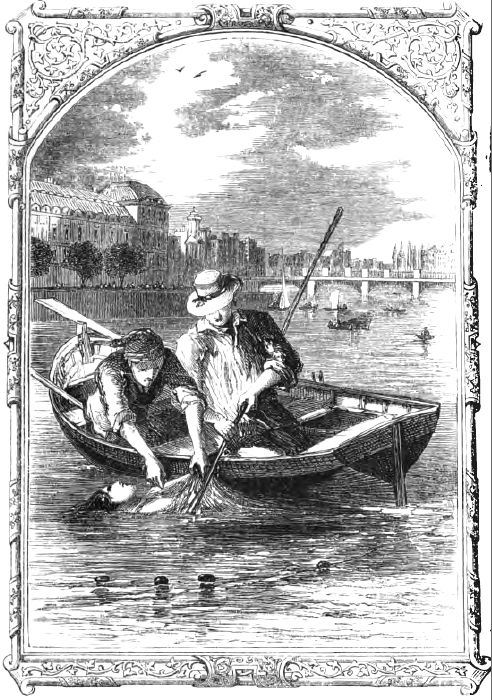
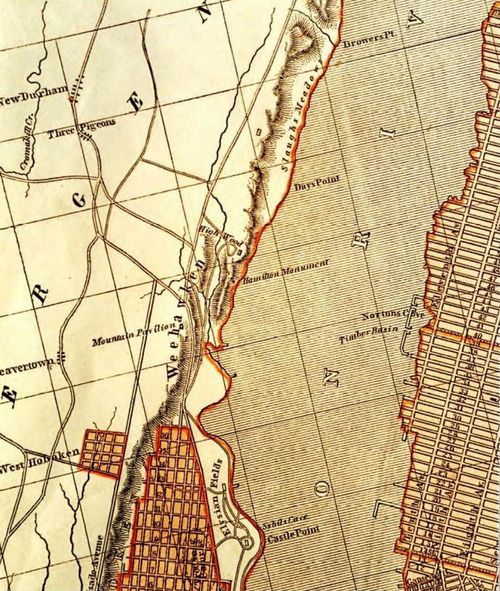
By the summer of 1841 Rogers, now about twenty, was helping her widowed mother run a boarding house in lower Manhattan and was engaged to one of the lodgers, Daniel Payne. On Sunday morning, July 25, 1841, she told Payne she was going to visit relatives. She did not come home that night. On Wednesday, July 28, her body was recovered from the Hudson River near Sybil's Cave, a popular spring and picnic spot on the Hoboken shore. A coroner concluded that she had been the victim of violence and had been dead for some days.
The case became a sensation. New York's penny papers, still new and fiercely competitive, printed theory after theory: that she had been attacked by one of the gangs who roamed the Hoboken shore on summer Sundays, that a jilted admirer had killed her, or that she was still alive and the body was someone else's. The papers also attacked the city's police, an antiquated system of watchmen and constables who had no detective branch and divided responsibility with New Jersey authorities across the river.
In late August, according to the press of the day, the sons of Frederica Loss, who kept a roadside tavern at Weehawken north of Hoboken, found a woman's clothing and a handkerchief marked with Rogers's initials in a thicket near the inn. Loss said she had seen Rogers at the tavern with a dark-complexioned young man on the afternoon she disappeared. The discovery seemed to confirm the gang theory, although many wondered why the items had gone unnoticed for a month.
On October 7, 1841, Daniel Payne was found dead near Sybil's Cave, having taken laudanum. Among his papers was a note that read in part, "To the World, here I am on the very spot. May God forgive me for my misspent life." Payne had been cleared by an alibi and was widely seen as grief-stricken rather than guilty, but his death deepened the mystery.
Over a year later, in November 1842, the New York Tribune published a statement attributed to Frederica Loss suggesting that Rogers had not been murdered by a gang at all but had died at the tavern during an abortion, and that her body had been put in the river to hide it. The authorities did not act on it, and the claim has never been confirmed. No one was ever charged with Mary Rogers's death.
The victims
Mary Cecilia Rogers was probably born in 1820 or 1821 in Lyme, Connecticut, though no birth record survives. She was the only child of her mother, Phoebe, and her father died when she was in her teens, after which mother and daughter moved to New York. Her job at Anderson's tobacco shop paid well because she drew customers, and among those said to have known the shop were writers such as Washington Irving and James Fenimore Cooper. Admirers wrote verses about her in the papers.
After the 1838 disappearance episode she left the shop and helped her mother run a boarding house. She was about twenty when she died. Almost everything written about her afterwards treated her as a symbol, whether of city temptation, female vulnerability or police failure, and very little of her own voice survives.
Timeline
The Sun reports Mary Rogers missing; she returns within days, and some call it a stunt.
Rogers leaves home on a Sunday morning, telling her fiancé she is visiting relatives.
Her body is recovered from the Hudson River near Sybil's Cave, Hoboken.
Clothing and a handkerchief marked with her initials are reported found in a thicket near Frederica Loss's tavern at Weehawken.
Daniel Payne is found dead near Sybil's Cave after taking laudanum, leaving a remorseful note.
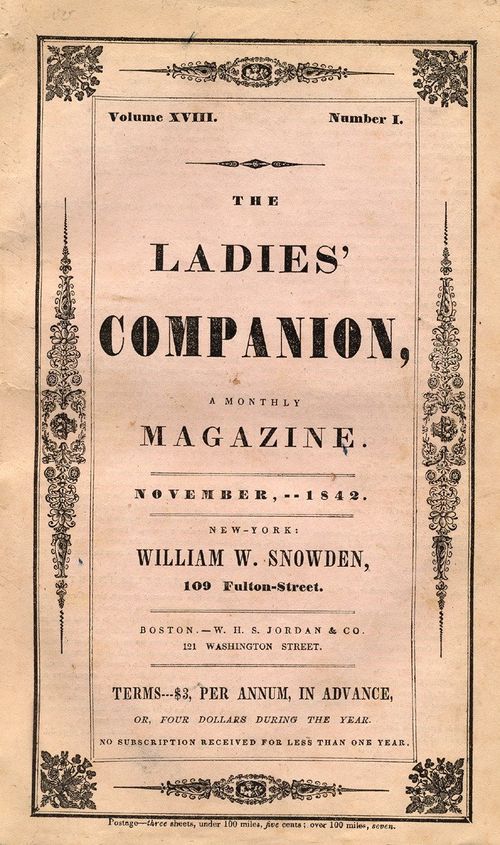
Poe's "The Mystery of Marie Rogêt" begins appearing in Snowden's Ladies' Companion.
The New York Tribune reports a statement attributed to Frederica Loss that Rogers died during an abortion.
Poe publishes the final installment of his story, revised to allow for the new theory.
New York replaces its watch system with a municipal police force, a reform the Rogers case had helped to press.
People in the case
-
Mary Rogers Victim
? – July 1841
New York tobacco shop clerk known as the beautiful cigar girl; born c. 1820 in Lyme, Connecticut. Disappeared July 25, 1841; body found July 28.
-
Daniel Payne Also involved
? – 7 October 1841
Rogers's fiancé, cleared by an alibi; died of laudanum near Sybil's Cave.
-
Frederica Loss Witness
? – 1842
Keeper of a Weehawken roadhouse near where Rogers's belongings were found; a statement attributed to her in 1842 alleged a fatal abortion.
-
John Anderson Also involved
Owner of the New York tobacco shop where Rogers worked.
-
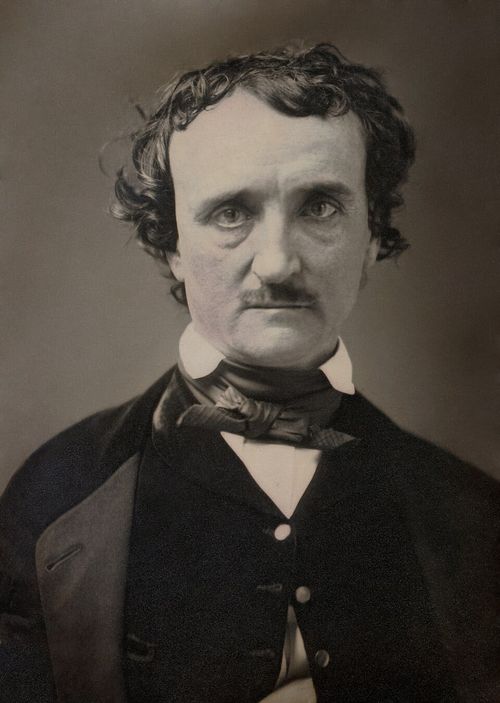
Edgar Allan Poe Also involved
19 January 1809 – 7 October 1849
Fictionalized the case as "The Mystery of Marie Rogêt" (1842-43).
Where it happened
- Sybil's Cave, Hoboken. Spring and pleasure ground near where Rogers's body was recovered and where Daniel Payne died.
- Weehawken, New Jersey. Area of Frederica Loss's tavern and the thicket where Rogers's belongings were reported found.
Outcome
Unsolved Unsolved
No one was ever charged with Mary Rogers's death. The inquest concluded she had died by violence, but neither the gang theory nor the later abortion theory was tested in court. Her fiancé, the only person close to her who was seriously considered, had an alibi and died in October 1841.
What the record settles, and what it doesn't
Established
- Mary Rogers left home on Sunday, July 25, 1841, and her body was recovered from the Hudson River near Hoboken on July 28.
- She was well known in New York as a former clerk at John Anderson's tobacco shop, and her death received intense press coverage.
- Her fiancé Daniel Payne died near Sybil's Cave on October 7, 1841, after taking laudanum, leaving a remorseful note.
- Edgar Allan Poe based "The Mystery of Marie Rogêt" on the case, moving it to Paris, and revised it after new claims appeared in November 1842.
- No one was ever charged with her death.
Disputed
- How she died: the contemporary consensus was murder by a gang or an individual attacker, while the 1842 statement attributed to Frederica Loss pointed to a fatal abortion and the disposal of her body; modern writers remain divided.
- Whether the clothing found near Loss's tavern had lain there since July or was planted later, since it was found weeks after the death in a spot that had seemingly been passed over.
- The meaning of Daniel Payne's suicide note, read by some as an admission of guilt and by most as an expression of grief.
- Whether the 1838 disappearance was a genuine episode or a publicity stunt for Anderson's shop.
Pictures


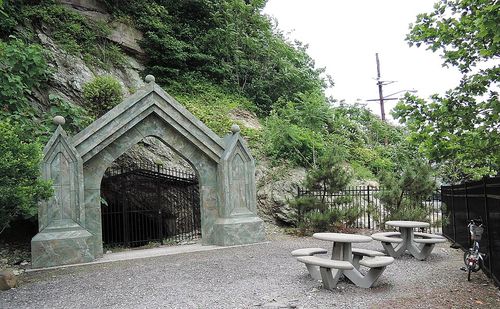


Afterwards
The Rogers case outlived everyone involved because of a story. Edgar Allan Poe, who had invented the detective tale the year before with "The Murders in the Rue Morgue", moved the crime to Paris, renamed the victim Marie Rogêt and set his detective Dupin to reason through the newspaper coverage. Poe claimed to be offering a real solution, and when the abortion theory appeared in late 1842 he quietly adjusted his text to accommodate it. It is often called the first detective story based on a real murder.
The case also became an argument in two public debates. Its handling exposed the weakness of New York's watch system, and in 1845 the city created a municipal police force. And the abortion theory, whatever its truth, was invoked by those campaigning for the stricter abortion law New York passed in 1845. Rogers herself, as so often, faded behind the uses that others made of her.
Questions readers ask
How did Mary Rogers die?
No one knows for certain. An inquest found she had died by violence, and the press blamed a gang. In 1842 a statement attributed to a tavern keeper claimed she had died during an abortion and been thrown in the river. Neither account was ever proven.
What story did Edgar Allan Poe base on Mary Rogers?
"The Mystery of Marie Rogêt", published in 1842-43 as a sequel to "The Murders in the Rue Morgue". Poe moved the case to Paris and had his detective, C. Auguste Dupin, analyze the newspaper coverage.
Why was Mary Rogers called the beautiful cigar girl?
She worked at John Anderson's tobacco shop in New York, where her looks attracted many customers. The newspapers gave her the nickname before her death and used it constantly afterward.
Sources and further reading
- Mary Rogers (Wikipedia)
- The Mystery of Marie Rogêt (Wikipedia)
- Edgar Allan Poe, "The Mystery of Marie Rogêt" (Wikisource)
- Wikidata Q3296234 (life dates checked here)
Written by Sinister Crimes from the sources above; see our editorial standards. Last checked 1 November 2026.