

The case
The trial was almost over, and by most accounts the accused was winning, when a man with a wooden leg arrived in Toulouse in 1560 and said that he was Martin Guerre. The man in the dock had been living as Martin Guerre for more than three years. He had shared a house and a bed with Martin's wife, Bertrande de Rols, raised Martin's son, fathered children of his own, and convinced most of the village of Artigat, including Martin's four sisters, that he was who he said he was.
The real Martin was born around 1524 in the Basque town of Hendaye. His family moved to Artigat, in the foothills of the Pyrenees, when he was a small child, ran a tile works and changed their name from Daguerre to Guerre. At about fourteen Martin was married to Bertrande, a girl from a comfortable local family, but the couple had no child for eight years; when a son, Sanxi, was finally born, the village had long whispered that the marriage was bewitched. In 1548, accused of stealing grain from his own father, Martin vanished. Under church law Bertrande could not remarry while he might still be alive. She waited.
In the summer of 1556 a man arrived claiming to be Martin, now changed by eight years of absence but able to recall places, people and private moments in convincing detail. Bertrande accepted him, as did Martin's sisters and his uncle Pierre Guerre, who had married Bertrande's widowed mother in the meantime. The newcomer and Bertrande had two daughters, of whom one, Bernarde, survived. Trouble began over property. Martin's father had died while he was away, and when the returned Martin demanded an account of the estate from Pierre and took him to law over it, Pierre's doubts hardened into certainty. A passing soldier added fuel by saying that the real Martin Guerre had lost a leg in the wars.
Pierre made inquiries and decided that the man was Arnaud du Tilh, known as Pansette, from Sajas, a village some distance to the north-west, a man with a poor reputation. Since only the wronged wife could properly bring the charge, Pierre brought it in Bertrande's name, and she was pressed to support it. At the trial in Rieux in 1560 Bertrande testified that she had been deceived. Yet she and the accused gave matching accounts of their private life before 1548, and when he offered to accept death if she would swear that he was not her husband, she said nothing. More than 150 witnesses were heard. Some swore he was Martin, others that he was Arnaud, and many would not commit themselves. The court found him guilty and sentenced him to death.
He appealed to the Parlement of Toulouse, where the judges, among them the jurist Jean de Coras, were inclined to believe him. He answered every test of memory, and Pierre and Bertrande were themselves arrested on suspicion of false accusation. Then the one-legged man appeared. He knew less about the couple's past than the accused did, but when the family saw the two men side by side, Pierre, Bertrande and the four sisters all recognised the newcomer as Martin.
The court condemned Arnaud du Tilh for imposture and adultery in September 1560. After sentence he confessed, explaining that men who mistook him for Martin had given him the idea, and that he had gathered details of Martin's life before arriving. He asked forgiveness of Bertrande and the family. He was hanged in front of the Guerre house in Artigat. Bertrande was not punished; the court accepted that she had been deceived. The real Martin, who had served in Spanish armies and lost his leg at the battle of St Quentin in 1557, at first rebuked her for having been fooled, then returned to live with her.
Who lost out
Bertrande de Rols, married as a girl to a husband who walked out on her, spent eight years unable to remarry and then three years with a man who was not her husband, at the end of which she was arrested, interrogated and made a public figure in one of the most famous trials of the century. Her daughter Bernarde, born of the impostor, was declared legitimate by the court because her mother had acted in good faith. The Guerre family estate, the prize at the root of the quarrel, was the other thing at stake.
Timeline
Martin Guerre is born, by most accounts, in Hendaye in the Basque country.
The family moves to Artigat and changes its name from Daguerre to Guerre.
Martin, aged about fourteen, marries Bertrande de Rols.
Accused of stealing grain from his father, Martin disappears.
A man claiming to be Martin arrives in Artigat and is accepted by Bertrande and the family.
The real Martin, serving with Spanish forces, loses a leg at the battle of St Quentin.
The newcomer is accused of arson and of impersonating Martin, and is acquitted.
Tried at Rieux, he is convicted as Arnaud du Tilh and sentenced to death; he appeals to Toulouse.
The real Martin Guerre appears before the Parlement of Toulouse during the appeal.
The Parlement confirms Arnaud du Tilh's conviction for imposture and adultery.
Arnaud du Tilh is hanged in front of the Guerre house in Artigat.
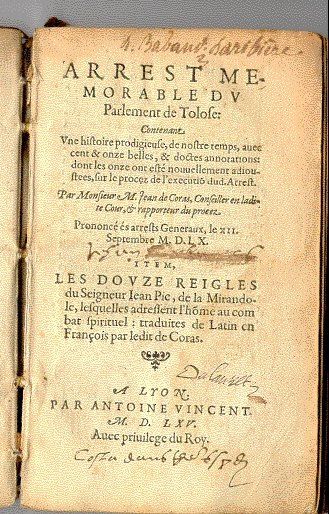
Jean de Coras publishes his account of the case, Arrest Memorable.
People in the case
-
Arnaud du Tilh Perpetrator
? – 16 September 1560
Known as Pansette; impersonated Martin Guerre from 1556 until his conviction and was hanged at Artigat.
-
Martin Guerre Victim
1524 – ?
Peasant of Artigat who left home in 1548, lost a leg at St Quentin in 1557 and returned in 1560; died at some point before 1594.
-
Bertrande de Rols Witness
Martin's wife, who lived with the impostor for three years; she died before the mid-1570s.
-
Pierre Guerre Also involved
Martin's uncle and Bertrande's stepfather, who identified the impostor and drove the prosecution.
-
Jean de Coras Judge
3 December 1515 – 4 October 1572
Judge of the Parlement of Toulouse who heard the appeal and published an account of the case, Arrest Memorable.
-
Michel de Montaigne Also involved
28 February 1533 – 13 September 1592
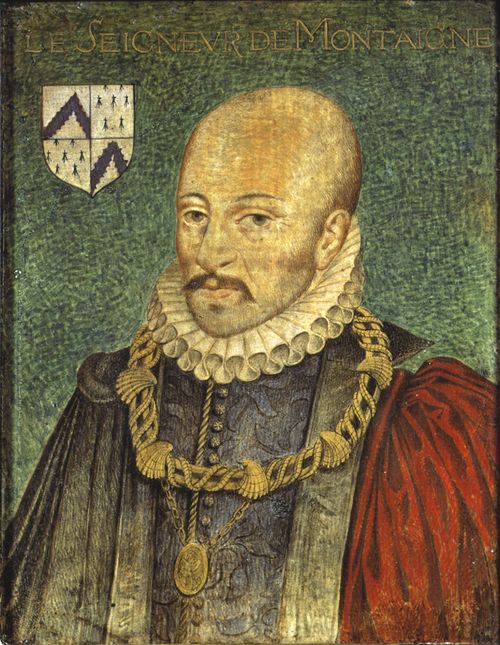
The essayist, who recalled the case and Coras's account of it in his Essays.
Where it happened
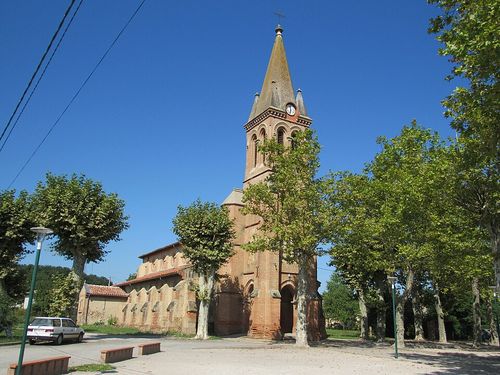
- Artigat. Village in the County of Foix (now Ariège) where the Guerres lived and where Arnaud du Tilh was hanged.
- Rieux-Volvestre. Seat of the court that first tried the impostor in 1560.
- Palais de Justice, Toulouse. Site of the Parlement of Toulouse, which heard the appeal.
- Sajas. Village identified in the case records as Arnaud du Tilh's home.
Outcome
Executed Executed
Convicted at Rieux in 1560 and sentenced to death, the impostor appealed to the Parlement of Toulouse. After the real Martin Guerre appeared and was recognised by the family, the Parlement upheld his conviction for imposture and adultery in September 1560. He was ordered to make public amends and was hanged at Artigat four days later. Bertrande was not prosecuted, and the court treated her daughter by the impostor as legitimate.
What the record settles, and what it doesn't
Established
- Martin Guerre left Artigat in 1548 after being accused of stealing grain from his father.
- From 1556 a man claiming to be Martin lived with Bertrande de Rols for about three years, and they had children together.
- He was tried at Rieux in 1560 and identified as Arnaud du Tilh, known as Pansette.
- The real Martin Guerre, who had lost a leg at St Quentin in 1557, appeared during the appeal at Toulouse and was recognised by the family.
- The Parlement of Toulouse condemned Arnaud du Tilh, who confessed and was hanged at Artigat in September 1560.
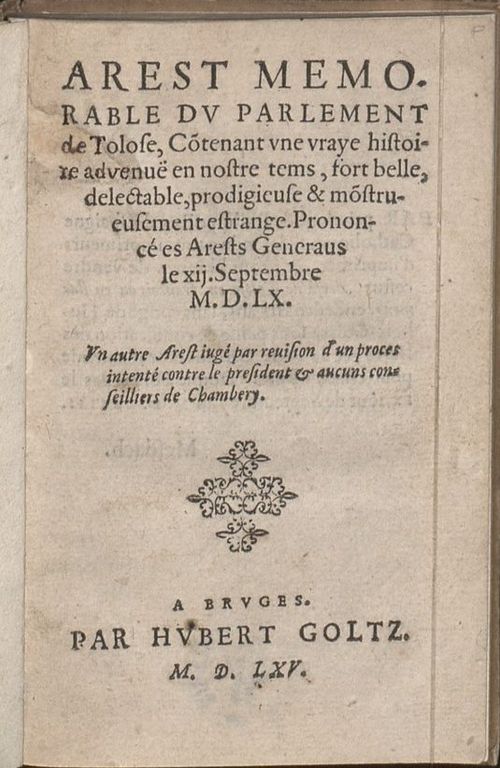
- Jean de Coras, one of the appeal judges, published an account of the case in 1561, and it was reprinted many times.
Disputed
- Whether Bertrande was truly deceived: the 1983 study by Natalie Zemon Davis argued she knowingly accepted the impostor as a husband who treated her well, while critics hold that she was genuinely fooled, as the judges and her contemporaries believed.
- The date of the final judgment, given as 12 September 1560 in many accounts and 13 September in others.
- Whether Michel de Montaigne attended the sentencing, as some retellings claim, or knew the case only by reputation and through Coras's book.
- How the real Martin came to reappear at exactly the right moment; some French writers suggest that members of the Parlement arranged his return.
- The precise form of execution, with some sources saying the body was also burned.
Pictures



Afterwards
Coras's Arrest Memorable, published in 1561, made the case famous across Europe, and Guillaume Le Sueur wrote a second contemporary account. The story passed into legal commentary, Montaigne's Essays and the work of Alexandre Dumas, and in the twentieth century into a novel, an opera, the 1982 French film The Return of Martin Guerre and its American transposition Sommersby, as well as two stage musicals. Martin and Bertrande had two more sons before her death; Martin remarried and had another son, and he had died by 1594. Coras himself was killed in the massacre of Protestants at Toulouse in October 1572.
Questions readers ask
Who was the fake Martin Guerre?
Arnaud du Tilh, nicknamed Pansette, a man from Sajas in the same region of southern France. He confessed after his conviction in 1560.
Did Bertrande know the man was not her husband?
Nobody can be sure. The court and her contemporaries believed she was deceived, but a 1983 study argued she accepted him knowingly, and historians still disagree.
What happened to Arnaud du Tilh?
He was condemned by the Parlement of Toulouse in September 1560 and hanged outside the Guerre house in Artigat four days later.
Is the film The Return of Martin Guerre accurate?
It follows the historical record closely for most of its length, but invents an ending that explains Bertrande's motives.
Sources and further reading
- Martin Guerre (Wikipedia)
- Affaire Martin Guerre (Wikipédia, French)
- Jean de Coras (Wikipedia)
- Wikidata Q542183 (life dates checked here)
Written by Sinister Crimes from the sources above; see our editorial standards. Last checked 1 November 2026.