

The case
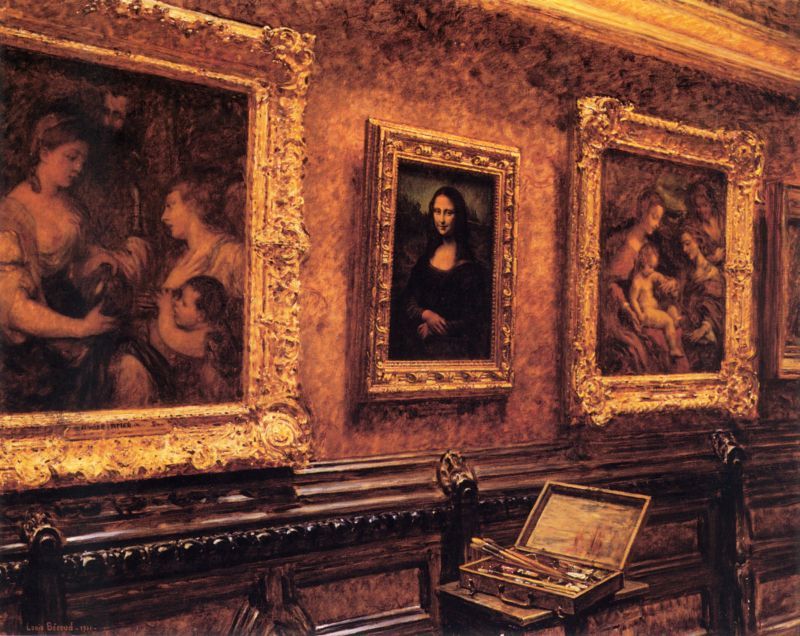
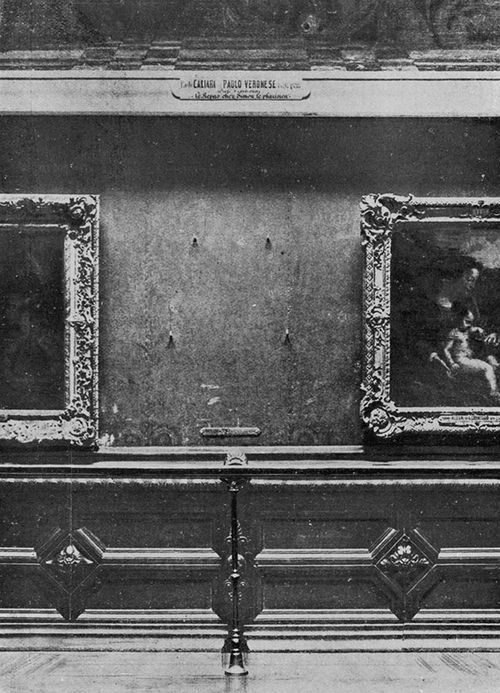
On Tuesday 22 August 1911 the painter Louis Béroud set up his easel in the Salon Carré of the Louvre, meaning to paint the room with the Mona Lisa in it. Where the picture should have been there were four iron pegs and a patch of bare wall. The guards first assumed it had gone to the museum's photographers. By late morning it was clear that nobody in the building knew where it was.
It had gone the previous morning. Mondays were the Louvre's closing day, when cleaners, carpenters and contractors had the galleries largely to themselves. Vincenzo Peruggia, a 29-year-old house painter from Dumenza, a village near Lake Maggiore, had worked in the museum for a glazing contractor and had helped fit the glass cases then being added to the most valuable paintings. In the account he later gave Italian investigators, he came in early through a workers' entrance in the white smock the staff wore, waited until the Salon Carré was empty, lifted the poplar panel off its pegs and carried it to a service staircase. There he stripped away the frame and the glass case and left them on the steps. He found a door at the bottom locked, and a plumber who took him for a colleague opened it. Within minutes he was out on the street with the picture wrapped in his smock.
The French reaction veered between panic and farce. The Louvre closed for a week. The museum's director, Théophile Homolle, lost his post. Police searched trains and ships, newspapers offered rewards and printed hundreds of tips, and crowds queued to stare at the empty wall. The investigation also caught two innocent men. A former secretary of the poet Guillaume Apollinaire had stolen small Iberian statuettes from the Louvre years earlier, and some of them had passed through the hands of Apollinaire and Pablo Picasso. Apollinaire spent about a week in the Santé prison in September 1911 and Picasso was questioned. Neither had anything to do with the Mona Lisa.
The police did question Peruggia. His name was on the list of contract workers, he had a criminal record, and his prints were on file. Officers visited his room on the rue de l'Hôpital-Saint-Louis and accepted his account of himself. A print had been left on the discarded glass, but no one thought to compare it with his record. According to the usual telling, the painting sat in a trunk or under a false bottom a few feet from the detectives while they talked to him.
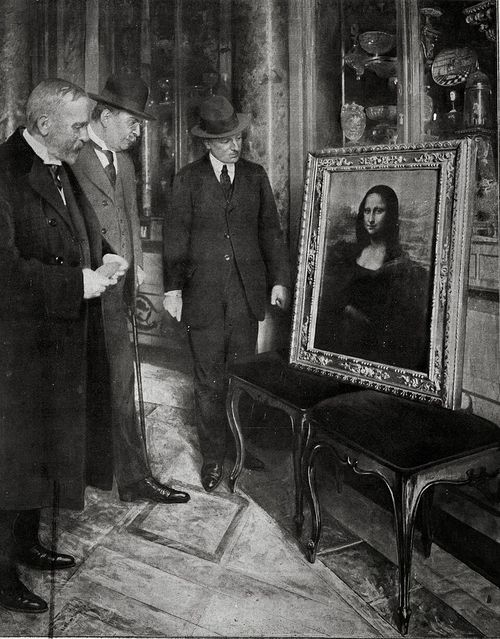
He kept it for more than two years. In late 1913 he answered a newspaper advertisement placed by Alfredo Geri, a Florentine antiques dealer collecting works for an exhibition, and offered him the Mona Lisa under the name 'Leonardo'. Geri brought in Giovanni Poggi, director of the Uffizi. On 11 December 1913 the two men met Peruggia at his small Florence hotel and examined the panel, checking the Louvre's stamps on its back. They took it away for safe keeping, and the next day Peruggia was arrested in his room.
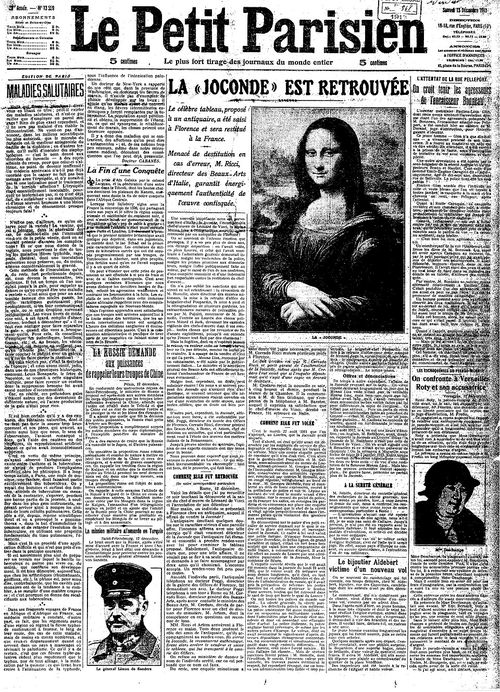
Peruggia said he had acted to return to Italy a picture he believed Napoleon had looted. That was wrong: Leonardo took the portrait to France himself, and it passed into the French royal collection in the sixteenth century. His letters home spoke hopefully of a fortune to come, and he asked for a reward from Geri. The painting was put on show at the Uffizi, then handed to the French ambassador in Rome on 19 December 1913, and was back in the Louvre on 4 January 1914.
A Florentine court tried him in June 1914. It accepted that patriotism had played a part, found him guilty with mitigating circumstances, and sentenced him to a year and fifteen days. On appeal the term was reduced to seven months and eight days, which he had already largely served. He came out a minor celebrity in Italy, and the picture he took came back far more famous than it had left.
Timeline
On the Louvre's Monday closing day, Peruggia takes the Mona Lisa from the Salon Carré and leaves the museum with it.
The painter Louis Béroud finds the picture gone; after a morning of confusion the museum confirms it has been stolen.
The Louvre closes to the public for about a week while police search the building; the frame and glass case are found on a service staircase.
Guillaume Apollinaire is arrested over earlier thefts of statuettes from the Louvre; he is released within days and Picasso is questioned.
In a Florence hotel room, Alfredo Geri and Uffizi director Giovanni Poggi examine the panel Peruggia offers them and take it away.
Peruggia is arrested at his hotel in Florence.
After a brief showing at the Uffizi, the painting is formally handed to the French ambassador in Rome.
The Mona Lisa is returned to the Louvre.
A Florentine court convicts Peruggia with mitigating circumstances and sentences him to a year and fifteen days.
On appeal the sentence is cut to seven months and eight days.
Peruggia dies of a heart attack at Saint-Maur-des-Fossés, near Paris, on his 44th birthday.
People in the case
-
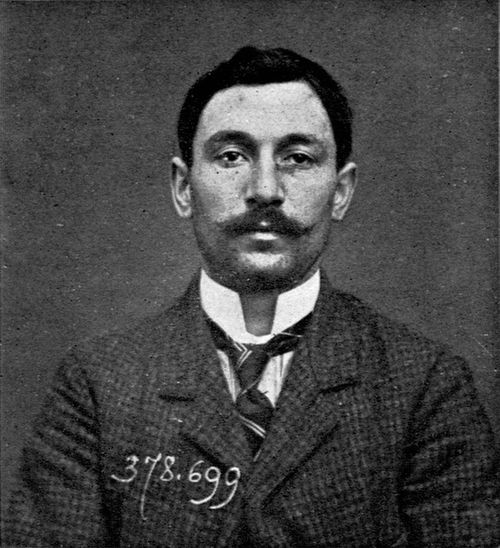
Vincenzo Peruggia Perpetrator
8 October 1881 – 8 October 1925
Italian decorator and glazier from Dumenza who had worked at the Louvre; took the painting on 21 August 1911 and was convicted in Florence in 1914.
-
Louis Béroud Witness
17 January 1852 – 9 October 1930
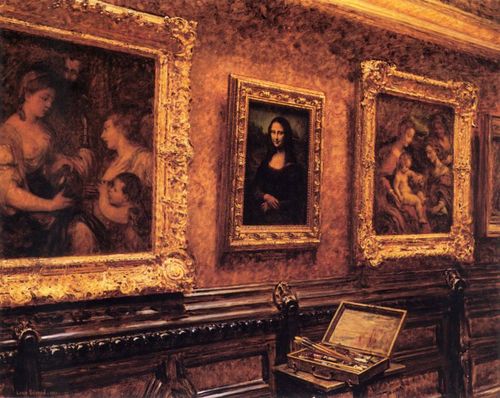
French painter who arrived to work in the Salon Carré on 22 August 1911 and raised the alarm that the painting was missing.
-
Théophile Homolle Also involved
19 December 1848 – 13 June 1925
Director of France's national museums, including the Louvre, from 1904; forced from the post after the theft.
-
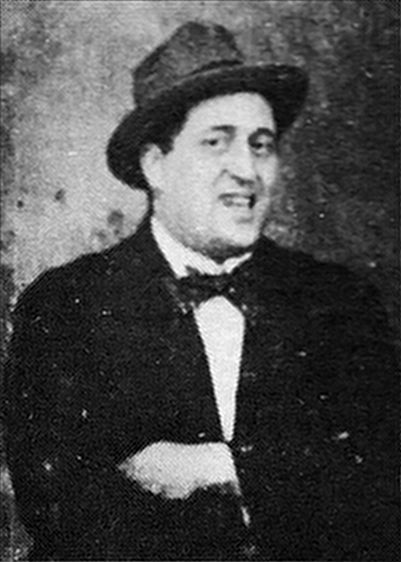
Guillaume Apollinaire Suspect
26 August 1880 – 9 November 1918
Poet arrested in September 1911 over earlier thefts of statuettes from the Louvre by an acquaintance; released and cleared of any link to the Mona Lisa.
-
Pablo Picasso Suspect
25 October 1881 – 8 April 1973
Questioned by police because he had once bought statuettes stolen from the Louvre; never charged in connection with the painting.
-
Alfredo Geri Witness
Florentine antiques dealer whom Peruggia contacted in late 1913 offering to sell the painting; he alerted the authorities.
-
Giovanni Poggi Investigator
11 February 1880 – 1961
Director of the Uffizi who authenticated the painting in Florence on 11 December 1913 and took it into custody.
Where it happened
- Salon Carré, Louvre. The gallery where the Mona Lisa hung in 1911, between works by Correggio and Titian.
- Uffizi Gallery, Florence. Where the recovered painting was examined and briefly exhibited in December 1913.
- Dumenza. Peruggia's home village in the province of Varese, near the Swiss border.
- Saint-Maur-des-Fossés. Paris suburb where Peruggia lived after the war and died in 1925.
Outcome
Convicted Convicted
Peruggia was tried in Florence in June 1914 for aggravated theft. The court found him guilty but allowed mitigating circumstances, including his professed patriotic motive, and sentenced him to one year and fifteen days in prison. On 29 July 1914 the appeal court reduced this to seven months and eight days. No one else was ever charged.
What the record settles, and what it doesn't
Established
- The Mona Lisa was taken from the Salon Carré of the Louvre on Monday 21 August 1911, the museum's closing day, and the loss was noticed on 22 August.
- The thief was Vincenzo Peruggia, an Italian decorator who had worked at the Louvre for a contractor fitting protective glass to paintings.
- Police interviewed Peruggia during the investigation and did not identify him as the thief.
- Guillaume Apollinaire was briefly jailed and Pablo Picasso questioned in connection with earlier statuette thefts; neither was involved in taking the Mona Lisa.
- Peruggia offered the painting to the Florentine dealer Alfredo Geri in late 1913 and was arrested in Florence on 12 December 1913.
- The painting was returned to the Louvre on 4 January 1914.
- A Florentine court convicted Peruggia in June 1914; on appeal his sentence was cut to seven months and eight days.
Disputed
- How Peruggia got in: his own account to Italian investigators has him entering early on the Monday morning in a worker's smock, while other versions, repeated in many histories, say he hid in a storeroom overnight on Sunday.
- His motive: Peruggia said he wanted to restore the picture to Italy, and the court partly accepted this; his letters to his family and his request for a reward suggest he also hoped to profit.
- The Valfierno story: in 1932 the journalist Karl Decker published a claim that a con man calling himself the Marqués de Valfierno commissioned the theft so he could sell forged copies to collectors. Decker's article is the only source; no copies, buyers or independent record of Valfierno or the forger Yves Chaudron has been found, and historians treat the story as unverified.
- Whether Peruggia acted alone: he insisted he did, but some writers suspect that acquaintances helped him, notably the Lancellotti brothers, fellow Italian workers in Paris whom he knew; nothing was proved.
- Where the painting was kept: most accounts place it in Peruggia's Paris room for the whole period until he took it to Italy in December 1913, but some Italian accounts say he took it to Dumenza earlier.
Pictures





Afterwards
Peruggia served in the Italian army in the First World War and spent time as a prisoner of war. He married, had a daughter, and went back to France, working as a decorator under his first name, Pietro. He died at Saint-Maur-des-Fossés in 1925, so quietly that newspapers ran his obituary twenty-two years later when a different Vincenzo Peruggia died.
The theft did more for the painting than any curator had. Before 1911 the Mona Lisa was admired by connoisseurs. After two years of front pages, postcards, cabaret songs and crowds filing past an empty wall, it was a household image across Europe and America. Security at the Louvre was tightened, and the case is still the standard illustration of how a single absence can create a celebrity.
Questions readers ask
Who stole the Mona Lisa in 1911?
Vincenzo Peruggia, an Italian decorator who had worked at the Louvre fitting glass to paintings. He took it on 21 August 1911, a day the museum was closed, and kept it hidden for more than two years.
How was the Mona Lisa found?
In late 1913 Peruggia offered it to the Florentine dealer Alfredo Geri. Geri and the Uffizi director Giovanni Poggi examined it at Peruggia's hotel on 11 December 1913, took it away, and Peruggia was arrested the next day.
Was Picasso arrested for stealing the Mona Lisa?
No. Picasso was questioned, and his friend Guillaume Apollinaire was held for several days, over statuettes an acquaintance had stolen from the Louvre years earlier. Neither was involved in the Mona Lisa theft.
How long did Peruggia go to prison?
He was sentenced in Florence in June 1914 to a year and fifteen days. On appeal this was reduced to seven months and eight days.
Sources and further reading
- Vincenzo Peruggia (Wikipedia)
- Mona Lisa: 1911 theft (Wikipedia)
- Vincenzo Peruggia (Italian Wikipedia)
- Eduardo de Valfierno (Wikipedia)
- Vol de La Joconde (French Wikipedia)
- Wikidata Q361362 (life dates checked here)
Written by Sinister Crimes from the sources above; see our editorial standards. Last checked 1 November 2026.