

The case
In May 1930 a letter written by a young domestic servant went to the wrong address and was opened at the Düsseldorf post office. In it she told a friend about a man who had taken her into the Grafenberg woods outside the city, attacked her and then let her go. The clerk sent it to the police. For more than a year the city had been searching for a killer the newspapers called the Vampire of Düsseldorf, and this was the first lead that pointed to a front door.
The attacks had begun on 3 February 1929, when Apollonia Kühn was stabbed on a street in the eastern district of Flingern and survived. Days later nine-year-old Rosa Ohliger was found dead beside the Vinzenzkirche in the same district, and on the night of 12 to 13 February Rudolf Scheer was killed on his way home. Over the summer and autumn the victims multiplied: the housemaid Maria Hahn, who went missing in August; the foster sisters Luise Lenzen and Gertrud Hamacher, killed on 24 August as they walked home from a fair at Flehe; Ida Reuter and Elisabeth Dörrier, young women in domestic service; and on 7 November five-year-old Gertrud Albermann. Many others were attacked and lived.
The investigation became one of the largest in Weimar Germany. The interior ministry set up a special murder commission and sent Ernst Gennat, head of the Berlin homicide squad, to advise. Police received some twelve thousand tips from the public and questioned thousands of people. The weapons changed, from scissors to a knife to a hammer, and the victims ranged from small children to a middle-aged man, so for months many detectives believed they were looking for more than one killer. A mentally ill man confessed to several of the murders and confused matters further. Survivors' descriptions put the attacker's age well below his real one.
The killer himself sent letters to the police and to a local newspaper, with sketch maps. The last of them, posted in November 1929, led searchers to Maria Hahn's grave on the edge of a wood, and it described where Gertrud Albermann's body had been left in terms only the person responsible could know. Graphologists matched the handwriting across the letters, and Gennat became convinced that one man had committed most of the crimes. One tip did name the eventual culprit: a former cellmate told police he had boasted of similar acts in prison. Officers showed his photograph to the survivor Gertrud Schulte, but she did not recognise him.
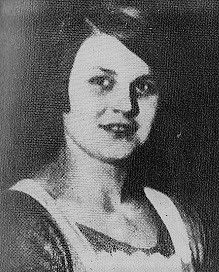
The young woman had come to Düsseldorf from Cologne in May 1930 looking for work. At the station a man had offered to help her, taken her to his rooms in Mettmanner Strasse and then into the woods. With detectives, she identified the building, number 71. The tenant was Peter Kürten, a 46-year-old factory worker with a long criminal record, a neat appearance and a friendly manner that had disarmed his victims. Seeing that he had been traced, he told his wife Auguste on 23 May that he was the man the whole city was looking for, and urged her to go to the police and claim the reward. He was arrested on 24 May 1930 near the church of St Rochus.
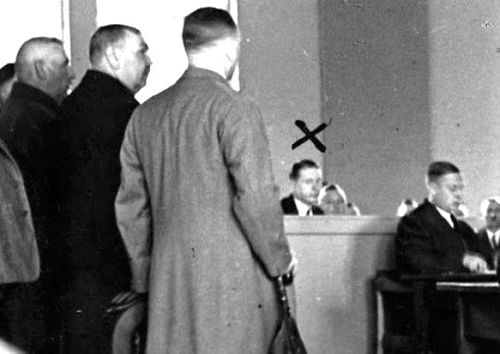
Kürten confessed to nine murders and dozens of attacks, including the killing of nine-year-old Christine Klein in Mülheim am Rhein in 1913. He withdrew the confession in June 1930 and renewed it in August. Doctors who examined him over eight weeks at the Bedburg-Hau asylum found no mental illness. His trial in Düsseldorf began on 13 April 1931, with Alex Wehner for the defence. On 22 April the court convicted him of nine murders and seven attempted murders and sentenced him to death nine times. The Prussian government refused clemency, and on 2 July 1931 he was guillotined in the courtyard of Klingelpütz prison in Cologne. The night before, he wrote letters to his wife, to survivors and to bereaved families.
The victims
Most of the dead were young working people or children from Düsseldorf's poorer districts. Christine Klein, nine, was the daughter of an innkeeper in Mülheim am Rhein and was asleep in her room above the family tavern in May 1913. Rosa Ohliger, also nine, had lost her way home on a February evening in 1929 when a stranger offered to walk her there. Rudolf Scheer was a disabled working man walking home late at night. Maria Hahn was a housemaid who had agreed to spend her Sunday off on an outing to the Neandertal with a man she had just met. Luise Lenzen, about thirteen, and her five-year-old foster sister Gertrud Hamacher had been to a local shooting festival and fair and were taking a field path home.
Ida Reuter, 31, was a housemaid, unmarried, who went walking with a man she met at the main station. Elisabeth Dörrier, 22, was out of work and looking for lodgings when she was approached outside the cinemas on Graf-Adolf-Strasse; she was found unconscious the next morning and died a day later. Gertrud Albermann, five, was playing outside her aunt's house in Flingern when a man persuaded her to come with him. Among those who survived were Apollonia Kühn, the first person attacked in 1929, the housemaid Gertrud Schulte, and the young servant whose letter ended the hunt.
Timeline
Peter Kürten is born in Mülheim am Rhein, near Cologne.
Nine-year-old Christine Klein is killed in her family's inn at Mülheim; the crime goes unsolved for seventeen years.
Apollonia Kühn survives an attack in Flingern, the first of the 1929 series.
Rosa Ohliger, nine, and Rudolf Scheer are killed in Düsseldorf's eastern districts.
Maria Hahn is killed after a day out in the Neandertal.
Luise Lenzen and Gertrud Hamacher are killed on their way home from a fair at Flehe.
Elisabeth Dörrier is attacked near the river Düssel and dies the following day.
Five-year-old Gertrud Albermann is killed in Flingern.
A map sent by the killer leads police to Maria Hahn's grave.
A young domestic servant is attacked in the Grafenberg woods and survives.
Kürten is arrested near St Rochus church after his wife goes to the police.
His trial opens before the Düsseldorf jury court.
Kürten is convicted of nine murders and seven attempted murders and sentenced to death.
Kürten is guillotined at Klingelpütz prison in Cologne.
People in the case
-
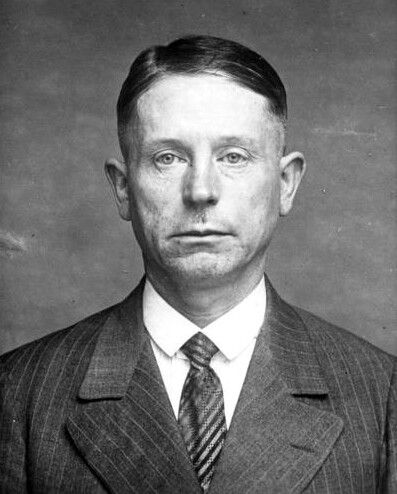
Peter Kürten Perpetrator
26 May 1883 – 2 July 1931
Factory worker with a long criminal record; convicted of nine murders and seven attempted murders and guillotined in Cologne.
-
Christine Klein Victim
? – 25 May 1913
Nine-year-old innkeeper's daughter from Mülheim am Rhein; the earliest murder Kürten was convicted of.
-
Maria Hahn Victim
? – 11 August 1929
Housemaid killed after a Sunday outing; her grave was found from a map the killer sent to the press.
-
Gertrud Albermann Victim
? – 7 November 1929
Five-year-old girl from Flingern; the last person Kürten killed.
-
Auguste Kürten Witness
Kürten's wife, née Scharf, married in 1923; she went to the police after he confessed to her.
-
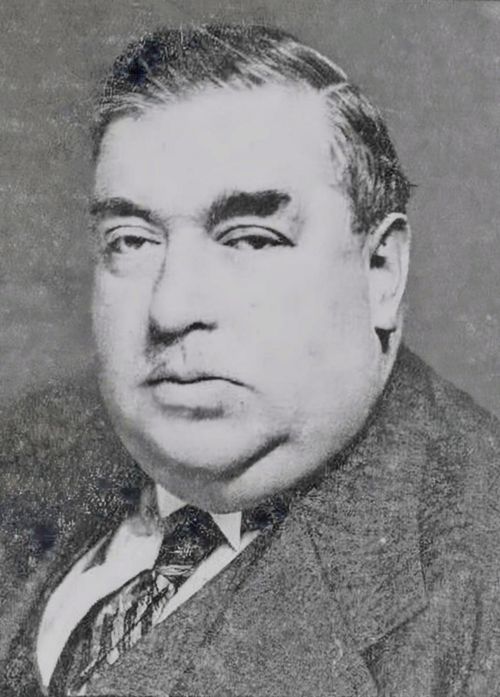
Ernst Gennat Investigator
1 January 1880 – 21 August 1939
Head of the Berlin murder squad, sent to Düsseldorf to assist; he later wrote a study of the case.
-
Karl Berg Also involved
10 October 1868 – 9 July 1936
Düsseldorf forensic physician who interviewed Kürten at length and published a study of him, Der Sadist.
Where it happened
- Mettmanner Strasse 71, Düsseldorf. Building where Kürten and his wife rented rooms, identified by the surviving servant. Coordinates are for the present-day address.
- Flingern, Düsseldorf. Working-class district where several of the 1929 attacks took place, close to Kürten's home.
- Klingelpütz prison, Cologne. Site of the former prison where Kürten was executed; the prison was demolished and the site is now a park.
- Mülheim am Rhein. Kürten's birthplace, now part of Cologne, where Christine Klein was killed in 1913.
Outcome
Executed Convicted and executed
Kürten was tried before the jury court in Düsseldorf from 13 April 1931. On 22 April he was convicted of nine murders, receiving nine death sentences, and of seven attempted murders, for which he received fifteen years' penal servitude. The Prussian government rejected his petition for clemency, and he was executed by guillotine at Klingelpütz prison in Cologne on 2 July 1931.
What the record settles, and what it doesn't
Established
- Between February and November 1929 a series of murders and attacks on children, women and one man took place in and around Düsseldorf.
- Kürten was convicted of nine murders, including that of Christine Klein in Mülheim am Rhein in 1913, and of seven attempted murders.
- The killer sent letters and maps to the police and press, one of which led to the discovery of Maria Hahn's grave in November 1929.
- Police inquiries were vast, involving thousands of tips and interviews and specialist help from the Berlin police, yet did not identify Kürten during 1929.
- A misdelivered letter from a surviving servant led police to Kürten's lodgings at Mettmanner Strasse 71 in May 1930.
- Kürten admitted his guilt to his wife, who informed the police, and he was arrested on 24 May 1930.
- Psychiatric examiners found him legally responsible, and he was executed in Cologne on 2 July 1931.
Disputed
- How many crimes Kürten committed: he confessed to far more attacks than he was tried for, including killings near Altenburg and from his childhood that investigators could not confirm.
- Several dates and details differ between German and English accounts, for example whether Rosa Ohliger died on 8 or 9 February 1929, Rudolf Scheer's age (45 or 54), and the spelling of some names in the record.
- How much of his confession was accurate: his examiners judged parts of it embellished, though they had no doubt about the core crimes.
- Why police failed to suspect a man with his record who lived a few steps from where Rosa Ohliger was found; contemporaries and later writers blamed both the scale of the inquiry and the misleading variety of weapons and victims.
- How far the case inspired Fritz Lang's film M (1931), which also drew on other Weimar-era murder cases.
Pictures

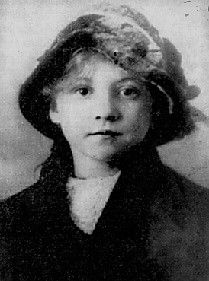


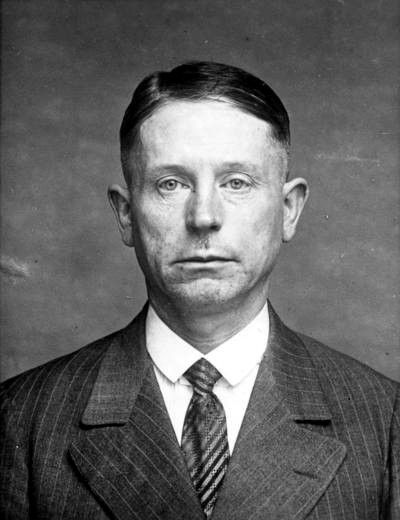


Afterwards
Auguste Kürten, devastated by her part in her husband's arrest, received the reward, took another name and left Düsseldorf. The case shaped German detective work: Gennat's report on the Düsseldorf crimes is often credited with introducing the term 'Serienmörder', and an early offender profile was published during the hunt. Karl Berg's interviews with Kürten became one of the first detailed studies of a serial killer.
The verdict also reopened a fierce public argument about the death penalty in Weimar Germany. Fritz Lang's film M, released in May 1931 while Kürten awaited execution, fixed the image of a city hunting a child murderer in popular memory. Kürten's head was preserved after his execution and later taken to the United States, where it has been displayed in a museum of curiosities.
Questions readers ask
How was Peter Kürten caught?
A survivor described her attack in a letter that went to the wrong address and was opened at the post office. Police traced the man she described to Mettmanner Strasse 71, and Kürten then confessed to his wife, who went to the police.
Why was he called the Vampire of Düsseldorf?
The nickname came from the press and from Kürten's own claims about blood made after his arrest, which investigators believed were partly true and partly exaggerated.
How many people did Peter Kürten kill?
He was convicted of nine murders, one in 1913 and eight in 1929, and of seven attempted murders. He claimed many more crimes, but most of those claims could not be verified.
Was the film M based on Peter Kürten?
Fritz Lang's M (1931) drew on the atmosphere of the Düsseldorf hunt but is not a retelling of it; Lang and his co-writer also drew on other cases of the period.
Sources and further reading
- Peter Kürten (Wikipedia)
- Peter Kürten (German Wikipedia)
- Peter Kürten (Wikidata)
- Wikidata Q60291 (life dates checked here)
Written by Sinister Crimes from the sources above; see our editorial standards. Last checked 1 November 2026.