

The case
On the afternoon of 15 April 1920, the paymaster of the Slater and Morrill shoe company, Frederick Parmenter, and his guard, Alessandro Berardelli, were carrying the week's wages in two steel boxes along Pearl Street in South Braintree, Massachusetts, when two men stepped out and shot them both. The gunmen threw the money boxes into a dark blue Buick carrying several other men and drove off, firing at workers as they went. Berardelli died at the scene; Parmenter, shot in the back as he ran, was mortally wounded.
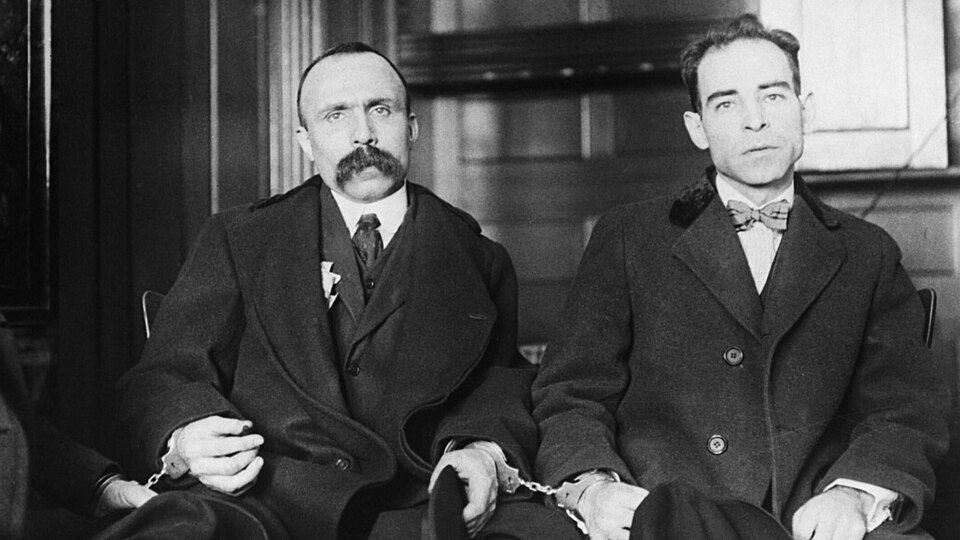
Three weeks later, on 5 May, police arrested two Italian immigrants on a streetcar. Nicola Sacco was a shoemaker and night watchman; Bartolomeo Vanzetti peddled fish in Plymouth. Both were followers of Luigi Galleani, whose anarchist movement preached revolutionary violence and was being hunted by the federal government after a wave of bombings in 1919. Both were armed when arrested, Sacco with a .32 Colt pistol, and both lied about their guns and their political connections. They had been with a man the police were watching in connection with an earlier attempted payroll robbery in Bridgewater. A fellow anarchist had just fallen to his death from a Justice Department office in New York, and the pair had reason to fear deportation.
Vanzetti was tried first, alone, for the Bridgewater attempt, convicted on contested eyewitness evidence and sentenced to twelve to fifteen years. Then, on 31 May 1921, both men went on trial at Dedham for the Braintree murders before Judge Webster Thayer, who had presided at the first trial and asked to hear the second. The prosecution offered eyewitnesses who placed the men near the scene, a cap said to resemble Sacco's, Vanzetti's revolver, said to be the dead guard's, and expert testimony that the fatal bullet in Berardelli could have come from Sacco's pistol. The defence offered alibi witnesses and experts who disagreed. District Attorney Frederick Katzmann's cross-examination dwelt on the men's radicalism and on their flight to Mexico in 1917 to avoid the draft. On 14 July 1921, after a few hours, the jury convicted both of first-degree murder.
Six years of appeals followed. The defence showed that a prosecution ballistics expert had signed a statement saying he could not identify Sacco's pistol as the murder weapon, that the jury foreman was alleged to have said before the trial that they ought to hang anyway, and that witnesses had changed their stories. Thayer denied every motion. In November 1925 Celestino Medeiros, a convicted murderer awaiting execution, confessed to taking part in the Braintree robbery and said Sacco and Vanzetti were not involved; the defence linked the crime to the Morelli gang of Providence. Thayer rejected that too. The state's Supreme Judicial Court, which could review only errors of law, upheld him.
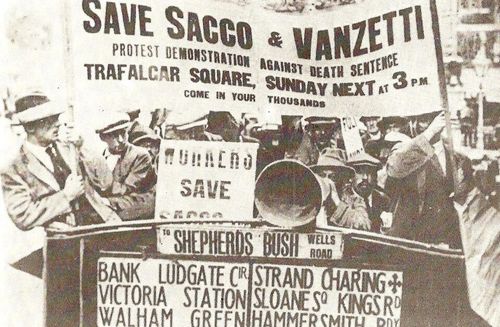
By then the case had become a worldwide cause. When Thayer passed death sentences on 9 April 1927, Vanzetti told him that he was suffering because he was a radical and an Italian, and that he would live his life again the same way. Protests filled streets from Paris to Buenos Aires. Governor Alvan Fuller appointed an advisory committee headed by Harvard's president, Abbott Lawrence Lowell, which heard evidence of Thayer's out-of-court remarks about anarchists but concluded the trial had been fair. Fuller refused clemency.
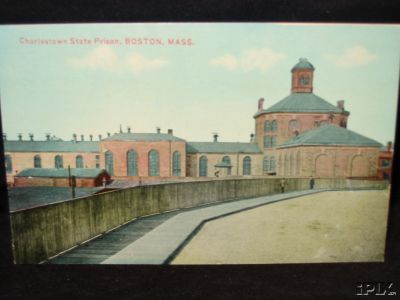
Medeiros, Sacco and Vanzetti were electrocuted at Charlestown State Prison just after midnight on 23 August 1927. Sacco cried out in Italian for anarchy and then said farewell to his wife, his child and his mother. Vanzetti shook hands with his guards, declared that he was innocent of this and every crime, and said he wished to forgive some people for what they were doing to him. Huge crowds followed the funeral procession through Boston.
The victims
Frederick Parmenter was the paymaster at Slater and Morrill; Alessandro Berardelli was the guard assigned to walk beside him and was armed because of a run of payroll robberies in the area. Both died for a cash box in the middle of an ordinary working afternoon.
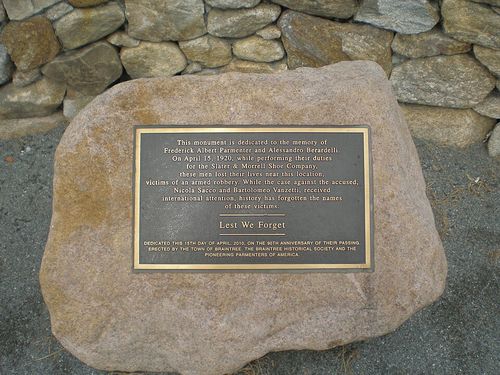
In the decades of argument that followed, the two dead men were all but forgotten. Their names rarely appeared in the petitions, poems and protest songs, and the case came to be known by the names of the men convicted of killing them. Only much later did the town of Braintree put up a plaque in their memory at the corner of Pearl Street and French Avenue, near the place where they fell.
Timeline
An attempted payroll robbery fails in Bridgewater, Massachusetts.
Parmenter and Berardelli are shot during the Slater and Morrill payroll robbery in South Braintree.
Sacco and Vanzetti are arrested on a streetcar, both armed.
Vanzetti is convicted of the Bridgewater attempted robbery.
The Braintree murder trial opens at Dedham before Judge Webster Thayer.
The jury convicts Sacco and Vanzetti of first-degree murder.
Celestino Medeiros confesses to taking part in the Braintree crime and clears the two men.
The Supreme Judicial Court upholds Thayer's rulings.
Thayer sentences Sacco and Vanzetti to death.
Governor Fuller appoints the Lowell advisory committee.
Medeiros, Sacco and Vanzetti are electrocuted at Charlestown State Prison.
New ballistics tests indicate the fatal bullet was fired from Sacco's pistol; later critics question the chain of custody.
On the fiftieth anniversary, the governor of Massachusetts proclaims that the two were unfairly tried and convicted.
People in the case
-
Frederick Parmenter Victim
? – April 1920
Paymaster of the Slater and Morrill shoe company; mortally wounded during the robbery.
-
Alessandro Berardelli Victim
? – 15 April 1920
Payroll guard; shot four times and killed at the scene. His revolver was never recovered.
-
Nicola Sacco Accused
22 April 1891 – 23 August 1927
Shoemaker from Torremaggiore, Apulia, and Galleanist anarchist; convicted of murder and executed. Maintained his innocence.
-
Bartolomeo Vanzetti Accused
11 June 1888 – 23 August 1927
Fish peddler from Villafalletto, Piedmont, and Galleanist anarchist; convicted of murder and executed. Maintained his innocence.
-
Celestino Medeiros Suspect
1902 – 23 August 1927
Convicted murderer who in 1925 confessed to taking part in the Braintree robbery and cleared Sacco and Vanzetti; executed the same night for a separate killing. Name also spelled Madeiros.
-
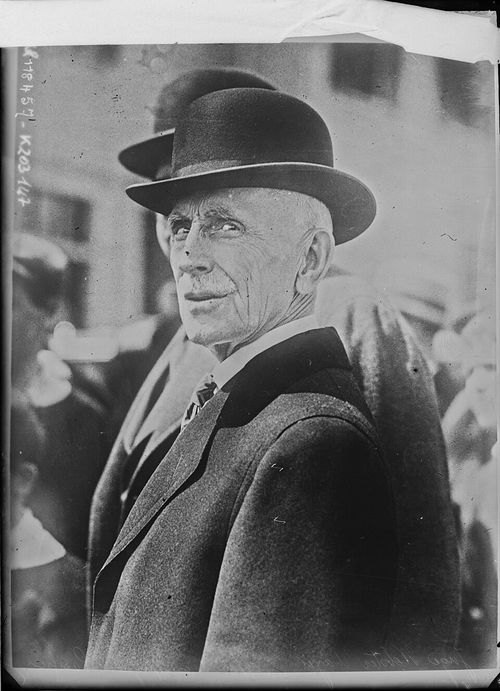
Webster Thayer Judge
7 July 1857 – 18 April 1933
Trial judge at both trials who denied every motion for a new trial; his remarks outside court about the defendants were later cited as evidence of bias.
-
Frederick G. Katzmann Prosecutor
12 September 1875 – 15 October 1953
District attorney who prosecuted both trials.
-
Alvan T. Fuller Also involved
27 February 1878 – 30 April 1958
Governor of Massachusetts who appointed the Lowell committee and refused clemency in 1927.
-
Abbott Lawrence Lowell Also involved
13 December 1856 – 6 January 1943
President of Harvard and chairman of the governor's advisory committee, which found the trial fair.
Where it happened
- Pearl Street, South Braintree. Where the payroll was robbed; a memorial at Pearl Street and French Avenue marks the site (town coordinates).
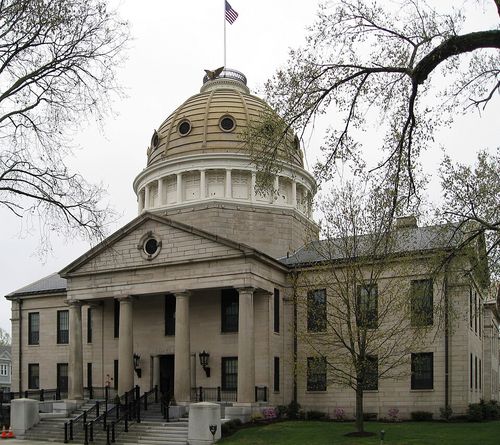
- Norfolk County Courthouse, Dedham. Where the 1921 murder trial was held.
- Charlestown State Prison (site). Where the three men were executed on 23 August 1927; the prison has since been demolished.
Outcome
Disputed verdict Executed; conviction widely doubted
Sacco and Vanzetti were convicted of first-degree murder on 14 July 1921 and sentenced to death on 9 April 1927 after all motions for a new trial and appeals failed. They were executed on 23 August 1927. In 1977 the governor of Massachusetts issued a proclamation that they had been unfairly tried and convicted and that any disgrace should be removed from their names; it was not a pardon and did not declare them innocent.
What the record settles, and what it doesn't
Established
- Frederick Parmenter and Alessandro Berardelli were shot and killed during a payroll robbery in South Braintree on 15 April 1920.
- Sacco and Vanzetti were anarchists in the Galleanist movement, were armed when arrested and gave false answers about their guns and politics.
- A Dedham jury convicted both of first-degree murder on 14 July 1921, and all appeals and motions for a new trial were denied.
- Celestino Medeiros confessed in 1925 to taking part in the robbery and said Sacco and Vanzetti were not involved.
- Judge Thayer made hostile remarks about the defendants and anarchists outside court, as later affidavits recorded.
- Sacco and Vanzetti were executed at Charlestown State Prison on 23 August 1927, both protesting their innocence.
- In 1977 the governor of Massachusetts proclaimed that they had been unfairly tried, without pardoning them or declaring them innocent.
Disputed
- Whether Sacco fired the fatal shot: ballistics examinations in 1935, 1961 and 1983 pointed to his pistol, while defenders argue the gun barrel and Bullet III may have been switched or planted, citing the barrel-swapping incident in 1924 and the evidence's long stay in an expert's home.
- Whether Vanzetti was involved at all: even some contemporaries who thought Sacco guilty considered Vanzetti innocent, and the evidence placing him at the scene was weak.
- Whether the Morelli gang committed the robbery, as Medeiros's confession and the defence's later investigation suggested; prosecutors and some historians found the confession unreliable.
- How much prejudice decided the verdict: most historians conclude that anti-Italian and anti-radical feeling and the judge's conduct made a fair trial impossible, while a minority argue the evidence of guilt, at least against Sacco, was substantial.
Pictures





Afterwards
The executions set off riots and protests across Europe, Latin America and beyond, and hundreds of thousands lined Boston's streets for the funeral procession. The case became a touchstone for writers and artists, from the men's own prison letters, published after their deaths, to poems, novels, songs and Ben Shahn's paintings. It also helped drive reform: In 1939 Massachusetts changed its law so that the Supreme Judicial Court must review the whole record in capital cases and may order a new trial whenever justice requires.
The argument over guilt never ended. Later statements by people close to the anarchist movement, the 1961 ballistics tests and stories of evidence tampering have pulled opinion first one way and then the other. On the fiftieth anniversary of the executions the governor of Massachusetts declared 23 August 1977 a memorial day and stated that the trial had been unfair, a decision that survived a censure attempt in the state senate. A plaster cast of a memorial relief by Gutzon Borglum, rejected by state and city leaders for decades, was finally accepted and is displayed in the Boston Public Library.
Questions readers ask
Were Sacco and Vanzetti guilty?
Historians still disagree. Later ballistics tests suggested Sacco's pistol fired a fatal bullet, but the handling of that evidence is disputed, the case against Vanzetti was weak, and another man confessed. Most historians agree the trial was not fair.
Were Sacco and Vanzetti pardoned?
No. In 1977 the governor of Massachusetts issued a proclamation saying they had been unfairly tried and convicted and that any disgrace should be removed from their names, but it was deliberately not a pardon.
When were Sacco and Vanzetti executed?
Just after midnight on 23 August 1927, in the electric chair at Charlestown State Prison in Boston, the same night as Celestino Medeiros.
Who were the victims in the Sacco and Vanzetti case?
Frederick Parmenter, the paymaster of a Braintree shoe company, and Alessandro Berardelli, his guard, who were shot during a payroll robbery on 15 April 1920.
Sources and further reading
- Sacco and Vanzetti (Wikipedia)
- Bartolomeo Vanzetti (Wikipedia)
- Nicola Sacco (Wikipedia)
- Wikidata Q833926 (life dates checked here)
Written by Sinister Crimes from the sources above; see our editorial standards. Last checked 1 November 2026.