
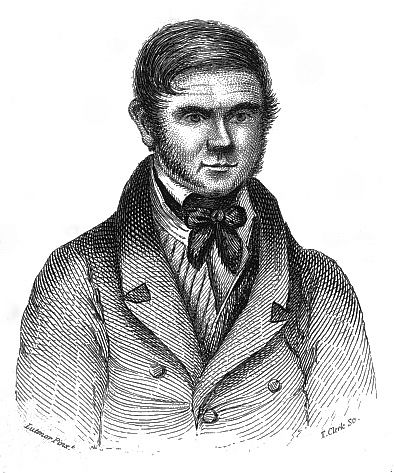

The case
It began with a death nobody caused. In November 1827 an old army pensioner called Donald died of dropsy in William Hare's lodging house in Tanner's Close, off the West Port of Edinburgh, still owing £4 in rent. Hare and his friend William Burke prised open the parish coffin, swapped the body for tanner's bark and carried the corpse to the university. A student pointed them to Surgeons' Square and the anatomy rooms of Dr Robert Knox, who paid £7 10s. One of his assistants said they would be glad to see the men again.
Edinburgh was then one of the great schools of anatomy in Europe, and Knox's lectures drew hundreds of students who expected to see real dissections. The law allowed only a small supply of bodies, chiefly executed criminals, so the gap was filled by grave robbers. By the 1820s families were guarding fresh graves and putting iron mortsafes over coffins, and the price of a body had risen to £8 or £10.
Burke and Hare had both come over from Ulster and worked as labourers on the Union Canal. Burke, a cobbler and second-hand clothes dealer, lived with his partner Helen McDougal; Hare kept the lodging house with Margaret Laird, the widow of its previous owner. Early in 1828 a lodger fell ill with fever, and the two men decided not to wait for death. They plied him with whisky, and while Burke lay across his chest Hare covered his nose and mouth. The method left almost no marks, and Knox paid £10.
Over the next nine months they killed again and again, mostly people on the edge of the city's life: elderly lodgers, a salt seller from Gilmerton, a woman too drunk to stand whom Burke offered to see home, an elderly woman and her grandson, a boy who could not speak, killed the same day. Mary Paterson, a young woman Burke met in the Canongate, was recognised on the dissecting table by one of Knox's assistants. So was James Wilson, a well-known street figure called "Daft Jamie", killed that autumn; Knox is said to have dismissed the students' recognition and dissected the body early.
The last victim was Margaret Docherty, an Irish woman Burke drew into his lodgings on 31 October 1828 by claiming his mother shared her surname. Two other lodgers, James and Ann Gray, had been paid to sleep elsewhere that night. When they came back the next day and found her body in the straw by the bed, they went to the police, refusing McDougal's offer of £10 a week to stay quiet. By then the body was in a tea chest at Knox's rooms, where officers found it the following morning.
The case was not easy to prove. The surgeon Robert Christison thought Docherty had probably been suffocated but could not establish it medically. The Lord Advocate, Sir William Rae, offered Hare immunity on 1 December in exchange for evidence, and Hare confessed to every killing. Burke and McDougal were charged with three murders and tried on Christmas Eve 1828 in a sitting that ran through the night. On Christmas morning the jury convicted Burke of murdering Docherty and returned the Scottish verdict of not proven against McDougal. The judge ordered that Burke's body be publicly dissected.
The victims
Burke and Hare killed sixteen people, and many of them were never named in the record: travelling sellers, old women who took a bed for a night, a pedlar of matches from Cheshire. Those whose names survive include Abigail Simpson, a pensioner from Gilmerton who walked into the city to sell salt; Mary Paterson, whose friend Janet Brown searched for her and was told she had gone to Glasgow; Effy, who scavenged cinders and scraps and had sold leather to Burke for his cobbling; a washerwoman named Mrs Ostler; and Ann Dougal, a relative of Helen McDougal visiting from Falkirk.
James Wilson was eighteen and lived on the streets, a gentle, disabled young man everyone in the Old Town knew; his mother and sister later petitioned the court to have Hare prosecuted.
Timeline
The lodger Donald dies of natural causes and Burke and Hare sell his body to Robert Knox.
Abigail Simpson is killed, the only murder for which Burke later gave an exact date.
Mary Paterson is killed after Burke meets her and a friend in the Canongate.
An elderly woman and her grandson are killed on the same day.
Margaret Docherty is killed at Burke's lodgings.
Ann and James Gray find Docherty's body and report it; police later recover it from Knox's rooms.
Hare is offered immunity in return for turning king's evidence.
Burke and McDougal go on trial at the High Court of Justiciary in Parliament House.
Burke is convicted of Docherty's murder; the charge against McDougal is found not proven.
Burke is hanged in the Lawnmarket before a crowd estimated at 25,000 or more.
Burke's body is publicly dissected by Professor Alexander Monro at the university.
Hare is released and smuggled out of Edinburgh on the Dumfries mail coach.
The Anatomy Act gives anatomists legal access to unclaimed bodies.
People in the case
-
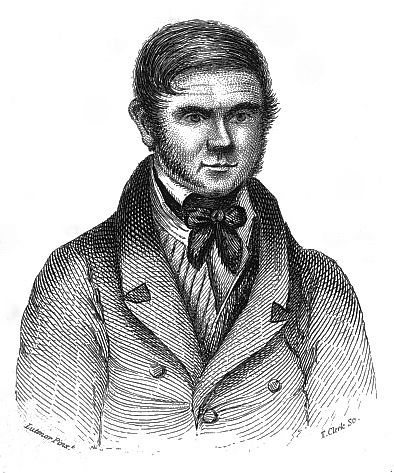
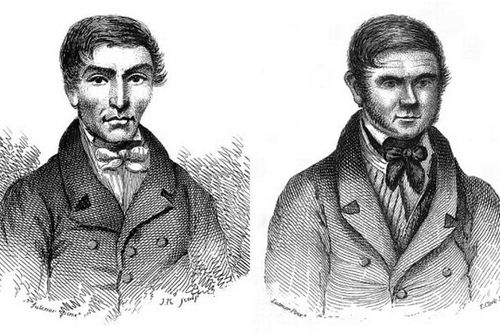
William Burke Perpetrator
1792 – 28 January 1829
Born in Urney, County Tyrone; cobbler and labourer. Convicted of the murder of Margaret Docherty and hanged.
-
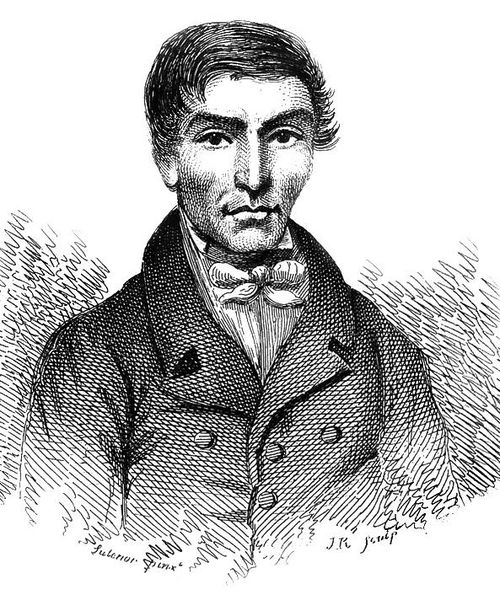
William Hare Accomplice
Born in Ulster, year unknown (estimates range from c. 1792 to c. 1807). Turned king's evidence, was never tried, and disappeared after release in February 1829.
-
Helen McDougal Accused
Burke's partner, from the Falkirk area; tried with him and freed on a not proven verdict. Her later life is unknown.
-
Margaret Hare Also involved
Born Margaret Laird; Hare's partner and keeper of the lodging house. Immune from prosecution; last seen leaving for Ireland in 1829.
-
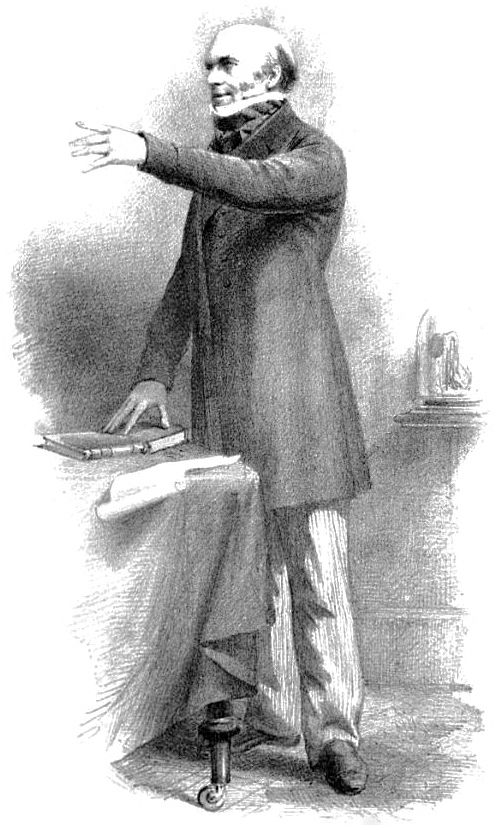
Robert Knox Also involved
4 September 1791 – 20 December 1862
Anatomy lecturer who bought the bodies; never charged, and cleared by a committee of inquiry.
-
Margaret Docherty Victim
? – 31 October 1828
Middle-aged Irish woman; the last victim and the murder for which Burke was convicted.
-
Robert Christison Witness
18 July 1797 – 23 January 1882
Forensic expert who examined Docherty's body.
-
David Boyle Judge
26 July 1772 – 30 January 1853
Lord Justice-Clerk who presided at the trial.
-
Sir William Rae Prosecutor
14 April 1769 – 19 October 1842
Lord Advocate who granted Hare immunity and prosecuted Burke.
Where it happened
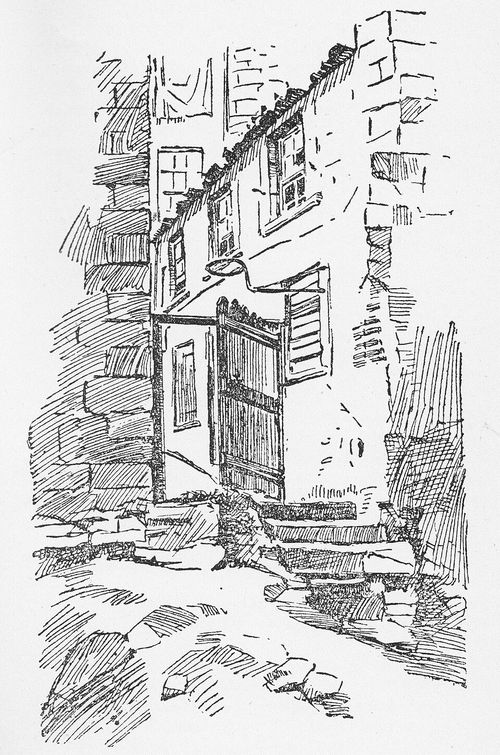
- West Port, Edinburgh. Tanner's Close, site of Hare's lodging house and most of the murders, lay off this street; it was demolished in 1902.
- Old College, University of Edinburgh. Where Burke's body was dissected; Knox's rooms were nearby in Surgeons' Square.
- Parliament House, Edinburgh. Seat of the High Court of Justiciary, where Burke and McDougal were tried.
- Surgeons' Hall Museum. Displays Burke's death mask and a book said to be bound in his skin.
Outcome
Executed Burke executed; others freed
William Burke was convicted of Margaret Docherty's murder on 25 December 1828 and hanged on 28 January 1829; his body was publicly dissected and his skeleton kept by the University of Edinburgh. Helen McDougal was freed on a verdict of not proven. William Hare and Margaret Hare were immune from prosecution, and an attempt by James Wilson's family to bring a private prosecution against Hare was rejected by the High Court in January 1829. Robert Knox was never charged.
What the record settles, and what it doesn't
Established
- Burke and Hare killed sixteen people in Edinburgh between early 1828 and 31 October 1828 and sold their bodies to Robert Knox.
- Their first sale, in November 1827, was the body of a lodger who had died naturally.
- The killings were usually done by suffocation after the victim had been made drunk, which left few marks.
- The crimes came to light when lodgers Ann and James Gray found Margaret Docherty's body and went to the police.
- Hare was granted immunity in return for his evidence and never stood trial.
- Burke was convicted, hanged on 28 January 1829 and publicly dissected, and his skeleton remains in the University of Edinburgh's anatomical museum.
- The case contributed to the passing of the Anatomy Act 1832.
Disputed
- The order and exact dates of the murders: Burke's two confessions and Hare's statement give different sequences, and modern historians follow different versions.
- What Robert Knox knew: a committee found no evidence he knew of murder, while contemporaries and many later writers held that he asked no questions about obviously fresh bodies, including ones his own students recognised.
- How much Helen McDougal and Margaret Hare knew or did: Burke's later confession implicated them only partly, and the not proven verdict left McDougal's role formally unresolved.
- Who did most of the killing: at trial Hare put the blame on Burke, while Burke's final confession placed much of it on Hare.
- What became of Hare: stories of him blinded in a lime pit and begging in London are folklore with no reliable source.
Pictures




Afterwards
Hare was put on the road south from Dumfries in February 1829 and never reliably seen again. McDougal and Margaret Hare both faced mobs after their release and vanished from the record. Knox, though cleared, was jeered in the street and burned in effigy; he left Edinburgh in 1842 and spent his last years as a pathological anatomist and doctor in London. The word "burking" entered the language for smothering a person or killing to sell the body, and a skipping rhyme about the case survived in Edinburgh for generations.
Along with the case of the London Burkers in 1831, the murders pushed Parliament to pass the Anatomy Act 1832, which ended dissection as a punishment and let anatomists take unclaimed bodies from workhouses and hospitals instead. Burke's skeleton is still held by the university's anatomy museum, and the case has been retold on stage and screen many times, often with as much invention as fact.
Questions readers ask
How many people did Burke and Hare kill?
Sixteen, according to Hare's confession and Burke's later statements. Their first sale, in November 1827, was a man who had died naturally, so he is not counted among the murders.
What happened to William Hare?
He was given immunity for testifying against Burke, released on 5 February 1829 and taken out of Scotland after a mob besieged him in Dumfries. No reliable record of his later life or death exists.
Was Dr Knox punished?
No. He was never charged, and a committee of inquiry found no evidence that he knew murder was involved. His reputation in Edinburgh was ruined and he eventually moved to London.
Where is Burke's skeleton?
In the Anatomical Museum of the University of Edinburgh's medical school, as the trial judge intended when he ordered Burke's body to be dissected.
Sources and further reading
- Burke and Hare murders (Wikipedia)
- Robert Knox (Wikipedia)
- Wikidata Q1288729 (life dates checked here)
Written by Sinister Crimes from the sources above; see our editorial standards. Last checked 1 November 2026.