
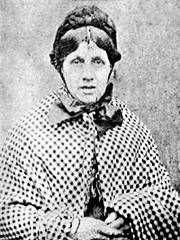

The case
In July 1872 a widow in West Auckland asked the village's assistant overseer, Thomas Riley, whether her stepson could be taken into the workhouse. The boy, Charles Edward Cotton, was seven and in good health. Riley later recalled her saying that the child would not trouble her long and would go the way of the rest of the Cottons. Within a week he was dead, and Riley went to the police.
The widow was Mary Ann Cotton, about forty, a pitman's daughter from the Durham coalfield. Her father had been killed in a fall down a shaft at Murton Colliery when she was nine. She had worked as a nurse in a colliery manager's household, trained as a dressmaker and, from the age of twenty, moved from one mining or shipbuilding town to the next with a succession of husbands. The first, William Mowbray, died in 1865; the second, George Ward, in 1866; the fourth, Frederick Cotton, in 1871. The third, the Sunderland shipwright James Robinson, survived because he refused to insure his life and turned her out after discovering debts she had run up behind his back.
Wherever she lived, people around her fell ill with sickness and purging and died. Doctors wrote 'gastric fever', 'typhus' or 'English cholera' on the certificates. Her mother died within days of Mary Ann arriving to nurse her in 1867. Most of the children she bore did not reach school age, and several of her stepchildren died too. Many of the lives were insured with the Prudential, and the payouts, often only a few pounds, were collected promptly. None of this was connected at the time, partly because she moved often and partly because a dead child in a pit village was not unusual.
West Auckland ended the pattern. In March 1872, over about three weeks, her ten-year-old stepson Frederick, her baby son Robert and her lodger and lover Joseph Nattrass all died in her house on Front Street. Nattrass had just made a will in her favour. By then she was also involved with an excise officer and expecting his child. Charles Edward, the last of Frederick Cotton's boys, was the one obstacle left.
At first the inquest into Charles's death returned natural causes. But the doctor who had attended him, William Kilburn, had kept samples, and when he tested them he found arsenic. The boy's body was exhumed, the regional press began to list the deaths that had followed her across the north-east, and Mary Ann Cotton was arrested and charged with murder. Her trial was put off so that she could give birth in Durham Gaol, where a daughter was born in January 1873.
The trial opened at the Durham Assizes on 5 March 1873 before Mr Justice Archibald. The prosecution was led by Charles Russell, chosen by the Attorney General in a decision that drew questions in Parliament. Defence counsel was found for her only days beforehand. He argued that the boy might have breathed arsenic from the green dye of the wallpaper, or that a chemist had dispensed it by mistake. The judge allowed the jury to hear about the three March deaths, which made those explanations hard to believe. After less than an hour and a half the jury convicted her on 7 March, and she was sentenced to hang.
Petitions for mercy were sent to the Home Secretary and failed. She was hanged inside Durham Gaol by William Calcraft on 24 March 1873, still saying she was innocent. The drop was too short, and she died of strangulation rather than a broken neck.
The victims
Only one death was ever tried: that of Charles Edward Cotton, aged seven, the younger son of the pitman Frederick Cotton by his first wife. He had lost his mother, then his aunt Margaret, who had cared for him, then his father and his elder brother, and in his last months he was the only Cotton child left in the house on Front Street. The prosecution put weight on the fact that he had been a healthy boy only days before he fell ill.
The wider toll is an estimate. Across twenty years, the deaths around Mary Ann Cotton included three husbands, her mother, her lover Joseph Nattrass, Frederick Cotton's sister Margaret, and something like a dozen children: her own and her stepchildren, most of them under ten. They came from colliery rows, shipyards and seaside harbour towns, families for whom a burial-club or Prudential policy worth a few pounds was a normal precaution. Because most of them were never exhumed, no court established how they died.
Timeline
Mary Ann Robson is born at Low Moorsley, County Durham.
She marries William Mowbray, the first of four husbands.
William Mowbray dies of an intestinal illness; she collects his insurance.
Her second husband, George Ward, dies in Sunderland after a long illness.
Her mother dies at Seaham Harbour days after Mary Ann arrives to nurse her.
She marries Frederick Cotton bigamously at St Andrew's, Newcastle upon Tyne.
Frederick Cotton dies at West Auckland of what is certified as gastric fever.
Stepson Frederick, baby Robert and lodger Joseph Nattrass die within about three weeks.
Charles Edward Cotton, aged seven, dies after a few days' illness.
Arsenic is found in samples kept by Dr Kilburn, and Mary Ann Cotton is arrested.
She gives birth to her last child in Durham Gaol.
Her trial for murder opens at the Durham Assizes.
The jury finds her guilty and she is sentenced to death.
She is hanged at Durham County Gaol by William Calcraft.
People in the case
-
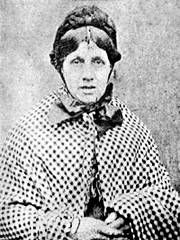
Mary Ann Cotton Perpetrator
October 1832 – 24 March 1873
Born Mary Ann Robson at Low Moorsley, County Durham; nurse, dressmaker and housekeeper. Convicted of murdering her stepson and hanged at Durham.
-
Charles Edward Cotton Victim
? – 12 July 1872
Born c. 1864-65. Seven-year-old stepson whose death led to the arsenic tests and the only murder charge.
-
Joseph Nattrass Victim
? – March 1872
Mary Ann's former lover and later lodger in West Auckland; died in March 1872, about 36 years old, after changing his will in her favour. Not the subject of a charge.
-
Frederick Cotton Victim
? – December 1871
Pitman and widower whom she married bigamously in 1870; his death was certified as gastric fever. Not the subject of a charge.
-
Thomas Riley Witness
West Auckland parish official whose suspicion after the boy's death prompted the police inquiry.
-
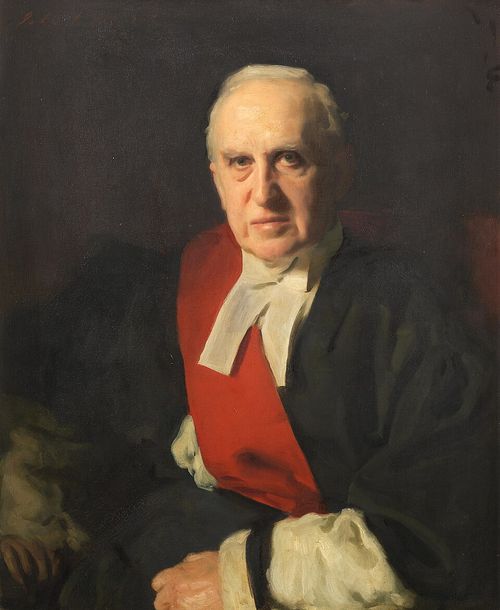
Charles Russell Prosecutor
10 November 1832 – 10 August 1900
Led the prosecution; later Lord Chief Justice. He would also appear in the Bartlett and Maybrick poisoning trials.
-
Thomas Campbell Foster Defence
1813 – 1882
Defence counsel, engaged shortly before the trial. Some contemporary reports give his first name differently.
-
Sir Thomas Dickson Archibald Judge
8 April 1813 – 18 October 1890
Trial judge at the Durham Spring Assizes, 1873.
-
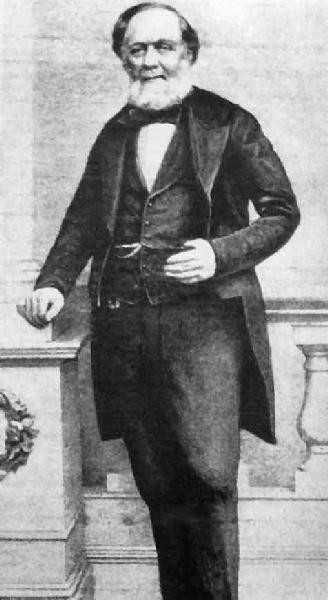
William Calcraft Also involved
10 October 1800 – 13 December 1879
Executioner who hanged her at Durham.
Where it happened
- West Auckland, County Durham. Village where she lived on Front Street and where Charles Edward Cotton and three others died in 1872.
- Durham Assize Courts, Old Elvet. Where she was tried in March 1873; now Durham Crown Court.
- Durham County Gaol. Where she gave birth while awaiting trial and was executed; now HM Prison Durham.
- Low Moorsley, near Hetton-le-Hole. Her birthplace in the Durham coalfield.
Outcome
Executed Executed
Mary Ann Cotton was tried for one murder only, that of her stepson Charles Edward Cotton, at the Durham Spring Assizes in March 1873. The jury convicted her after a short retirement, having heard evidence of three similar deaths in her household, and Mr Justice Archibald sentenced her to death. Petitions for clemency failed, and she was hanged at Durham on 24 March 1873.
What the record settles, and what it doesn't
Established
- Charles Edward Cotton, aged seven, died in his stepmother's house in West Auckland on 12 July 1872.
- Samples kept by the attending doctor, William Kilburn, and tests after exhumation showed arsenic.
- Mary Ann Cotton had told a parish official shortly before the death that the boy would not trouble her long.
- Three more members of her West Auckland household died within weeks of each other in March 1872, and the jury heard of those deaths.
- Lives in her household had been insured, and she sought the insurance money on the boy's death before a certificate was issued.
- A jury at the Durham Assizes convicted her of murder on 7 March 1873.
- She was hanged at Durham County Gaol on 24 March 1873 and maintained her innocence to the end.
Disputed
- How many people she killed: totals of around 21 are often quoted, but only one death was tried and most of the others were never examined for poison.
- Whether some of the early child deaths were natural, given high infant mortality in mining districts in the 1850s and 1860s.
- Her date of birth: sources give 1, 15 or 31 October 1832.
- The identity of the excise officer who fathered her last child, sometimes called John Quick-Manning in popular accounts, though records suggest a man named Richard Quick Mann.
- Whether the short drop at her execution was a mistake or deliberate.
Pictures


Afterwards
Of the thirteen children she bore, only two outlived her: George, who had stayed with his father James Robinson, and the baby born in prison, who was taken from her shortly before the execution and adopted. The case was widely reported and gave rise to a playground rhyme in the north-east, 'Mary Ann Cotton, she's dead and she's rotten'. It also fed the growing pressure for proper registration of deaths: compulsory registration had been law since 1836, but enforcement with penalties only arrived with the Births and Deaths Registration Act 1874.
She is often called Britain's first female serial killer, a label that reflects the scale of the suspicion rather than any court finding beyond the one murder. Her story has been retold in books, radio and a 2016 ITV drama, Dark Angel.
Questions readers ask
How many people did Mary Ann Cotton kill?
She was convicted of one murder, her seven-year-old stepson Charles Edward Cotton. Around 21 deaths are commonly attributed to her, including husbands, her mother and many children, but those were never tried and the exact number is unknown.
How did Mary Ann Cotton poison her victims?
The prosecution showed that Charles Edward Cotton died of arsenic poisoning, and she had bought arsenic and soft soap, saying it was to kill bedbugs. The illnesses around her were usually certified as gastric fever, which arsenic poisoning closely resembles.
Why did Mary Ann Cotton kill?
The prosecution's case was financial: lives in her household were insured, and the stepson was an obstacle to a new relationship. She denied the murder throughout.
When was Mary Ann Cotton hanged?
She was hanged at Durham County Gaol on 24 March 1873, seventeen days after her conviction, by the executioner William Calcraft.
Sources and further reading
- Mary Ann Cotton (Wikipedia)
- Mary Ann Cotton sentenced to hang exactly 150 years ago (The Northern Echo)
- Serial killer Mary Ann Cotton 'stamped with eternal infamy' (Darlington and Stockton Times)
- Wikidata Q292650 (life dates checked here)
Written by Sinister Crimes from the sources above; see our editorial standards. Last checked 1 November 2026.