

The case
The man who killed four young women in Lambeth in 1891 and 1892 was caught largely because he could not stop writing letters about them. Under false names he wrote to coroners, doctors and public men, accusing them of the poisonings and demanding money for his silence. One letter, sent to the eminent physician William Broadbent, named Matilda Clover as a victim of strychnine at a time when her death was on record as a drinker's natural end. Only the poisoner could have known otherwise.
Thomas Neill Cream was born in Glasgow in 1850 and grew up near Quebec City, where his family moved when he was a small child. He qualified in medicine at McGill University in 1876 and took further training at St Thomas's Hospital in London and in Edinburgh. His career in North America was marked by deaths. In London, Ontario, a pregnant young woman was found dead behind his office in 1879. In Chicago, where he ran a practice offering illegal abortions, patients died and he was investigated. In 1881 he was convicted of murdering Daniel Stott, an epileptic railway agent in Boone County, Illinois, with strychnine added to a remedy, and was sentenced to life imprisonment at Joliet. His sentence was commuted, and he walked free in July 1891.
With money left to him by his father, he sailed for England, arriving in Liverpool on 1 October 1891, and took rooms at 103 Lambeth Palace Road. Lambeth then was a district of cheap lodging houses and music halls south of the river, where many young women got by on casual work and prostitution. On 13 October, Ellen Donworth, nineteen, went to meet a man who had written to her, drank from a bottle he offered, and collapsed in the street near Waterloo Road that evening. She died within hours. A week later Matilda Clover, twenty-seven, took capsules a client had given her at her lodgings in Lambeth Road and died in convulsions early on 21 October. A doctor's assistant put her death down to drink.
Cream spent part of early 1892 in Canada and came back in April. A woman named Louisa Harris, who used the name Lou Harvey, was given pills by him and pretended to swallow them; she survived and would identify him. On the night of 11 April, Alice Marsh, twenty-one, and Emma Shrivell, eighteen, who shared rooms in Stamford Street, spent the evening with a man who called on them. Both took his capsules and died in agony in the early hours of 12 April.
Strychnine was found in the bodies of Donworth, Marsh and Shrivell, and the Lambeth poisoner became a newspaper sensation. Cream talked about the case too freely, including to a visiting former New York detective, and showed an uncanny knowledge of the victims. Scotland Yard watched him, made enquiries in America, and on 3 June 1892 arrested him on a charge of sending a threatening letter. Matilda Clover's body was exhumed on 6 May, and the toxicologist Thomas Stevenson found strychnine. An inquest in July named 'Thomas Neill' as her killer.
His trial at the Old Bailey opened on 17 October 1892 before Mr Justice Hawkins. The indictment named four murders, but the Crown, led by the Attorney General, Sir Charles Russell, proceeded on the Clover charge alone, and the judge let the jury hear about the other deaths. The defence called no witnesses. On 21 October the jury convicted him after a few minutes, and he was hanged at Newgate on 15 November 1892.
The victims
Ellen Donworth, called Nellie, was nineteen and lived at 8 Duke Street off Westminster Bridge Road. Matilda Clover was twenty-seven and rented the second-floor front room at 27 Lambeth Road, where she lived with her two-year-old child. Alice Marsh, twenty-one, and Emma Shrivell, eighteen, shared rooms at 118 Stamford Street, near Waterloo station. All four lived on the margins of Victorian London, where sickness and sudden death among poor women rarely prompted questions, and Clover's death was at first not investigated at all.
Cream's earlier victims included Daniel Stott, a sixty-one-year-old station agent on the North-Western Railway in Boone County, Illinois, who died in June 1881 after taking medicine Cream had sent for his epilepsy. Several women in Canada and Chicago who died after visiting his practices are counted among his possible victims, though he was never convicted for any of them.
Timeline
Thomas Neill Cream is born in Glasgow.
He graduates in medicine from McGill University in Montreal.
Daniel Stott dies of strychnine poisoning in Boone County, Illinois.
Cream is convicted of Stott's murder and sentenced to life in Joliet prison.
Cream is released from Joliet after his sentence is commuted.
He arrives in Liverpool and soon takes lodgings at 103 Lambeth Palace Road.
Ellen Donworth dies after drinking from a bottle given to her by a man in Waterloo Road.
Matilda Clover dies at 27 Lambeth Road; her death is put down to drink.
A blackmail letter to William Broadbent claims Clover was poisoned with strychnine.
Alice Marsh and Emma Shrivell die at 118 Stamford Street.
Matilda Clover's body is exhumed and strychnine is found.
Cream is arrested on a charge of sending a threatening letter.
His trial for the murder of Matilda Clover opens at the Old Bailey.
The jury finds him guilty and he is sentenced to death.
Cream is hanged at Newgate Prison by James Billington.
People in the case
-
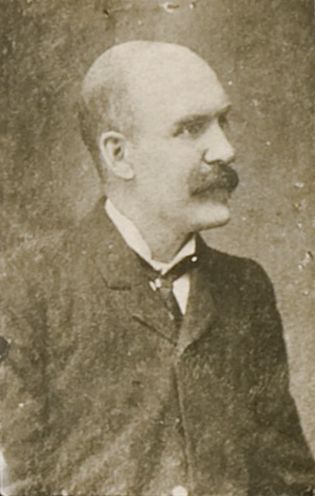
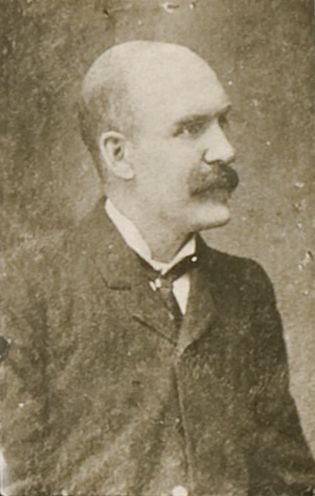
Thomas Neill Cream Perpetrator
27 May 1850 – 15 November 1892
Glasgow-born, McGill-trained physician. Convicted of murder in Illinois in 1881 and in London in 1892; hanged at Newgate.
-
Ellen Donworth Victim
? – 13 October 1891
Aged nineteen; poisoned with strychnine after meeting a man who had written to her.
-
Matilda Clover Victim
? – 21 October 1891
Aged twenty-seven; her death was certified as natural until her exhumation in May 1892. Cream was tried for her murder.
-
Alice Marsh Victim
? – 12 April 1892
Aged twenty-one; died with Emma Shrivell after taking capsules from a visitor.
-
Emma Shrivell Victim
? – 12 April 1892
Aged eighteen; shared rooms with Alice Marsh in Stamford Street.
-
Daniel Stott Victim
? – June 1881
Illinois railway agent, about 61, poisoned with strychnine in a remedy Cream supplied; Cream's 1881 conviction.
-
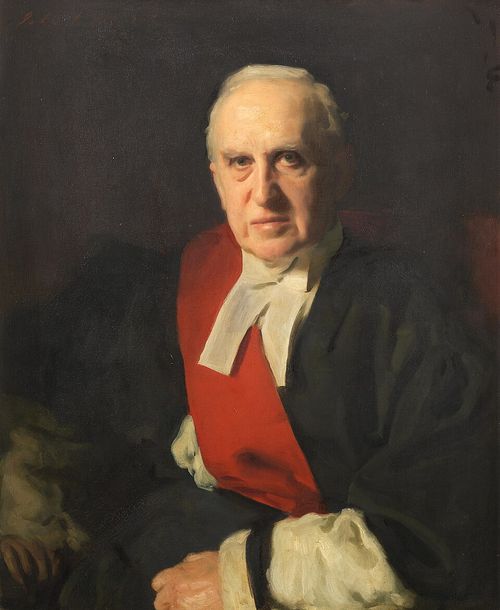
Sir Charles Russell Prosecutor
10 November 1832 – 10 August 1900
Attorney General; led the Crown case at the Old Bailey.
-
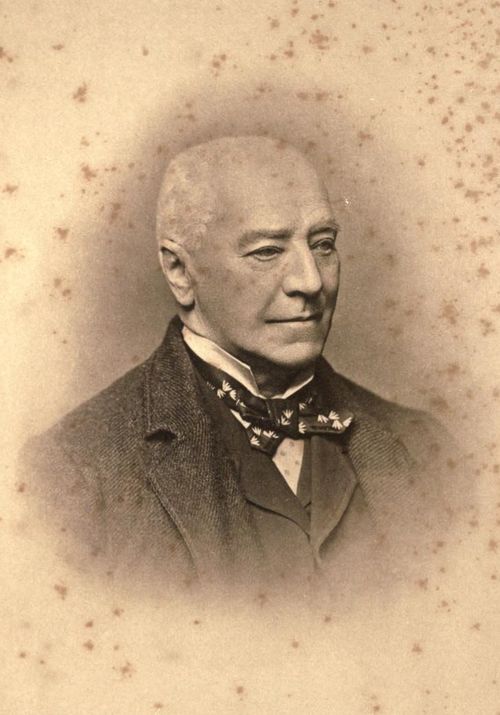
Sir Henry Hawkins Judge
14 September 1817 – 6 October 1907
Trial judge, who passed the death sentence.
-
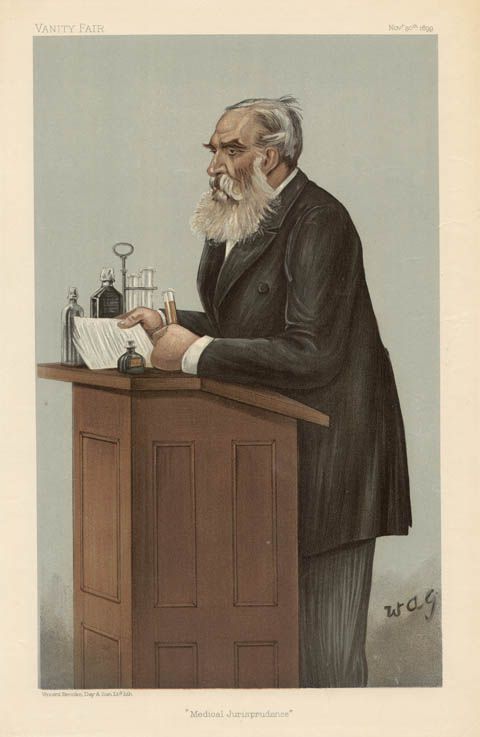
Thomas Stevenson Investigator
14 April 1838 – 18 January 1908
Home Office analyst who found strychnine in the exhumed body of Matilda Clover.
-
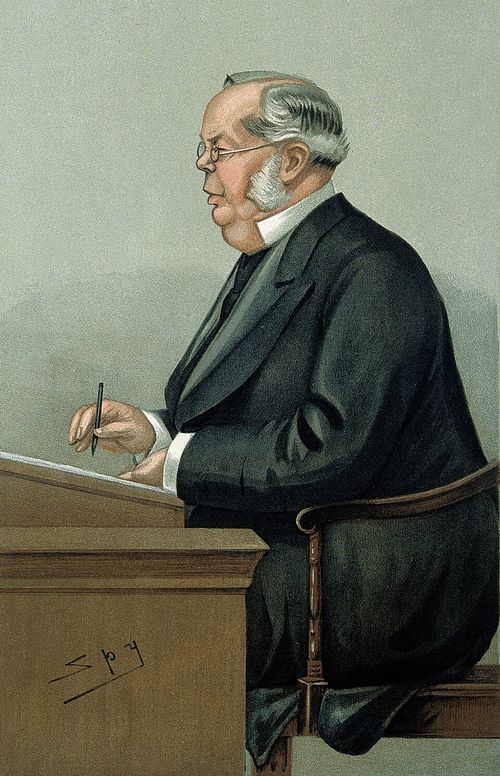
William Broadbent Witness
23 January 1835 – 10 July 1907
Physician whom Cream tried to blackmail over Clover's death; he passed the letter to Scotland Yard.
Where it happened
- Lambeth Palace Road, Lambeth. Cream lodged at No. 103 during the poisonings. Approximate position of the street.
- Stamford Street, near Waterloo. Alice Marsh and Emma Shrivell lived and died at No. 118. Approximate position of the street.
- Old Bailey and Newgate Prison. Site of the Central Criminal Court, where he was tried, and of Newgate, where he was hanged.
- Joliet prison, Illinois. Where Cream served ten years of a life sentence for the murder of Daniel Stott.
Outcome
Executed Executed
Cream was indicted at the Central Criminal Court for the murders of Matilda Clover, Ellen Donworth, Alice Marsh and Emma Shrivell, for attempting to poison Louisa Harris, and for blackmail. The Crown proceeded only on the Clover murder, with evidence of the other deaths admitted, and the jury convicted him on 21 October 1892. He was hanged at Newgate on 15 November 1892.
What the record settles, and what it doesn't
Established
- Thomas Neill Cream was a qualified doctor who had already been convicted of murder by strychnine in Illinois in 1881.
- He was released from Joliet in July 1891 and arrived in England that October.
- Ellen Donworth, Matilda Clover, Alice Marsh and Emma Shrivell died of strychnine poisoning in Lambeth between October 1891 and April 1892.
- Cream wrote anonymous and pseudonymous letters about the deaths, including one naming Clover as a poison victim before anyone else suspected it.
- Louisa Harris survived by pretending to take his pills and gave evidence against him.
- He was convicted of the murder of Matilda Clover on 21 October 1892 and hanged at Newgate on 15 November.
Disputed
- His motive: some writers see sadism and a wish for control, others a muddled scheme to profit through blackmail; the record supports both his cruelty and his obsession with extortion.
- How many he killed: four London murders are well established and Stott's death led to a conviction, but deaths in London, Ontario and Chicago remain unproven.
- The hangman James Billington's story that Cream said 'I am Jack the...' on the scaffold is uncorroborated by other witnesses, and Cream was in Joliet prison during the 1888 Whitechapel murders.
- Why his life sentence in Illinois was commuted; there were allegations at the time of family influence or bribery.
Pictures


Afterwards
Cream's medicine case, from which he dispensed the capsules, was kept by the Metropolitan Police and is held in the Crime Museum at New Scotland Yard. His body was buried within Newgate and moved when the prison was demolished in the early 1900s. The Clover case showed how easily a death among poor women could go uninvestigated, and also how a sound exhumation and a careful analyst could recover the truth months later.
The Ripper story attached itself to Cream through Billington's claim and has never shaken loose, despite the Illinois prison records. Novels, radio plays and television dramas have returned to him repeatedly, often as a shadowy doctor in the background of Sherlock Holmes-style mysteries.
Questions readers ask
Was Thomas Neill Cream Jack the Ripper?
No. He was serving a life sentence in Joliet prison, Illinois, throughout 1888, when the Whitechapel murders took place. The idea rests on an unsupported claim by his hangman about his last words.
How many people did Thomas Neill Cream kill?
He was convicted of two murders: Daniel Stott in Illinois in 1881 and Matilda Clover in London in 1892. Three more London deaths by strychnine were proved to be his work at the trial, and several earlier deaths in Canada and the US are suspected.
How was the Lambeth Poisoner caught?
His own letters gave him away: he accused prominent men of the murders and named Matilda Clover as a poison victim when her death was still thought natural. His knowledge of the cases and his behaviour drew police attention, and her exhumation confirmed strychnine.
What poison did Thomas Neill Cream use?
Strychnine, which he gave to his victims in drinks or in gelatine capsules. He had used strychnine in his 1881 Illinois murder as well.
Sources and further reading
- Thomas Neill Cream (Wikipedia)
- Trial of Thomas Neill Cream, ed. W. Teignmouth Shore (Notable British Trials, 1923), Internet Archive
- Wikidata Q117026 (life dates checked here)
Written by Sinister Crimes from the sources above; see our editorial standards. Last checked 1 November 2026.