

The case
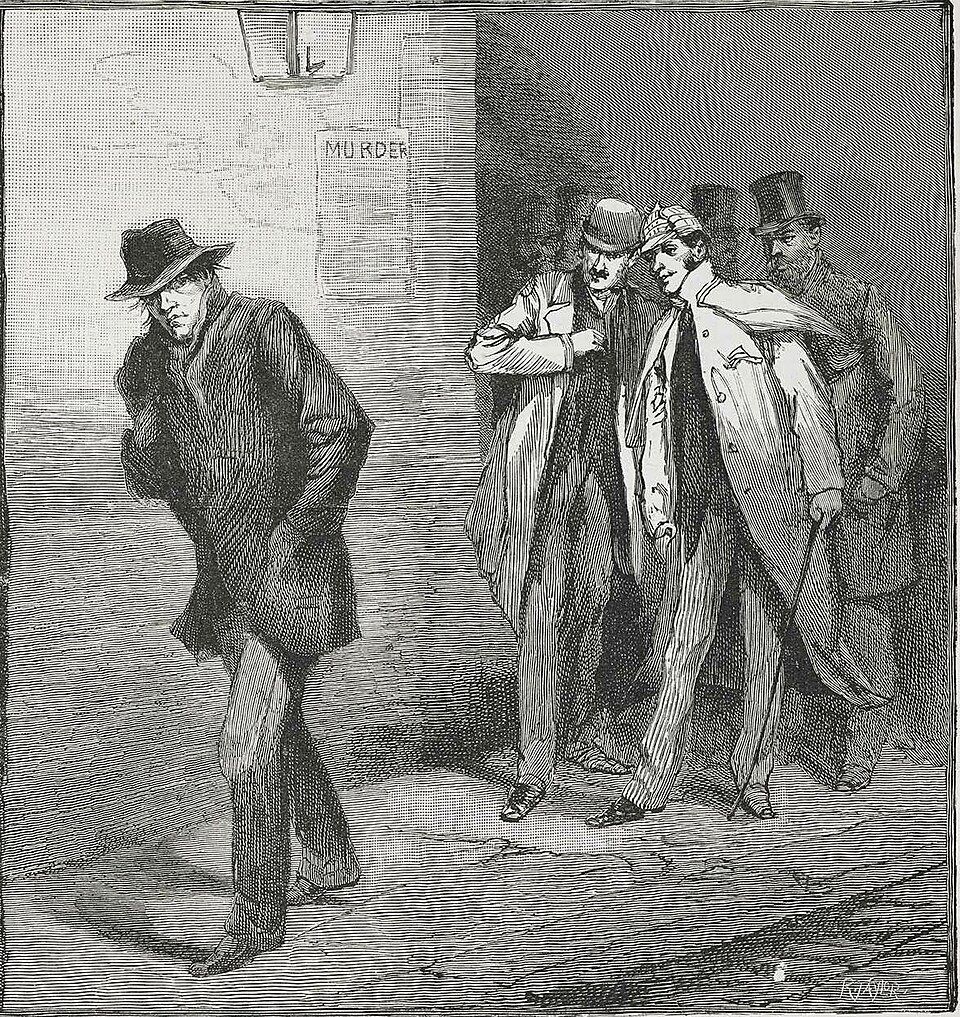
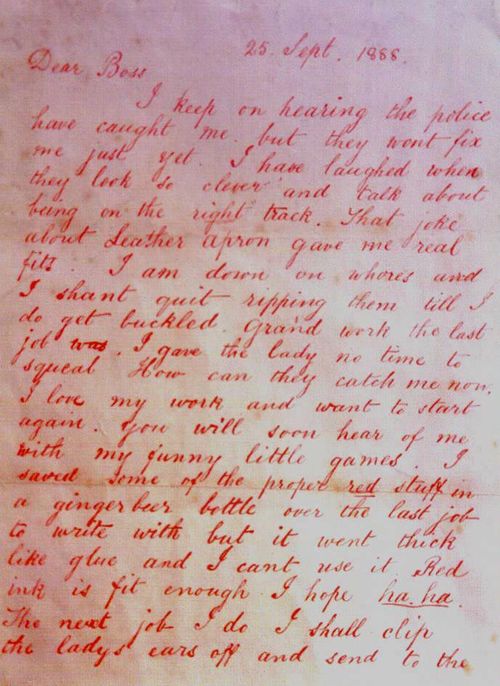
The name that made the case famous was probably written by a journalist. On 27 September 1888 the Central News Agency in London received a letter in red ink, addressed "Dear Boss" and signed "Jack the Ripper". By then two women had been killed in the streets of Whitechapel and Spitalfields within eight days of each other, and the press already had a nickname for the unknown attacker: "Leather Apron". Within a week the new name had replaced it, and it has never gone away.
Whitechapel in 1888 was one of the poorest districts in Britain. Roughly 80,000 people lived in the parish, thousands of them in common lodging-houses where a bed cost fourpence a night and a place leaning on a rope cost two. Many women without husbands or regular work moved between these houses, the workhouse and casual prostitution. All five of the women now called the "canonical five" lived that way.
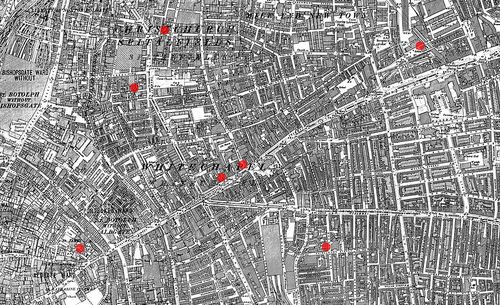
Mary Ann Nichols was found in Buck's Row at about 3:40 in the morning on Friday 31 August. Annie Chapman was found in the back yard of 29 Hanbury Street, Spitalfields, early on Saturday 8 September. In the small hours of Sunday 30 September came what the papers called the "double event": Elizabeth Stride was found at about 1 a.m. in Dutfield's Yard off Berner Street, and Catherine Eddowes roughly three-quarters of an hour later in Mitre Square, just inside the City of London. Mary Jane Kelly, the youngest, was killed in her rented room at 13 Miller's Court, off Dorset Street, and found there late on the morning of 9 November.
Each woman's throat had been cut. In four of the five the killer also inflicted mutilations, which grew more extensive as the series went on; Stride was the exception, and investigators then and since have wondered whether her killer was interrupted or was someone else entirely. A piece of Eddowes's apron turned up that night in a doorway in Goulston Street beneath a chalked line about "the Juwes". The Metropolitan Police Commissioner, Sir Charles Warren, had it washed off before dawn for fear of attacks on the area's Jewish immigrants, a decision that was criticised then and is still debated.
Two police forces were involved, because Mitre Square lay in the City rather than the Metropolitan district. Detective Inspector Frederick Abberline was sent from Scotland Yard to work alongside the local H Division, and Chief Inspector Donald Swanson coordinated the inquiry. More than 2,000 people were interviewed and some 80 detained. Butchers and slaughtermen were checked, as were the crews of cattle boats in the nearby docks. In October the police surgeon Thomas Bond was asked for his view of the killer, and the short report he wrote is often described as the earliest offender profile.
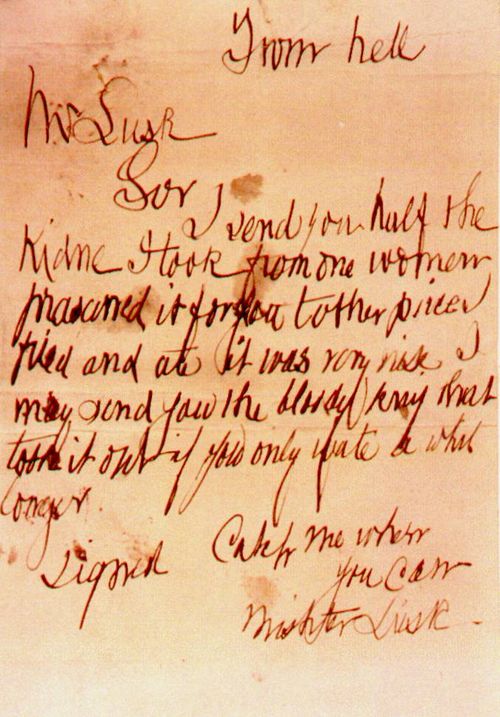
The letters made everything louder. Hundreds arrived claiming to be from the murderer. Besides "Dear Boss", the best known are the "Saucy Jacky" postcard of 1 October and the "From Hell" letter received on 16 October by George Lusk, a local builder who chaired the Whitechapel Vigilance Committee. It came with half a human kidney in a small box. Whether that kidney came from Catherine Eddowes, whose left kidney had been taken, or from a medical student's joke has been argued over ever since.
After Kelly the series stopped, or appeared to. Later Whitechapel deaths, up to that of Frances Coles in February 1891, were filed alongside the first five, but the police never agreed on how many belonged together. Nobody was charged with any of the canonical murders. In 1894 Sir Melville Macnaghten, who joined the force only after the killings, named three men in an internal memorandum as more likely suspects than the one the newspapers favoured at the time. None of them was ever tried, and no document in the police file is dated later than 1896.
The victims
Mary Ann "Polly" Nichols, 43, was a locksmith's daughter from the City who married a printer's machinist and had five children before the marriage broke down; that spring she had briefly taken a post as a servant in Wandsworth and wrote cheerfully to her father about it. Annie Chapman, about 47, was a soldier's daughter who had married a coachman and spent several years with him in Windsor; after their separation and his death the small allowance he paid her stopped, and she made a living crocheting, selling flowers and from casual prostitution. Elizabeth Stride, 44, was born Elisabeth Gustafsdotter on a farm near Gothenburg in Sweden, came to London in 1866, married a ship's carpenter and ran a coffee shop with him in Poplar.
Catherine Eddowes, 46, was born in Wolverhampton, worked as a tinplate stamper as a girl, and had three children with a former soldier, Thomas Conway; in her last years she lived with John Kelly, a fruit seller, and the two went hop-picking in Kent each summer, walking back into London from that year's harvest on 27 September, three days before she died. Mary Jane Kelly, about 25, told friends she had been born in Limerick and raised in Wales; little of her early life can be confirmed. She had lived for about eighteen months with Joseph Barnett, a Billingsgate fish porter, until he moved out of Miller's Court on 30 October after a quarrel; he still called on her, and saw her on the evening before she died.
Timeline
Mary Ann Nichols is found dead in Buck's Row, Whitechapel, at about 3:40 a.m.
Annie Chapman is found in the back yard of 29 Hanbury Street, Spitalfields.
The Central News Agency receives the "Dear Boss" letter, the first known use of the name "Jack the Ripper".
Elizabeth Stride is found in Dutfield's Yard and, about 45 minutes later, Catherine Eddowes in Mitre Square.
The "Saucy Jacky" postcard, referring to a "double event", reaches the Central News Agency.
Police publish facsimiles of the letter and postcard in the hope that someone recognises the handwriting.
George Lusk receives the "From Hell" letter with half a human kidney.
Mary Jane Kelly is found in her room at 13 Miller's Court, off Dorset Street.
Police surgeon Thomas Bond sends his assessment of the killer to Robert Anderson, head of the CID.
The body of Montague John Druitt, later named as a suspect, is recovered from the Thames at Chiswick.
Frances Coles is killed in Swallow Gardens, the last death placed in the police "Whitechapel murders" file.
Sir Melville Macnaghten writes the memorandum naming Druitt, Kosminski and Michael Ostrog.
People in the case
-
Mary Ann Nichols Victim
26 August 1845 – 31 August 1888
Known as Polly; found in Buck's Row, Whitechapel. The first of the canonical five.
-
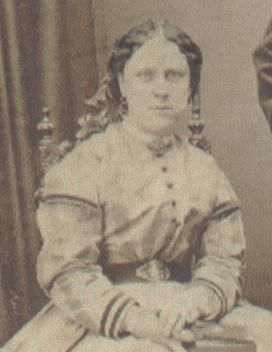
Annie Chapman Victim
1840 – 8 September 1888
Born Eliza Ann Smith; usually given as born 25 September 1840, though some records suggest 1841. Found at 29 Hanbury Street.
-
Elizabeth Stride Victim
27 November 1843 – 30 September 1888
Swedish-born, known as "Long Liz". Found in Dutfield's Yard, Berner Street.
-
Catherine Eddowes Victim
14 April 1842 – 30 September 1888
From Wolverhampton; found in Mitre Square in the City of London.
-
Mary Jane Kelly Victim
1863 – 9 November 1888
Born c. 1863, by her own account in Limerick. Killed in her room at 13 Miller's Court.
-
Frederick Abberline Investigator
8 January 1843 – 10 December 1929
Scotland Yard detective inspector sent to lead inquiries on the ground in Whitechapel.
-
Sir Charles Warren Investigator
7 February 1840 – 21 January 1927
Commissioner of the Metropolitan Police; resigned in November 1888 after sustained criticism.
-
George Lusk Witness
1839 – 25 October 1919
Builder and chairman of the Whitechapel Vigilance Committee; received the "From Hell" letter.
-
Montague John Druitt Suspect
15 August 1857 – December 1888
Barrister and schoolmaster named in Macnaghten's 1894 memorandum; drowned in the Thames in December 1888. Never charged.
-
Aaron Kosminski Suspect
11 September 1865 – 24 March 1919
Polish-born barber in Whitechapel, later confined to asylums; named by Macnaghten and favoured by Anderson and Swanson. Never charged.
Where it happened
- Buck's Row (now Durward Street). Where Mary Ann Nichols was found on 31 August 1888.
- 29 Hanbury Street, Spitalfields. Annie Chapman was found in the back yard; the house has since been demolished.
- Dutfield's Yard, Berner Street (now Henriques Street). Where Elizabeth Stride was found on 30 September 1888.
- Mitre Square, City of London. Where Catherine Eddowes was found; the only killing inside the City police's area.
- Miller's Court, Dorset Street. Mary Jane Kelly's room; Dorset Street was cleared and built over in the 20th century.
Outcome
Unsolved Unsolved
Inquests into all five deaths returned verdicts of wilful murder by a person or persons unknown. No one was ever charged with any of the canonical killings. The Metropolitan Police went on adding deaths to its Whitechapel murders file until 1891, but no arrest ever led to a trial for the 1888 killings.
What the record settles, and what it doesn't
Established
- Five women, Mary Ann Nichols, Annie Chapman, Elizabeth Stride, Catherine Eddowes and Mary Jane Kelly, were killed in Whitechapel, Spitalfields and the City of London between 31 August and 9 November 1888.
- Each victim died from a cut to the throat, and four of the five were also mutilated.
- The name "Jack the Ripper" first appeared in the "Dear Boss" letter postmarked 27 September 1888 and spread after police published a facsimile.
- The Metropolitan Police and the City of London Police both investigated, interviewing more than 2,000 people.
- Sir Charles Warren ordered the chalked message in Goulston Street to be erased on the morning of 30 September 1888.
- No one was ever charged with any of the five murders.
Disputed
- Whether the same person killed all five women: some researchers link only Nichols, Chapman and Eddowes with confidence, while others add Martha Tabram (7 August 1888) and later victims to the series.
- Whether Elizabeth Stride's killer was interrupted or was a different man, since she suffered no mutilation.
- Who wrote the letters: most historians regard "Dear Boss" as a journalist's hoax, a view police officials themselves later expressed, while a minority still treat some letters as genuine.
- Whether the kidney sent to George Lusk came from Catherine Eddowes or was a prank by someone with access to a dissecting room.
- The killer's identity: more than a hundred suspects have been proposed, from men named by police at the time such as Kosminski and Druitt to famous figures never investigated, and claims based on modern DNA testing have been widely criticised as unreliable.
Pictures





Afterwards
Warren, worn down by criticism, resigned as Commissioner just before Kelly's murder in November 1888. Inspector Abberline retired in 1892; he is reported to have favoured the poisoner George Chapman, hanged in 1903, one of several theories that officers who worked the case held privately and never proved. Much of the City of London Police's file was destroyed in the Blitz, which has left gaps that later writers have filled with speculation.
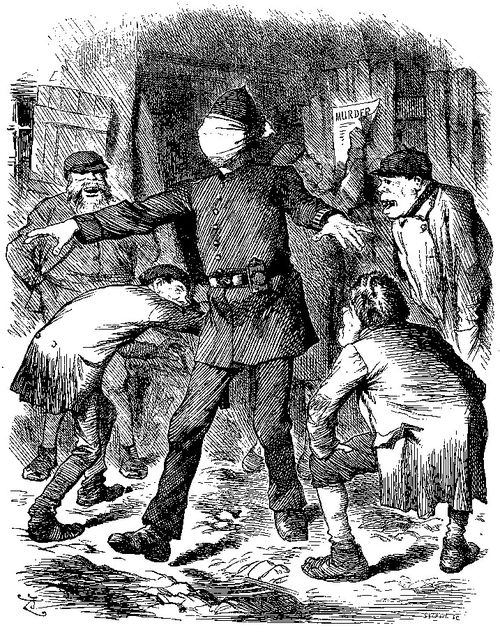
The case changed crime reporting. Cheap, mass-circulation papers sold over a million copies a day at the height of the scare, and the habit of giving an unknown killer a name started here. The streets themselves have largely been rebuilt: Buck's Row became Durward Street, Berner Street became Henriques Street, and Dorset Street disappeared under later buildings. The five women are buried in east London cemeteries, and the attention given to their lives, rather than only their deaths, has grown in recent decades.
Questions readers ask
Was Jack the Ripper ever caught?
No. Nobody was charged with any of the five canonical murders, and the police file was closed without a prosecution. Senior officers privately favoured different suspects, but none could be proved.
How many people did Jack the Ripper kill?
Five victims are traditionally attributed to him: Mary Ann Nichols, Annie Chapman, Elizabeth Stride, Catherine Eddowes and Mary Jane Kelly. The police file covered eleven Whitechapel deaths between 1888 and 1891, and researchers disagree over whether he killed fewer or more than five.
Where did the name Jack the Ripper come from?
From a letter signed "Jack the Ripper" sent to the Central News Agency and postmarked 27 September 1888. Police officials later said they believed a journalist wrote it, and most historians agree it was a hoax.
Who were the main suspects?
In 1894 Sir Melville Macnaghten named Montague John Druitt, Aaron Kosminski and Michael Ostrog as more likely suspects than others then discussed. None was ever charged, and the case against each is circumstantial.
Sources and further reading
- Jack the Ripper (Wikipedia)
- Whitechapel murders (Wikipedia)
- Mary Ann Nichols (Wikipedia)
- Catherine Eddowes (Wikipedia)
- Wikidata Q43963 (life dates checked here)
Written by Sinister Crimes from the sources above; see our editorial standards. Last checked 1 November 2026.