

The case
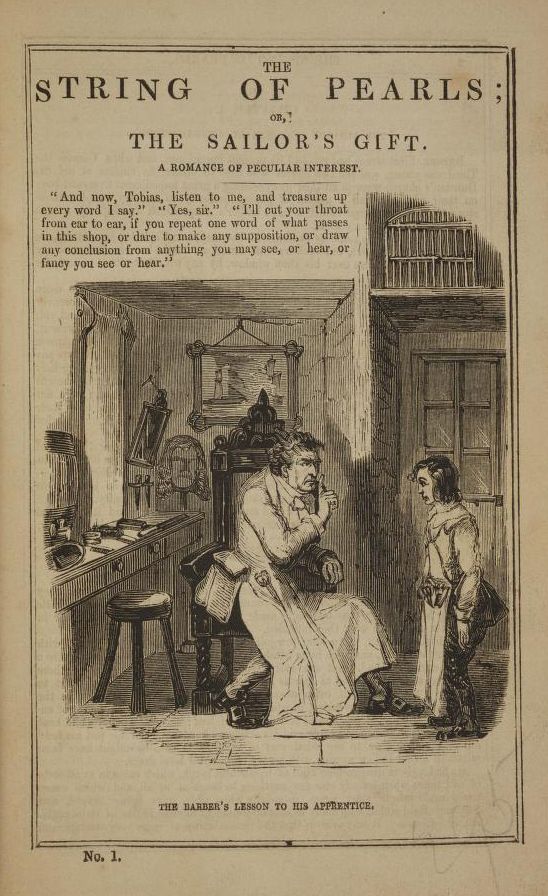
This is a legend, not a case. There is no record that a barber named Sweeney Todd ever lived, killed or was hanged in London. What can be documented is the moment the story entered print: on 21 November 1846, in the seventh issue of a cheap weekly called The People's Periodical and Family Library, published by Edward Lloyd, the first instalment of a serial titled The String of Pearls: A Romance.
Over eighteen weekly parts, ending on 20 March 1847, readers followed the disappearance of a sailor, Lieutenant Thornhill, last seen entering a barber's shop beside St Dunstan's church in Fleet Street. He had been carrying a string of pearls as a gift for Johanna Oakley, whose sweetheart was believed lost at sea. Thornhill's dog waits outside the shop. His friends start asking questions. Johanna disguises herself as a boy and takes a job in the shop. Nearby, in Bell Yard, Mrs Lovett's pie shop does a roaring trade.
The secret, revealed in the closing instalments, is a barber's chair over a trapdoor that tips customers into the cellar, an underground passage to the bakery, and pies made from the victims. The story is set in 1785 and ends with Mrs Lovett poisoned by her partner and Todd arrested and hanged. It was penny-dreadful fiction, written fast for working-class readers who wanted sensation in weekly doses.
Who wrote it is uncertain. Lloyd's stable of writers did not sign their work. The serial was long credited to Thomas Peckett Prest, and more recent scholarship favours James Malcolm Rymer, the author of Varney the Vampire; it is possible the two shared the job. Lloyd republished an expanded version in 1847 and 1848, and in 1850 issued it as a book of more than seven hundred pages, with a different ending in which Todd escapes and is later shot.
The stage made Todd a household name before the serial had even finished. George Dibdin Pitt adapted the story for the Britannia Theatre in Hoxton in early 1847 and billed it as founded on fact. It was Pitt's version that gave Todd his catchphrase about polishing customers off. Variations on the melodrama played across Britain for the rest of the century.
The plot itself was older than the serial. A Swedish traveller, Pehr Lindeström, recorded hearing a nearly identical tale in Calais in the seventeenth century. A Paris version, set in the rue de la Harpe and supposedly drawn from police records of around 1800, was printed in a London magazine in the 1820s. Charles Dickens joked about cat-meat pies in The Pickwick Papers and about the makers of cannibal pastry said in country legends to do a lively trade in the capital in Martin Chuzzlewit, a few years before Todd appeared.
The claim that Sweeney Todd was real began with the publishers. The 1850 book edition's introduction asserted it, and Pitt's playbills hinted at it. In the twentieth century an author published two books arguing that Todd was a real barber who had killed around 1800 and been hanged after a trial at the Old Bailey. Researchers who checked his references against the court records, newspapers and the Newgate Calendar could not find the cases he described. No trial, execution or barber's shop matching the story has been identified.
Timeline
Jacques du Breul's history of Paris mentions a murderous pastry cook in the rue des Marmousets, an early version of the motif.
The Pickwick Papers begins appearing, with Sam Weller's joke about pies made of cat.
The first instalment of The String of Pearls appears in Lloyd's People's Periodical.
George Dibdin Pitt's stage adaptation opens at the Britannia Theatre, Hoxton, billed as founded on fact.
The eighteenth and final part of the original serial is published.
Lloyd issues an expanded book version whose introduction claims the story is true.
Frederick Hazleton's dramatic version, Sweeney Todd, the Barber of Fleet Street, is staged in Lambeth.
The melodrama reaches Broadway at the Frazee Theatre.
The earliest surviving film of the story is released in Britain.
People in the case
-
James Malcolm Rymer Also involved
1814 – 1884
Prolific writer of penny serials for Edward Lloyd; now considered the most likely author of The String of Pearls.
-
Thomas Peckett Prest Also involved
13 May 1810 – 5 June 1859
Lloyd writer long credited with the serial; he may have shared in it.
-
Edward Lloyd Also involved
16 February 1815 – 8 April 1890
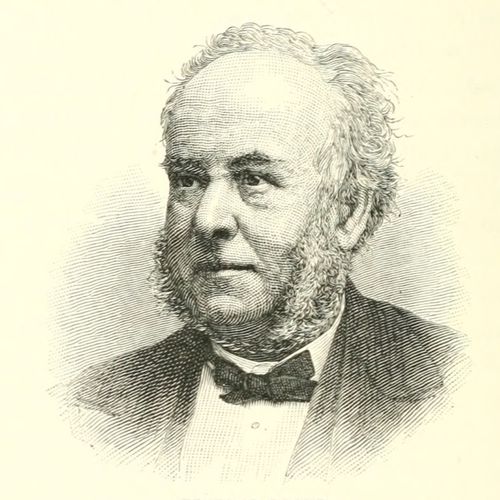
Publisher of The People's Periodical, where the serial first ran; later a newspaper proprietor.
-
George Dibdin Pitt Also involved
30 March 1795 – 16 February 1855
Playwright whose 1847 melodrama for the Britannia Theatre spread the story and billed it as fact.
Where it happened
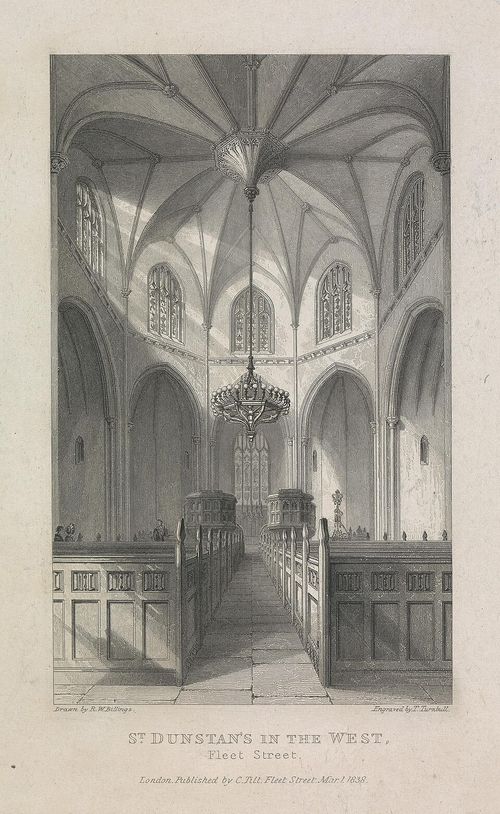
- St Dunstan-in-the-West, Fleet Street. The church beside which the story places Todd's shop; in the tale its crypt hides the victims.
- Fleet Street, London. Setting of the fictional barber's shop.
- Britannia Theatre site, Hoxton. Where Pitt's 1847 melodrama first put Todd on stage.
Outcome
Legend Legend
There was no trial because there is no evidence of a crime. Searches of Old Bailey records, newspapers and the Newgate Calendar have found no barber named Sweeney Todd tried or executed for murder in London. Within the fiction, the 1846-47 serial ends with Todd hanged, while the 1850 book has him escape and later shot.
What the record settles, and what it doesn't
Established
- Sweeney Todd first appeared in print in The String of Pearls, serialised in Edward Lloyd's People's Periodical from 21 November 1846 to 20 March 1847.
- The serial was unsigned and is attributed to James Malcolm Rymer, Thomas Peckett Prest, or both.
- George Dibdin Pitt's 1847 stage version at the Britannia Theatre, Hoxton, billed the story as founded on fact.
- The motif of a murderer whose victims end up in pies circulated in Paris and Calais legends long before 1846.
- No court record, newspaper report or execution record of a real Sweeney Todd has been found.
Disputed
- Authorship of The String of Pearls: older catalogues credit Prest, recent scholarship favours Rymer, and some see a collaboration.
- Whether a real crime lies behind the legend: a twentieth-century author argued for a historical barber of around 1800, but his sources could not be verified by other researchers.
- Which earlier tale the serial drew on most directly: the Paris rue de la Harpe story printed in London in the 1820s is the usual candidate, but the motif was widespread.
- When the stage version first opened; sources place it in February or March 1847, while the serial was still running.
Pictures


Afterwards
Todd outlived his creators by a wide margin. Victorian melodrama kept him on stage for decades, and silent films followed in 1926 and 1928. A 1973 stage play gave him a revenge motive for the first time, and that version became the basis of Stephen Sondheim and Hugh Wheeler's 1979 musical, which has been revived regularly and filmed. The name entered everyday English, and Fleet Street walking tours still point out the site beside St Dunstan's. The persistence of the true-story claim is itself part of the legend's history: a publisher's selling line from 1850 that no archive has ever supported.
Questions readers ask
Was Sweeney Todd a real person?
There is no evidence that he was. He first appears in an 1846-47 penny serial, and searches of court and execution records have found no matching barber or trial.
Where did the Sweeney Todd story come from?
From The String of Pearls, a serial published by Edward Lloyd in 1846-47 and probably written by James Malcolm Rymer. It drew on older French legends about murderers and pie-makers.
Where was Sweeney Todd's barber shop?
In the story, on Fleet Street beside St Dunstan-in-the-West, with Mrs Lovett's pie shop in nearby Bell Yard. No real shop matching it has been identified.
Why do people think Sweeney Todd was real?
The 1850 book edition and early stage posters claimed the story was based on fact, and a twentieth-century writer repeated the claim. None of those claims has been backed by records.
Sources and further reading
- Sweeney Todd (Wikipedia)
- The String of Pearls (Wikipedia)
- The String of Pearls (Wikisource)
- Wikidata Q669485 (life dates checked here)
Written by Sinister Crimes from the sources above; see our editorial standards. Last checked 1 November 2026.