
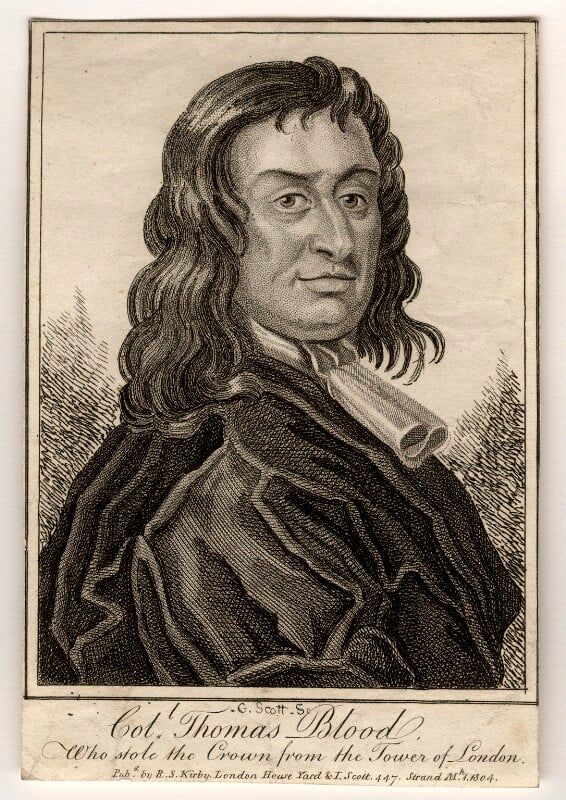

The case
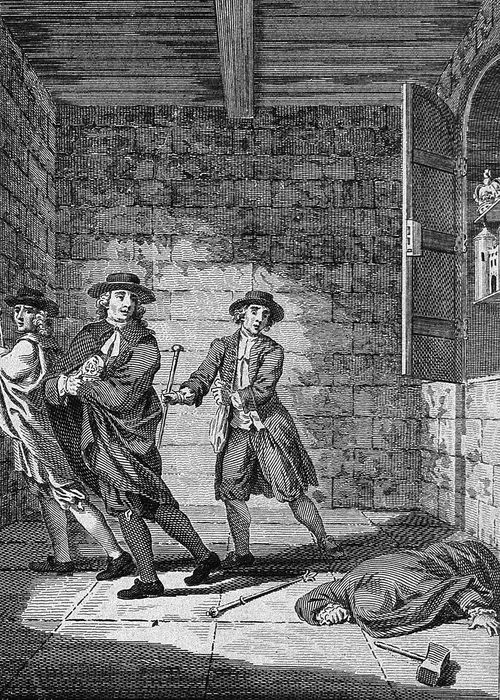
To fit the crown of England under his coat, Thomas Blood beat it flat with a mallet. It was the morning of 9 May 1671, in the basement room of the Martin Tower at the Tower of London where the regalia were kept behind a grille. One of his companions was sawing the sceptre in half to get it into a bag. Another had pushed the orb down the front of his breeches. On the floor lay the keeper of the jewels, Talbot Edwards, a man in his late seventies, bound, gagged and stabbed.
The robbery had been weeks in the making. That spring Blood had visited the Tower dressed as a clergyman, with a woman posing as his wife, and paid to see the jewels. When the woman pretended to be taken ill, the Edwards family took her up to their lodgings above the jewel room to recover. Blood came back with gifts, became a friend of the household and proposed a marriage between the Edwardses' daughter and a nephew of his, a young man with a good income. The meeting to settle the match was the cover for the raid.
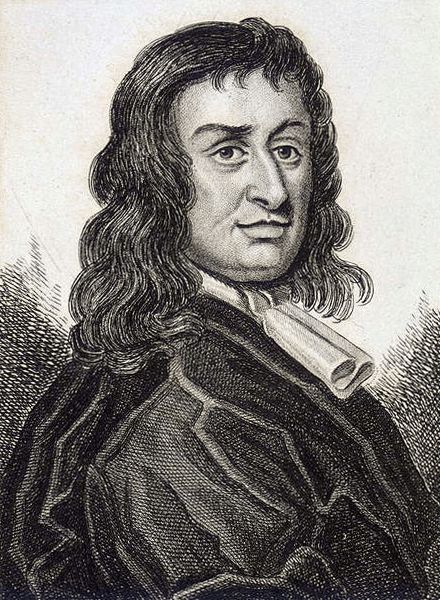
Blood was no ordinary thief. Born in Ireland around 1618 to a family of English descent, he had fought in the civil wars, on the king's side at first and then for Parliament, and been rewarded with Irish land. The Restoration of Charles II in 1660 stripped him of it. In 1663 he was among the plotters of a rising to seize Dublin Castle and its governor, the Duke of Ormond; the plot was betrayed, several accomplices were executed, and Blood escaped to a life of hiding, false names and conspiracy in Ireland, the Netherlands and Scotland.
In December 1670, back in London and posing as a physician, he led a gang that dragged Ormond from his coach in St James's Street and carried him off on horseback toward Tyburn, apparently meaning to hang him there. Ormond struggled free with the help of a servant. Nobody was charged.
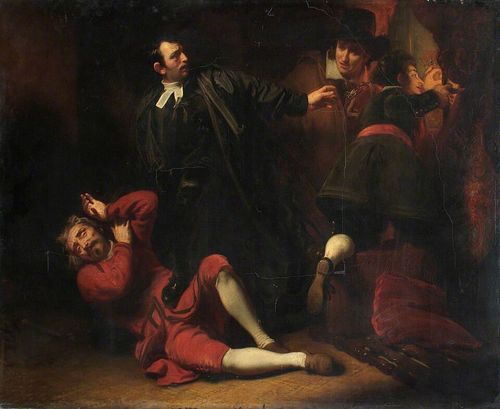
The jewel raid was interrupted, by most accounts, through bad luck. Edwards's son Wythe, home from soldiering in Flanders, arrived at the door just as the thieves were at work, and the old man worked his gag loose and shouted that the crown was stolen. The gang ran for the gate, dropping the sceptre, firing at the warders and wounding one. Blood was caught on the wharf by Captain Beckman, a relative of the Edwards family, struggling and calling it a gallant attempt. His brother-in-law Hunt and an accomplice named Perrot were taken with him. The crown was recovered, though stones had come loose and some were missing.
Then came the strangest part. Blood would answer to no one but the king, and he was taken before Charles II, Prince Rupert and others for questioning. He claimed among other things that he had once had the king in his sights while he bathed in the Thames and had held back from awe of majesty. Within weeks he was not only pardoned but granted Irish land worth £500 a year, and he became a familiar figure at court, where he acted as a go-between for petitioners. Ormond, whose kidnapping had gone unpunished, was reportedly furious. The Edwards family received a promise of a few hundred pounds that was never paid in full.
Who lost out
Talbot Edwards was the elderly keeper of the Jewel House, who lived with his family in the Martin Tower and earned fees by showing the regalia to paying visitors. He trusted Blood as a friend of the family and was beaten, bound and stabbed for it. He survived, went back to showing visitors the jewels and telling the story of the attack, and died in 1674; he is buried in the Tower's chapel of St Peter ad Vincula. His wife and daughter, who had befriended the disguised Blood, were used as unwitting cover for the plan. A warder was wounded by gunfire during the escape.
Timeline
Thomas Blood is born in Ireland, probably in County Clare.
Blood's plot to seize Dublin Castle and the Duke of Ormond is betrayed; he escapes.
Blood's gang drags Ormond from his coach in St James's Street; Ormond escapes.
Disguised as a clergyman, Blood visits the Jewel House and befriends the Edwards family.
Blood and his accomplices attack Talbot Edwards and seize the crown, sceptre and orb, but are caught at the Tower.
Blood is questioned by Charles II and pardoned, receiving Irish lands worth £500 a year.
Talbot Edwards dies and is buried in the chapel of St Peter ad Vincula.
The Duke of Buckingham wins a £10,000 slander judgment against Blood.
Blood dies at his home in Westminster.
People in the case
-
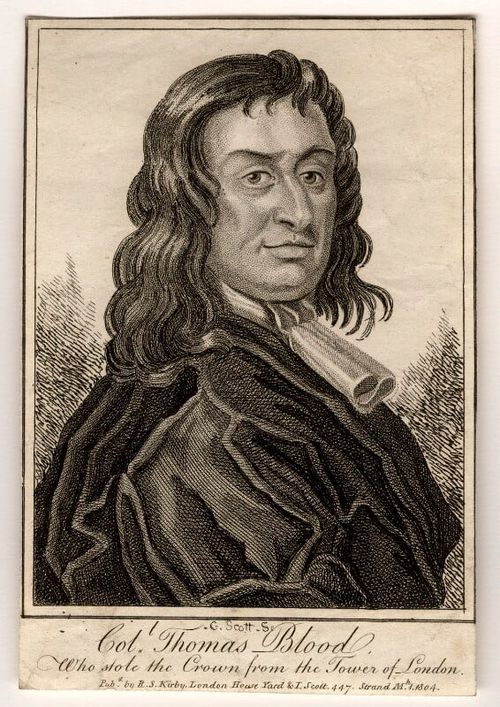
Thomas Blood Perpetrator
1618 – 24 August 1680
Anglo-Irish former officer and conspirator; led the attempt on the Crown Jewels and was pardoned by Charles II.
-
Talbot Edwards Victim
? – 1674
Keeper of the regalia at the Jewel House, about 77 at the time; stabbed and bound during the robbery and survived.
-
Wythe Edwards Witness
Son of Talbot Edwards; his unexpected return is said to have raised the alarm. Dates unknown.
-
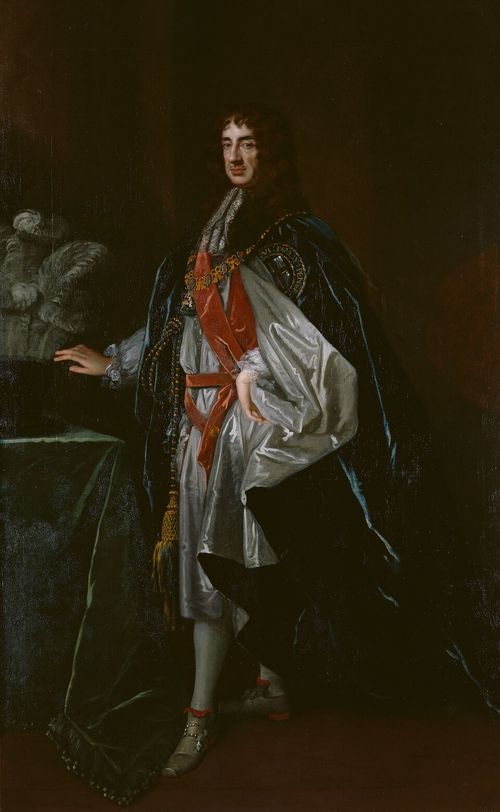
Charles II Also involved
29 May 1630 – 6 February 1685
King of England, Scotland and Ireland; questioned Blood personally and pardoned him.
-
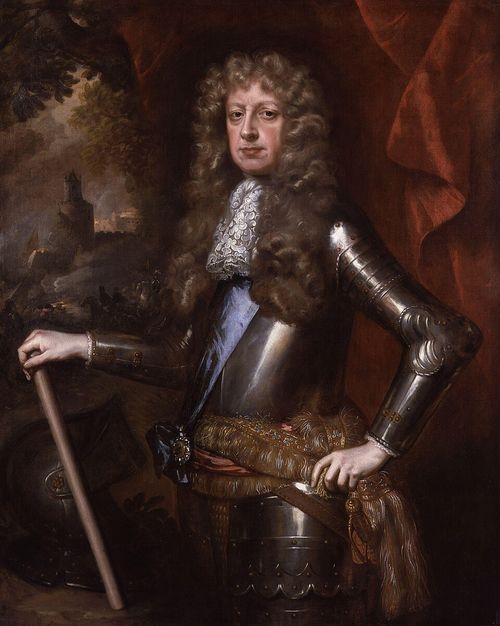
James Butler, 1st Duke of Ormond Victim
19 October 1610 – 21 July 1688
Lord Lieutenant of Ireland, target of Blood's 1663 plot and of his December 1670 kidnapping attempt.
-
George Villiers, 2nd Duke of Buckingham Also involved
30 January 1628 – 16 April 1687
Courtier suspected of being Blood's patron; later sued him for slander.
Where it happened
- Jewel House, Tower of London. The Crown Jewels' home today; in 1671 they were kept in the Martin Tower.
- Tower of London. Scene of the robbery and of Blood's capture on the wharf.
- Christchurch Gardens, Westminster. Former churchyard where Blood was buried in 1680.
Outcome
Convicted Caught, then pardoned
Blood was arrested in the act on 9 May 1671 but never tried for the robbery. After questioning by the king and his council he was pardoned that summer and granted Irish land worth £500 a year; his accomplices Hunt and Perrot also went unpunished. In 1680 he was found liable at King's Bench for slandering the Duke of Buckingham, with damages of £10,000 that he never paid.
What the record settles, and what it doesn't
Established
- On 9 May 1671 Thomas Blood and accomplices attacked the keeper Talbot Edwards and seized the crown, sceptre and orb at the Tower of London.
- Blood had prepared the robbery by visiting the Jewel House in disguise and befriending the Edwards family.
- He was caught before leaving the Tower precincts and the regalia were recovered, though damaged.
- He insisted on seeing the king and was questioned by Charles II in person.
- He was pardoned and granted Irish land worth £500 a year, while the Edwards family received less than they were promised.
- He had earlier taken part in the 1663 Dublin Castle plot and the 1670 attack on the Duke of Ormond.
Disputed
- Why Charles II pardoned him: explanations include fear of reprisals from Blood's associates, the king's liking for a bold rogue, Blood's usefulness as an informer or agent, and even the suggestion that the king, short of money, had a hand in the plan.
- Whether the Duke of Buckingham was behind the attack on Ormond, as Ormond's son openly alleged before the king.
- How the alarm was raised: popular accounts credit the chance return of Wythe Edwards, others Talbot Edwards's own struggle.
- Whether Blood worked as a government spy after his pardon; a modern biography argues he did, but the evidence is circumstantial.
- The identity of the woman who posed as Blood's wife on his first visit is not reliably recorded.
Pictures




Afterwards
The robbery ended the informal arrangement under which the keeper took the regalia out of a cupboard for paying visitors; the jewels have been under armed guard ever since. Blood became a minor celebrity at court, mocked in verse by the Earl of Rochester for being in favour after stealing Ormond and the crown. He fell out with Buckingham, lost a slander action in 1680, and died that August before paying. Such was his reputation for trickery that his body is said to have been exhumed to make sure he was really dead. His son Holcroft Blood became a distinguished military engineer and commanded Marlborough's artillery at Blenheim. The theft remains the most famous attempt on the Crown Jewels, retold in plays, films and the Tower's own tours.
Questions readers ask
Did Colonel Blood steal the Crown Jewels?
He seized them, but only briefly. He and his accomplices were caught inside the Tower precincts on 9 May 1671 and the crown, orb and sceptre were recovered.
Why did Charles II pardon Colonel Blood?
Nobody knows for certain. Theories include fear of his associates, the king's amusement at his nerve, Blood's value as an informer, and suspicion that the king was involved.
Was Thomas Blood really a colonel?
No. The rank was self-styled; he had served as an officer in the civil wars but never held a colonel's commission.
What happened to the keeper of the Crown Jewels?
Talbot Edwards survived being beaten and stabbed, returned to his post and died in 1674. He is buried in the Tower of London's chapel.
Sources and further reading
- Thomas Blood (Wikipedia)
- Crown Jewels of the United Kingdom (Wikipedia)
- Wikidata Q2032295 (life dates checked here)
Written by Sinister Crimes from the sources above; see our editorial standards. Last checked 1 November 2026.