

The case
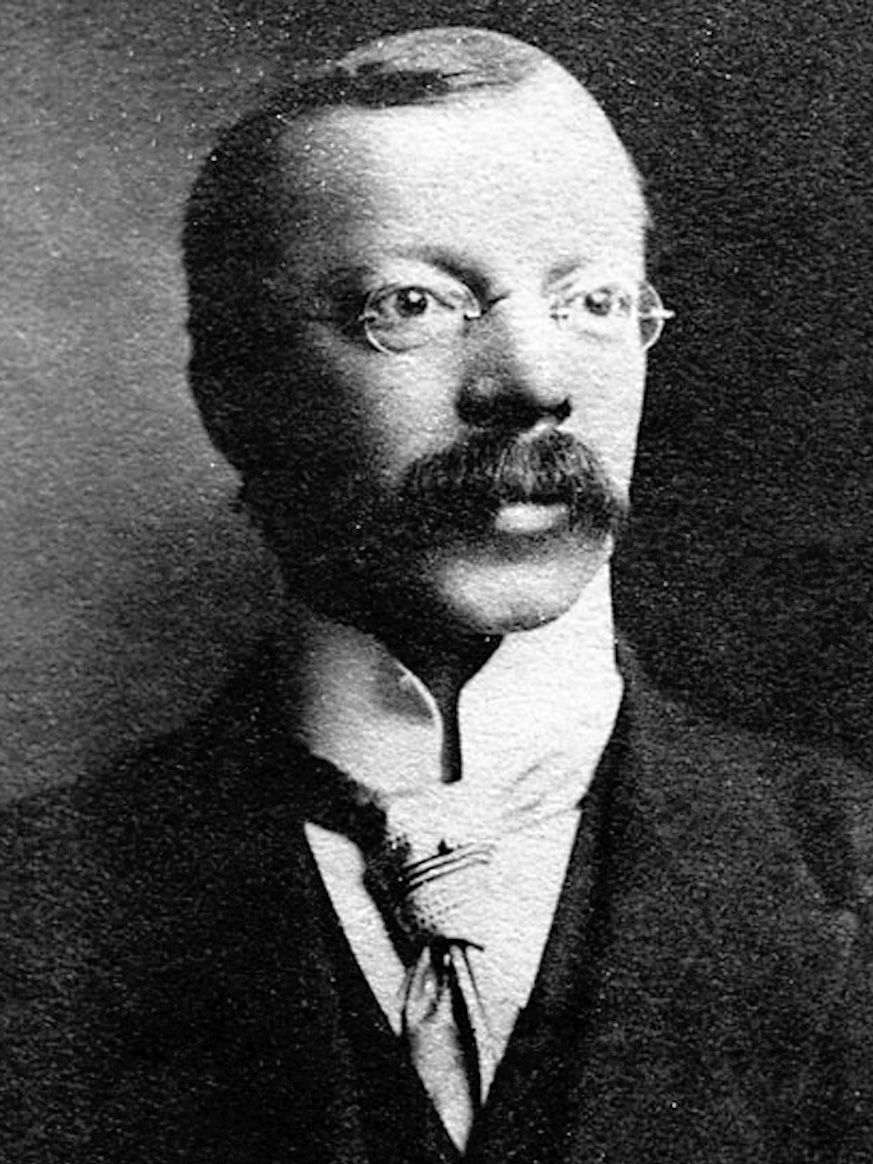
On 22 July 1910 the captain of a Canadian Pacific liner in mid-Atlantic sent a wireless message about two of his saloon passengers: a man who had recently shaved off his moustache and his "son", whose manner and build were "undoubtedly a girl". The captain was Henry Kendall of the Montrose, and the passengers, travelling under false names, were Hawley Harvey Crippen and his typist Ethel Le Neve. No fugitive had been caught this way before.
Crippen was born in Coldwater, Michigan, in 1862 and trained in homeopathy in Cleveland. In 1894, after his first wife's death, he married a young aspiring singer who called herself Cora Turner and later took the stage name Belle Elmore. They moved to London in 1897 when he was sent to run the British office of a patent-medicine firm. His American qualifications did not allow him to practise as a doctor in Britain, so he sold remedies, managed an ear clinic and, in 1900, hired Ethel Le Neve as a typist. By 1910 he and Cora were living at 39 Hilldrop Crescent in Holloway, taking in lodgers, while he carried on an affair with Le Neve.
On the night of 31 January 1910 the Crippens gave a small supper for two music-hall friends, Paul and Clara Martinetti, who left in the early hours. Cora was never seen again. Crippen told her friends she had gone to America, then that she had died there and been cremated. Le Neve moved into the house and was soon seen wearing Cora's furs and jewellery.
Cora's friends in the Music Hall Ladies' Guild did not believe him. One of them, the singer Lil Hawthorne, and her husband took their doubts to a Scotland Yard superintendent they knew. On 8 July Chief Inspector Walter Dew called on Crippen, who now admitted the death story was a lie: Cora, he said, had left him for another man and he had invented her death to spare himself the embarrassment. Dew searched the house, found nothing and was largely satisfied.
Crippen was not. Within a day or two he and Le Neve had left for Brussels and then Antwerp, where on 20 July they sailed on the Montrose for Quebec, Le Neve in boy's clothes. Their flight sent the police back to Hilldrop Crescent, and on 13 July, on the last of several searches, they found human remains buried under the brick floor of the cellar. The head and limbs were never recovered. The Home Office analyst William Willcox found the poison hyoscine in the tissue, and a local chemist's records showed that Crippen had bought a quantity of it shortly before Cora vanished.
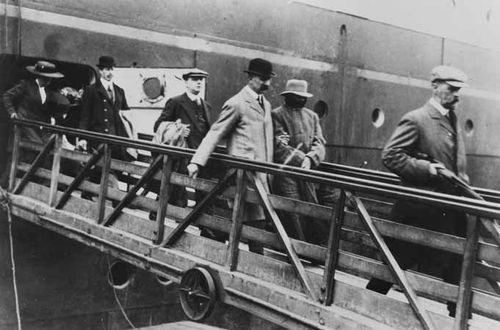
Kendall's message reached Scotland Yard, and Dew sailed from Liverpool on the faster White Star liner Laurentic, overtaking the Montrose. On 31 July, near Father Point at the mouth of the St Lawrence, he came aboard dressed as a pilot and greeted Crippen by name. Crippen's reported reply was that he was glad the suspense was over. Because Canada was a British dominion, no extradition hearing was needed, and the pair were brought back to England at the end of August.
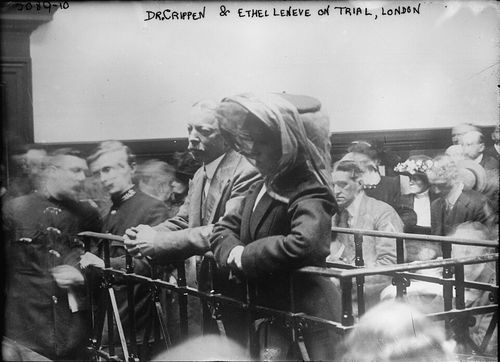
Crippen was tried at the Old Bailey in October before the Lord Chief Justice, Lord Alverstone. The crown's case rested on the hyoscine, on a piece of skin that the young pathologist Bernard Spilsbury identified as bearing an abdominal scar matching Cora's medical history, and on a fragment of pyjama jacket found with the remains that carried a maker's label from no earlier than 1908, after the Crippens had moved in. The jury took 27 minutes to convict. Le Neve, tried separately as an accessory after the fact, was acquitted.
The victims
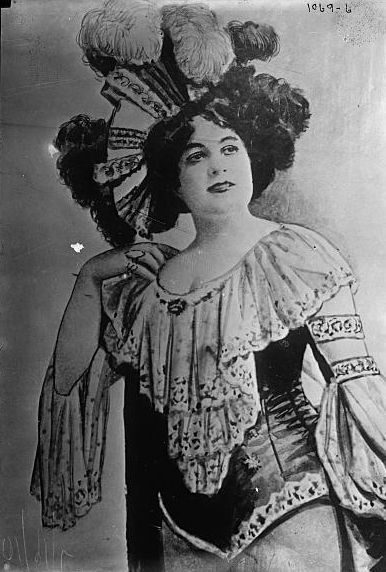
Cora Crippen was born in America to an immigrant family, as Kunigunde Mackamotski, in about 1873; she preferred Corrine or Cora, and on stage she was Belle Elmore. Her stage career in London was modest, but she had a wide circle of friends among performers and was an active member of the Music Hall Ladies' Guild, a charity run by women of the profession. It was her fellow members who refused to accept her husband's account of her disappearance and pushed the police to act.
Timeline
Crippen, a widower, marries Cora Turner in New York.
The couple move to London, where Crippen manages a patent-medicine office.
Cora Crippen is last seen alive after a supper party at 39 Hilldrop Crescent.
Chief Inspector Walter Dew interviews Crippen, who admits his story of Cora's death was invented.
Police searching the empty house find human remains under the cellar floor.
Captain Kendall of the Montrose sends a wireless message reporting his suspicions.
Dew, disguised as a pilot, boards the Montrose in the St Lawrence and Crippen and Le Neve are arrested.
Crippen's four-day trial opens at the Old Bailey.
The jury convicts Crippen of murder after 27 minutes and he is sentenced to death.
Ethel Le Neve is tried as an accessory after the fact and acquitted.
Crippen is hanged at Pentonville Prison by John Ellis.
People in the case
-
Hawley Harvey Crippen Perpetrator
11 September 1862 – 23 November 1910
American homeopath and patent-medicine seller; convicted of his wife's murder and hanged at Pentonville.
-
Cora Crippen (Belle Elmore) Victim
1873 – February 1910
Born c. 1873 as Kunigunde Mackamotski; music-hall singer and Crippen's second wife. Last seen alive on the night of 31 January 1910.
-
Ethel Le Neve Accused
22 January 1883 – 9 August 1967
Crippen's typist and lover; tried as an accessory after the fact and acquitted. Sources give her birth as 21 or 22 January 1883.
-
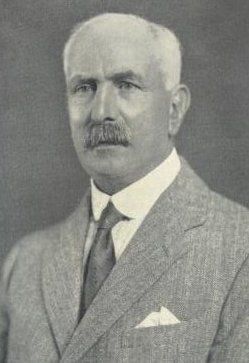
Walter Dew Investigator
17 April 1863 – 16 December 1947
Scotland Yard chief inspector who interviewed Crippen, then crossed the Atlantic to arrest him.
-
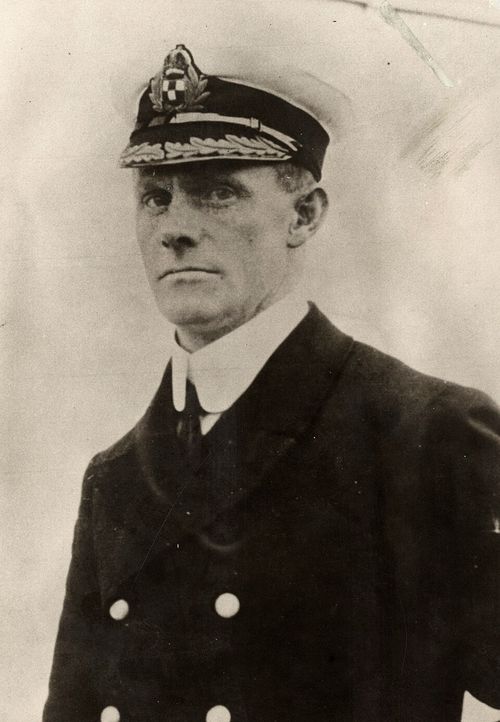
Henry George Kendall Witness
30 January 1874 – 28 November 1965
Captain of the Montrose who recognised the fugitives and sent the wireless message.
-
Bernard Spilsbury Witness
16 May 1877 – 17 December 1947
Pathologist whose evidence on the scarred skin made his name.
-
Richard Muir Prosecutor
8 March 1857 – 1924
Led the crown's case against Crippen.
-
Lord Alverstone Judge
22 December 1842 – 15 December 1915
Lord Chief Justice who presided at the trial.
Where it happened
- 39 Hilldrop Crescent, Holloway. The Crippens' home, where remains were found in the cellar.
- Father Point (Pointe-au-Père), Quebec. Pilot station at the mouth of the St Lawrence where Dew boarded the Montrose.
- Old Bailey (Central Criminal Court). Where Crippen and, separately, Le Neve were tried.
- HM Prison Pentonville. Where Crippen was hanged and buried.
Outcome
Executed Convicted and executed
Crippen was convicted of murder at the Old Bailey on 22 October 1910 and sentenced to death; his appeal failed. He was hanged at Pentonville on 23 November 1910. Ethel Le Neve was acquitted of being an accessory after the fact. In 2009 the Criminal Cases Review Commission declined to refer the conviction back to the Court of Appeal.
What the record settles, and what it doesn't
Established
- Cora Crippen was last seen alive on the night of 31 January 1910, after guests left 39 Hilldrop Crescent.
- Crippen told friends she had gone to America and died there, and later admitted to police that this was untrue.
- Crippen and Le Neve fled to Belgium and sailed from Antwerp to Canada on the Montrose, with Le Neve disguised as a boy.
- Human remains were found buried under the cellar floor of the house on 13 July 1910, and hyoscine was found in them.
- Captain Kendall's wireless message led to the couple's arrest on 31 July 1910, the first capture of a fugitive helped by wireless telegraphy.
- A jury convicted Crippen of murder, Le Neve was acquitted, and Crippen was hanged on 23 November 1910.
Disputed
- Whose remains were in the cellar: the prosecution identified them as Cora's through a scar, while the defence argued the mark was a fold of skin; DNA tests published in 2010 on a surviving slide claimed the tissue was male, but critics questioned the method and the slide's provenance.
- Whether Crippen meant to kill: some lawyers of the period, including Edward Marshall Hall, thought he may have given hyoscine as a sedative and killed Cora by accident, which could have supported a lesser verdict.
- Why Crippen ran after Dew had apparently accepted his story, and how far his flight, rather than the forensic evidence, convinced the jury.
- Whether the prosecution was right to withhold the affidavit behind the arrest warrant from the defence, as one junior counsel later complained.
Pictures




Afterwards
Le Neve went to North America after the trial, worked as a typist in Toronto, and came back to London under another name. She married in 1915, raised a family in Croydon and died in 1967 without ever speaking publicly about the case. Captain Kendall became a minor celebrity; four years later he commanded the Empress of Ireland when she sank in the St Lawrence, not far from where Crippen was arrested, and he survived.
The case made Spilsbury the best-known forensic witness in England, and it showed police everywhere what wireless could do. Crippen's name passed into the language as shorthand for a wife-murderer, appeared in music-hall songs within months, and has been the subject of plays, novels and films ever since. His waxwork stood for decades in the Chamber of Horrors at Madame Tussauds.
Questions readers ask
How was Dr Crippen caught?
The captain of the Montrose, Henry Kendall, recognised Crippen and his disguised companion and sent a wireless message to Britain. Chief Inspector Walter Dew took a faster ship, reached Canada first, and arrested Crippen on board on 31 July 1910.
Was Dr Crippen really a doctor?
He held an American homeopathic qualification from Cleveland, but it did not allow him to practise medicine in Britain. In London he worked selling patent medicines and managing a clinic, though everyone called him Dr Crippen.
Is there doubt about Crippen's guilt?
Some. DNA testing published in 2010 claimed the cellar remains were male, which would mean they were not Cora's, but the work was criticised, and the Criminal Cases Review Commission did not refer the case for appeal.
What happened to Ethel Le Neve?
She was tried as an accessory and acquitted, moved to Canada for a few years, then returned to England, married and lived quietly in Croydon until her death in 1967.
Sources and further reading
- Hawley Harvey Crippen (Wikipedia)
- Ethel Le Neve (Wikipedia)
- Walter Dew (Wikipedia)
- Henry George Kendall (Wikipedia)
- Wikidata Q1387957 (life dates checked here)
Written by Sinister Crimes from the sources above; see our editorial standards. Last checked 1 November 2026.