

The case
On 19 April 1828 Thomas Marten, a molecatcher in the Suffolk village of Polstead, took a spade to a barn on the hill above his cottage and began digging in one of its grain bays. His wife had been telling him for weeks that she dreamed of his daughter Maria lying buried there. Within a short time he struck a sack. Inside were the remains of Maria, who had walked out of the cottage almost a year before to elope with the son of the biggest farm in the parish.
Maria Marten was 25 when she disappeared. She had two children by earlier relationships, one of whom had died, and in 1826 she began a secret affair with William Corder, a farmer's son two years younger who had a local name for petty fraud: he had sold his father's pigs behind his back and passed a forged cheque. In 1827 Maria had his child, which died within weeks. She wanted marriage, and Corder seemed to agree.
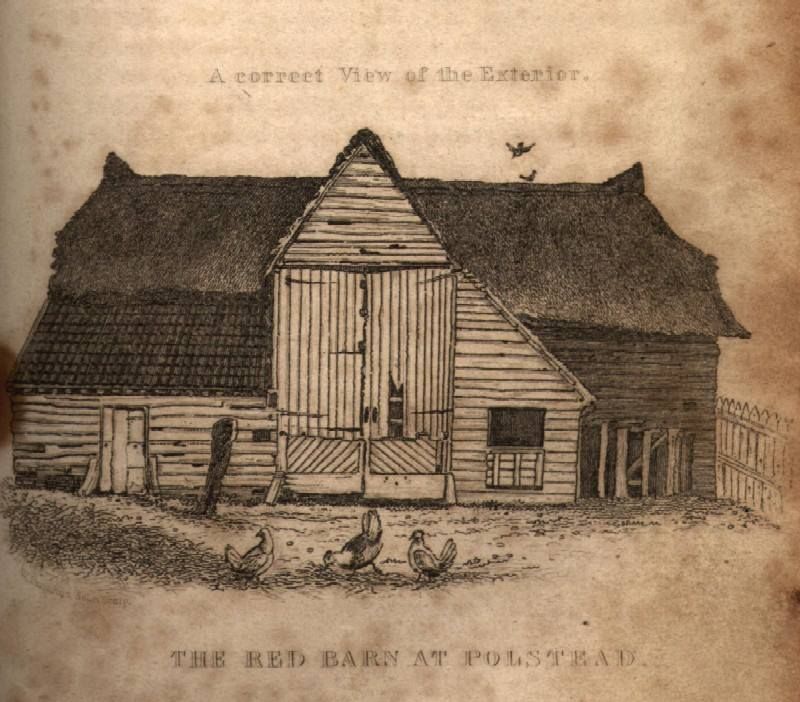
In May 1827 Corder told the Martens that the parish constable had a warrant to prosecute Maria for bearing children out of wedlock, and that they must go to Ipswich at once to marry. After two postponements he arrived at the cottage on Friday 18 May and urged her to leave that day, dressed in a man's clothes so as not to be noticed, while he carried her things to the Red Barn, a local landmark named for its tiled roof, where she could change. She set out across the fields to meet him and was never seen alive again.
Corder came back alone. For months he explained Maria's absence with stories: she was in Ipswich, then on the Isle of Wight, then unwell or unable to write because of an injured hand. He left the district, and his letters to her family said they were married and happy. Then Ann Marten, Maria's stepmother and barely a year older than her, began to speak of her dreams, and her husband went to the barn.
The body was identified at an inquest at the Cock Inn by Maria's sister, who recognised her hair and clothing and a missing tooth. Corder's green handkerchief was found around the neck. The Polstead constable, Ayres, traced him with the help of a London officer, James Lea, to a boarding house for ladies in Brentford that he ran with his new wife, Mary Moore, whom he had met through a newspaper advertisement for a bride. Lea found him at breakfast, timing eggs with his watch. Corder denied knowing Maria. In the house were a pair of pistols and a passport.
The trial at the Shire Hall in Bury St Edmunds opened on 7 August 1828 before the Chief Baron of the Exchequer, William Alexander, with admission by ticket. The cause of death could not be fixed with certainty, so the indictment covered shooting, stabbing and strangling. Maria's young brother George told the court he had seen Corder with a loaded pistol and later walking away from the barn with a pickaxe. Corder said they had quarrelled and that Maria had shot herself with one of his pistols after he left. The jury convicted him in about 35 minutes. Before he was hanged on 11 August he confessed that he had shot her, though he denied stabbing her.
The victims
Maria Marten was born on 24 July 1801, the daughter of Thomas Marten, who made his living catching moles for the farms around Polstead. By the time she was grown, her father had remarried. Contemporary writers remarked on her looks and judged her harshly for her children: one by Corder's elder brother Thomas, who died in infancy, and a son, Thomas Henry, whose father sent money for his keep. Her life was narrow and hard, and the scandal that made her famous turned her into a melodrama heroine almost before she was buried. Souvenir hunters chipped her gravestone in St Mary's churchyard away to nothing.
Timeline
Maria Marten is born in Polstead, Suffolk.
Maria begins a relationship with William Corder.
Maria and Corder's child is born and dies in infancy.
Maria leaves her father's cottage to meet Corder at the Red Barn and is not seen again.
Thomas Marten finds his daughter's body buried in the Red Barn.
Corder is arrested at his wife's boarding house in Brentford, west of London.
Corder's trial opens at the Shire Hall, Bury St Edmunds.
The jury convicts Corder and he is sentenced to hang and be dissected.
Corder is hanged at Bury St Edmunds after confessing to the shooting.
The Red Barn, stripped by souvenir hunters, burns down.
People in the case
-
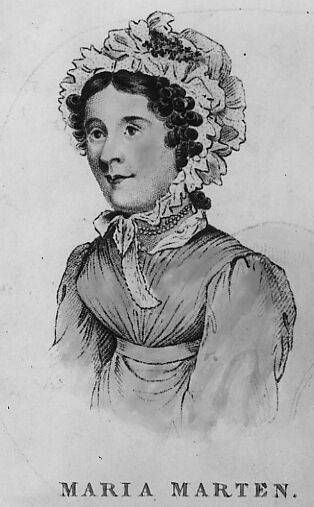
Maria Marten Victim
24 July 1801 – 18 May 1827
Molecatcher's daughter from Polstead, aged 25.
-
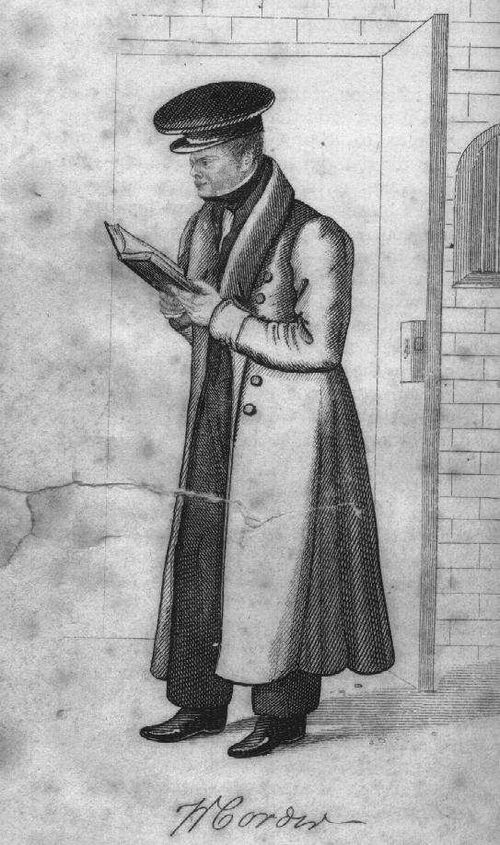
William Corder Perpetrator
1803 – 11 August 1828
Born c. 1803; farmer's son from Polstead. Convicted of Maria's murder and hanged at Bury St Edmunds.
-
Ann Marten Witness
Maria's stepmother, about a year older than her; her dreams led to the discovery of the body.
-
Thomas Marten Witness
Maria's father, who dug up her body in the Red Barn.
-
James Lea Investigator
London police officer who arrested Corder at Brentford.
-
William Alexander Judge
1754 – 29 June 1842
Chief Baron of the Exchequer; tried and sentenced Corder. Birth year given as 1754 or 1755.
-
Mary Moore Also involved
Married Corder after answering his newspaper advertisement for a wife; ran the Brentford boarding house with him.
Where it happened
- Polstead, Suffolk. Maria's village; the Red Barn stood on Barnfield Hill about half a mile from the Martens' cottage.
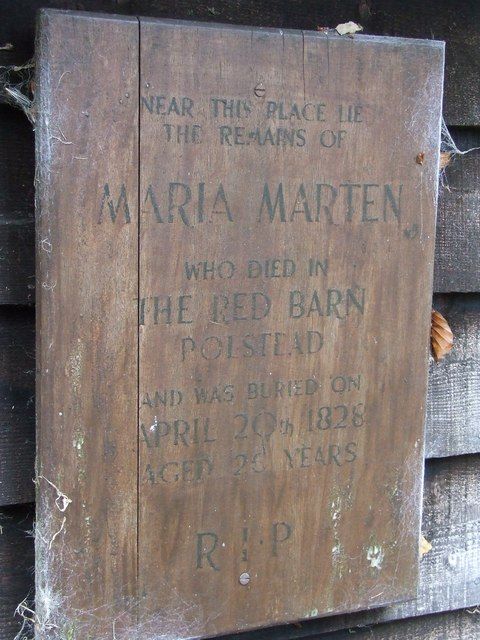
- St Mary's Church, Polstead. Maria was buried in the churchyard; a sign now marks the place where her stone stood.
- Moyse's Hall, Bury St Edmunds. Museum holding relics of the case, including a book bound in Corder's skin and his death mask.
Outcome
Executed Convicted and executed
William Corder was tried at Bury St Edmunds in August 1828 on an indictment for the murder of Maria Marten and found guilty after about 35 minutes. Chief Baron Alexander sentenced him to be hanged and his body dissected. He confessed to shooting her and was hanged at Bury St Edmunds on 11 August 1828 before a crowd variously estimated at 7,000 to 20,000.
What the record settles, and what it doesn't
Established
- Maria Marten left her home in Polstead on 18 May 1827 to meet William Corder at the Red Barn and was not seen alive again.
- Corder afterwards told her family she was alive and that they had married, and wrote letters to that effect.
- Thomas Marten found Maria's body buried in the Red Barn on 19 April 1828 after his wife spoke of dreams about it.
- Corder was arrested at Brentford, where he had married Mary Moore after advertising for a wife.
- A jury at Bury St Edmunds convicted Corder of murder, and he was hanged on 11 August 1828 after confessing to shooting Maria.
- His body was publicly displayed and dissected, and his skin was later used to bind an account of the case.
Disputed
- How Maria died: the evidence suggested shooting, stabbing or strangling, and Corder admitted only to shooting her.
- Ann Marten's dreams: many at the time took them at face value, while sceptics suggested she already knew where the body was, and some rumour went further, claiming she and Corder had been lovers; there is no evidence for that.
- The fate of Maria and Corder's child: they said they buried it in Sudbury, but no record of the burial was ever found, and some suspected it had been killed.
- Corder's motive: the prosecution suggested Maria knew of his frauds and that he had pocketed the money sent for her son, while others saw simply a man trying to escape a marriage he did not want.
Pictures



Afterwards
Few English murders have been so thoroughly turned into entertainment. Melodramas were playing before Corder came to trial, and versions of Maria Marten, or The Murder in the Red Barn toured fairs and theatres for a century. James Catnach's broadside on the execution, with a ballad attributed to Corder, is said to have sold over a million copies. Polstead became a destination for sightseers, and the barn was stripped for souvenirs before it burned down in 1842.
Corder's body was displayed at the Shire Hall, then dissected before Cambridge students and physicians. His skeleton was used for teaching and later shown at the Hunterian Museum of the Royal College of Surgeons in London, until the bones were cremated in 2004. Moyse's Hall Museum in Bury St Edmunds still exhibits relics of the case. A lane in Polstead bears Maria's name.
Questions readers ask
Was the Red Barn Murder solved by a dream?
Maria's stepmother said she dreamed the body was in the Red Barn, and her husband found it there. Whether the dream was genuine or a way of passing on a suspicion has been doubted since the trial.
Did William Corder confess?
Yes. After his conviction he confessed that he had shot Maria in the barn after a quarrel, but he denied stabbing her.
Does the Red Barn still exist?
No. It was stripped by souvenir hunters after the trial and burned down in 1842.
Sources and further reading
- Red Barn Murder (Wikipedia)
- Moyse's Hall (Wikipedia)
- Wikidata Q3844918 (life dates checked here)
Written by Sinister Crimes from the sources above; see our editorial standards. Last checked 1 November 2026.