

The case
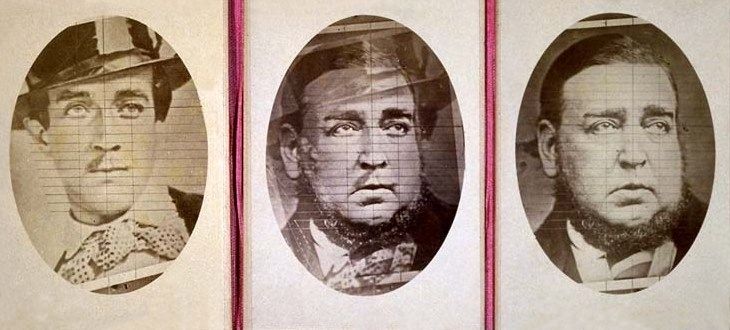
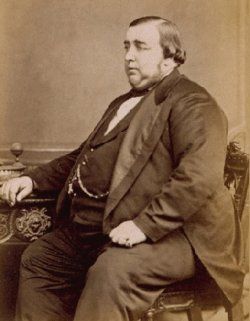
On Christmas Day 1866 a heavily built man stepped ashore at Tilbury with a wife, two small daughters and an elderly Jamaican servant, announcing himself as Sir Roger Tichborne, heir to one of the oldest Catholic baronetcies in Hampshire. Within days he had made a curious detour to Wapping, in the East End, to ask after a family called Orton. Nobody thought much of it at the time. Seven years later it would be the hinge of the longest criminal trial England had yet seen.
The real Roger Tichborne had been raised mostly in Paris, spoke English with a French accent, and left England in 1853 after a thwarted romance with his cousin Katherine Doughty. In April 1854 he sailed from Rio de Janeiro on the Bella, bound for Jamaica. Days later a capsized boat bearing the ship's name was found off the Brazilian coast. No one from the Bella was heard of again, and the family accepted that Roger had drowned. His mother never did. Henriette, Lady Tichborne, advertised for news of him for years, and in 1865 a Sydney agency spread her notices through Australian newspapers, promising a liberal reward.
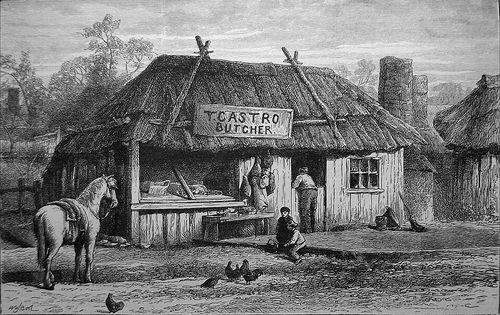
The answer came from Wagga Wagga in New South Wales. A local lawyer reported that a bankrupt butcher called Thomas Castro had spoken of an English inheritance and a shipwreck, and eventually admitted that he was the missing heir. His letters to Lady Tichborne were vague and full of errors, yet she wanted to believe them. When the two met in a Paris hotel in January 1867, she accepted him on sight and settled £1,000 a year on him. The rest of the family took one look and called him an impostor. He was far heavier than the slender Roger, could not speak French, and fumbled questions about relatives and places Roger had known since childhood.
Even so he gathered a remarkable following. Old soldiers from Roger's regiment, the family solicitor and doctor, and Andrew Bogle, a former servant of the Tichbornes who had sailed with him from Sydney, all swore he was genuine. Against them, an agent sent to Australia found station records showing that a man named Arthur Orton, a butcher's son from Wapping, had worked in Gippsland in the 1850s and then vanished. The Claimant said he had known Orton. In Chile, where he insisted he had stayed as Roger, villagers remembered only a young English sailor they called Arturo. Lady Tichborne's death in March 1868 cost him his chief protector, and his supporters began funding him through public subscriptions and a bond issue.
His civil action, Tichborne v. Lushington, opened at Westminster in May 1871. On the stand he could not say who Virgil was, confused Latin with Greek, and claimed that he had seduced his cousin Katherine, by then a respected married woman. The defence lined up more than 200 witnesses; it barely needed them. When a school friend testified that Roger had carried tattoos the Claimant lacked, the jury said in March 1872 that it had heard enough. The judge had the Claimant arrested for perjury.
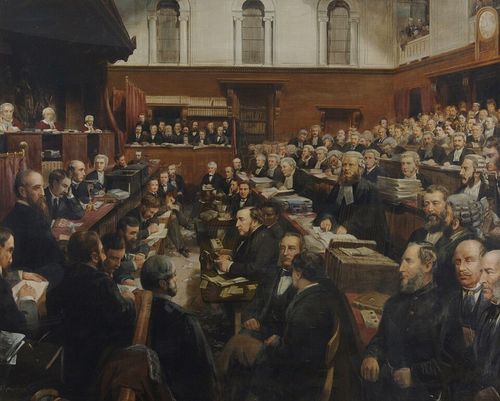
Out on bail, he toured the country, speaking at packed meetings in an accent that reporters heard as pure London. The criminal trial, Regina v. Castro, ran from April 1873 to February 1874. His counsel, Edward Kenealy, turned it into a running war with the bench, portraying his client as the victim of a plot by the Jesuits, the government and the legal establishment. The prosecution traced the ship that the Claimant said had rescued him, the Osprey, and found that names he gave for its crew belonged to the vessel that had carried Orton to Tasmania. A sailor who swore to the rescue turned out to be a fraud himself and was jailed for perjury.
On 28 February 1874 the jury took about half an hour to find that the defendant was not Roger Tichborne, had not seduced Katherine Doughty, and was Arthur Orton. He received two consecutive seven-year sentences. The jury added a rebuke of Kenealy, whose career at the bar ended within the year.
Timeline
Roger Charles Doughty Tichborne is born, the elder son of James and Henriette Tichborne.
Arthur Orton is born in Wapping, east London, the son of a butcher.
Roger Tichborne sails from Rio de Janeiro on the Bella, which is lost at sea with all aboard.
Lady Tichborne learns that a Wagga Wagga butcher calling himself Thomas Castro has been identified as her son.
The Claimant lands in England and soon visits Wapping asking after the Orton family.
Lady Tichborne meets the Claimant in Paris and accepts him as Roger.
Lady Tichborne dies, leaving the Claimant without his main supporter.
The civil action Tichborne v. Lushington opens at Westminster.
The jury halts the civil case; the Claimant is arrested for perjury and sent to Newgate.
The criminal trial, Regina v. Castro, begins in the Court of Queen's Bench.
The jury finds that the Claimant is Arthur Orton; he is sentenced to fourteen years.
The Claimant is released on licence after ten years in prison.
He sells a confession to The People newspaper, then quickly retracts it.
He dies in poverty in London and is buried at Paddington Cemetery.
People in the case
-
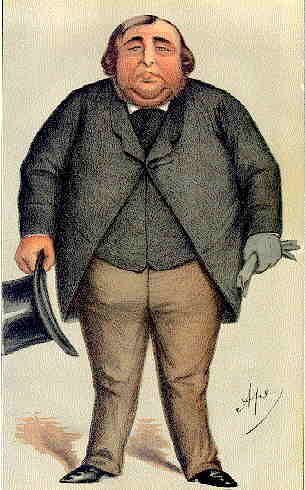
Arthur Orton Perpetrator
20 March 1834 – 1 April 1898
The Claimant, convicted in 1874 of perjury as Arthur Orton of Wapping; he called himself Roger Tichborne to the end, apart from a brief confession in 1895.
-
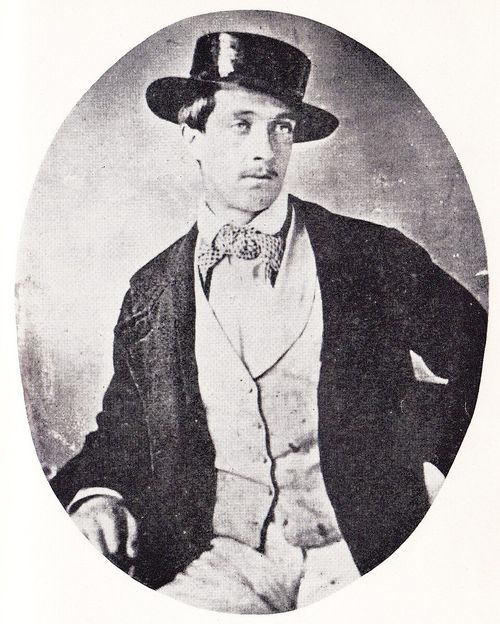
Roger Tichborne Also involved
5 January 1829 – April 1854
Heir to the Tichborne baronetcy, presumed lost with the ship Bella off Brazil in April 1854.
-
Henriette, Lady Tichborne Witness
? – 12 March 1868
Roger's mother (born about 1807); she accepted the Claimant as her son in Paris in January 1867 and supported him until her death.
-
Andrew Bogle Witness
Former Tichborne family servant, born into slavery in Jamaica; he accepted the Claimant in Sydney and stood by him through both trials.
-
Edward Kenealy Defence
2 July 1819 – 16 April 1880
Defence counsel at the criminal trial; disbarred for his conduct, then elected to Parliament in 1875 on the Claimant's cause.
-
Henry Hawkins Prosecutor
14 September 1817 – 6 October 1907
Cross-examined the Claimant in the civil case and led the prosecution in Regina v. Castro.
-
Sir Alexander Cockburn Judge
24 September 1802 – 20 November 1880
Lord Chief Justice who presided over the criminal trial; his summing-up was criticised as one-sided.
-
Sir William Bovill Judge
26 May 1814 – 1 November 1873
Chief Justice of the Common Pleas who heard the civil action and ordered the Claimant's arrest for perjury.
Where it happened
- Wagga Wagga, New South Wales. Where the bankrupt butcher Thomas Castro was identified as the missing heir in 1865.
- Wapping, London. Arthur Orton's birthplace, which the Claimant visited within days of reaching England.
- Tichborne, Hampshire. Village and family seat near Alresford whose estates were at stake.
- Palace of Westminster. The Westminster courts heard both the civil action and the criminal trial.
- Paddington Old Cemetery. Burial place of the Claimant in 1898.
Outcome
Convicted Convicted of perjury
The civil action collapsed in March 1872 and the Claimant was charged with perjury. After a trial at bar lasting 188 court days, a jury on 28 February 1874 found him to be Arthur Orton, and he was sentenced to two consecutive terms of seven years. He was released on licence in October 1884.
What the record settles, and what it doesn't
Established
- Roger Tichborne sailed from Rio de Janeiro on the Bella in April 1854, and the ship was lost.
- The Claimant surfaced in Wagga Wagga as a butcher named Thomas Castro and was accepted by Lady Tichborne in Paris in January 1867.
- Soon after landing in England he went to Wapping to ask after the Orton family, a visit he could never satisfactorily explain.
- He could not speak French, Roger's first language, and showed little knowledge of Roger's schooling at Stonyhurst.
- The jury in Regina v. Castro found in 1874 that he was Arthur Orton and that his story of seducing Katherine Doughty was false.
- He served ten years of a fourteen-year sentence and died destitute in 1898.
Disputed
- Whether the Claimant was Orton has been doubted by a minority: one major 1957 study accepted the verdict as fair on the evidence but argued that some uncertainty remained, while most historians regard Orton's identity as settled.
- How the Claimant knew genuine details of Roger's life: his opponents said servants such as Bogle coached him, while supporters credited real memory.
- Cockburn's summing-up has been praised as forthright by some and condemned by others as openly partisan.
- Various family-connection theories, such as Orton being a hidden Tichborne relation, circulated among supporters; there is no direct evidence for any of them.
- The Claimant's brief 1895 confession is read by most as the truth and by a few as a paid stunt, since he retracted it almost at once.
Pictures





Afterwards
The verdict made the Claimant a popular hero rather than a disgraced man. Kenealy founded the Magna Charta Association and won the Stoke-upon-Trent by-election in 1875 as "the People's Candidate", but his motion for a royal commission on the trial drew almost no support, and the movement faded through the 1880s. Released in 1884, the Claimant toured music halls and circuses, went briefly to New York, and in 1895 sold a confession to a newspaper before retracting it. He died in 1898; around 5,000 people came to his burial, and the Tichborne family allowed a card naming him as Sir Roger Charles Doughty Tichborne to be placed on the coffin. The case has been retold many times, from Jorge Luis Borges's "Tom Castro, the Implausible Impostor" to the 1998 film The Tichborne Claimant.
Questions readers ask
Who was the Tichborne Claimant really?
A jury in 1874 found that he was Arthur Orton, a butcher's son from Wapping who had gone to Australia. Most historians accept that verdict, though a few have argued some doubt remains.
Why did Lady Tichborne believe him?
She had never accepted that Roger drowned and had spent years advertising for him. Her younger son had died shortly before the Claimant's letters arrived, and she recognised him the moment she saw him in Paris, despite obvious differences.
What was the Claimant convicted of?
Perjury, for the evidence he gave in his failed civil action. He was sentenced to fourteen years and served ten.
How long was the Tichborne trial?
The criminal trial ran from 21 April 1873 to 28 February 1874, 188 court days, one of the longest trials ever heard in an English court.
Sources and further reading
- Tichborne case (Wikipedia)
- Arthur Orton (Wikipedia)
- Arthur Orton (Wikidata)
- Wikidata Q2161912 (life dates checked here)
Written by Sinister Crimes from the sources above; see our editorial standards. Last checked 1 November 2026.